A good pop filter can make spoken-word recordings, streams, podcasts, and vocals sound cleaner by reducing harsh bursts of air from “P” and “B” sounds. Dual-layer designs add a practical layer of protection between your voice and the microphone capsule.
These 10 options cover flexible gooseneck filters, clamp-mounted studio models, and shields designed for popular microphones such as the Blue Yeti. Use the guide below to match the filter’s construction, size, and mounting system to your setup.
Best 10 Dual Layer Microphone Pop Filters Picks for 2026
Adjustable All-Rounder
AOKEO Dual-Layer Mic Pop Filter

- Two-screen design reduces plosives and airflow bursts
- 360° gooseneck supports flexible positioning
- Rotating clamp fits many stands and boom arms
Best For: Versatile vocal recording, streaming, and microphone protection
Classic Studio Shield
NEEWER Professional Dual-Layer Pop Filter

- Separated screens help disperse plosive air pressure
- Steel gooseneck adjusts angle and distance
- Swivel clamp supports easy mounting and repositioning
Best For: Adjustable vocal, streaming, and performance setups
Compact Metal Pick
FIFINE PF1 Dual-Layer Pop Filter

- Metal dual-layer screen targets plosives and airflow
- Rigid gooseneck supports stable adjustment
- Compatible with listed FIFINE microphones and tubular mounts
Best For: FIFINE owners, gaming, dubbing, and live streaming
Simple Nylon Shield
Movo PF-6 Dual-Layer Mesh Pop Filter

- Double nylon mesh helps minimize plosives
- Flexible gooseneck supports recording-position adjustments
- Compatible with Blue Yeti, Blue Snowball, and more
Best For: Home studios using common Blue microphones
Best Three-Layer Coverage
Upgraded Metal Mesh, Foam & Etamine Mic Filter
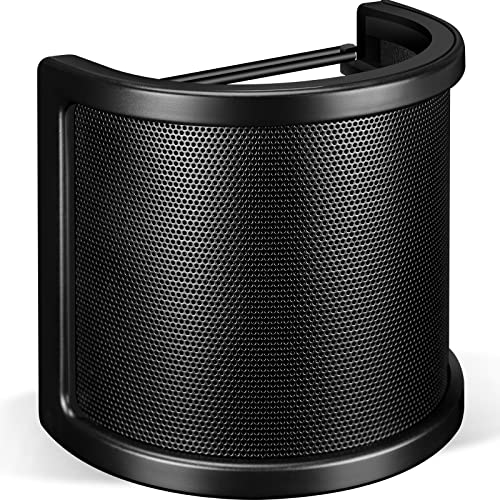
- Three-layer design targets pops, wind, and breath sounds
- Fits compatible 45–63 mm microphones
- Quick elastic-band and rubber-ring installation
Best For: Vocal recording and streaming with compatible microphones
Best Flexible Placement
Dual-Layer Gooseneck Microphone Pop Filter

- Dual-layer screen reduces vocal popping sounds
- 360-degree flexible gooseneck
- Adjustable clamp secures to a mic stand
Best For: Flexible positioning with Blue Yeti and other microphones
Best Large Mesh Screen
AxcessAbles 6-Inch Dual-Layer Pop Filter

- 6-inch double-layer nylon mesh screen
- 14.5-inch adjustable steel gooseneck
- Fits mic stands with tubing up to 1.25 inches
Best For: Studio recording with Blue Yeti or AT2020 microphones
Best Overall Coverage
Professional Double-Layer Pop Filter

- Six-layer filtering targets plosives, hiss, and sibilance
- 360° arm supports flexible, stable positioning
- Clamp fits tubular mounts up to 1.38 inches
Best For: Home studios, broadcasting, singing, and streaming
Best for Flexible Compatibility

- Dual layers target pops, hissing, and lisping
- 360° gooseneck adjusts angle and distance
- Clamp supports boom arms, floor stands, and Blue Yeti mics
Best For: Podcasts, gaming, streaming, and Blue Yeti setups
Best Simple Shield Design
Professional Dual-Layer Pop Screen

- Dual layers reduce hissing, lisping, and plosives
- 360° gooseneck enables convenient positioning
- Adjustable clamp mounts to a microphone stand
Best For: Basic recording and microphone-stand setups
Adjustable All-Rounder – AOKEO Dual-Layer Mic Pop Filter
For shoppers comparing dual layer microphone pop filters, this AOKEO model combines two-stage airflow control with a flexible mounting setup. Its rotating clamp and 360° gooseneck make it practical for singers, streamers, and actors using different microphone stands or boom configurations.
Best For: Users who want broad compatibility, flexible positioning, and added microphone protection.
Pros:
- Dual screens disperse and contain bursts of air from plosive sounds.
- Adjustable gooseneck helps set the filter’s distance and angle.
- Rotating clamp with scratch-proof gripper fits various tubular stands and booms.
- Helps reduce “S” sounds, “B” and “P” plosives, and saliva exposure.
Cons:
- The clamp-and-gooseneck design adds hardware compared with a basic screen.
- The supplied specifications list metal, plastic, and sponge materials rather than a fully metal construction.
Choose this model if mounting flexibility and a protective barrier matter as much as pop reduction. The included warranty coverage also adds reassurance for regular recording use.
Classic Studio Shield – NEEWER Professional Dual-Layer Pop Filter
The NEEWER Professional Pop Filter is a straightforward option among dual layer microphone pop filters, using separated screens to disperse air pressure before it reaches the microphone. Its steel gooseneck and swivel mount support repeatable positioning for vocals, streaming, and performance work.
Best For: Singers, streamers, and actors seeking an adjustable, stand-mounted pop filter.
Pros:
- Dual-layer construction helps contain plosive air blasts.
- Steel gooseneck supports adjustments to angle and microphone distance.
- Scratch-proof rotating clamp fits a range of tubular booms and microphone stands.
- Swivel mount simplifies installation, removal, and location changes.
Cons:
- The microphone is not included.
- Its standard-size design may be less compact than a small desktop-focused filter.
This is a practical, conventional choice when you want adjustable placement and wide stand compatibility without adding specialized features. It is best suited to setups where the included clamp and gooseneck can remain attached.
Compact Metal Pick – FIFINE PF1 Dual-Layer Pop Filter
The FIFINE PF1 is a compact metal option for shoppers seeking dual layer microphone pop filters with a firm mounting system. Its two screens target airflow from “B,” “P,” and “S” sounds, while the gooseneck and clamp provide flexible placement for recording, gaming, dubbing, and live streaming.
Best For: FIFINE microphone owners and creators who want a compact, adjustable pop filter.
Pros:
- Dual-layer design uses a gap to disperse airflow between screens.
- Metal gooseneck is designed to resist bending or sagging.
- Clamp can attach firmly to compatible boom arms and microphone stands.
- Large coverage area helps reduce pops and protect the microphone surface from saliva.
Cons:
- Compatibility is specifically listed with certain FIFINE microphones and suitable tubular mounts.
- The metal construction weighs about 0.27 kg, which may be more than lightweight mesh alternatives.
The PF1 stands out when you value a sturdy metal build and a secure, adjustable mount. Its compact format and stated FIFINE compatibility make it especially logical for matching brand setups.
Simple Nylon Shield – Movo PF-6 Dual-Layer Mesh Pop Filter
The Movo PF-6 offers a simple dual-layer microphone pop filters setup built around nylon mesh, a flexible gooseneck arm, and a clamp mount. It is designed to minimize plosives and mount to microphone stands, including setups using Blue Yeti and Blue Snowball microphones.
Best For: Home-studio users who want an easy-to-mount nylon mesh filter for common microphones.
Pros:
- Double-layer nylon mesh is designed to reduce plosives.
- Flexible gooseneck allows positioning for recording.
- Mounts easily to a microphone stand.
- Listed as compatible with Blue Yeti, Blue Snowball, and more.
Cons:
- The notes provide fewer mounting and material details than some competing models.
- It is primarily described as a plosive-reduction shield, with no specific claim about saliva protection.
Consider the PF-6 if you prefer a nylon mesh design and a simple stand-mounted installation. Its stated Blue microphone compatibility makes it a convenient match for those familiar recording setups.
Best Three-Layer Coverage – Upgraded Metal Mesh, Foam & Etamine Mic Filter
If you want more than a basic screen, this three-layer microphone filter combines metal mesh, foam, and etamine layers to address plosives, crackles, wind interference, and breath sounds. Its elastic-band and rubber-ring setup is designed for compatible microphones measuring 45–63 mm in diameter.
Best For: Vocal recording, streaming, YouTube videos, and compatible handheld or studio microphones.
Pros:
- Three-layer construction targets pops, breath sounds, wind, and crackles.
- Helps keep saliva away from the microphone.
- Designed for quick assembly and removal.
- Compatible with many listed microphones, including AT2020, AT2035, NT1A, and MXL 770.
Cons:
- Will not fit the Blue Yeti according to the supplied notes.
- Compatibility depends on a 45–63 mm microphone diameter.
This is the most protective option of the three if your microphone matches its size range and you want layered coverage rather than a simple mesh screen. Confirm your microphone dimensions before buying.
Best Flexible Placement – Dual-Layer Gooseneck Microphone Pop Filter
This dual-layer microphone pop filter is a practical choice when positioning flexibility matters. Its 360-degree gooseneck and adjustable clamp let you place the screen between your voice and microphone for recording, broadcasting, karaoke, stage use, or home setups.
Best For: Users who need adjustable placement and compatibility with Blue Yeti or other microphones.
Pros:
- Dual-layer screen helps reduce popping sounds from fast-moving air.
- 360-degree flexible gooseneck supports convenient positioning.
- Adjustable clamp is designed to secure the filter to a mic stand.
- Suitable for studio, broadcast, karaoke, stage, and home use.
Cons:
- Microphone is not included.
- The supplied notes do not specify the filter’s screen diameter or clamp tubing limit.
Choose this model if you value a flexible arm and broad stated microphone compatibility. It offers a straightforward dual-layer setup, but check your stand arrangement to ensure the clamp works with it.
Best Large Mesh Screen – AxcessAbles 6-Inch Dual-Layer Pop Filter
For buyers seeking a larger screen with straightforward stand mounting, this dual layer microphone pop filter uses a 6-inch nylon mesh center. Its double-layer construction is designed to break up bursts of air while remaining sonically transparent, and the included gooseneck supports precise positioning.
Best For: Blue Yeti and AT2020 users who want a large, adjustable filter for studio recording.
Pros:
- Large 6-inch dual-layer nylon mesh screen.
- Designed to reduce air blasts without altering sound quality.
- 14.5-inch adjustable steel gooseneck allows precise positioning.
- Attaches to mic stands with upper tubing up to 1.25 inches in diameter.
Cons:
- Requires a compatible mic stand for attachment.
- The longer gooseneck may be more than needed for compact setups.
This is a solid fit when coverage area and controlled positioning are priorities. Its stated stand-mount limit and large screen make it especially useful for a dedicated recording setup.
Best Overall Coverage – Professional Double-Layer Pop Filter
For shoppers comparing dual layer microphone pop filters, this model stands out for its six-layer filtering construction, broad positioning range, and sturdy flexible arm. It is designed to reduce plosives, sibilance, hiss, and unwanted moisture during recording, broadcasting, karaoke, or streaming.
Best For: Home studios, broadcasters, singers, and streamers who want extensive filtering and flexible placement.
Pros:
- Six filtering layers, including dual metal mesh and high-density foam, target plosives, sibilance, and unwanted noise.
- 360-degree carbon steel arm can be shaped freely and supports over 10,000 bends.
- Rotating clamp fits tubes up to 1.38 inches and includes an anti-scratch EVA pad.
- Large 5.91-inch outer diameter and 13.39-inch arm provide versatile positioning.
Cons:
- The larger filtering assembly may require more desk or stand clearance.
- Compatibility is specified for tubular mounts up to 1.38 inches in diameter.
With its multilayer construction and unusually long, shapeable arm, this is a strong choice when coverage and positioning flexibility matter more than having the smallest setup.
Best for Flexible Compatibility – IXTECH Dual-Layer Mic Filter
This IXTECH model is a practical option among dual layer microphone pop filters, using two filtering layers to reduce pops, hissing, and lisping. Its adjustable clamp and 360-degree gooseneck are intended for use with Blue Yeti microphones, boom arms, floor stands, and other compatible microphone setups.
Best For: Podcasters, gamers, streamers, and Blue Yeti users who need adjustable mounting and broad compatibility.
Pros:
- Dual-layer design filters sound and reduces remaining air pressure from plosives.
- 360-degree gooseneck adjusts the filter’s angle and distance from the microphone.
- Adjustable screw clamp has scratch-proof grippers for secure mounting.
- Lightweight metal construction is designed for stability and splash protection.
Cons:
- The 6.6-ounce weight may be more noticeable on some lighter stands or arms.
- The supplied notes do not specify the filter’s screen diameter.
The IXTECH is a versatile choice for users who want straightforward dual-layer filtering with a flexible mounting system and compatibility across common microphone arrangements.
Best Simple Shield Design – Professional Dual-Layer Pop Screen
This professional microphone shield offers a straightforward dual-layer design for reducing hissing, lisping, and plosive sounds. For buyers seeking dual layer microphone pop filters, its flexible 360-degree gooseneck and adjustable clamp provide basic positioning control for recording studio and general microphone use.
Best For: Users who want a simple dual-layer shield with adjustable mounting for a microphone stand.
Pros:
- Dual-layer wind screen helps address “S” hissing and “B” and “P” plosive sounds.
- 360-degree flexible gooseneck supports convenient positioning.
- Adjustable clamp is designed to secure the filter to a microphone stand.
- Can help protect the microphone from saliva accumulation.
Cons:
- The supplied notes do not provide a screen diameter or gooseneck length.
- Microphone is not included.
- The notes describe a microphone-stand clamp but do not specify tube-size compatibility.
This model keeps the feature set focused: dual-layer filtering, flexible adjustment, and stand mounting. It may suit buyers who prefer a basic shield without needing detailed size specifications.
How We Picked the Best Dual Layer Microphone Pop Filters
We focused on filters that use two layers of mesh or screening to diffuse plosive air before it reaches the microphone. We also considered mounting hardware, arm flexibility, clamp compatibility, screen diameter, microphone fit, and suitability for recording, streaming, podcasting, and voice-over work.
Because product names and specifications can vary by seller, confirm the listed dimensions and included hardware before ordering. A filter that looks similar may use a different clamp, arm length, or mounting thread.
Quick Comparison
| Type | Best For | What to Check |
|---|---|---|
| Dual-layer nylon mesh | General vocal recording and streaming | Gooseneck stability and clamp grip |
| Metal mesh | Frequent studio use | Screen spacing and mounting strength |
| Multi-layer mesh and foam | Extra wind and plosive control | Potential effect on vocal brightness |
| Large six-inch screen | Close-mic vocals and broadcast speech | Desk space and microphone clearance |
Key Buying Factors for Dual-Layer Microphone Pop Filters
Filter Construction
Two-layer nylon filters are lightweight and effective for most speech and vocal applications. Metal mesh can be more durable, while designs that add foam may provide additional wind control. More layers are not automatically better; dense materials can slightly change the feel of high frequencies if placed too close to the microphone.
Arm and Clamp Design
A flexible gooseneck should hold its position without slowly sagging. Check the arm length and clamp opening against your desk, isolation shield, or stand. A strong clamp matters just as much as the filter because movement can create handling noise and inconsistent distance from the microphone.
Screen Size and Placement
A larger screen gives you more freedom to move while staying protected from plosives. Position the filter several inches in front of the microphone, leaving enough room to avoid touching the grille. The exact distance depends on the microphone and recording style, so use the filter as part of a consistent mic technique rather than as a substitute for it.
Microphone Compatibility
Most clamp-mounted filters work with standard desk stands, boom arms, or microphone supports, but compatibility with a Blue Yeti or another USB microphone can depend on clearance around the body and mounting point. Confirm that the arm can reach the capsule without blocking controls, camera views, or headphones.
Who Should Buy Which Dual Layer Microphone Pop Filters?
- For streamers and podcasters: Choose a flexible dual-layer nylon filter with a reliable clamp and enough screen area for natural movement.
- For vocalists and home studios: Look for a larger screen and a sturdy arm that stays fixed during repeated takes.
- For Blue Yeti owners: Prioritize reach, clamp compatibility, and clearance around the microphone body rather than relying only on “compatible” wording.
- For frequent or mobile use: A lighter nylon model is easier to reposition, while metal construction may better suit a permanent studio setup.
The best Dual Layer Microphone Pop Filters are the ones that stay securely positioned, fit your microphone setup, and reduce plosives without interfering with your natural recording workflow.