If you want tighter bass, clearer mids, and better room correction, the right graphic audio equalizers can make a noticeable difference fast.
Below, we focus on practical choices for home stereos, DJ systems, and rack-mounted setups so you can match the right EQ to your gear and your goals.
Best 10 Graphic Audio Equalizers Picks for 2026
Dual-Channel Precision
Rockville REQ42-S Silver 19" Rack Mount EQ
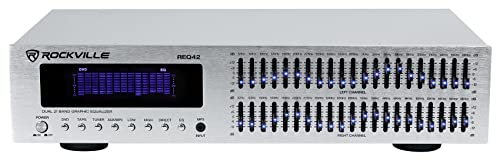
- Dual 21-band equalizer with 42 total bands
- RCA stereo and front 3.5mm inputs
- Blue LED sliders, dual VU meters, rack-mountable
Best For: Detailed dual-channel EQ control in rack setups
Pro Studio Standard
dbx 231s Dual Channel 31-Band Equalizer

- Dual 31-band, 1/3-octave constant-Q design
- Switchable 6 or 12 dB boost/cut ranges
- Balanced TRS and XLR connections with bypass
Best For: DJs, engineers, and installers needing pro EQ control
Visual Audio Hub
Decibelvibe TNZ SGE6 Graphic Equalizer

- Rear RCA and 3.5mm input/output connections
- USB and Bluetooth 5.0 inputs with built-in mic
- 16 color options plus brightness, speed, and gain control
Best For: Bluetooth-ready setups that want a visual spectrum display
Noise-Reducing Rack EQ
Dual Channel 15-Band Graphic Equalizer EQ215

- Dual-channel 15-band design with ±12 dB per band
- Low-cut switch helps reduce hum and rumble
- XLR balanced and 1/4" TRS I/O with bypass
Best For: Rack users needing clean audio and pro-style connectivity
Pro Dual-Channel 31-Band Control
31-Band Stereo EQ for Home Audio

- 31 bands per channel for precise tuning
- LOW-CUT and BYPASS switches simplify setup
- XLR and 1/4" TRS I/O for flexible routing
Best For: Audiophiles, DJs, and installers needing detailed stereo EQ control
Feature-Rich Digital Rack EQ
Home Audio Equalizer with Bluetooth 5.2

- 10 presets and bypass for quick recall and comparison
- 31-segment LED display for real-time monitoring
- Bluetooth 5.2 and USB playback built in
Best For: Home theater, KTV, studio, and DJ setups needing extra playback features
Compact 15-Band Rack EQ
Stereo Graphic Equalizer with Sub Output

- 15 bands per channel for focused EQ control
- Dedicated bass output and low-cut feature
- XLR and 1/4" TRS connections for flexibility
Best For: Users who want a compact rack EQ with subwoofer output
Most Adjustable Pick
31-Band Digital Equalizer with PC Tuning

- 31-band dual-channel design
- PC software plus LED display
- XLR, TRS, and stereo L/R inputs
Best For: fine-grained EQ control and flexible home or studio setups
Best Rack-Mount Value
15-Band Stereo Graphic Equalizer for Home Audio
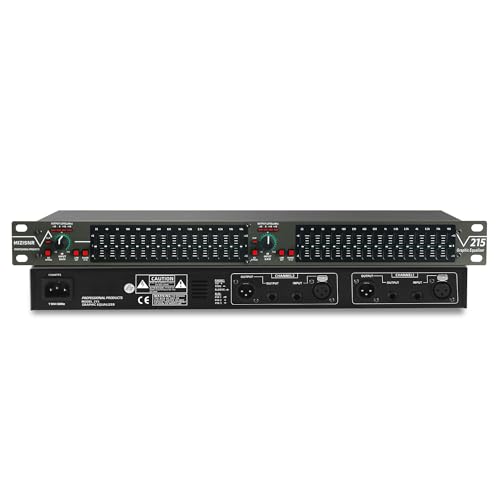
- Dual-channel 15-band rack EQ
- LOW-CUT and BYPASS switches
- XLR balanced and TRS support
Best For: simple rack-mounted EQ control for live, studio, or installation use
Silver Finish Alternative
15-Band Stereo Graphic Equalizer in Silver

- Dual-channel 15-band rack EQ
- LOW-CUT and BYPASS switches
- Balanced XLR and TRS inputs/outputs
Best For: buyers who want the 15-band rack EQ feature set in silver
Dual-Channel Precision – Rockville REQ42-S Silver 19" Rack Mount EQ
If you want graphic audio equalizers that offer hands-on control for a home theater, DJ rig, or small studio, the Rockville REQ42-S gives you a lot of adjustment headroom. Its dual 21-band layout lets you shape two channels across the full 20-20,000 Hz range, while RCA and front-panel 3.5mm inputs keep source hookup flexible.
Best For: Users who want detailed dual-channel EQ control with rack-friendly installation and easy source compatibility.
Pros:
- Dual 21-band equalizer provides 42 total bands for detailed tuning.
- RCA stereo inputs plus a front 3.5mm input work with multiple audio sources.
- Blue LED sliders, dual VU meters, and a multi-color display help with visual monitoring.
- Lightweight 19″ rack-mount design fits cleanly into organized setups.
Cons:
- Best suited to rack-based systems rather than portable use.
- More bands and controls can be more than casual listeners need.
The REQ42-S is a practical pick if you value precise adjustment and a professional-looking rack layout. Its feature set is geared toward users who want control and visibility without giving up simple connectivity.
Pro Studio Standard – dbx 231s Dual Channel 31-Band Equalizer
Among graphic audio equalizers, the dbx 231s stands out for its straightforward pro-audio layout and broad 31-band control per channel. It uses constant-Q frequency bands, switchable boost/cut ranges, and balanced XLR or TRS connections, making it a strong fit for installed systems and live sound workflows.
Best For: DJs, engineers, and installers who want a familiar dual-channel 31-band equalizer with pro connections.
Pros:
- Dual 31-band, 1/3-octave constant-Q design supports detailed EQ shaping.
- Switchable 6 or 12 dB boost/cut ranges add flexibility.
- Front-panel bypass switch makes comparison easy.
- Balanced TRS and XLR inputs/outputs suit professional gear.
Cons:
- Does not add consumer-style extras like Bluetooth or USB input.
- May be more feature-dense than needed for simple home listening.
This model is aimed at users who want a direct, no-nonsense equalizer with established pro-audio connectivity. If your priority is reliable control and standard rack integration, it is an easy format to work into a serious setup.
Visual Audio Hub – Decibelvibe TNZ SGE6 Graphic Equalizer
If you’re shopping for graphic audio equalizers that do more than basic tone shaping, the Decibelvibe TNZ SGE6 adds music spectrum display features, wireless input options, and preamp-style flexibility. It supports rear RCA and 3.5mm connections, plus USB and Bluetooth 5.0, so it can slot into home audio, hi-fi, or DJ systems without much fuss.
Best For: Listeners who want a graphic equalizer with Bluetooth, USB, and visual spectrum display features.
Pros:
- Rear RCA and 3.5mm input/output support wide system compatibility.
- USB and Bluetooth 5.0 inputs add wireless and digital convenience.
- Built-in microphone can display spectrum without audio cables connected.
- Brightness, speed, gain, and 16 color options add visual customization.
Cons:
- Only one CR2 battery is required, which adds an extra power consideration.
- Feature set may be more about display and flexibility than strict EQ simplicity.
The SGE6 is a good fit if you want a single unit that combines equalization, visual feedback, and modern input options. It is especially appealing for setups where appearance and connectivity matter as much as sound control.
Noise-Reducing Rack EQ – Dual Channel 15-Band Graphic Equalizer EQ215
For buyers comparing graphic audio equalizers in a rack setup, the EQ215 focuses on clean signal handling and flexible pro-style connections. Its dual-channel 15-band design gives you ±12 dB adjustment per band, while the low-cut switch and bypass function help refine the signal path for live or installed audio.
Best For: Users who want a rack-mount equalizer with noise reduction tools and balanced I/O options.
Pros:
- Dual-channel 15-band design offers precise adjustment per channel.
- Low-cut switch helps reduce wind noise, hum, and floor rumble.
- Bypass switch supports quick A/B checks during setup.
- XLR balanced and 1/4″ TRS inputs/outputs increase compatibility.
Cons:
- 15 bands per channel is less granular than 31-band models.
- Requires 110-230V power, so it is still a mains-powered rack unit.
The EQ215 is a solid choice if you want a practical equalizer that prioritizes noise control and straightforward integration. It should work well for users who need dependable rack-mount EQ without moving into more specialized digital gear.
Pro Dual-Channel 31-Band Control – 31-Band Stereo EQ for Home Audio
This graphic audio equalizer is built for users who want detailed, hands-on control over a stereo system. With 31 bands per channel, switchable bypass, and a low-cut option, it gives you the tools to shape sound for home audio, studio, DJ, or installation use without overcomplicating the setup.
Best For: Audiophiles, DJs, and installers who want a fully adjustable dual-channel rack EQ with balanced connections.
Pros:
- 31-band design on each channel allows fine frequency tuning.
- LOW-CUT switch helps reduce wind noise, rumble, and hum.
- BYPASS switch makes comparison and debugging straightforward.
- XLR balanced and 1/4″ TRS input/output support flexible system integration.
Cons:
- Manual-style control layout may be more than casual listeners need.
- Best suited to rack-based setups rather than simple plug-and-play use.
Overall, this EQ focuses on precision and compatibility, making it a practical choice when you need more control than a basic tone knob can provide. The visual LED ladders and dual-channel design add useful feedback for serious audio adjustments.
Feature-Rich Digital Rack EQ – Home Audio Equalizer with Bluetooth 5.2
For buyers comparing graphic audio equalizers, this model stands out for mixing EQ control with extra playback and display features. It offers 31 segments, preset storage, real-time LED spectrum indication, and built-in Bluetooth 5.2 plus USB playback for systems that need more than just basic filtering.
Best For: Home theater, KTV, studio, and DJ users who want a rack EQ with Bluetooth, USB, and visual monitoring.
Pros:
- 10 preset modes let you save settings for faster recall.
- 31-segment LED spectrum display shows frequency changes in real time.
- Built-in Bluetooth 5.2 and USB playback add source flexibility.
- XLR balanced and 1/4″ TRS connections support broad compatibility.
Cons:
- More feature-heavy than a basic equalizer if you only need simple EQ.
- Rack-mount format is best for organized audio setups.
This is a good fit if you want a graphic equalizer that also acts as a flexible audio hub. The combination of presets, spectrum feedback, and multiple playback options makes it especially useful for environments where quick adjustments matter.
Compact 15-Band Rack EQ – Stereo Graphic Equalizer with Sub Output
This graphic audio equalizer is a compact option for users who want targeted control without moving up to a 31-band unit. With 15 bands per channel, a low-cut feature, bypass mode, and a dedicated bass output, it covers the core tools needed for home audio, live events, and studio use.
Best For: Users who want a smaller dual-channel rack EQ with subwoofer output and flexible connections.
Pros:
- 15-band per-channel design offers practical sound shaping.
- Dedicated low-cut control helps reduce unwanted low-end noise.
- Separate bass output adds useful low-frequency flexibility.
- XLR balanced and 1/4″ TRS connections support diverse systems.
Cons:
- Fewer bands than 31-band models, so adjustment is less granular.
- Designed for rack mounting, not portable use.
This EQ is a sensible middle-ground choice if you want solid control and sub output without the complexity of a higher-band model. The 1U form factor and bypass switch make it easy to integrate into a serious audio rack.
Most Adjustable Pick – 31-Band Digital Equalizer with PC Tuning
If you want graphic audio equalizers with more detailed control than a basic tone knob, this 31-band digital model is built for precise shaping. It combines dual-channel control, PC software tuning, a live LED display, and preset options, making it a strong fit for users who want flexible adjustment across home stereo, studio, or live-sound setups.
Best For: Users who want fine-grained dual-channel EQ control with PC-based tuning and broad connectivity.
Pros:
- 31-band dual-channel EQ gives detailed control over left and right audio paths.
- Includes PC software for deeper fine-tuning.
- Offers balanced XLR, stereo L/R, and TRS connections for flexible setup.
- 10 presets plus bypass mode make quick comparisons easy.
Cons:
- Advanced controls may be more than casual users need.
- Noise reduction is adjustable, which may require some setup time.
This is the most feature-rich option in the group, especially if you value detailed control and multi-connection compatibility. It leans toward users who want a polished, adjustable signal path rather than a simple plug-and-play EQ.
Best Rack-Mount Value – 15-Band Stereo Graphic Equalizer for Home Audio
This is a straightforward choice among graphic audio equalizers if you want a professional dual-channel rack unit with practical controls. Each channel offers 15 bands with adjustable gain range, plus a LOW-CUT switch to reduce common low-frequency noise sources. It is designed for audio installations, live applications, and studio use.
Best For: Users who want a rack-mount stereo EQ with simple controls and solid noise cleanup.
Pros:
- Dual-channel 15-band design provides broad tonal adjustment.
- LOW-CUT switch helps reduce wind noise, rumble, and hum.
- BYPASS switch makes A/B comparison and debugging easier.
- XLR balanced and 1/4-inch TRS I/O supports a range of setups.
Cons:
- Only 15 bands per channel, so it is less detailed than 31-band models.
- No PC tuning or digital display features are listed.
For buyers who want a conventional rack EQ with familiar controls, this model keeps the focus on utility. It is a practical fit when you need stereo shaping, low-cut filtering, and reliable installation-friendly hardware.
Silver Finish Alternative – 15-Band Stereo Graphic Equalizer in Silver
If you are comparing graphic audio equalizers and prefer a cleaner-looking rack unit, this silver version delivers the same core feature set as the black model. It uses dual-channel 15-band adjustment, includes LOW-CUT and BYPASS switches, and supports balanced XLR plus 1/4-inch TRS connections for flexible use in home audio, studio, or live applications.
Best For: Buyers who want the same 15-band stereo EQ features in a silver finish.
Pros:
- Dual-channel 15-band EQ with adjustable gain range.
- LOW-CUT switch targets wind noise, rumble, and hum.
- BYPASS switch supports fast comparison and debugging.
- Rack-mount 1U design works for installation and live setups.
Cons:
- Feature set is similar to the black version, so finish may be the main difference.
- Less detailed than a 31-band equalizer.
This model is best viewed as a cosmetic alternative rather than a different performance tier. If you want a silver rack EQ with the same practical control layout and connection options, it fits the brief well.
How We Picked the Best Graphic Audio Equalizers
We looked for models that offer the most useful control for real-world listening, not just large band counts on paper. That means choosing units with sensible channel layouts, solid connectivity, manageable rack size, and features that fit common home and DJ use cases. We also favored options with clear labeling, noise-reduction claims, and formats that are easy to integrate into existing systems.
Quick Comparison
For most buyers, 15-band models are the easiest way to get straightforward tonal shaping without overwhelming setup complexity. 31-band Graphic Audio Equalizers provide finer adjustment and are better suited to more demanding rooms, live sound, or users who want precise tuning. Digital models add flexibility and extra connectivity, while analog rack units often appeal to users who want simple, reliable hands-on control.
Key Buying Factors for Graphic Audio Equalizers
Band Count
More bands usually mean more detailed control, but they are not always necessary. A 15-band EQ is often enough for casual home listening, while 31-band units are better when you need to address specific problem frequencies.
Channel Configuration
Most buyers should check whether the unit is dual-channel stereo, since that matters for balanced left/right adjustment. Dual-channel designs are the safest pick for home audio and DJ systems.
Connectivity and Inputs
Make sure the equalizer matches your source and amplifier. RCA is common for home systems, while rack and pro setups may rely on balanced connections. Some modern units also add Bluetooth, USB, or auxiliary input for broader compatibility.
Noise and Build Quality
Look for low-noise operation and a sturdy chassis, especially if the unit will live in a rack or be used frequently. Clean signal handling matters more than flashy extras.
Digital Vs. Analog
Digital Graphic Audio Equalizers can offer more convenience and functionality, but analog designs are often simpler and easier to use. Choose digital if you want flexibility; choose analog if you want direct control and a more traditional workflow.
Who Should Buy Which Graphic Audio Equalizers?
If you want easy setup for a home stereo, a 15-band rack unit is usually the best place to start. If you need finer tuning for a large room, studio, or DJ application, a 31-band model makes more sense. Buyers who want modern convenience should consider a digital EQ with PC or wireless input support, while traditionalists may prefer a straightforward rack-mount analog equalizer for dependable everyday use.
In short, the best choice depends on how much control you need and how your system is connected. Match the EQ to your audio chain first, then choose the band count and features that fit your listening habits.