Touring guitarists need more than impressive effects. The right processor must deliver consistent tones, fast changes between songs, dependable connections, and controls that remain usable under stage pressure.
We selected 10 leading guitar effects processors for touring, ranging from compact pedalboards to full-featured floor units. Use the guide below to narrow the options by rig size, workflow, connectivity, and budget.
Best 10 Guitar Effects Processors for Touring Picks for 2026
Flagship Command Center

- High-resolution 32-bit/96 kHz processing
- Ten footswitches plus expression pedal
- Fast patch switching with delay carryover
Best For: Touring guitarists and bassists needing extensive live control
Compact Expanded Controller
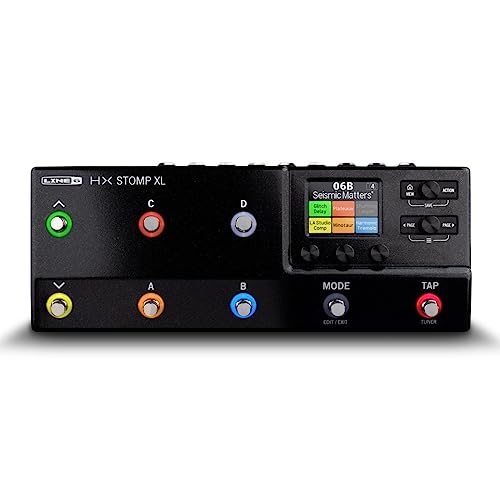
- Five additional footswitches over HX Stomp
- Eight blocks of dynamic DSP
- Compatible with HX and Helix presets
Best For: Touring players wanting expanded control in a compact format
Touchscreen Tone Workstation

- 32 amp types and 170+ BOSS effects
- 15 assignable routing blocks
- Color touch display and rugged metal chassis
Best For: Players wanting intuitive editing and flexible live routing
Travel-Ready HX Modeling

- Over 300 effects and models
- Up to six simultaneous blocks
- Compact pedalboard-friendly design
Best For: Touring guitarists building portable, expandable rigs
Tour-Ready Compact Power

- Compact metal chassis with integrated expression pedal
- 32 amps, 170 effects, and up to 15 assignable blocks
- Speaker IR support and flexible signal routing
Best For: Touring players needing extensive tones in a compact format
Portable HX Modeling

- Large color display and simple interface
- 270+ HX and legacy amp/effects models
- Third-party IR loading and stereo effects loop
Best For: Touring guitarists seeking portable, accessible modeling
Hands-On Stage Control
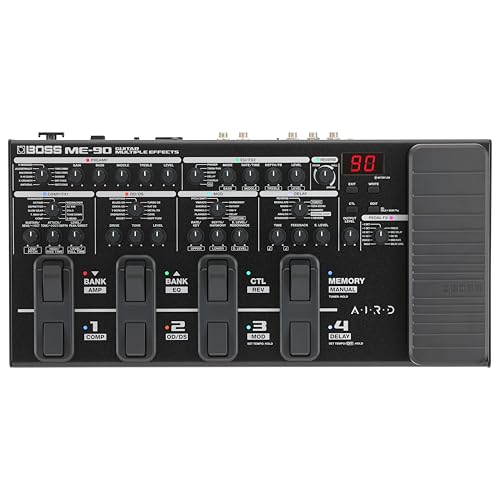
- Eight multifunction footswitches and expression pedal
- 11 AIRD amps, 60 effects, and IR loading
- Battery-powered with effects loop and patch storage
Best For: Performers wanting immediate stompbox-style control on tour
Premium All-in-One

- Guitar, vocal, amp-capture, and looping features
- Gapless switching with reverb and delay spillover
- Wi-Fi, Bluetooth, MIDI, USB, and stereo FX loop
Best For: Touring players building a complete guitar-and-vocal rig
Flexible Stage Workhorse
Valeton GP-200 Multi-Effects Processor

- 240+ effects with 11 movable modules per patch
- Built-in expression pedal and eight LED footswitches
- Balanced outputs, MIDI, FX loop, and USB-C audio
Best For: Guitarists and bassists needing flexible live patches
Gig-Ready Bundle

- 240+ effects and 140+ amp and cab models
- Looper, drum machine, expression pedal, and USB audio
- Includes padded, water-resistant gig bag
Best For: Touring players wanting a portable all-in-one rig
Flagship Command Center – BOSS GT-1000
BOSS GT-1000 Guitar Effects Processor | Industry-Leading Guitar Effects Processor
Check Price On AmazonFor guitar effects processors for touring, the BOSS GT-1000 is a professional-grade choice built around high-resolution processing, extensive control, and reliable patch transitions. Its onboard expression pedal, numerous footswitches, Bluetooth editing, and bass mode make it adaptable to complex live setups.
Best For: Touring guitarists and bassists who need deep control, extensive effects, and seamless patch changes.
Pros:
- 32-bit/96 kHz processing supports detailed audio fidelity.
- Large BOSS effects library includes MDP effects and newer algorithms.
- Ultra-fast patch switching includes delay carryover.
- Offers ten footswitches, six knobs, an expression pedal, MIDI, USB, and Bluetooth.
Cons:
- Its 24-inch chassis and 8-pound weight may require more pedalboard space.
- The extensive controls and routing options may take time to master.
The GT-1000 is a strong fit when touring demands maximum flexibility rather than a compact footprint. Dedicated bass functionality and multiple control options also make it useful for performers covering different instruments or elaborate patch configurations.
Compact Expanded Controller – Line 6 HX Stomp XL
The Line 6 HX Stomp XL combines the compact HX Stomp format with five additional footswitches, making it a practical option among guitar effects processors for touring. Its eight-block DSP architecture and preset compatibility with the HX and Helix family support flexible live rigs.
Best For: Touring players who want expanded foot control in a relatively compact multi-effects unit.
Pros:
- Adds five footswitches to the HX Stomp format for easier live control.
- Provides eight blocks of dynamic DSP.
- Presets are fully interchangeable with the HX and Helix family.
- Weighs approximately 454 grams and measures 12.44 by 4.72 by 2.67 inches.
Cons:
- The supplied notes do not specify the number of onboard effects or amp models.
- Its expanded format is less compact than the standard HX Stomp.
The HX Stomp XL is especially appealing for touring musicians who need more hands-on switching than the original Stomp provides without moving to a larger flagship floorboard. Compatibility with the wider HX and Helix ecosystem can also simplify preset management.
Touchscreen Tone Workstation – BOSS GX-100
The BOSS GX-100 offers an approachable control layout for touring guitarists who want amp modeling, effects, and routing flexibility in one unit. Its color touch display, rugged metal chassis, assignable controls, and support for speaker IRs make it practical for shaping and managing live tones.
Best For: Guitarists and bassists who prioritize intuitive editing, flexible routing, and authentic amp-style response.
Pros:
- Includes 32 amplifier types and more than 170 BOSS effects.
- Provides 15 assignable blocks and flexible amp/effect routing.
- Supports onboard speaker types and WAV speaker IR loading.
- Color touch display, assignable footswitches, and expression pedal simplify control.
Cons:
- Bluetooth mobile editing and audio streaming require the optional Bluetooth Audio MIDI Dual Adaptor.
- The supplied dimensions indicate a relatively large 23.7-inch chassis.
For touring players who prefer visual editing over menu-heavy operation, the GX-100 stands out with its touch display and AIRD-based tube amp response. It offers substantial tonal depth while keeping essential performance controls easy to assign.
Travel-Ready HX Modeling – Line 6 HX Stomp
The Line 6 HX Stomp is a compact option for guitar effects processors for touring, using HX modeling in a pedal-sized format. It combines more than 300 effects and models with up to six simultaneous blocks, IR loading, a looper, and expandable expression control.
Best For: Touring guitarists building compact rigs or adding modeling and effects to an existing pedalboard.
Pros:
- Uses the same HX modeling platform as Helix.
- Includes more than 300 effects and models from several Line 6 product families.
- Supports up to six simultaneous amp, cab, and effect blocks.
- Compact 6.7-inch chassis includes three color-coded capacitive footswitches.
Cons:
- Only three onboard footswitches may require additional control for complex live changes.
- Six simultaneous blocks provide less processing room than the HX Stomp XL’s eight blocks.
The HX Stomp is a strong touring solution when portability matters most. Its small footprint and broad modeling library make it useful as a complete compact rig, an effects hub, or an expansion unit alongside other pedals.
Tour-Ready Compact Power – BOSS GX-10
The BOSS GX-10 is a strong choice among guitar effects processors for touring when portability, flexible routing, and broad sound coverage matter. Its rugged metal chassis, integrated expression pedal, and compact format are suited to players who need substantial processing without a larger floor unit.
Best For: Touring guitarists and bassists who want a compact processor with extensive amp, effects, and routing options.
Pros:
- Compact, travel-ready design with a rugged metal chassis
- Includes 32 amplifier types, 170 BOSS effects, and up to 15 assignable blocks
- Supports speaker IR loading and offers an integrated expression pedal
- Uses 24-bit AD, 32-bit DA, and 32-bit floating-point processing
Cons:
- Three footswitches provide fewer onboard switches than some larger processors
- Its wide routing and sound-design options may require setup time
The GX-10 balances a compact footprint with the GX-100 sound engine, making it a practical touring rig for players who value tonal flexibility and streamlined transport.
Portable HX Modeling – Line 6 POD Go
The Line 6 POD Go is a practical option among guitar effects processors for touring, combining a lightweight, compact design with a simple interface and a large selection of modeled sounds. Its color display, rugged footswitches, expression pedal, and third-party IR support make it well suited to portable setups.
Best For: Touring guitarists who want straightforward access to a broad library of amp and effects models.
Pros:
- Compact and portable design with a large color display
- Provides more than 270 HX and legacy amp and effects models
- Supports third-party IR loading and includes a stereo effects loop
- Offers eight rugged footswitches and a cast-aluminum expression pedal
Cons:
- Shoulder bag is sold separately
- Listed weight is 6 pounds, which may be more than expected for a compact unit
With its accessible controls and extensive model library, the POD Go is a sensible touring companion for players who prioritize portability and quick navigation over highly complex routing.
Hands-On Stage Control – BOSS ME-90
BOSS ME-90 Guitar Multi-Effects Guitar Processor | All-In-One Guitar Processor
Check Price On AmazonThe BOSS ME-90 is built for guitarists who want hands-on control from their guitar effects processors for touring. Its stompbox-style interface, eight multifunction footswitches, battery-powered operation, effects loop, and dedicated expression pedal make it easy to adjust and perform with customized sounds.
Best For: Performing guitarists who prefer immediate knob-based editing and extensive footswitch control.
Pros:
- Eight multifunction footswitches and a redesigned expression pedal with toe switch
- Includes 11 AIRD amp models, 60 effects, and IR loading
- Battery-powered, compact, and equipped with an effects loop
- Stores 36 ready-to-play presets and 36 user patches
Cons:
- Optional Bluetooth Audio MIDI Dual Adaptor is required for wireless editing and streaming
- Its extensive controls and options may be more than needed for simple rigs
The ME-90 is especially appealing for touring players who want the feel of individual stompboxes while retaining preset storage, amp modeling, and modern editing support.
Premium All-in-One – HeadRush Core
The HeadRush Core is a feature-rich choice for guitar effects processors for touring, especially when one floorboard needs to handle guitar, vocals, amp captures, and playback. Its touchscreen, gapless preset switching, extensive connectivity, and rugged steel chassis are designed for complex live rigs.
Best For: Touring guitarists who also need vocal processing, amp cloning, looping, and flexible stage I/O.
Pros:
- Combines guitar effects, amp modeling, vocal effects, Auto-Tune, and a looper.
- Gapless preset switching with reverb and delay tail spillover supports smooth live changes.
- Offers stereo outputs, an FX loop, MIDI, USB audio, Bluetooth, Wi-Fi, and Neural Amp Modeler support.
- Includes 350+ impulse responses and supports third-party IR loading.
Cons:
- Its broad feature set may require more setup time than a simpler multi-effects unit.
- At approximately 3.9 kg, it is relatively substantial for a pedalboard.
The Core stands out when touring demands extend beyond standard guitar effects. It is particularly capable for players who want one central unit for complete rigs, vocal duties, direct recording, and live performance transitions.
Flexible Stage Workhorse – Valeton GP-200 Multi-Effects Processor
Valeton GP-200 Multi-Effects Processor for Guitar & Bass, Expression Pedal, MIDI, USB Interface
Check Price On AmazonThe Valeton GP-200 is a practical option among guitar effects processors for touring, offering a broad effects library, extensive stage connections, and an integrated expression pedal in a cast-metal chassis. Its patch capacity and movable signal modules suit players who need repeatable live setups.
Best For: Guitarists and bassists wanting flexible patches, hands-on control, and direct stage or studio connectivity.
Pros:
- Provides 240+ effects, 140+ amp and cab models, and up to 11 simultaneous modules.
- Built-in expression pedal can control multiple parameters across two modes.
- Includes balanced XLR outputs, ground lift, FX loop, MIDI, USB-C audio, re-amping, and headphones.
- Offers 256 patches, a 180-second looper, 100 drum patterns, and an IR loader.
Cons:
- Requires a power adapter and does not support battery operation.
- The supplied warranty description is limited to a 90-day free-return period.
With its combination of routing options, foot control, and patch flexibility, the GP-200 is well suited to organized touring rigs. It also transitions effectively to recording through its USB-C interface and re-amping support.
Gig-Ready Bundle – Valeton GP-200 with Gig Bag
This GP-200 bundle is a touring-friendly pick among guitar effects processors for touring because it combines the processor’s live-oriented modeling and routing with a padded, water-resistant gig bag. It delivers a compact performance setup with amp modeling, looping, drums, and USB audio.
Best For: Touring musicians who want a complete GP-200 setup with built-in control and included transport protection.
Pros:
- Includes 240+ effects, 140+ amp and cabinet models, and support for 11 simultaneous modules.
- Built-in expression pedal, customizable footswitch layout, and 4.3-inch color display support live operation.
- Features 256 patch slots, 20 user IR slots, a 180-second looper, and 100 drum patterns.
- Includes a padded gig bag with accessory pockets and a water-resistant exterior.
Cons:
- It is corded and requires a 9V power supply.
- The bundle adds transport value but does not change the GP-200’s core processing limits.
The main advantage of this package for touring is convenience: the GP-200 supplies the performance features, while the included bag makes transport and storage easier. It is a sensible choice for players seeking a ready-to-carry compact rig.
How We Picked the Best Guitar Effects Processors for Touring
We focused on the features that matter most beyond the practice room: dependable live operation, flexible signal routing, convincing amp and cabinet modeling, quick preset access, hands-on control, and practical stage connectivity. We also considered portability, expression-pedal support, MIDI, USB audio, looping, vocal compatibility, and whether a unit can function as the center of a complete touring rig.
Because touring setups vary widely, this list includes both compact processors for streamlined boards and larger floor units suited to complex presets, multiple outputs, and detailed foot control.
Quick Comparison
| Best For | What to Prioritize |
|---|---|
| Compact fly dates | Small footprint, direct outputs, headphones, and fast preset navigation |
| Full-band touring | Reliable switching, multiple outputs, MIDI, and flexible routing |
| Traditional pedal users | Hands-on controls, easy effect toggling, and an effects-loop option |
| Direct-to-PA rigs | Quality amp modeling, cabinet or IR loading, and balanced connections |
| Guitar-and-vocal performers | Vocal processing, looping, and independent input control |
Key Buying Factors for Guitar Effects Processors for Touring
Live Control and Preset Switching
Check how many footswitches are available, whether they support snapshots or scenes, and how quickly you can move between presets. Assignable switches and an expression pedal can reduce tap dancing during songs.
Outputs, Routing, and Compatibility
For direct venues, look for dependable outputs that can feed a PA, amplifier, FRFR speaker, or recording interface. Flexible routing is valuable when you need separate signals for front-of-house and a personal monitor, or when integrating an amplifier with the processor.
Modeling, IRs, and Effects
Choose a unit with the amp models, cabinet simulations, impulse-response loading, and effects your set actually requires. More models are not automatically better if editing is slow or presets are difficult to organize.
Durability, Power, and Portability
A touring processor should fit your case, tolerate repeated setup, and use a power arrangement that is easy to replace or standardize. Consider screen visibility, switch spacing, and whether the chassis feels suitable for frequent stage use.
Connectivity and Expandability
MIDI, USB audio, external-switch inputs, an effects loop, and expression connections can extend a rig’s useful life. Prioritize the connections you will use rather than paying for rarely needed features.
Who Should Buy Which Guitar Effects Processors for Touring?
Choose a compact model if you fly frequently, use a small pedalboard, or rely on a simple direct rig. These units reduce weight and setup time while still covering amp modeling and essential effects.
Choose a larger floor processor if your set uses many scenes, layered effects, multiple instruments, or complex routing. The extra switches and connections can make live changes safer and faster.
Choose a hands-on multi-effects unit if you prefer dedicated controls and manual effect changes over deep menu editing. This approach is especially useful for players moving from traditional pedals.
Choose a processor with vocal and looping features if you perform solo or need one device to manage guitar, voice, and backing layers. Finally, confirm preset compatibility, output requirements, and rehearsal workflow before committing: the best touring processor is the one you can operate confidently in a loud, time-sensitive live environment.