Finding a capable multi-effects unit does not require a premium budget. The best guitar effects processors under $200 combine amp modeling, effects, looping, recording features, and patch storage in compact packages for practice, rehearsal, and performance.
This roundup compares 10 affordable processors with different strengths, from beginner-friendly pedalboards and expression pedals to modern units with impulse-response loading, neural amp modeling, rechargeable batteries, and app control.
Best 10 Guitar Effects Processors Under 200 Picks for 2026
Best Practice Companion

- 71 effects and 13 amp models
- 30-second looper with 68 rhythm patterns
- Integrated expression pedal and headphone output
Best For: Practice, songwriting, and versatile entry-level tone exploration
Best Modern Modeling Value
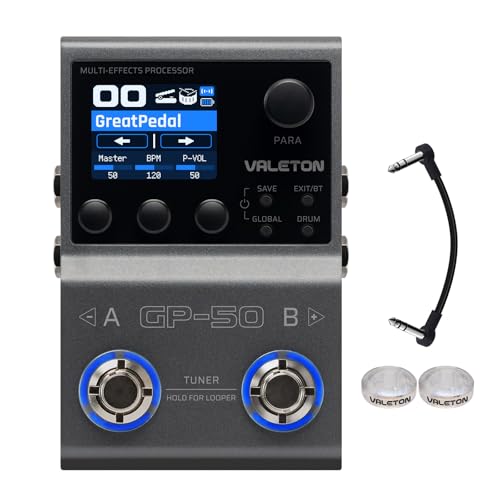
- 100+ HD effects with nine simultaneous modules
- NAM and IR loading with 100 patch slots
- Bluetooth app control and USB audio
Best For: Flexible modeling, recording, and portable pedalboard setups
Best Learning-Focused Floorboard

- 80 preset and 80 user patches
- 180-second looper with drum machine
- Assignable expression pedal and learning functions
Best For: Beginners, home practice, and extended looping
Best Feature-Rich Choice

- 240 effects with amp modeling and IR support
- 3.5-inch display with app and PC editing
- Looper, drums, Bluetooth, and USB-C
Best For: Players seeking extensive tone shaping and connectivity
Best All-in-One Portable Rig

- 125 effects with 99 presets and 11 modules
- Built-in wah/volume expression pedal
- Rechargeable battery, looper, drums, and USB audio
Best For: Mobile performers and versatile recording setups
Best Compact Practice Pedal

- Nine amp models and eight IR cabinets
- Six-to-eight-hour rechargeable battery
- Bluetooth, headphones, and mobile recording
Best For: Portable practice and simple recording
Most Versatile

- 200+ effects with flexible routing
- IR and NAM support
- Rechargeable battery and USB audio
Best For: Portable practice, live setups, and recording
Best for Beginners
AME-100 Multi-Effects Processor

- AI-assisted tone creation
- 147 effects and app support
- Battery-powered with OTG recording
Best For: Guided practice and mobile recording
Best for Foot Control

- Four multifunction footswitches
- 170 effects and 55 amp models
- Expression pedal and OTG recording
Best For: Hands-on live performance and practice
Best Practice Companion – Zoom G1X Four
The Zoom G1X Four is a practical pick among guitar effects processors under 200 for players who want a broad effects library, an integrated expression pedal, and useful practice tools in one compact unit. Its looper, rhythm patterns, tuner, amp models, and headphone capability make it suitable for home practice as well as basic recording and live experimentation.
Best For: Guitarists who prioritize practice features, tone exploration, and hands-on expression control.
Pros:
- Includes 71 effects and 13 amp models for varied tones.
- Built-in 30-second looper and 68 rhythm patterns support practice and songwriting.
- Integrated expression pedal, tuner, aux input, and headphone monitoring add flexibility.
- Guitar Lab software supports patch editing and tone building on Mac and Windows.
Cons:
- The looper is limited to 30 seconds.
- Its signal format and core design are aimed at straightforward multi-effects use rather than advanced modern loading features.
The G1X Four stands out when ease of practice and a large selection of built-in sounds matter more than extensive external file loading. It is a well-rounded, accessible option for exploring effects without assembling multiple pedals.
Best Modern Modeling Value – Valeton GP-50
The Valeton GP-50 is a feature-dense choice among guitar effects processors under 200, combining over 100 HD effects with NAM and cabinet IR loading. It is designed for players who want deeper signal-chain customization, app control, USB audio, and portable operation in a compact metal enclosure.
Best For: Guitarists and bassists seeking flexible digital modeling, downloadable tones, and recording connectivity.
Pros:
- Supports more than 100 HD effects and up to nine simultaneous modules.
- Loads up to 20 third-party cabinet IR files and 80 NAM files.
- Offers Bluetooth 5.0 app editing, USB audio, USB MIDI, and re-amping support.
- Includes a color LCD, 100 patch slots, rechargeable battery, and stereo outputs.
Cons:
- Its extensive loading and routing options may require more setup than a basic multi-effects pedal.
- The compact dual-footswitch layout may provide less direct control than a larger floorboard.
The GP-50 is the most technically expansive option in this group. Choose it if NAM, IR, wireless editing, and USB recording are priorities; choose a simpler unit if you mainly want immediate plug-in-and-play practice.
Best Learning-Focused Floorboard – MOOER GE100
The MOOER GE100 is a practical option among guitar effects processors under 200 for players who want many presets, an integrated expression pedal, and substantial looping time. Alongside its 66 effect types, it adds drum rhythms, a tuner, headphone output, and scale-and-chord learning functions.
Best For: Beginners and home players who want built-in lessons, long looping, and straightforward preset management.
Pros:
- Provides 80 preset patches, 80 user patches, and 66 effect types.
- Includes a 180-second looper and drum machine with varied rhythm patterns.
- Assignable expression pedal parameters support volume, wah, and tone control.
- Scale-and-chord learning functions add educational value for developing players.
Cons:
- Its larger 9.06-inch footprint may take more pedalboard space.
- The listed controls and connectivity are less extensive than those of more modern USB- and Bluetooth-equipped processors.
The GE100 makes a strong case for learners who will use its educational tools and 180-second looper. It is less focused on advanced file-based modeling, but its preset capacity and integrated pedal keep the setup approachable.
Best Hands-On Control – AME-200 Multi-Effects Processor
The AME-200 is a practical contender among guitar effects processors under 200 for players who want dedicated foot control and an amp-modeling setup with recording-oriented features. It combines four programmable footswitches with reverb, delay, modulation, a looper, drum patterns, and MNRS GNR and GIR loading support.
Best For: Performers who want more direct floor control for live transitions, looping, and compact recording rigs.
Pros:
- Includes four programmable footswitches for hands-on control.
- Provides amp modeling, reverb, delay, chorus, and flanger effects.
- Built-in tuner, 50 drum patterns, and a 60-second looper support practice and performance.
- Supports USB OTG recording, external expression control, and MNRS GNR/GIR loading.
Cons:
- Its listed 12-by-12-by-6-inch dimensions and 2.2-pound weight make it less compact than several alternatives.
- An external footswitch requires a TRS stereo cable with two 1/4-inch connectors.
- The notes specify a 12-volt power requirement, so power compatibility should be checked before setup.
The AME-200 is appealing when footswitch access is more important than minimal size. Its four-switch layout and recording features make it a performance-minded choice, while the external-switch requirement adds some setup considerations.
Best Feature-Rich Choice – MOOER GE100Pro
For guitarists comparing guitar effects processors under 200, the MOOER GE100Pro stands out as an expansive digital rig with amp modeling, 240 effects, app and desktop editing, and support for external IR files. Its 3.5-inch color screen and RGB lighting also make it practical for stage or home use.
Best For: Players who want deep tone customization, modern connectivity, looping, and a broad effect library.
Pros:
- Includes 240 effects, realistic amp modeling, and support for MNRS, NAM A2, and third-party IR files.
- Offers mobile and desktop editing through MOOER Cloud, plus Bluetooth audio and USB-C connectivity.
- Combines an 80-second stereo looper, drum rhythms, metronome patterns, and an expression pedal.
Cons:
- Its extensive features may require more setup and learning than a simpler multi-effects pedal.
- The listed standard model uses an AC adapter, so it is less portable than the battery-powered Li version.
The GE100Pro is a strong all-in-one option for musicians who value experimentation and editing flexibility. It is especially appealing when recording, rehearsing, or building detailed stage presets matters as much as basic effects.
Best All-in-One Portable Rig – SORAN Dual Stomp
Among guitar effects processors under 200, the SORAN Dual Stomp is designed for players who want many sounds, hands-free control, and battery-powered portability. It pairs 99 presets and 125 effects with amp and cab models, USB audio, looping, and a rechargeable battery.
Best For: Gigging, practicing, and recording guitarists who want a broad feature set with integrated wah and volume control.
Pros:
- Provides 99 presets, 11 simultaneous modules, 125 effects, and 80 amp and cab models.
- Includes a dual-mode expression pedal for wah or volume, plus a 40-second stereo looper and 100 drum patterns.
- Rechargeable battery supports up to six hours of continuous use, while USB audio supports recording and streaming.
Cons:
- The 2-inch screen is smaller than the display on some larger multi-effects units.
- Its large feature set may feel more involved for players who only need a few basic effects.
The Dual Stomp offers unusually broad functionality in a compact pedal, particularly for players who need expression control and rhythmic tools without extra equipment. Its rechargeable design adds flexibility for mobile practice and performance.
Best Compact Practice Pedal – LEKATO CUBE BABY
For shoppers seeking compact guitar effects processors under 200, the LEKATO CUBE BABY focuses on essential amp, cabinet, and time-based effects in a small rechargeable format. Bluetooth playback, headphone monitoring, and PC or phone recording make it particularly convenient for daily practice.
Best For: Home practice, portable playing, and guitarists who want straightforward recording and headphone support.
Pros:
- Offers nine amp models, eight IR cabinets, and support for loading third-party IR files.
- Built-in battery provides six to eight hours of use and can charge while operating.
- Includes Bluetooth playback, 3.5mm headphone output, and recording to a PC or mobile phone.
Cons:
- Its effect and amp selection is more limited than the larger multi-effects units in this roundup.
- The three preset modes are convenient, but players wanting extensive preset management may prefer a more advanced processor.
The CUBE BABY is a practical choice when portability and quiet practice matter more than a large effect library. Its rechargeable battery, headphone output, and recording support make it easy to use away from a full pedalboard.
Most Versatile – Valeton GP-150
For guitarists comparing guitar effects processors under 200, the Valeton GP-150 stands out for its broad modeling library, flexible routing, and recording-friendly connectivity. It combines more than 200 effects with IR and NAM support, a built-in rechargeable battery, an expression pedal, and USB audio functionality.
Best For: Players who want one portable processor for practice, live use, tone experimentation, and recording.
Pros:
- Includes 200+ effects and supports up to 12 effect modules simultaneously.
- Supports third-party IRs and NAM files, with storage for SnapTone and IR files.
- Built-in 3000mAh battery provides over six hours of playtime.
- Works as a 6-in/4-out USB audio interface with Bluetooth and MIDI support.
Cons:
- The extensive editing and modeling features may be more than beginners need.
- It is larger than the more compact AME-100.
The GP-150 is a particularly capable choice when flexibility matters most. Its looper, drum patterns, battery operation, and modern file support give it a strong feature set for both mobile players and home studios.
Best for Beginners – AME-100 Multi-Effects Processor
Among guitar effects processors under 200, the AME-100 is aimed at accessible tone creation and convenient practice. It offers 147 effects, app-based AI tone assistance, IR and ADT support, wireless audio features, and a rechargeable battery in a compact format.
Best For: Beginners and home players who want guided tone creation, simple practice tools, and mobile recording options.
Pros:
- AI Tone Companion can generate or modify tones from conversational descriptions through the app.
- Provides 147 effects across nine modules with 80 preset slots.
- Includes a looper, 40 drum styles, and 10 metronome types.
- Supports Bluetooth audio, USB OTG recording, and BLE-MIDI footswitch expansion.
Cons:
- The AI Tone Companion requires an AUDOTA STUDIO App login.
- Its 20-second looper is shorter than the loopers on the other listed processors.
The AME-100 prioritizes approachable controls and modern connectivity over the largest effect count. It is a practical option for learning, songwriting, livestreaming, and quick recording with a compatible smart device.
Best for Foot Control – MOOER GE150 Pro
The MOOER GE150 Pro is a strong contender among guitar effects processors under 200 for players who need hands-on control. Its four footswitches, expression pedal, 200 presets, extensive amp modeling, and OTG recording features support both performance and practice.
Best For: Gigging or practicing guitarists who want expanded foot control and a broad amp-and-effects palette.
Pros:
- Offers 170 effects, 55 amp models, 26 cabinet simulations, and 200 factory presets.
- Four multifunction footswitches provide flexible preset and performance control.
- Expression pedal supports parameter and volume control, including toe-tap switching.
- Includes an 80-second stereo looper, drum machine, AUX input, and OTG recording.
Cons:
- The listed standard GE150 Pro is corded rather than battery-powered.
- Its larger footprint and 1.1 kg weight may be less convenient for minimal pedalboards.
The GE150 Pro makes the most sense for players who value physical control during performances. Its four-switch layout, expression pedal, amp modeling, and practice features give it a performance-oriented design with useful recording connectivity.
How We Picked the Best Guitar Effects Processors Under 200
We focused on practical features that matter at this price: sound-shaping flexibility, amp and cabinet modeling, effects variety, preset capacity, foot control, connectivity, portability, and ease of use. We also considered whether each unit suits a specific use case, such as home practice, direct recording, rehearsals, or small live setups.
Feature lists can vary by firmware and regional package, so confirm current specifications before buying. In particular, check whether an expression pedal, power adapter, software access, or required cables are included.
Quick Comparison
| Best For | Features to Prioritize |
|---|---|
| Beginners and practice | Simple interface, presets, tuner, looper, and drum patterns |
| Live performance | Durable footswitches, fast patch changes, expression control, and reliable power |
| Recording and direct use | USB audio, cabinet or IR loading, amp modeling, and headphone output |
| Modern tone experimentation | NAM support, app editing, downloadable models, and flexible signal chains |
| Portable setups | Compact construction, rechargeable battery, and Bluetooth or mobile control |
Key Buying Factors for Guitar Effects Processors Under 200
Effects and Amp Modeling
Count more than the number of listed effects. Look for the types you actually use—overdrive, distortion, delay, reverb, modulation, pitch effects, and noise reduction—and check how many modules can run simultaneously. Amp, cabinet, IR, or NAM support can make a major difference when connecting directly to headphones, an interface, or a full-range speaker.
Controls and Patch Management
A large screen and dedicated footswitches make editing and live navigation easier. An expression pedal is useful for wah, volume, pitch, and parameter fades, while app control can simplify deep editing. Consider preset slots, patch spillover, tap tempo, and whether switching sounds requires multiple presses.
Connections and Recording
USB connectivity is valuable for firmware updates, editing, and recording. If direct recording matters, verify that the unit supports USB audio rather than only file transfer. Bluetooth, an auxiliary input, a headphone output, a looper, and a drum machine can make a processor much more useful for silent practice.
Power and Portability
For rehearsals and travel, check size, weight, adapter requirements, and battery runtime. Rechargeable models are convenient but may be less suitable if you need uninterrupted long sessions or easy replacement power.
Who Should Buy Which Guitar Effects Processors Under 200?
Beginners should prioritize an intuitive interface, built-in tuner, useful presets, and a looper or rhythm section over maximum effect counts. Players building a compact live rig should look for expression control, sturdy switches, clear patch navigation, and dependable outputs. Home recordists should favor USB audio, IR or cabinet loading, headphone monitoring, and flexible amp modeling. Guitarists who already understand signal chains may get more value from NAM support, downloadable captures, app editing, and extensive routing options. Finally, choose a battery-powered unit if portability is central to your setup; otherwise, a mains-powered processor may offer simpler long-session reliability.