Choosing the right tuner can make bass setup, rehearsal, and live performance faster and more reliable. The best options range from compact clip-on models to rugged pedal tuners and replacement machine heads.
This roundup compares 10 strong picks for different budgets and needs, with attention to tuning accuracy, visibility, installation, compatibility, and everyday durability.
Best 10 Guitar Tuners for Bass Guitars Picks for 2026
Best Compact Pick
Snark SN5X Clip-On Chromatic Tuner

- Bass- and guitar-focused frequency range
- Full-color display
- Front- or back-of-headstock placement
Best For: Portable everyday bass tuning
Best Stage Pedal

- Tank-tough stompbox construction
- 21-segment high-visibility LED meter
- Silent tuning and drop-tuning support
Best For: Live bass rigs and pedalboards
Best Hardware Upgrade
Guyker 1:17 Bass Tuning Machines

- Sealed 1:17 gear-ratio tuners
- Includes mounting hardware
- 2R + 2L four-string bass set
Best For: Compatible bass tuning-key replacements
Best Multi-Instrument Clip-On
Fender FCT-2 Professional Clip-On Tuner

- Dedicated bass and chromatic modes
- Color LCD needle display
- Dual-hinge clip with CR2032 battery
Best For: Players who tune multiple instruments
Budget Replacement

- For Precision Bass and Jazz Bass-style instruments
- 19:1 ratio with alloy-metal construction
- Includes four pegs and mounting hardware
Best For: Economical 4R replacement projects
Easy Clip-On Pick
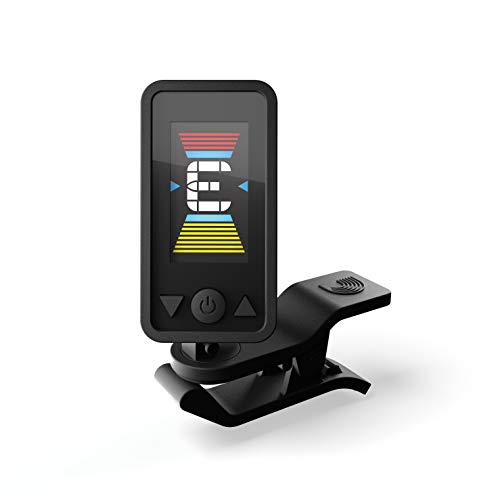
- Clips onto bass headstocks securely
- Full-color screen with dual swivels
- 435–450 Hz adjustable calibration
Best For: Portable everyday bass tuning
Precision Hardware Upgrade

- Four-right-hand set for compatible basses
- 1:20 ratio with metal construction
- Mounting hardware is included
Best For: Precision-oriented 4R hardware replacements
Stock Fender Replacement
American Standard/Deluxe Bass Tuners

- Right-handed replacement set
- Chrome metal construction
- Made for American Standard/Deluxe basses
Best For: Compatible right-handed Fender bass repairs
Everyday Clip-On Pick

- Vibration sensing for noisy settings
- 360-degree rotatable display
- Works with bass and multiple stringed instruments
Best For: Quick, portable tuning across several instruments
High-Ratio Hardware Upgrade

- 1:19 gear ratio
- 2L + 2R metal alloy set
- Fits specified 13.7 mm headstock holes
Best For: Compatible electric bass headstock replacements
Best Compact Pick – Snark SN5X Clip-On Chromatic Tuner
The Snark SN5X is a straightforward choice if you want guitar tuners for bass guitars in a lightweight clip-on format. Its full-color display and vibration-based headstock placement make it practical for everyday practice, and it can be positioned on either the front or back of the headstock.
Best For: Bassists who want a small, simple clip-on tuner for routine tuning.
Pros:
- Frequency range tailored to guitar and bass.
- Full-color display is easy to read.
- Lightweight 1.58-ounce design.
- Can be used on the front or back of the headstock.
Cons:
- Plastic construction may feel less rugged than a metal stage pedal.
- Uses a replaceable lithium battery.
The SN5X keeps the feature set focused and the physical design compact, making it a sensible option when portability and basic bass tuning matter most.
Best Stage Pedal – BOSS TU-3 Chromatic Tuner
The BOSS TU-3 is a strong choice among guitar tuners for bass guitars when you need a pedalboard-ready tuner for performances. Its durable stompbox housing, high-visibility 21-segment LED meter, accurate tuning, and automatic muting are designed for dependable stage use.
Best For: Performing bassists who need silent, visible tuning on stage.
Pros:
- Accurate to plus or minus one cent.
- High-brightness LED meter with adjustable brightness.
- Supports 6-string basses and drop tuning up to six semitones.
- Automatically mutes the signal while tuning.
Cons:
- Requires a 9-volt power source.
- Larger and heavier than a clip-on tuner.
- Its pedal format may be unnecessary for casual practice.
With stage-focused visibility, mute functionality, and broad tuning support, the TU-3 is better suited to a bass rig than to players seeking the smallest possible tuner.
Best Hardware Upgrade – Guyker 1:17 Bass Tuning Machines
The Guyker GK-150 set is different from electronic guitar tuners for bass guitars: these are replacement tuning machines for a four-string bass. The sealed design, 1:17 gear ratio, and included mounting hardware make them a potential upgrade, but you should verify the 13.7 mm peg-hole size and the 2R + 2L layout before ordering.
Best For: Bass owners replacing compatible tuning keys on Jazz-, Precision-, or similar-style instruments.
Pros:
- 1:17 gear ratio for precise adjustment.
- Sealed lubrication and cast housings.
- Includes screws, bushings, washers, nuts, and ferrules.
- Black metal finish and 2R + 2L configuration.
Cons:
- Not a tuner for measuring pitch; it is replacement hardware.
- Compatibility depends on the 13.7 mm peg-hole size and mounting layout.
- Designed for four-string basses.
This set makes sense for a hardware repair or upgrade, but fit is the deciding factor. Compare the supplied dimensions and layout with your bass before purchasing.
Best Multi-Instrument Clip-On – Fender FCT-2 Professional Clip-On Tuner
Fender FCT-2 Professional Multi-Instrument Clip-On Tuner for Guitar, Bass, Ukulele, and Violin
Check Price On AmazonThe Fender FCT-2 is a versatile option among guitar tuners for bass guitars, with dedicated Guitar, Bass, Ukulele, Violin, and Chromatic modes. Its vibration-sensing clip, color LCD needle display, dual-hinge headstock design, and included CR2032 battery make it convenient for both practice and multi-instrument setups.
Best For: Players who tune bass and several other instruments with one compact clip-on tuner.
Pros:
- Dedicated bass mode plus four other tuning modes.
- Vibration sensing works in loud or quiet environments.
- Color LCD needle display provides clear visual feedback.
- Includes a CR2032 battery and supports B0 to B7.
Cons:
- Plastic construction may be less rugged than a pedal tuner.
- Its broader multi-instrument feature set may be unnecessary for bass-only players.
The FCT-2 is a practical all-around clip-on when flexibility matters. Its dedicated bass mode and adjustable dual-hinge clip keep it useful without requiring a separate tuner for every instrument.
Budget Replacement – 4R Chrome Bass Tuning Pegs
These economy sealed tuning keys are a practical option for players seeking guitar tuners for bass guitars, particularly when replacing hardware on a common Precision Bass or Jazz Bass-style instrument. The set fits a 9/16-inch (14 mm) peg hole and uses a 19:1 gear ratio.
Best For: Precision Bass and Jazz Bass replacement projects using 4R tuner layouts.
Pros:
- Designed for common Precision Bass and Jazz Bass applications.
- 19:1 gear ratio supports fine tuning adjustments.
- Includes four pegs, nuts, ferrules, and screws.
- Alloy-metal construction with a chrome finish.
Cons:
- Compatibility depends on a 9/16-inch (14 mm) peg-hole size and 4R layout.
- The notes identify these as economy replacement tuners.
Check your bass’s peg-hole diameter, tuner orientation, and mounting pattern before ordering. For a compatible Precision or Jazz Bass-style setup, this kit covers the main replacement hardware in one package.
Easy Clip-On Pick – D'Addario Eclipse Bass Tuner
The D’Addario Eclipse is a convenient choice for players comparing guitar tuners for bass guitars and wanting a tuner that mounts directly to the headstock. Its color display, adjustable viewing angles, and stated quick, accurate tuning make it useful for practice, rehearsals, and performance setup.
Best For: Bassists who want a compact clip-on tuner with flexible headstock placement and an easy-to-read display.
Pros:
- Works with acoustic guitars, electric guitars, bass guitars, and ukuleles.
- Full-color vertical screen offers multiple viewing angles.
- Dual swivels support left- or right-handed mounting positions.
- Adjustable calibration range from 435–450 Hz.
Cons:
- Requires one included CR2 battery.
- It is a clip-on tuner rather than a replacement tuning-machine set.
Choose this model if you prefer a portable electronic tuner instead of changing the bass’s hardware. The strong clamp and adjustable screen make positioning straightforward, while the calibration control adds flexibility for precise tuning.
Precision Hardware Upgrade – Guyker 1:20 Bass Tuners
For a hardware replacement rather than a clip-on device, these Guyker tuners are worth considering among guitar tuners for bass guitars. The four-right-hand set uses a 1:20 gear ratio, cast metal housings, metal knobs, and included mounting hardware for compatible electric bass instruments.
Best For: Right-handed 4R bass layouts, including Jazz Bass, Ibanez-style, and Precision Bass-style replacement work.
Pros:
- 1:20 gear ratio is suited to precise tuning adjustments.
- Includes nuts, ferrules, screws, bushings, and washers.
- Metal construction with cast housings and metal knobs.
- Compact design is intended for smaller bass headstocks.
Cons:
- This set is specified for four right-hand tuners.
- Fit should be confirmed against the parameter drawing before purchase.
- It may not suit basses requiring a different tuner orientation or layout.
Measure the existing hardware and compare it with the supplied parameter information before ordering. If your bass uses a compatible 4R arrangement, the higher 1:20 ratio and complete mounting kit make this a focused replacement option.
Stock Fender Replacement – American Standard/Deluxe Bass Tuners
For players looking for guitar tuners for bass guitars in a direct replacement format, this Fender set is designed for American Standard and Deluxe bass models. The right-handed configuration, chrome finish, and metal construction make it a focused option for compatible bass repairs or upgrades.
Best For: Right-handed American Standard or Deluxe bass guitars needing compatible chrome tuning hardware.
Pros:
- Designed for American Standard and Deluxe bass tuners.
- Right-handed set for the appropriate headstock configuration.
- Chrome metal construction for a matching hardware finish.
Cons:
- Compatibility is focused on specific Fender bass models.
- Not a clip-on tuner for checking pitch during performance.
This is a specialized replacement set rather than a universal tuner. Confirm your bass model and right-handed layout before ordering.
Everyday Clip-On Pick – Rotatable Bass Guitar Tuner
Guitar Tuner Clip On 1 Pack Tuners for Acoustic Electric Guitar Bass Ukulele Violin banjo Tuning
Check Price On AmazonThis clip-on tuner is a practical choice for shoppers comparing guitar tuners for bass guitars and other stringed instruments. Its vibration sensor is intended to work in noisy surroundings, while the 360-degree rotatable screen helps you position the display for easier reading.
Best For: Bass players who want a compact, versatile clip-on tuner for quick tuning at home, rehearsal, or onstage.
Pros:
- Designed for bass, acoustic and electric guitar, ukulele, violin, banjo, and other stringed instruments.
- Vibration sensing supports tuning in noisy surroundings.
- 360-degree rotatable screen allows flexible viewing.
- Automatic shut-off activates after three minutes without continued operation.
Cons:
- Plastic construction may not feel as substantial as metal hardware.
- It is supplied as a single tuner.
With its broad instrument compatibility and adjustable display, this is the most flexible option here for routine pitch checks. Its plastic body keeps the design compact, while the automatic shut-off helps preserve usability over time.
High-Ratio Hardware Upgrade – QWORK Bass Tuning Pegs
QWORK Guitar Bass Tuners - Metal Tuning Pegs Keys (2L + 2 R) - Ratio Headstock Sealed Machine Head
Check Price On AmazonFor a hardware-focused approach to guitar tuners for bass guitars, the QWORK set provides four metal alloy tuning pegs with a 1:19 gear ratio. The 2L + 2R arrangement, sealed machine-head design, and included installation hardware suit compatible electric bass headstocks.
Best For: Electric bass owners replacing a complete set of compatible tuning pegs with modern 13.7 mm headstock holes.
Pros:
- Includes two left and two right tuning pegs for a balanced set.
- 1:19 gear ratio supports fine adjustment positioning.
- Metal alloy construction and sealed machine-head design.
- Package includes four ferrules and four screws.
Cons:
- Designed for modern 13.7 mm headstock holes, so fit must be confirmed.
- Listed compatibility is for electric guitar instruments and may not suit every bass.
This set offers a complete replacement package, but installation depends on the headstock dimensions and layout. Measure the existing holes before choosing it for your bass.
How We Picked the Best Guitar Tuners for Bass Guitars
We selected these products to cover the main ways bassists tune: clip-on chromatic tuners for portability, pedal tuners for stage use, and replacement tuning machines for upgrading or repairing a bass headstock. We considered tuning range, display readability, response to low bass notes, construction, installation requirements, tuning ratio, and compatibility with common bass designs.
Because “tuner” can mean either an electronic tuning device or a mechanical tuning key, check the product type carefully before buying. A clip-on or pedal tuner helps you tune an existing instrument; machine heads physically replace the bass’s tuning hardware.
Quick Comparison
| Type | Best For | Main Advantage | Watch For |
|---|---|---|---|
| Clip-on tuner | Practice, lessons, and travel | Compact and easy to use | Clip position and battery life |
| Pedal tuner | Rehearsals and live performance | Fast muting and clear visibility | Requires a pedalboard or power |
| Replacement machine heads | Repairs and upgrades | Improved tuning feel and stability | Mounting dimensions and side orientation |
Key Buying Factors for Guitar Tuners for Bass Guitars
Tuning Accuracy and Bass Response
Look for chromatic detection that reliably tracks low-frequency bass notes. A tuner with a responsive display and stable needle or indicator is easier to use than one that continually jumps between readings. For stage work, fast tracking and a readable display matter as much as headline accuracy.
Display, Visibility, and Operating Style
Clip-on tuners are convenient for acoustic or unplugged tuning and work well in noisy rooms because they sense vibration through the headstock. Pedal tuners are better when you need a large display, quick access, and signal muting while changing strings or tuning between songs.
Compatibility and Installation
For replacement tuners, verify the number of machines, left- and right-handed orientation, mounting-hole pattern, post diameter, bushing size, and string-post height. A 2L + 2R set may suit a particular headstock layout, while four right-facing tuners are intended for another design. Measure your existing hardware before ordering.
Tuning Ratio and Construction
Higher-ratio machine heads generally provide finer adjustment, while sealed gears can offer protection from dust and routine moisture. Open-gear designs may suit vintage-style instruments but can require more maintenance. Confirm whether the set includes screws, bushings, washers, and buttons.
Who Should Buy Which Guitar Tuners for Bass Guitars?
Choose a clip-on model if you want the simplest affordable tuner for home practice, lessons, travel, or quick setup. These are especially useful for bassists who play unplugged or switch between multiple instruments.
Choose a pedal tuner if you perform live and need a highly visible display, dependable operation, and silent tuning through a pedalboard. It is the most practical format for frequent stage use.
Choose replacement machine heads if your current tuners slip, feel rough, show excessive play, or are damaged. Match the specifications precisely rather than choosing by appearance alone, and have a technician handle installation if drilling or headstock modification is required.