If your headphones sound too quiet, thin, or hard to drive, the right headphone amplifier can make a big difference. It can add usable volume, cleaner dynamics, and better control without forcing you to replace your headphones.
This roundup focuses on practical picks for gaming, desktop listening, portable use, and multi-output sharing, so you can find the right match for your setup and budget.
Best 10 Headphone Amplifier Picks for 2026
Desktop DAC Amp for Gaming and Hi-Fi

- High-power desktop headphone amplifier with DAC
- USB-C, optical, coaxial, Bluetooth, and mic input
- Balanced, single-ended, and RCA outputs
Best For: Desktop users who want one flexible amp for gaming, music, and connected audio gear
Simple 4-Listener Splitter Amp

- Feeds four headphones from one source
- Independent volume for each listener
- Compact, plug-and-play metal build
Best For: Tracking sessions and rehearsals where four people need their own headphone level
Portable High-Impedance Headphone Amp
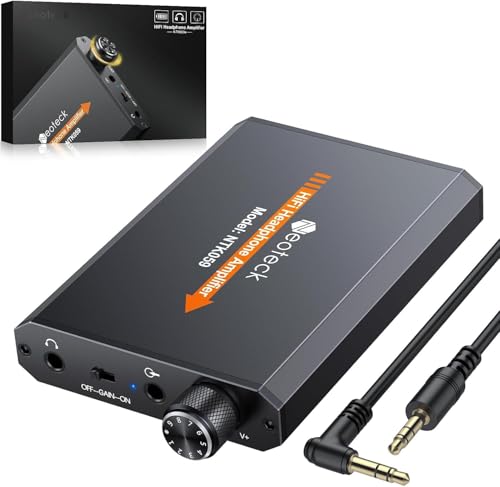
- Battery-powered amp for 16-300 ohm headphones
- Two-stage gain and volume control
- Compact aluminum body with 12+ hour battery life
Best For: Travelers and everyday listeners who need a small portable headphone amp
4-Channel Studio Monitor Amp with Bass Boost
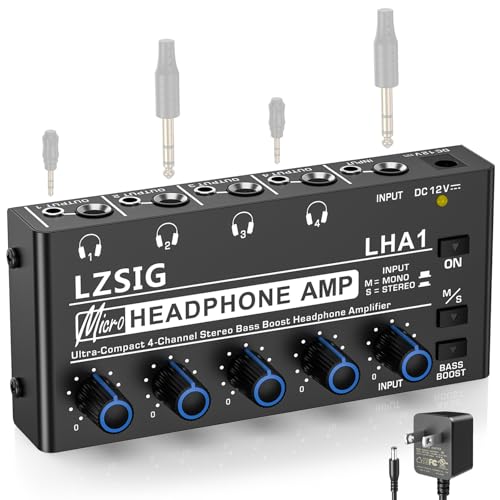
- Four-channel headphone amplifier for shared monitoring
- Independent volume plus stereo/mono switch
- Bass boost and metal road-ready build
Best For: Home studios and stage setups needing clean, rugged multi-headphone monitoring
Portable Monitor Pick
Donner EM1 Portable Analog Headphone Amplifier

- XLR/TRS input with locking connection
- Up to 12 hours of battery life
- Made for in-ear/on-ear monitoring
Best For: musicians and performers needing a portable monitor amp
Budget Bass Boost Choice
Neoteck 3.5mm HiFi Headphone Amp

- Bass switch for extra low-end control
- 3.5mm in/out with broad device support
- More than 8 hours of battery life
Best For: travel and daily listening with bass boost
Desktop Value Amp
Douk Audio U3 Mini Hi-Fi Headphone Amp

- Class A sound with warm, mellow tuning
- Drives many high-impedance headphones
- Op amp socket for DIY upgrades
Best For: desktop listeners who want strong drive and tuning flexibility
Gaming-Tuned Desktop DAC Amp
TOPPING DX1 II Gaming DAC Headphone Amplifier

- 10-band PEQ with independent L/R tuning
- Balanced output up to 1000mW x2 at 32Ω
- Works with PC, PS5, Switch, and more
Best For: Gamers and desktop listeners who want EQ control and balanced output
Simple Portable Analog Amp
TNP Portable 3.5mm Headphone Amplifier

- RCA and 3.5mm inputs with 3.5mm/6.35mm outputs
- Smooth analog volume knob with power switch
- Compact, lightweight, and easy to power
Best For: Affordable everyday headphone boosting with simple controls
Warm Tube Desktop Amp
Rockville TubeHead Tube Headphone Amplifier

- Dual 6K4 tubes for a warm, analog sound
- Supports 16-600 ohm headphones
- Compact aluminum build with low-noise circuitry
Best For: Listeners who want tube flavor in a small desktop amp
Desktop DAC Amp for Gaming and Hi-Fi – Fosi Audio K7
If you want a headphone amplifier that can anchor a full desktop setup, the Fosi Audio K7 is built for exactly that role. It combines a high-resolution DAC, strong output power, and broad input/output support, making it a practical pick for gaming, music, and work on the same unit.
Best For: Desktop listeners who want a versatile headphone amp for PC, PS5, Switch, and connected audio gear.
Pros:
- Supports USB-C, optical, coaxial, Bluetooth aptX HD/LL, and 3.5mm microphone input.
- Offers 4.4mm balanced, 3.5mm single-ended, and RCA outputs for flexible desktop connections.
- Rated up to 2100mW output power and supports PCM 384kHz/32bit and DSD256.
- Compact metal chassis with dual knobs, shortcut buttons, and a status display.
Cons:
- Designed as a desktop unit, so it is not a portable solution.
- May be more amp than needed for simple plug-and-play headphone use.
Overall, the K7 stands out as a feature-rich headphone amplifier for users who want one hub to handle multiple sources and outputs. Its strongest appeal is convenience without giving up the higher-end connectivity and power that demanding headphones can benefit from.
Simple 4-Listener Splitter Amp – Mackie HM-4
The Mackie HM-4 is a straightforward headphone amplifier for situations where several people need to monitor the same source. It keeps the setup simple: one input, four outputs, and individual volume control for each listener.
Best For: Small tracking sessions, rehearsals, and shared listening setups that need four independent headphone feeds.
Pros:
- Drives four headphones from a 1/4-inch or 1/8-inch output.
- Each of the four outputs has its own level control.
- Compact metal build can be mounted with velcro to a desk, rack, or stand.
- Plug-and-play design with no power supply needed.
Cons:
- Focused on splitting and monitoring rather than advanced sound shaping.
- Not intended for portable battery-powered use.
If you only need a dependable multi-output headphone amplifier, the HM-4 is easy to understand and easy to live with. Its simplicity is the point: it gives every listener control over their own volume without adding setup complexity.
Portable High-Impedance Headphone Amp – Neoteck 16-300 Ohm
The Neoteck portable headphone amplifier is made for people who want more output and cleaner listening from phones, laptops, and other small devices. With battery power, gain switching, and support for 16-300 ohm headphones, it suits travel and everyday listening alike.
Best For: Mobile listeners and headphone users who need a compact battery-powered amp for 16-300 ohm headphones.
Pros:
- Supports 16-300 ohm headphones for low-, mid-, and higher-impedance use.
- Includes a two-stage gain switch and volume control for easy adjustment.
- Uses a 1500mAh rechargeable battery with more than 12 hours of use.
- Compact, smartphone-sized aluminum design is lightweight and travel-friendly.
Cons:
- Uses a 3.5mm jack design, so it is not aimed at balanced desktop setups.
- Portable format means it is not built for multi-user monitoring.
For a compact headphone amplifier, the Neoteck focuses on portability and practical compatibility rather than desk-bound extras. It makes sense if you want a simple way to improve headphone output on the go without carrying a large setup.
4-Channel Studio Monitor Amp with Bass Boost – LZSIG LHA2 4-Channel
The LZSIG LHA2 is a 4-channel headphone amplifier designed for shared monitoring in home studios and stage setups. It combines independent level control, a bass boost function, and low-noise circuitry, making it a practical tool when several headphones need to hear the same source clearly.
Best For: Studio and stage users who need a rugged 4-channel amp for shared headphone monitoring.
Pros:
- Supports up to four pairs of 32-100 ohm headphones with 1/4-inch or 1/8-inch plugs.
- Independent volume control on each channel for personalized monitoring.
- Bass boost switch increases the 400-600 Hz and 3000-7200 Hz bands for fuller vocals and bass.
- Solid metal chassis and heavy-duty knobs are built for regular use.
Cons:
- Sold as a headphone amplifier, not a mixer.
- Best fit is for shared monitoring rather than high-end solo listening.
As a headphone amplifier for studios or live use, the LZSIG keeps the focus on clean distribution and user control. Its low-noise design and durable build make it a sensible choice when reliability matters more than extra features.
Portable Monitor Pick – Donner EM1 Portable Analog Headphone Amplifier
If you need a headphone amplifier for stage monitoring or noisy environments, the Donner EM1 is built around portability and straightforward analog connections. It supports XLR and TRS input, offers stereo/mono source switching, and includes volume control plus a 3.5mm output jack for in-ear or on-ear use.
Best For: Musicians and performers who want a compact monitor amp with locking inputs and solid battery life.
Pros:
- High-power output is suited to high-impedance professional headphones.
- XLR and TRS input connectors with locking mechanism add flexibility.
- Runs up to 12 hours on a single charge.
- Compact metal belt-pack clip makes it easy to carry.
Cons:
- Does not support the microphone.
- Designed for monitor use, so it is not aimed at casual all-in-one headset setups.
The EM1 is a practical choice if you want a portable headphone amplifier focused on clean monitoring, simple controls, and dependable battery-powered use.
Budget Bass Boost Choice – Neoteck 3.5mm HiFi Headphone Amp
The Neoteck headphone amplifier is a compact 3.5mm option for listeners who want more volume, added bass control, and a portable design. Its 16-600 ohm range, high SNR, and low THD+N are aimed at delivering louder, cleaner playback from common devices like phones, laptops, MP3 players, and portable CD players.
Best For: Everyday listeners who want a small headphone amplifier with bass boost and wide device compatibility.
Pros:
- Supports a wide 16-600 ohm range.
- Bass switch adds a more mellow, enhanced low end.
- Works with phones, laptops, MP3 players, iPods, and more.
- Rechargeable battery lasts more than 8 hours.
Cons:
- Not recommended to use while charging.
- Uses 3.5mm AUX input and output only, so it is less flexible than pro monitor amps.
This is a sensible headphone amplifier for travel or daily listening when you want easy portability, bass tuning, and clean sound without a bulky setup.
Desktop Value Amp – Douk Audio U3 Mini Hi-Fi Headphone Amp
The Douk Audio U3 is a mini desktop headphone amplifier built for home or office setups where you want stronger drive and a warmer, more detailed sound. It uses RCA input, supports 6.35mm and 3.5mm headsets, and is designed to handle many high-impedance headphones with a compact footprint.
Best For: Desktop listeners who want a small headphone amplifier with plenty of drive and DIY upgrade potential.
Pros:
- Class A design with smooth, warm, and mellow sound.
- Strong drive power for many high-impedance headphones.
- Pluggable op amp socket adds upgrade flexibility.
- Mini size is well suited to desktop audio systems.
Cons:
- Requires external DC power from 5V to 20V.
- Best suited to desktop use rather than true portable listening.
If you want a headphone amplifier for a desk setup, the U3 stands out for its drive strength, tuning flexibility, and easy fit beside a PC or stereo source.
Gaming-Tuned Desktop DAC Amp – TOPPING DX1 II Gaming DAC Headphone Amplifier
If you want a headphone amplifier that doubles as a DAC, DSP processor, and compact preamp, the TOPPING DX1 II is built for a flexible desktop setup. Its 10-band PEQ makes it practical for tuning headphones, gaming chat, or even speaker output, while the balanced design and low noise floor suit both sensitive IEMs and harder-to-drive headphones.
Best For: PC and console users who want detailed sound, EQ control, and balanced output in one compact unit.
Pros:
- 10-band PEQ with independent L/R tuning for custom sound shaping
- ES9039Q2M DAC and XMOS XU316 support high-resolution playback up to PCM 384kHz and DSD256
- Powerful fully balanced headphone output up to 1000mW x2 at 32Ω
- Compatible with PC, Mac, Nintendo Switch, and PS5 in UAC 1.0 or 2.0 modes
Cons:
- Designed as a desktop unit, so it is not the most portable option
- Best feature set depends on using TOPPING Tune software for PEQ control
- Some users may not need the extra DSP and preamp functions
This is a strong choice if you want more than a basic headphone amplifier and value tuning flexibility, clean output, and broad device support. It is especially appealing for gamers and desktop listeners who want one box to handle audio, EQ, and headset chat.
Simple Portable Analog Amp – TNP Portable 3.5mm Headphone Amplifier
The TNP Portable 3.5mm Headphone Amplifier is a straightforward headphone amplifier for listeners who want an easy volume boost and simple analog controls. With RCA or 3.5mm input options, a smooth volume knob, and compact powered operation, it fits neatly into home audio, studio, or portable use cases.
Best For: Buyers who want an affordable, simple inline amp for headphones and earphones.
Pros:
- Supports both 3.5mm and RCA input, with only one input used at a time
- 3.5mm volume control knob with power switch for easy adjustment
- Offers 3.5mm or 6.35mm stereo output flexibility
- Compact, lightweight design with Micro-USB or DC adapter power
Cons:
- Rated output power is modest at 100 milliwatts
- No advanced tuning, DSP, or balanced output options
- Best suited to basic amplification rather than feature-rich setups
This amp keeps the feature set simple, which can be a plus if you just need a practical headphone amplifier without extra complexity. It makes the most sense for users who value basic compatibility, small size, and manual volume control over advanced audio features.
Warm Tube Desktop Amp – Rockville TubeHead Tube Headphone Amplifier
The Rockville TubeHead is a tube-style headphone amplifier for listeners who want a warmer presentation and a compact desktop footprint. Its dual 6K4 vacuum tubes, low-noise circuitry, and broad 16-600 ohm support make it a practical pick for home listening, gaming, or studio monitoring.
Best For: Audiophiles who want tube character and a compact amp for a wide range of headphones.
Pros:
- Dual 6K4 vacuum tubes provide a warm, analog sound signature
- Supports headphones from 16 to 600 ohms
- Up to 180mW output at 32 ohms for solid desktop use
- Compact aluminum chassis with low-noise circuitry
Cons:
- Single-channel design in the supplied specs may limit some setup flexibility
- Not as powerful as higher-output desktop headphone amplifiers
- Tube sound may not suit listeners who prefer a fully neutral presentation
This is a good choice if your priority is character rather than maximum output or advanced features. It brings tube flavor in a small package while still covering a wide range of headphone impedances.
How We Picked These Headphone Amplifiers
We focused on real-world usefulness first: output power, compatibility, input and output options, portability, and whether the unit makes sense for common listening setups. A good Headphone Amplifier should match your headphones’ impedance and sensitivity, not just advertise high numbers.
We also looked for models that serve clear buyer needs, such as gaming DAC/amp combos, compact desktop units, multi-channel splitters, and portable amps for travel or on-the-go monitoring.
Quick Comparison
Some models are best for pure desktop listening with stronger drive and more connectivity, while others are better for simple volume boosting or sharing audio across multiple listeners. If you want a feature-rich all-in-one option, a DAC Headphone Amplifier is usually the most flexible. If you only need to split a source to several headphones, a simpler multi-out amplifier may be enough.
Key Buying Factors for a Headphone Amplifier
Power and Headphone Match
Check your headphone impedance and sensitivity before buying. Low-impedance earbuds and many gaming headsets need far less power than high-impedance studio headphones, and overpowering is less useful than having clean, stable output.
Inputs, Outputs, and Use Case
USB-C, optical, RCA, and 3.5mm inputs each fit different systems. For PCs and consoles, a USB or optical Headphone Amplifier may be ideal. For home audio gear, RCA support matters more. Balanced outputs can help certain headphones, but only if your headphones and cable support them.
Features That Matter
Look for volume control, bass boost, Bluetooth if you want wireless convenience, and EQ if you prefer tuning. For monitoring or sharing audio, multi-output designs are more important than extra sound-shaping features.
Who Should Buy Which Headphone Amplifier?
Gamers and desktop users: Choose a DAC Headphone Amplifier with USB connectivity and enough output for modern headsets and larger cans.
Portable listeners and monitors: Pick a compact or rechargeable model that is easy to carry and simple to power.
Multi-user setups: A 4-channel or multi-out Headphone Amplifier is the better fit for studios, practice spaces, and shared listening.
Budget buyers: A basic 3.5mm or RCA amp can be a smart way to improve volume and control without spending on advanced features.
The best Headphone Amplifier is the one that matches your source device, headphones, and listening habits. When those three line up, the improvement is often immediate and easy to hear.