If you want cleaner sound from a TV, game console, or desktop source, a headphone amp with optical input can make a real difference.
Below, we break down the best options for different setups, from simple DAC/amp combos to more powerful desktop solutions.
Best 10 Headphone Amplifiers with Optical Input Picks for 2026
Entry-Level DAC/Amp
Fosi Audio Q4 Desktop Converter

- USB, optical, and coaxial inputs
- 3.5mm headphone and RCA outputs
- Bass and treble controls in a compact metal shell
Best For: Affordable optical-input desktop listening and simple speaker hookup
High-Resolution Desktop DAC/Amp
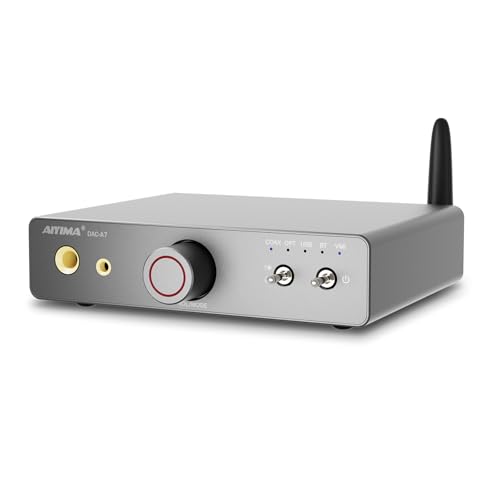
- ES9038Q2M decoding with OPA1612 op-amps
- Bluetooth 5.4 with LDAC and aptX-HD
- Drives 16–600 ohm headphones with high power output
Best For: Desktop listeners who want optical-ready DAC performance and Bluetooth
Compact Stereo Amp

- Optical, coaxial, RCA, Bluetooth, and USB inputs
- RMS 60Wx2 output with remote control
- Treble and bass knobs plus LED display
Best For: Small-room speaker setups that need optical input and easy controls
Balanced Desktop Headphone Amp

- Up to 4600mW+4600mW balanced output
- Class AB discrete amplification
- 4.4mm balanced and 3.5mm outputs
Best For: Power-hungry planar and high-impedance headphone users
Simple Analog Amp Choice
TNP Portable 3.5mm Headphone Amplifier

- Stereo 3.5mm or RCA input support
- 3.5mm and 6.3mm headphone outputs
- Portable design with analog volume knob
Best For: Users needing a compact analog headphone amp with straightforward controls
Desktop DAC Upgrade Pick
Fosi Audio Q6 Mini Desktop DAC

- Optical, coaxial, and USB-C digital inputs
- RCA and sub-out outputs for amps or speakers
- Up to 32bit/768kHz PCM and DSD512
Best For: Desktop systems needing a high-resolution DAC for a separate amp
All-in-One Tube Pick
Fosi Audio MC331 Tube Integrated Amp
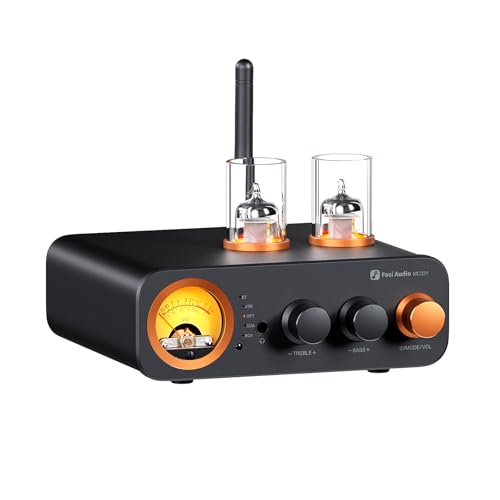
- Optical, coaxial, USB, Bluetooth, and RCA inputs
- Includes 3.5mm headphone output and pre-out
- Compact amp with remote and tone controls
Best For: Desktop or small-room listeners needing one box for speakers and headphones
Mini DAC Control Pick
Nobsound Q3 USB DAC Headphone Amp

- PC-USB, optical, and coaxial inputs
- RCA and 3.5mm headphone outputs
- Treble and bass controls in a mini aluminum case
Best For: Compact desk setups that need optical input and simple tone control
Gaming DAC Pick
Fosi Audio K5 Pro Headphone Amp
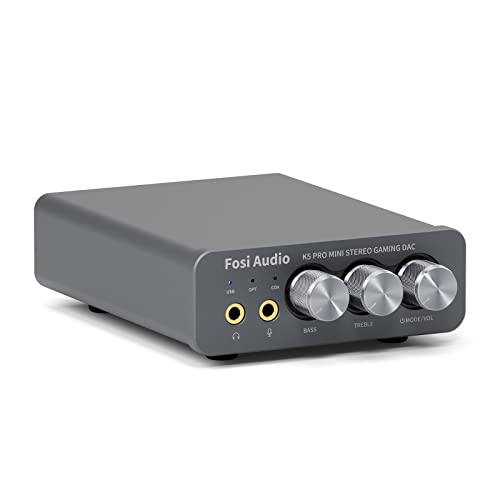
- USB Type-C, optical, and coaxial inputs
- 3.5mm headphone output with mic support
- RCA out for powered speakers or an external amp
Best For: Gaming and computer desks that need a compact DAC amp with mic support
Entry-Level DAC/Amp – Fosi Audio Q4 Desktop Converter
If you want headphone amplifiers with optical input for a simple desktop or TV setup, the Fosi Audio Q4 is a straightforward entry-level option. It combines USB, optical, and coaxial inputs with headphone and RCA outputs, making it easy to route digital audio to headphones or speakers without extra setup.
Best For: Users who want an affordable, compact DAC/headphone amp with optical input and easy plug-and-play use.
Pros:
- USB, optical, and coaxial inputs give it flexible source compatibility.
- 3.5mm headphone output and RCA outputs support both headphones and speaker systems.
- Bass and treble knobs let you fine-tune sound from the front panel.
- Compact metal design with included cables makes setup easy.
Cons:
- No microphone input is included.
- Best suited to entry-level use rather than high-power headphone driving.
The Q4 is a practical pick if you mainly need optical input plus basic headphone amplification in a small, low-fuss package. It focuses on convenience and connectivity rather than advanced desktop features.
High-Resolution Desktop DAC/Amp – AIYIMA DAC A7 Bluetooth
Among headphone amplifiers with optical input, the AIYIMA DAC A7 stands out for users who want a desktop unit with high-resolution decoding and wireless flexibility. It pairs optical-capable desktop use with Bluetooth 5.4, LDAC support, and a powerful headphone amp section for a wide range of headphones.
Best For: Listeners who want a feature-rich desktop DAC/headphone amp with optical use, Bluetooth, and strong output power.
Pros:
- ES9038Q2M decoding chip and OPA1612 op-amps are aimed at detailed sound.
- Supports Bluetooth 5.4 with LDAC and aptX-HD for high-resolution wireless audio.
- Drives headphones from 16 to 600 ohms with up to 1500mW at 32 ohms.
- Dual 3.5mm and 6.35mm headphone jacks plus output switching add flexibility.
Cons:
- Requires DC 5V 2A input power.
- It is more complex than a basic plug-and-play DAC/amp.
The DAC A7 is a strong match if you want more than a basic optical-input headphone amp. Its combination of high-end decoding, Bluetooth, and high output makes it especially appealing for mixed desktop and gaming setups.
Compact Stereo Amp – BT-398A Multi-Input Receiver
If you’re comparing headphone amplifiers with optical input and also need speaker power, the BT-398A is aimed more at compact stereo amplification than dedicated headphone use. It supports optical, coaxial, RCA, Bluetooth, and USB flash drive playback, so it can serve as a small all-in-one audio hub.
Best For: Buyers who want a budget-friendly compact amplifier with optical input for speakers, TV audio, or karaoke use.
Pros:
- Multiple inputs include optical, coaxial, RCA, Bluetooth, and USB.
- RMS 60Wx2 output suits small home theater or room setups.
- Remote control and treble/bass knobs make adjustment easy.
- Built-in LED display improves day-to-day usability.
Cons:
- It is a speaker amplifier first, not a dedicated headphone amp.
- Best fit is compact system use rather than high-end headphone listening.
The BT-398A makes sense if your main goal is a small amplifier with optical input that can handle several sources. Its value comes from versatility and simple control, especially for casual listening or small rooms.
Balanced Desktop Headphone Amp – FiiO JadeAudio GIGAS 1
For headphone amplifiers with optical input alternatives in a desktop chain, the FiiO JadeAudio GIGAS 1 is built for users who already have a DAC or source and want serious amplification. It does not include optical input itself, but it offers RCA and 3.5mm inputs, high-power balanced output, and support for demanding headphones.
Best For: Desktop headphone users who need a powerful balanced amp for planar or high-impedance headphones.
Pros:
- Up to 4600mW+4600mW balanced output provides very strong drive.
- Class AB discrete circuit is designed for smooth, natural sound.
- 4.4mm balanced and 3.5mm outputs support a variety of headphones.
- USB-C power with PD 12V support adds desktop flexibility.
Cons:
- No optical input is listed in the supplied specs.
- Requires an external source or DAC, since it is an amplifier-only design.
The GIGAS 1 is the most specialized amplifier here, aimed at users who prioritize output power and balanced headphone performance. If you already have a digital source, it can be a strong desktop amp upgrade.
Digital TV-to-Headphone Starter Pick – PROZOR 192KHz Optical DAC
If you need one of the simplest headphone amplifiers with optical input setups for a TV, console, or Blu-ray source, this PROZOR unit works as a digital-to-analog converter that outputs to RCA and a 3.5mm jack. It is aimed at PCM/LPCM two-channel audio, so it fits straightforward listening setups where you want to feed analog headphones or an amp from an optical source.
Best For: TV and home-cinema users who need an optical-to-analog adapter with a 3.5mm headphone output.
Pros:
- Converts Toslink/optical or coaxial digital audio to analog RCA and 3.5mm output simultaneously.
- Supports up to 192kHz/24-bit PCM input for high-resolution two-channel playback.
- Includes an optical cable and USB power cable for quick setup.
- Aluminum alloy housing and gold-plated RCA connectors for better shielding and durability.
Cons:
- Requires PCM/LPCM output from the source device to work properly.
- It is a DAC, not a headphone amp, so it does not directly add amplification on its own.
- For best results, it needs a proper 5V 1A power adapter and not a TV USB port.
This is a practical pick when your main goal is to bring optical audio into an analog headphone or amp chain without extra complexity. It is best suited to basic stereo listening rather than feature-heavy surround-sound use.
Simple Analog Amp Choice – TNP Portable 3.5mm Headphone Amplifier
For buyers comparing headphone amplifiers with optical input, this TNP model is best understood as a compact analog headphone amp that accepts 3.5mm or RCA input rather than optical directly. It is a straightforward way to add volume control and headphone drive to an existing analog source, especially when you already have a DAC or other line-level output feeding it.
Best For: Users who want a portable analog headphone amplifier with easy volume control and RCA/3.5mm input.
Pros:
- Supports stereo 3.5mm or RCA input, giving you flexible connection options.
- Includes 3.5mm and 6.3mm stereo headphone outputs.
- Analog volume knob with power switch for quick level adjustments.
- Portable, lightweight design with micro-USB or DC power options.
Cons:
- Does not include an optical input, so it is not a direct fit for optical-source setups.
- Connect only one input at a time.
- Output power is rated at 100 milliwatts, so it is more of a compact helper amp than a high-power desktop model.
This amplifier makes sense if your source is already analog and you mainly want a small, easy-to-use volume stage. If your system starts with optical audio, you will need a separate DAC before using it.
Desktop DAC Upgrade Pick – Fosi Audio Q6 Mini Desktop DAC
The Fosi Audio Q6 is a strong fit if you are building a headphone amplifiers with optical input setup around a separate DAC and amp. It accepts optical, coaxial, and USB-C digital input, then sends clean analog audio out through RCA or sub-out, making it a useful front-end for a home stereo amplifier or headphone amp.
Best For: Desktop systems that need a high-resolution optical DAC feeding a separate amplifier or powered speakers.
Pros:
- Optical, coaxial, and USB-C digital inputs for flexible source hookup.
- High-resolution conversion up to 32bit/768kHz PCM and DSD512.
- RCA and sub-out outputs for use with amplifiers, powered speakers, or a subwoofer.
- Compact aluminum-alloy enclosure with low-noise performance specs.
Cons:
- Cannot drive headphones or passive speakers directly.
- Works as a DAC only, so you still need a separate headphone amp for headphone listening.
- More of a desktop component than a portable all-in-one solution.
If you already have an amp and want a cleaner optical front end, this is the most capable option in the group. It is especially appealing when high-resolution playback and flexible digital inputs matter more than all-in-one convenience.
All-in-One Tube Pick – Fosi Audio MC331 Tube Integrated Amp
If you want headphone amplifiers with optical input that also double as a compact speaker amp, the Fosi Audio MC331 is built for flexibility. It combines a DAC, preamp, power amp, and headphone amp in one small unit, with optical, coaxial, USB, Bluetooth, and RCA inputs for easy source switching.
Best For: Desktop or small-room listeners who want one box for speakers and headphones.
Pros:
- Supports optical, coaxial, USB, Bluetooth, and RCA inputs
- Includes a 3.5mm headphone output and pre-out
- Compact design with 105W x2@4Ω speaker power
- Remote control plus bass and treble adjustment
Cons:
- 3.5mm headphone output only, not a dedicated full-size jack
- Tube styling may not appeal to buyers who prefer a purely modern look
The MC331 stands out if you want a desktop-friendly hub that can handle multiple digital sources while still driving bookshelf speakers. Its tube-and-VU-meter presentation adds personality, but the real draw is how much functionality it packs into a minimal footprint.
Mini DAC Control Pick – Nobsound Q3 USB DAC Headphone Amp
For shoppers comparing headphone amplifiers with optical input, the Nobsound Q3 keeps things simple and practical. It works as a compact USB DAC and headphone amp with optical and coaxial inputs, RCA output, and tone controls for users who want straightforward desktop audio.
Best For: Compact home or desk setups that need optical input, headphone output, and tone control.
Pros:
- PC-USB, optical, and coaxial inputs for flexible source support
- RCA and 3.5mm headphone outputs in a mini aluminum case
- Treble and bass controls for adjusting sound to taste
- Plug-and-play USB operation with no driver needed
Cons:
- Uses a 5V power supply, so it is best suited to desktop use
- Designed for basic stereo setups rather than feature-heavy systems
The Q3 is a good fit if you want a small, affordable-style control box with optical input and simple sound-shaping options. It focuses on practical connectivity and headphone support rather than extras, which makes it easy to place in a compact audio setup.
Gaming DAC Pick – Fosi Audio K5 Pro Headphone Amp
If you need headphone amplifiers with optical input for gaming or a PC desk setup, the Fosi Audio K5 Pro is aimed at that use case. It converts USB Type-C, optical, and coaxial sources to RCA and 3.5mm outputs, and it also adds microphone support plus bass and treble controls.
Best For: Gaming and computer setups that need a compact DAC, headphone amp, and mic input.
Pros:
- USB Type-C, optical, and coaxial input support
- 3.5mm headphone output with mic interface and bass/treble control
- RCA output for powered speakers or an external amp
- Compact external sound-card style design for PS5, PC, and Mac
Cons:
- Uses a 3.5mm headphone output instead of a full-size jack
- Best suited to desktop systems rather than larger home audio rigs
The K5 Pro is the most gaming-oriented option here, with optical input, mic support, and flexible outputs in a small footprint. If you want a desktop DAC amp that bridges headphones, speakers, and console or PC audio, it covers the basics well.
How We Picked the Best Headphone Amplifiers with Optical Input
We focused on models that make optical connectivity genuinely useful, not just available on the spec sheet. That means looking at DAC quality, headphone amp output, supported input types, and how well each unit fits common use cases like PCs, TVs, and gaming setups.
We also prioritized practical features such as easy switching between sources, usable volume control, compact footprints, and enough power for both easy-to-drive and more demanding headphones.
Quick Comparison
In this category, the biggest differences usually come down to power output, DAC implementation, and whether the device is built mainly for headphones, speakers, or both. Some Headphone Amplifiers with Optical Input are simple converter-amp combos for casual listening, while others are more capable desktop hubs with balanced outputs, Bluetooth, or speaker amp functions.
Key Buying Factors for Headphone Amplifiers with Optical Input
Input Compatibility
Check whether the optical input is the connection you will actually use most often, and confirm whether the unit also supports USB, coaxial, RCA, or Bluetooth. More inputs can make the setup more flexible, especially if you plan to switch between a PC, console, and TV.
Power and Headphone Match
Not all headphones need the same amount of power. High-impedance or low-sensitivity models benefit from a stronger amp stage, while efficient headphones need less power and may sound just fine with a smaller unit.
DAC Quality and Feature Set
Since optical input is digital, the DAC matters. Look for clear specs, low-noise design, and useful extras like tone controls, gain settings, or support for higher sample rates if you care about fine detail.
System Role
Decide whether you need a dedicated headphone amp or a broader desktop audio box that can also drive powered speakers or a full stereo system. The best choice depends on whether headphones are your main focus or just one part of a larger setup.
Who Should Buy Which Headphone Amplifiers with Optical Input?
If you want a simple, affordable upgrade for TV or PC audio, choose a compact DAC/amp with optical input and straightforward controls. If you use demanding headphones, move up to a higher-power desktop model with stronger amplification. If you want one device for headphones and speakers, look for a hybrid unit that can handle both without adding clutter.
For gaming and everyday desktop use, prioritize convenience, low noise, and easy source switching. For music-first listeners, focus more on DAC refinement, amp quality, and output power than on extra features you may never use.