Choosing the right keyboard amp can make a stage piano sound clearer, fuller, and more convincing in any room. The best options balance clean headroom, useful EQ, and enough power for your space.
This roundup covers 10 strong picks for players who need a reliable keyboard amplifier for stage piano practice, rehearsals, and live performance.
Best 10 Keyboard Amplifier for Stage Piano Picks for 2026
Compact Practice Amp
- 20 watts of clean power
- 8-inch speaker with two channels
- Headphone out for quiet practice
Best For: Small-room practice and simple setup
Full-Range Value Amp
AODSK 35W Dual-Speaker Keyboard Option

- 35W output with woofer and tweeter
- Treble, mid, and master controls
- AUX in plus recording output
Best For: Players wanting flexible features in a compact amp
Stage-Ready Mixer Amp

- 100 watts for live use
- 12-inch two-way speaker system
- Four-channel mixing with mic input
Best For: Gigging players who need volume and routing
Budget Multi-Use Amp
Donner DKA-20 for Practice and Small Gigs

- 20W with 8-inch woofer and tweeter
- Two channels with 3-band EQ
- AUX, headphone, and DI outputs
Best For: Affordable practice and small-performance setups
Premium Stage Power
Roland KC-400 4-Channel Stereo Mixing Keyboard Amplifier, 150 Watt

- 150 watts with a 12-inch woofer and horn tweeter
- Four stereo input channels plus stereo auxiliary input
- Stereo Link support for chaining another KC-400
Best For: Stage pianists who need higher power and flexible mixing
Flexible Budget Speaker
COOLMUSIC DM80 80-Watt Keyboard Amplifier with Bluetooth

- 80 watts with a 10-inch woofer and 3-inch tweeter
- Bluetooth, USB, and two inputs for multiple sources
- 3-band EQ for simple tone shaping
Best For: Players who want an affordable amp for keyboard and backing tracks
Compact Value Pick
Roland KC-80 3-Channel Mixing Keyboard Amplifier, 50 Watt

- 50-watt compact design with a 10-inch woofer
- Three input channels plus dedicated auxiliary input
- Includes XLR mic, line, headphones, and sub outputs
Best For: Pianists who want a compact amp for practice and small stages
High-Power PA Pick
Behringer KXD12 600W Keyboard Amplifier

- 600 watts with a bi-amped PA-style design
- 12-inch Turbosound speaker plus 1-inch driver
- 4 channels and 100 FX presets for live flexibility
Best For: Live players who need a loud, full-featured stage piano amp
Best Simple Pick
Donner DA-35 Keyboard and Drum Amplifier

- 35 watts with two speakers for modest-volume use
- 2 channels, 3-band EQ, and wireless audio
- DI out and headphone output add flexibility
Best For: Practice-oriented players needing a compact amp for small keyboard setups
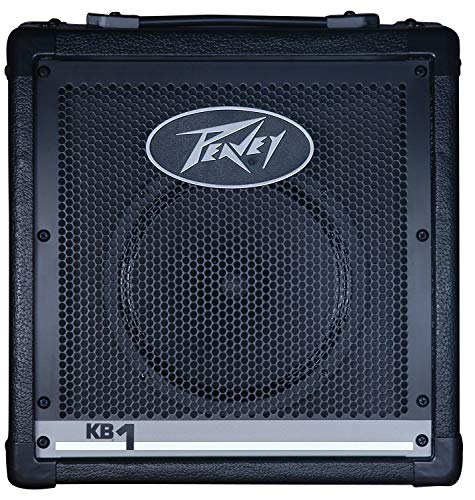
Compact Practice Amp – Peavey KB 1 for Small Spaces
If you want a keyboard amplifier for stage piano that is simple, compact, and easy to set up, the Peavey KB 1 is built for straightforward practice use. Its 20-watt output, 8-inch extended-range speaker, and dual channels make it a practical choice for small rooms and quick playing sessions.
Best For: Players who need a compact amp for home practice, small rehearsal spaces, or light keyboard use.
Pros:
- 20 watts of clean power for modest-volume use
- 8-inch extended-range speaker suits keyboards and synths
- Two separate channels with 2-band EQ per channel
- Headphone output for silent practice
Cons:
- Lower power than larger stage-ready keyboard amps
- Best suited to smaller spaces rather than loud performances
Overall, the KB 1 focuses on simplicity and portability more than big-stage output. If your priority is a no-fuss keyboard amp for stage piano practice, it delivers the basics cleanly and compactly.
Full-Range Value Amp – AODSK 35W Dual-Speaker Keyboard Option
The AODSK 35W is a versatile keyboard amplifier for stage piano players who want more full-range sound in a compact cabinet. With an 8-inch woofer, 2-inch tweeter, and three-band tone control, it is designed to handle keyboards, synthesizers, and other instruments with clear separation.
Best For: Keyboard players who want a budget-friendly amp with full-range sound and flexible input options.
Pros:
- 35-watt output with dual-speaker design
- 8-inch woofer plus 2-inch tweeter for broader frequency coverage
- Treble, mid, and master volume controls for tone shaping
- AUX input and recording output add practice and recording flexibility
Cons:
- Designed primarily as a drum amp, though it is compatible with keyboards
- Three-month warranty is shorter than many buyers may prefer
If you need a compact amp that can support stage piano, synth, and practice workflows, this model offers a lot of connectivity for the size. Its dual-speaker setup makes it the most full-range option in this group without jumping to a larger stage amp.
Stage-Ready Mixer Amp – Roland KC-200 for Larger Gigs
For a keyboard amplifier for stage piano that is built to handle more volume and routing, the Roland KC-200 stands out with 100 watts of power and a 12-inch two-way speaker system. Its four-channel onboard mixer, aux inputs, and output options make it well suited to players who need a more capable live setup.
Best For: Gigging keyboardists who need stronger output, multiple inputs, and stage-friendly connectivity.
Pros:
- 100 watts of power for higher-output use
- 12-inch woofer and tweeter for a fuller speaker system
- Four line input channels plus auxiliary input options
- XLR mic input, headphone out, and sub out increase flexibility
Cons:
- Much larger and heavier than compact practice amps
- More amp than casual home players may need
The KC-200 is the most performance-oriented option here and is the best match when stage piano needs to be heard clearly in a live mix. If you want a practical keyboard amp with real gigging capability, this Roland is the strongest fit.
Budget Multi-Use Amp – Donner DKA-20 for Practice and Small Gigs
The Donner DKA-20 is a versatile keyboard amplifier for stage piano players who want a small amp with useful extras. It combines 20 watts of power, two channels, a 3-band EQ, and an 8-inch woofer plus 2-inch tweeter layout for a flexible practice or casual performance setup.
Best For: Players who want an affordable, multi-input amp for practice, jamming, or small performances.
Pros:
- 20-watt output with two-speaker design
- Two channels with separate volume controls
- 3-band EQ plus gain and boost controls
- AUX input, headphone out, and DI output add versatility
Cons:
- Lower power than larger stage amps
- Best for smaller spaces rather than loud band settings
This Donner model packs a useful feature set into a compact amp, especially if you need keyboard, aux, and mic support in one unit. For stage piano practice and smaller live uses, it offers strong value and a lot of control for the size.
Premium Stage Power – Roland KC-400 4-Channel Stereo Mixing Keyboard Amplifier, 150 Watt
If you want a keyboard amplifier for stage piano that can handle a more demanding setup, the Roland KC-400 is built for exactly that kind of work. Its 150-watt output, 12-inch woofer, horn tweeter, and four stereo input channels make it a strong fit for players who need room for keys, click tracks, and additional sources on stage.
Best For: Stage pianists who need higher power, flexible mixing, and stereo expansion.
Pros:
- 150 watts of power for larger stage and rehearsal use
- Four stereo input channels plus stereo auxiliary input for flexible routing
- Custom two-way speaker system with 12-inch woofer and horn tweeter
- Stereo Link function lets you chain another KC-400 for more inputs and true stereo sound
Cons:
- Heavier than smaller practice-oriented amps at 54 pounds
- May be more amplifier than needed for very compact home setups
Overall, the KC-400 is the most stage-ready option here, especially if you value clean mixing and expandability over portability. It’s a practical choice when your piano rig needs headroom and control rather than just basic volume.
Flexible Budget Speaker – COOLMUSIC DM80 80-Watt Keyboard Amplifier with Bluetooth
The COOLMUSIC DM80 is a practical keyboard amplifier for stage piano if you also want a speaker that can handle other instruments and playback sources. With 80 watts, a 10-inch woofer, Bluetooth, USB connectivity, and a 3-band EQ, it gives you a straightforward way to cover practice, small gigs, and multi-source monitoring.
Best For: Players who want an affordable, versatile amp for keyboard, backing tracks, and compact live use.
Pros:
- 80-watt output is suitable for home practice and small gigs
- Bluetooth and USB support make it easy to play backing tracks
- Two inputs let you run multiple signals at once
- 3-band EQ helps shape lows, mids, and highs with simple control
Cons:
- Smaller 10-inch speaker limits the scale compared with larger stage amps
- Less mixer-style flexibility than dedicated keyboard amps with more channels
For stage piano players who want convenience and broad compatibility, the DM80 offers a lot of utility in a compact format. It makes the most sense when Bluetooth and easy setup matter as much as amplification.
Compact Value Pick – Roland KC-80 3-Channel Mixing Keyboard Amplifier, 50 Watt
If you need a smaller keyboard amplifier for stage piano without giving up proper onboard mixing, the Roland KC-80 is a strong compact option. Its 50-watt design, 10-inch woofer, dedicated auxiliary input, and three input channels make it a practical fit for simple rigs, rehearsals, and lighter live setups.
Best For: Pianists who want a compact, affordable amp for practice and small-stage use.
Pros:
- Compact 50-watt design is easier to place and transport
- Three input channels plus dedicated auxiliary input for simple mixing
- Custom two-way speaker system with 10-inch woofer and tweeter
- XLR mic input, line output, headphones output, and sub output add useful connectivity
Cons:
- Less power than larger stage-oriented keyboard amps
- Not as expandable as a higher-channel model
The KC-80 is a sensible choice when portability and straightforward operation matter more than maximum volume. For smaller stage piano setups, it provides the core features most players actually need.
Budget 2-Channel Amp – Coolmusic 100W Keyboard Speaker with Wireless Audio
If you need a straightforward keyboard amplifier for stage piano use, the Coolmusic DM100 is built around a simple 2-channel design with 100 watts of power, a 10-inch woofer, and a 3-inch tweeter. Its 3-band EQ and DI out make it practical for rehearsals, small gigs, and situations where you want to connect to another speaker or a mixing console.
Best For: Players who want an affordable, easy-to-use keyboard amp with basic stage-ready connectivity.
Pros:
- 100-watt output gives it more headroom than a small practice amp.
- 2-channel layout supports keyboard and other instrument inputs.
- 3-band EQ helps you shape sound quickly for different rooms.
- DI out adds flexibility for expanding your setup.
Cons:
- Designed as an electric drum amp, so it is not a dedicated stage piano amplifier.
- Only 2 channels, so it is less versatile than larger PA-style units.
The DM100 is a practical pick if you want a budget-friendly keyboard amplifier for stage piano use and value simple controls over advanced effects. It covers the essentials well and gives you useful output options without adding complexity.
High-Power PA Pick – Behringer KXD12 600W Keyboard Amplifier
For a keyboard amplifier for stage piano setups that needs serious output, the Behringer ULTRATONE KXD12 stands out with 600 watts, a bi-amped design, and a 12-inch Turbosound speaker. It is built more like a compact PA system than a basic practice amp, and the built-in Klark Teknik multi-FX section adds useful processing for live playing.
Best For: Keyboard players who need high volume, multiple channels, and onboard effects for live performance.
Pros:
- 600-watt bi-amped design delivers substantial power for live use.
- 12-inch Turbosound speaker and 1-inch driver provide full-range output.
- 4-channel layout is helpful for stage setups with multiple sources.
- Klark Teknik FX processor includes 100 presets for added versatility.
Cons:
- Likely more amp than you need for small practice spaces.
- Heavier-duty PA-style design may be less convenient than compact keyboard amps.
If you want a more powerful, gig-oriented keyboard amplifier for stage piano performance, this model offers the strongest feature set in the group. Its mix of power, channels, and effects makes it a solid all-in-one live solution.
Best Simple Pick – Donner DA-35 Keyboard and Drum Amplifier
The Donner DA-35 is a compact option for anyone looking for a keyboard amplifier for stage piano practice, small sessions, or casual performance. It offers 35 watts, two speakers, 2 channels, a 3-band EQ, and wireless audio connection, giving you a simple setup with enough controls for basic tone shaping.
Best For: Musicians who want a compact, flexible amp for practice, rehearsals, and small-volume keyboard use.
Pros:
- Two speakers and 35 watts are suitable for modest-volume playing.
- 2-channel input with separate volume controls supports multiple sources.
- 3-band EQ and wireless audio add useful everyday convenience.
- DI out and headphone output expand its practice and connection options.
Cons:
- 35 watts may be limited for larger stage piano performances.
- Primarily designed as a drum amp rather than a dedicated keyboard amp.
- Best suited to small rooms instead of louder live stages.
The DA-35 makes sense if portability and straightforward controls matter more than raw power. It is a sensible choice for players who want a compact keyboard amplifier for stage piano practice and occasional small-scale use.
How We Picked the Best Keyboard Amplifier for Stage Piano
We focused on clean sound reproduction, enough power for the intended venue, channel flexibility, speaker size, portability, and practical extras such as aux input, DI out, Bluetooth, and onboard EQ. For a Keyboard Amplifier for Stage Piano, clarity matters more than heavy coloration, so models with a straightforward, piano-friendly response ranked higher.
Quick Comparison
Smaller 20W to 50W amps are best for home practice, quiet rehearsals, and personal monitoring. Midrange 80W to 150W options suit band practice and small gigs. Higher-output units like the 600W class are better for players who want more stage volume, broader coverage, or a more PA-like setup.
Key Buying Factors for Keyboard Amplifier for Stage Piano
Power and Headroom
Stage piano tones need clean headroom so loud passages do not distort. If you play with a drummer or in a larger room, choose more wattage than you think you need.
Speaker Configuration
Larger woofers often deliver stronger low-end body, while tweeters help preserve the attack and sparkle of piano sounds. Stereo or multi-speaker designs can improve spread, especially for layered patches.
Inputs and Flexibility
Multiple channels are useful if you also run a microphone, backing track, or second instrument. Aux or wireless audio can make practice and rehearsal easier, while DI out matters for live sound reinforcement.
EQ and Tone Shaping
A simple 3-band EQ is often enough to tame boomy lows or harsh highs. This is especially helpful when a Keyboard Amplifier for Stage Piano is used in different rooms with different acoustics.
Who Should Buy Which Keyboard Amplifier for Stage Piano?
If you mostly practice at home, a compact low-watt amp is usually the most affordable and space-saving choice. Players rehearsing with a band should look at mid-power models with multiple channels and stronger low-end response. Gigging musicians who want maximum clarity, broader coverage, and more flexible routing should prioritize higher-powered keyboard amps with DI output and more advanced tone controls.
In short, match the amp to your room size, volume needs, and how often you’ll connect other gear. That is the fastest way to get the best results from a Keyboard Amplifier for Stage Piano without overspending.