If you want serious bass tone without hauling a heavy rig, a lightweight bass amplifier head is one of the smartest upgrades you can make. Today’s compact heads deliver enough power for rehearsals, small venues, and even larger stages when paired with the right cabinet.
In this roundup, we focus on models that balance portability, reliable output, and practical features so you can find the best fit for practice, rehearsal, or gigging.
Best 10 Lightweight Bass Amplifier Head Picks for 2026
Portable Micro Head
TC Electronic THRUST BQ250 250W Bass Head

- 250 watts in a 5.2 lb portable micro head
- MOSFET preamp plus THRUST compressor
- Compact stage/studio design with low-end focus
Best For: Players who want a tiny, easy-to-carry head for rehearsals and gigs
High-Output Compact Head
Fender Rumble 800 HD Bass Amplifier
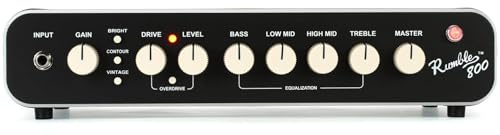
- 800 watts in a 5.8 lb head
- Four-band EQ and switchable overdrive
- XLR line out plus headphone output
Best For: Gigging players who want high power and flexible direct-out features
Power-Dense Mini Head
Peavey MiniMAX 600-Watt Mini Bass Amp Head

- 600 watts RMS into 4 ohms
- DDT speaker protection and TransTube gain boost
- 3-band EQ with Punch, Mid-shift, and Bright controls
Best For: Players who want compact power with simple tone shaping
Ultra-Compact Micro Head
TC Electronic BH250 Bass Guitar Amplifier Head

- 250 watts with class-D amplification
- About 4.9 pounds for easy transport
- TonePrint effects plus integrated tuner
Best For: Bassists who want maximum portability with tuning and effects features
Hybrid Tube Practice Head

- 12AX7 tube preamp with warm, punchy tone
- Bluetooth, headphone out, and cab simulation for practice
- Compact 2.9 lb head with compressor, EQ, and FX loop
Best For: Players wanting a portable head with tube tone and practice features
Pocket Power Head
Warwick Gnome Bass Amplifier Head
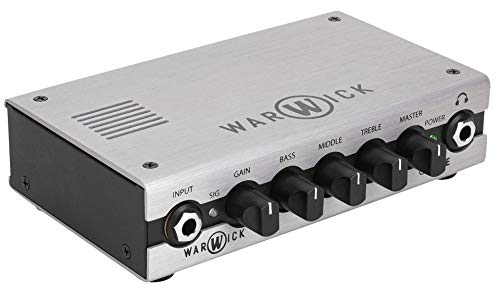
- 200 watts at 4 ohms in a 2.12 lb design
- 3-band EQ plus XLR DI and headphone out
- Simple solid-state head for portable bass rigs
Best For: Bassists who want high output in a tiny, easy-to-carry head
Stage-Ready Lightweight Head
Ampeg Venture V7 700W Bass Head

- 700 watts in a compact, portable head
- Legacy preamp with sweepable mids and voicing switches
- XLR DI, effects loop, aux in, and phones out
Best For: Gigging players who need compact size and high power
Editor's Pick

- 500-watt Class D power in a 6.2-pound head
- Four-band EQ with selectable low-mid and high-mid frequencies
- BOSS Tone Studio access plus cabinet calibration tools
Best For: Bassists wanting a compact, high-feature amp head with pro control.
Classic Tone Choice
Bulldog 77 Head 100W Bass Amplifier Head

- 100W bass head with classic Hiwatt tone
- 5-band EQ and bypassable transparent limiter
- Portable 10.6-pound design for easier transport
Best For: Players who want a portable, classic-voiced bass head with simple control.
Ultra-Portable Pick

- Tiny 16-ounce bass head for easy transport
- 5W output with 3-band EQ and gain control
- FX loop, aux in, and 4-16 ohm cabinet support
Best For: Musicians who need an ultra-compact bass head for practice and portability.
Portable Micro Head – TC Electronic THRUST BQ250 250W Bass Head
TC Electronic THRUST BQ250 250 Watt Portable Bass Head with Mosfet Preamp and Thrust Compressor
Check Price On AmazonIf you want a lightweight bass amplifier head that is easy to carry but still built for stage and studio use, the TC Electronic THRUST BQ250 is a strong compact option. It pairs a 250-watt output with a MOSFET preamp and THRUST compressor, so it is aimed at players who want a portable rig with a compressed, low-frequency-focused sound.
Best For: Bassists who want a very small, portable head with built-in compression for practice, rehearsals, and gigging.
Pros:
- 250-watt portable micro head for stage and studio use
- MOSFET preamp and THRUST compressor for a controlled bass tone
- Very light at about 5.2 pounds
- Compact footprint makes it easy to fit into a grab-and-go setup
Cons:
- Only one output channel
- Sound profile is geared toward a compressed low-end feel rather than maximum versatility
- Fewer onboard controls than larger heads
For players prioritizing portability, this head delivers a practical mix of power and convenience in a small package. Its main appeal is the combination of lightweight handling and built-in compression, which can make setup simpler for everyday bass duties.
High-Output Compact Head – Fender Rumble 800 HD Bass Amplifier
The Fender Rumble 800 HD is a lightweight bass amplifier head for players who want a lot of power without a bulky rig. With 800 watts, a four-band EQ, switchable overdrive, and XLR line out, it is designed for bassists who need flexible tone shaping and direct-output convenience in a compact head.
Best For: Gigging bassists who want high power, onboard tone control, and a direct-out-friendly setup.
Pros:
- 800-watt output in a compact 5.8 lb head
- Four-band EQ for broad tone control
- Switchable overdrive circuit adds extra drive when needed
- XLR line out with ground lift and stereo headphone output
Cons:
- Higher power rating may be more than some players need
- Best value depends on whether you need the direct-out features
- Designed around Fender Rumble speaker cabinet compatibility
This is a strong pick if you want a lightweight bass amplifier head that can cover louder stages and direct-to-board use. Its blend of power, EQ flexibility, and practical outputs makes it a versatile option for working bass players.
Power-Dense Mini Head – Peavey MiniMAX 600-Watt Mini Bass Amp Head
The Peavey MiniMAX is a lightweight bass amplifier head built for players who want a compact format with serious output. It delivers 600 watts RMS into 4 ohms and adds features like DDT speaker protection, TransTube gain boost, and a 3-band EQ with Punch, Mid-shift, and Bright controls.
Best For: Bassists who want a small head with strong output and simple tone-shaping tools.
Pros:
- 600 watts RMS into 4 ohms
- DDT speaker protection for added safety
- TransTube gain boost for extra drive at the pre-gain stage
- 3-band EQ with Punch, Mid-shift, and Bright controls
Cons:
- Feature set is focused on core controls rather than extensive extras
- Best performance depends on a 4-ohm setup for full rated output
- No built-in tuner or direct-out features listed in the supplied notes
If you want a lightweight bass amplifier head with a strong power rating and straightforward control layout, the MiniMAX is easy to put to work. It keeps the design practical while adding protection and voicing tools that help it fit into many bass rigs.
Ultra-Compact Micro Head – TC Electronic BH250 Bass Guitar Amplifier Head
The TC Electronic BH250 is a lightweight bass amplifier head built for players who want a very small rig with useful extras. It offers 250 watts of class-D power, a TonePrint knob for signature effects, and an integrated tuner with extended range for 4-, 5-, and 6-string basses.
Best For: Bassists who want a compact head with onboard tuning and easy-to-use effect options.
Pros:
- 250-watt portable micro head for stage and studio use
- Class-D amp design keeps it compact and lightweight at about 4.9 pounds
- Integrated tuner supports extended range for 4-, 5-, and 6-string basses
- TonePrint knob adds access to signature effects
Cons:
- Lower output than the larger heads in this group
- Single-channel layout keeps the interface simple rather than expansive
- Best suited to players who value portability over maximum feature depth
This is one of the easiest heads to carry if portability is your top priority. The BH250 stands out by combining a small footprint with tuner and TonePrint features, making it practical for bassists who want a streamlined setup.
Hybrid Tube Practice Head – JOYO BADASS 50W Bass Amp Head
If you want a lightweight bass amplifier head for practice, home recording, or small-room playing, the JOYO BADASS keeps things compact while still offering real amp-head functionality. Its 12AX7 tube preamp, built-in compressor, 3-band EQ, Bluetooth streaming, and headphone output make it especially practical for players who need one head to cover silent practice and cab-based sessions.
Best For: Beginners, hobbyists, and gigging bass players who want a portable head with tube warmth and practice features.
Pros:
- Genuine 12AX7 tube preamp for warm, punchy tone
- Built-in compressor, 3-band EQ, and FX loop for flexible shaping
- Bluetooth streaming and headphone output for silent practice
- Very compact and lightweight at 2.9 lbs
Cons:
- Requires an external speaker cabinet to produce sound
- Full 50W output needs a 4Ω cab
- Not a combo amp, so it is not an all-in-one setup
The BADASS is a strong fit if you want a lightweight bass amplifier head with real tube character and modern practice convenience. It is best suited to players who already have, or plan to buy, a compatible cabinet.
Pocket Power Head – Warwick Gnome Bass Amplifier Head
The Warwick Gnome is a lightweight bass amplifier head built for players who want a simple, ultra-portable rig with serious output. At just 2.12 lbs, it delivers 200 watts at 4 ohms, along with a 3-band EQ, XLR DI, and headphone output, making it easy to use for practice, direct recording, or compact live setups.
Best For: Bassists who want a tiny solid-state head with high power, DI convenience, and easy portability.
Pros:
- 200 watts at 4 ohms for plenty of headroom
- 3-band EQ with +/-15 dB cut/boost per band
- XLR DI and 1/4" headphone output for flexible use
- Very light at 2.12 lbs and built in a metal enclosure
Cons:
- Solid-state design will not provide tube-style coloration
- Single-channel layout keeps the feature set straightforward
- Best performance depends on pairing with the right cabinet or DI setup
If portability matters most, the Gnome stands out as one of the easiest lightweight bass amplifier heads to carry and deploy. It is a practical choice for players who want a no-fuss head with real output and direct-output options.
Stage-Ready Lightweight Head – Ampeg Venture V7 700W Bass Head
The Ampeg Venture V7 is a lightweight bass amplifier head aimed at players who need more power and stage flexibility without moving to a bulky rig. With 700 watts, a legacy preamp, sweepable mids, Ultra Hi and Ultra Lo switching, an effects loop, and XLR DI output, it is built for bigger live setups while still keeping the form factor compact.
Best For: Players who need a compact head with high power, classic Ampeg voicing, and stage-ready routing.
Pros:
- 700 watts of power for larger live applications
- Legacy preamp with sweepable mids and Ultra Hi/Ultra Lo voicing switches
- Footswitchable SGT overdrive with SVT and B15 voicing options
- Includes effects loop, aux input, phones output, and XLR DI
Cons:
- More power than many players need for home practice
- Designed for external speaker cabinets
- Feature set may be more than a simple practice head requires
For players who want a lightweight bass amplifier head that can scale up to serious gigging, the Venture V7 is the most stage-focused option here. Its combination of power, voicing control, and output connections makes it a strong pick for modern performance rigs.
Editor's Pick – BOSS Katana-500 Bass Head
If you want a lightweight bass amplifier head that still feels fully pro, the BOSS Katana-500 Bass Head is built for players who need big power in a compact package. Its 500-watt Class D power amp, refined preamp circuit, and cabinet calibration tools make it a flexible choice for rehearsals, gigs, and tone tweaking.
Best For: Bassists who want a compact, feature-rich head with strong tone-shaping control and modern connectivity.
Pros:
- 500-watt output in a compact 6.2-pound design
- Four-band EQ with low-mid and high-mid controls plus selectable frequencies
- Two Amp Feel settings for different styles
- Compressor and drive controls with three selectable types each
Cons:
- Feature set may be more than you need if you want a very simple head
- Requires time in BOSS Tone Studio to get the most from its expanded tools
The Katana-500 Bass Head stands out when portability matters, but you still want serious sound-shaping options and modern output flexibility. It is a strong fit for players who value a small footprint without giving up professional controls.
Classic Tone Choice – Bulldog 77 Head 100W Bass Amplifier Head
The Bulldog 77 Head is a practical lightweight bass amplifier head for players who want solid stage-ready output without carrying a bulky rig. Its 100-watt design, 5-band EQ, and transparent bypassable limiter give you straightforward control over tone and dynamics.
Best For: Bass players who want a portable 100W head with classic voicing and simple, useful tone shaping.
Pros:
- 100-watt output with plenty of headroom for studio and live use
- 5-band EQ for precise tone control
- Bypassable transparent limiter adds compression or drive when desired
- Compact 10.58-pound build for easier transport
Cons:
- Lower power than larger gigging heads
- Larger footprint than mini practice heads
If you want a balanced mix of portability and usable output, the Bulldog 77 Head makes sense as a no-fuss working head. It leans toward classic tone and practical controls rather than packing in extra effects or digital features.
Ultra-Portable Pick – Hotone Thunder Bass Mini Head
For players shopping for a lightweight bass amplifier head with maximum portability, the Hotone Thunder Bass Mini Head is about as small as it gets. It delivers 5 watts with volume and gain controls, a 3-band EQ, and a cabinet-matching speaker out for flexible use with different impedances.
Best For: Bassists who need an ultra-compact practice or portable head with simple tone shaping and an effects loop.
Pros:
- Extremely compact 16-ounce design
- 3-band EQ with volume and gain controls
- Speaker out supports cabinets from 4 to 16 ohms
- FX loop and aux in jack add useful flexibility
Cons:
- Only 5 watts of output
- Best suited to portable use rather than loud gigs
This mini head is a strong choice when size and convenience matter more than raw volume. It keeps the setup simple while still offering the basic features needed for practice or low-volume playing.
How We Picked the Best Lightweight Bass Amplifier Head Options
We focused on real-world usefulness: size and weight, rated power, preamp flexibility, onboard features, and overall value. A great Lightweight Bass Amplifier Head should be easy to carry, quick to set up, and capable of delivering clean low-end response without sacrificing headroom.
We also looked for models that make sense for different players, from home practice and studio use to club gigs and louder band settings.
Quick Comparison: Power, Portability, and Features
Higher wattage usually means more volume and headroom, but not every player needs the biggest number. A 50- to 250-watt head may be ideal for practice, recording, or small rooms, while 500 watts and up is better for louder bands and stage use. Features such as built-in compression, EQ shaping, headphone outputs, FX loops, and cabinet calibration can make a compact head much more versatile.
Also consider whether you want a simple plug-and-play design or a feature-rich unit that lets you fine-tune your tone in detail.
Key Buying Factors for a Lightweight Bass Amplifier Head
Power and Headroom
Make sure the wattage matches your use case. If you play with a hard-hitting drummer or on larger stages, extra headroom matters. For practice and smaller gigs, lower wattage can be more than enough.
Preamp Character
Some heads aim for clean, transparent tone, while others add warmth, grit, or compression. Choose a voicing that fits your style of music and preferred feel.
Connectivity
Look for useful extras like balanced DI out, headphone output, aux input, FX loop, and speaker compatibility. These features can expand how and where you use the head.
Cabinet Matching
Even the best Lightweight Bass Amplifier Head needs the right cabinet pairing. Check impedance support and speaker rating so the head can perform safely and efficiently.
Who Should Buy Which Lightweight Bass Amplifier Head?
If you need a compact practice amp, smaller heads with headphone and Bluetooth or aux input support are the most convenient. If you gig regularly, prioritize stronger output, dependable DI performance, and enough headroom to stay clear at stage volume. Players who want maximum portability should consider mini heads, while those wanting a more all-purpose rig should lean toward mid- to high-power models with fuller tone-shaping tools.
The best choice depends on your balance of portability, output, and control. If your priority is a Lightweight Bass Amplifier Head that is easy to transport but still sounds big, focus on the models that match your venues, cabinets, and playing style.