A good wireless setup should feel invisible: fast response, stable signal, and no drama on stage or in rehearsal. That is why choosing the right low latency wireless guitar system matters just as much as battery life or range.
Below, we focus on practical options that balance speed, reliability, and ease of use for electric guitar, bass, and other 6.35mm instruments.
Best 10 Low Latency Wireless Guitar System Picks for 2026
Budget UHF Performer
JOYO JW-08 Low-Latency Wireless

- <2ms latency for near-immediate response
- UHF system supports up to 6 paired sets
- Good for practice and small venues
Best For: Beginners and small-room players
Premium 5.8GHz Choice
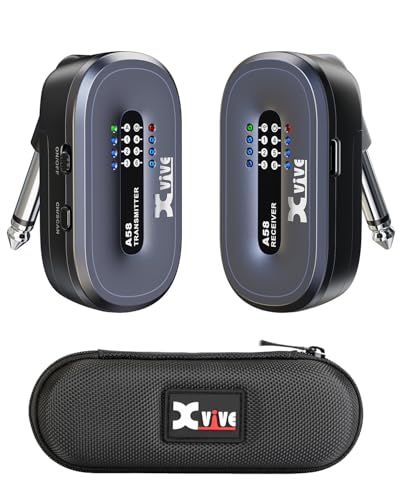
- 5.8 GHz true diversity wireless design
- 24-bit/48 kHz audio with active/passive support
- Compact option with quick USB-C charging
Best For: Players wanting clean audio and pickup flexibility
Multi-Channel Utility Pick
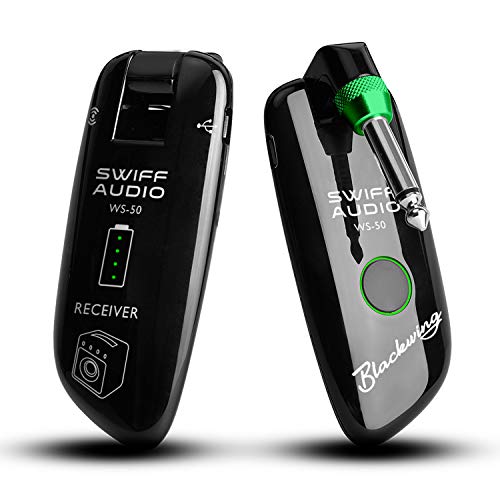
- UHF system with <2ms delay
- Up to 164 ft range and multi-device support
- About 5 hours of rechargeable battery life
Best For: Players needing flexible channels and solid range
Stage-Ready Compact Option
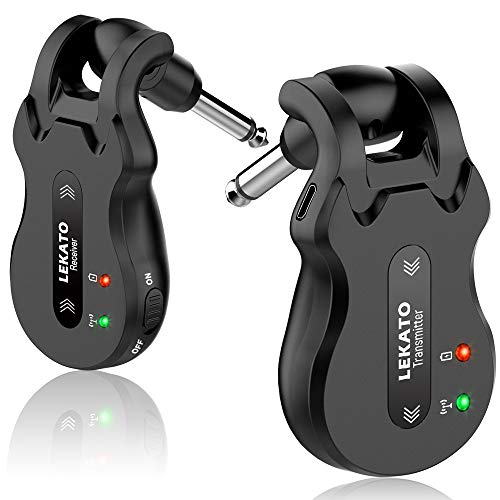
- 5.8 GHz design with strong anti-interference
- 24-bit/48 kHz audio with under 6 ms latency
- Four-channel support with easy plug-and-play setup
Best For: Stage and practice players who want simple reliability
Quick Practice Pick
JOYO JW-03 2.4GHz Wireless Guitar System
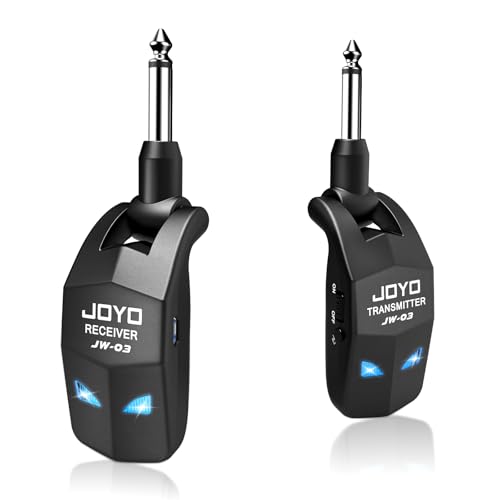
- Less than 5ms latency for responsive feel
- Up to 8 hours of battery life
- 65ft range with 4 selectable channels
Best For: Practice, rehearsals, worship, and small venues
Long-Range Budget Pick
A9 2.4GHz Wireless Guitar System

- Under 4ms latency and plug-and-play setup
- Over 30m/100ft range in ideal conditions
- 270° rotatable plug with rechargeable batteries
Best For: Budget buyers who want simple wireless freedom
Interference-Resistant Upgrade
JOYO JW-02S 5.8GHz Wireless Guitar System

- 5.8GHz frequency hopping helps reduce interference
- 48kHz/24-bit audio with under 6ms latency
- Up to 6 hours of battery life
Best For: Players in Wi-Fi or Bluetooth-heavy spaces
Ultra-Low Latency Pick
Xvive U2 Wireless Guitar System

- Less than 5ms latency
- 24-bit/48 kHz audio quality
- About 90 ft outdoor range
Best For: Gigging players who want a compact, reliable wireless system
Long-Range RGB Performer
230ft RGB Wireless Guitar System

- Open-field range up to 230 ft
- About 12 hours per charge
- 7 RGB lighting modes
Best For: Players who want long range, long battery life, and RGB lighting
Compact Practice Choice
A9 2.4GHz Wireless Guitar System

- Low latency under 4 ms
- Up to 100 ft open-area range
- One-button pairing with 4 channels
Best For: Home players and small-room performers
Budget UHF Performer – JOYO JW-08 Low-Latency Wireless
If you want a low latency wireless guitar system for practice, rehearsals, or small gigs, the JOYO JW-08 focuses on the basics that matter: stable UHF transmission, simple pairing, and very short delay. It is built for plug-and-play use with 6.35mm mono instruments and gives you enough range for typical room-to-room movement without adding much setup complexity.
Best For: Beginners, home practice, and small venue players who want an affordable, easy wireless setup.
Pros:
- Ultra-low <2ms latency is virtually imperceptible in normal playing.
- UHF transmission supports up to 6 paired sets with no crosstalk.
- 150 ft open-area range, with a practical 50–100 ft recommendation around obstacles.
- 220° rotatable plug fits most 1/4″ instrument jacks.
Cons:
- Not recommended for large stage performance.
- Battery life is listed at about 6 hours outdoors, so longer sets may need planning.
Overall, this is a straightforward option if you value low-latency playing and easy multi-unit use over premium stage-grade features.
Premium 5.8GHz Choice – Xvive A58 Wireless System
The Xvive A58 is a low latency wireless guitar system built for players who want reliable 5.8 GHz operation, high-resolution audio, and a compact stage-ready package. Its true diversity design and channel scan mode make it a practical pick for home use or live performance when you want strong signal stability and simple setup.
Best For: Guitarists and bassists who want a compact 5.8 GHz system with clean audio and flexible pickup support.
Pros:
- 5.8 GHz true diversity wireless design for reliable performance.
- 24-bit/48 kHz audio with a 20 Hz to 20 kHz range.
- Supports both active and passive pickup modes.
- USB-C charging with up to 5 hours of battery life and quick top-ups.
Cons:
- Range is listed at up to 100 ft, which may be limiting for larger spaces.
- Battery life is solid but shorter than some longer-run options.
For players who care about audio quality and compatibility, the A58 offers a polished wireless setup with enough speed and stability for everyday performance.
Multi-Channel Utility Pick – SWIFF UHF Wireless Set
The SWIFF wireless guitar system is aimed at players who want low latency wireless guitar system performance with multi-device support and a long working range. It uses UHF transmission, offers quick charging, and keeps setup simple with a rotatable plug and easy pairing for most 6.35mm instruments.
Best For: Players who need flexible multi-channel use and a dependable wireless link for regular rehearsals or gigs.
Pros:
- UHF transmission with <2ms delay and no lag according to the supplied notes.
- Up to 164 ft transmission range for wide movement.
- Supports multiple devices on separate channels.
- Built-in rechargeable battery with about 5 hours of working time.
Cons:
- The frequency response is listed at 30–16 kHz, which is narrower than some higher-end options.
- Battery life is moderate rather than extended.
This is a practical pick if you want a simple wireless setup with strong range and multi-device support, especially for players who need flexibility more than premium extras.
Stage-Ready Compact Option – LEKATO 5.8GHz Wireless
The LEKATO 5.8GHz system is a compact low latency wireless guitar system designed for players who want a clean, simple connection for live stage or studio practice. It emphasizes stronger anti-interference performance than 2.4GHz systems, along with easy plug-and-play use and a straightforward four-channel setup.
Best For: Guitarists and bassists who want an easy 5.8GHz wireless system for stage or practice use.
Pros:
- 5.8 GHz design with stronger anti-interference than 2.4 GHz systems.
- 24-bit/48 kHz audio with less than 6 ms latency.
- Up to 100 ft effective range.
- Supports simultaneous broadcasts on 4 channels and has a 220° rotatable plug.
Cons:
- Latency is low, but not as short as the sub-2ms options in this roundup.
- Battery life is listed at up to 5 hours, so it is best suited to standard-length sessions.
In practice, this LEKATO model balances easy operation, decent range, and strong interference resistance, making it a sensible choice for players who want a dependable wireless link without extra complexity.
Quick Practice Pick – JOYO JW-03 2.4GHz Wireless Guitar System
If you want a low latency wireless guitar system for everyday practice, the JOYO JW-03 keeps setup simple and the signal clean. It offers under 5ms latency, a 65ft open-area range, and a rechargeable design that fits home practice, rehearsals, worship sets, and small venues.
Best For: Players who want an easy plug-and-play option for practice and small gigs.
Pros:
- Less than 5ms latency with low distortion for responsive playing
- Up to 8 hours of battery life on a full charge
- 4 selectable channels, with support for multiple receivers
- 220° rotatable plug helps with recessed jacks and tight pedalboard spaces
Cons:
- Not recommended for large stages
- Can be less ideal in Wi-Fi or Bluetooth-heavy environments
Overall, this is a practical budget-friendly wireless system when you need reliable freedom of movement without a complicated setup. Its range and battery life make it a solid fit for smaller playing spaces.
Long-Range Budget Pick – A9 2.4GHz Wireless Guitar System
The A9 is a straightforward low latency wireless guitar system built for simple plug-and-play use. It claims under 4ms latency, over 30m/100ft transmission, and a 270° rotatable plug, making it a flexible choice for guitar, bass, and several other electric instruments.
Best For: Players who want a simple wireless setup with longer range on a budget.
Pros:
- Under 4ms latency for fast, direct response
- Over 30m/100ft transmission distance in ideal conditions
- 270° rotatable 1/4″ plug for better instrument fit
- Built-in rechargeable batteries with dual charging cable included
Cons:
- Listed working time is 4 hours, so battery life is modest
- 5V charging is required to avoid battery damage
This model stands out if your priority is easy operation and long open-area range rather than premium extras. It covers the basics well for practice, rehearsals, and casual playing.
Interference-Resistant Upgrade – JOYO JW-02S 5.8GHz Wireless Guitar System
If you need a low latency wireless guitar system that is better suited to crowded wireless environments, the JOYO JW-02S uses 5.8GHz with frequency hopping to help reduce Wi-Fi and Bluetooth interference. It also adds 48kHz/24-bit audio and under 6ms latency, making it a strong pick for home practice, studio work, rehearsals, worship, and small gigs.
Best For: Players who want cleaner wireless performance in environments with more interference.
Pros:
- 5.8GHz frequency hopping helps reduce interference from Wi-Fi and Bluetooth
- 48kHz/24-bit transmission for higher-resolution sound
- Under 6ms latency for real-time feel
- Up to 6 hours of battery life with included dual-head USB charging cable
Cons:
- Not recommended for large stages
- Open-area range is listed at 65-100ft, but walls and obstructions can reduce it
For players who care more about stability and cleaner signal handling than the lowest possible latency, this is the most refined option in the group. It keeps the same practical, compact wireless format while adding a more interference-resistant operating band.
Ultra-Low Latency Pick – Xvive U2 Wireless Guitar System
If you want a low latency wireless guitar system that stays simple on stage, the Xvive U2 is built around quick setup and reliable 2.4GHz performance. It offers 24-bit/48 kHz digital audio, less than 5ms latency, and about 90 feet of outdoor range, making it a practical choice for players who want cable-free freedom without a complicated rig.
Best For: Gigging guitarists and bass players who want a compact, dependable wireless system with very low latency.
Pros:
- Less than 5ms latency for responsive feel
- 24-bit / 48 kHz audio with 20 Hz–20 kHz frequency response
- About 90 feet of outdoor range with plug-and-play setup
- Rechargeable battery lasts up to 5 hours
Cons:
- Battery life is shorter than some higher-capacity competitors
- Best performance depends on keeping distance from 2.4GHz interference sources
Overall, the Xvive U2 is a strong low-latency option if you value fast response, straightforward operation, and a compact receiver/transmitter pair. Its reliability and wide instrument compatibility make it especially appealing for live players who want a no-fuss wireless setup.
Long-Range RGB Performer – 230ft RGB Wireless Guitar System
This low latency wireless guitar system is aimed at players who want more room to move, with an open-field range up to 230 feet and strong anti-interference performance. It keeps things practical with plug-and-play 6.35mm operation, a rechargeable battery rated for about 12 hours, and RGB lighting modes that add a visual touch for practice or content recording.
Best For: Players who want long range, long battery life, and a bit of stage-friendly visual flair.
Pros:
- Open-field range up to 230 feet
- Up to about 12 hours of rechargeable battery life
- Plug-and-play 6.35mm design with 280° rotatable plug
- 7 adjustable RGB lighting modes
Cons:
- Walls and rooms can reduce the stated range
- Only works with 6.35mm instrument jacks, not XLR or USB interfaces
For players who prioritize range and battery endurance, this system is an easy fit. It’s especially useful for rehearsals, live shows, and recording setups where you want wireless freedom plus a little visual personality.
Compact Practice Choice – A9 2.4GHz Wireless Guitar System
The A9 is a practical low latency wireless guitar system for home practice, rehearsal rooms, and small venues. It uses the 2.4GHz band for low noise and low latency under 4 ms, offers up to 100 feet of open-area range, and keeps setup simple with one-button pairing and a 270° rotatable 6.35mm plug.
Best For: Home players and small-room performers who want easy setup and solid low-latency performance.
Pros:
- Low latency under 4 ms
- Up to 100 feet of open-area range
- One-button pairing and plug-and-play operation
- 4 smart channels to help reduce crosstalk
Cons:
- Not recommended for large stages
- Battery life is limited to about 4 hours
- Performance may drop in heavy Wi-Fi/Bluetooth congestion
If you need an affordable, straightforward wireless setup for practice or smaller gigs, the A9 covers the essentials well. Its low-latency design and compact form factor make it a good everyday tool, especially when convenience matters more than long-range performance.
How We Picked the Best Low Latency Wireless Guitar System
We prioritized wireless guitar systems that emphasize low delay, usable range, dependable channel selection, and straightforward plug-and-play operation. We also looked for battery convenience, compatibility with passive and active pickups, and designs that are practical for home practice, rehearsal, and live use.
Quick Comparison: What Matters Most
If you want the fastest feel, look closely at published latency, transmission band, and audio resolution. For most players, a strong Low Latency Wireless Guitar System should also offer stable performance in crowded RF environments, enough range for stage movement, and a fit that works with your instrument’s output jack orientation.
Key Buying Factors for a Low Latency Wireless Guitar System
Latency and Feel
Lower latency helps the instrument respond more naturally, especially when playing tight rhythm parts, fast lead lines, or percussive techniques. In practice, small differences matter more to experienced players and anyone sensitive to timing.
Frequency Band and Interference
2.4GHz and 5.8GHz systems are common, but performance can vary based on venue congestion and nearby wireless devices. A system with multiple channels or strong interference handling is usually the safer choice for gigging.
Range and Real-World Use
Manufacturer range claims are useful, but walls, bodies, crowd density, and stage gear can reduce them. Choose more range than you think you need if you plan to move freely on stage.
Battery Life and Charging
Longer battery life matters for rehearsals, shows, and teaching sessions. Rechargeable units are convenient, but it is still smart to check charging time and whether the system can last through your longest set.
Fit, Connector Design, and Compatibility
Look for rotatable plugs or compact housings if your guitar has a recessed jack or a tight pedalboard layout. Also confirm compatibility with active pickups, bass, acoustic-electric instruments, and any special output requirements.
Who Should Buy Which Low Latency Wireless Guitar System?
Gigging players should favor stable channels, low delay, and strong range over flashy extras. Home users may prefer simple operation and good battery life. Bassists and acoustic players should verify compatibility first, while touring musicians may want the most proven Low Latency Wireless Guitar System they can afford for consistency and peace of mind.