A dependable metronome can make practice more focused by giving you a steady pulse to follow. Mechanical models add a visible pendulum, audible beat, and tactile, non-digital feel that many musicians prefer.
We compared 10 mechanical metronomes for tempo range, sound projection, construction, ease of use, and value across piano, guitar, violin, drums, and other instruments.
Best 10 Mechanical Metronomes Picks for 2026
Best All-Around Choice
Standard Black Mechanical Metronome

- 40–208 bpm tempo range
- Selectable 0, 2, 3, 4, and 6 beats
- 30-day returns and one-year warranty
Best For: Multi-instrument practice and beginners
Best Classic Design

- Battery-free wind-up mechanism
- 40–208 bpm with five beat settings
- Attractive wood-grain tower finish
Best For: Traditional home practice
Best Compact Option

- Weighs only 6.4 ounces
- Compact 5.9-inch height
- Black plastic casing without a bell
Best For: Portable, space-saving practice
Best Metal Movement
Wood-Grain High-Precision Metronome

- Metal movement components
- 40–208 bpm tempo range
- Loud sound for beat tracking
Best For: Beginners and multi-instrument practice
Best All-Around Value
AODSK Universal Mechanical Metronome

- Battery-free 40–208 BPM operation
- Loud sound for multi-instrument practice
- Selectable 0, 2, 3, 4, and 6 beats
Best For: Versatile practice at home or in lessons
Best for Beginners

- Intuitive visual pendulum beat
- 40–208 BPM with five beat settings
- About 15–45 minutes per winding
Best For: Students learning rhythm and tempo
Best Color Choice
Green Universal Mechanical Metronome
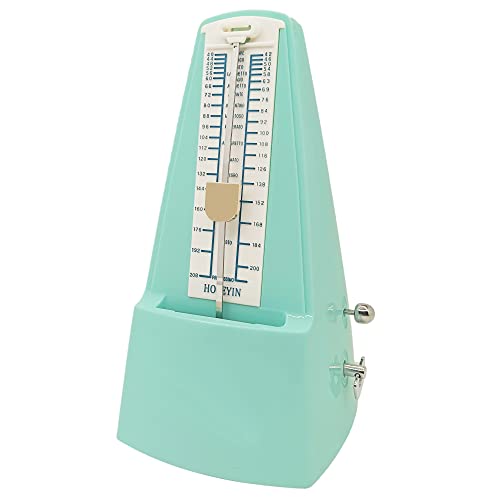
- Beginner- and child-friendly operation
- 40–208 BPM adjustable tempo
- 30-day returns and one-year warranty
Best For: Color-conscious beginners and gift buyers
Reliable Rhythm Practice

- Wind-up, battery-free operation
- 40–208 bpm with five beat settings
- Audible click and bell for practice
Best For: Beginners and multi-instrument practice
Classic Woodgrain Pick
Donner DPM-1 Mechanical Metronome

- Traditional woodgrain pyramid design
- 40–208 bpm with selectable beats
- Loud sound and five-position bell
Best For: Lessons and classic home practice
Best All-Around Choice – Standard Black Mechanical Metronome
This versatile option is a practical pick for shoppers comparing mechanical metronomes for several instruments. It offers an adjustable 40–208 bpm range, selectable beat accents, and straightforward operation suitable for beginners and children.
Best For: Multi-instrument practice and beginners who want broad tempo and beat settings.
Pros:
- Supports 40–208 bpm and 0, 2, 3, 4, or 6 beat settings.
- Works with piano, guitar, violin, drums, and other instruments.
- Includes a 30-day unconditional return policy and one-year manufacturer warranty.
- Plastic-and-metal movement is designed for stable performance.
Cons:
- Uses a plastic body rather than a wood-grain finish.
- At 1.2 pounds, it is less lightweight than compact models.
Its combination of wide tempo coverage, selectable accents, and warranty support makes this a balanced choice for home practice across multiple instruments.
Best Classic Design – Wood-Grained Tower Metronome
This wood-grained tower model suits buyers who want mechanical metronomes with a traditional appearance and clear practice functions. Its wind-up mechanism requires no batteries and provides an audible click and bell ring.
Best For: Musicians who prefer a classic tower style, battery-free operation, and extended practice sessions.
Pros:
- Offers 40–208 bpm and 0, 2, 3, 4, or 6 beat selection.
- A full wind lasts at least 18 minutes, depending on tempo.
- Plastic housing and metal mechanism are specified for high-precision timing.
- Wood-grain finish complements a music practice space.
Cons:
- At 650g, it is not the lightest option for portability.
- Requires winding before use.
With its battery-free design, classic tower profile, and stated tolerance of less than 1%, this model is well suited to structured practice at home.
Best Compact Option – Wittner Taktell Piccolo
The Wittner Taktell Piccolo is a compact choice for shoppers seeking mechanical metronomes in a small, lightweight format. Its black plastic casing weighs 6.4 ounces and has a simple design without a bell.
Best For: Musicians who prioritize a small, lightweight metronome for convenient storage or transport.
Pros:
- Compact dimensions measure approximately 1.97 x 2.76 x 5.9 inches.
- Weighs just 6.4 ounces.
- Black plastic casing offers a straightforward, durable exterior.
Cons:
- Does not include a bell.
- Supplied notes do not list a tempo range or beat-selection settings.
This is the most portable-looking option in the group, but buyers wanting detailed tempo and accent specifications may prefer one of the larger models.
Best Metal Movement – Wood-Grain High-Precision Metronome
This wood-grain model is aimed at buyers who want mechanical metronomes with a metal movement and broad practice coverage. It provides 40–208 bpm, five beat selections, and a loud sound intended to help players track tempo.
Best For: Beginners and multi-instrument players seeking a metal-movement metronome with prominent audible beats.
Pros:
- All movement pieces are made of metal for long-term use.
- Provides 40–208 bpm and 0, 2, 3, 4, or 6 beat selection.
- Designed for piano, guitar, violin, bass, drums, and other instruments.
- Wood-grain finish gives it a traditional appearance.
Cons:
- The larger body is less compact than the Wittner Piccolo.
- Requires winding and setup before practice.
Its metal movement, loud sound, and flexible settings make it a strong fit for learners who need clear beat tracking across different instruments.
Best All-Around Value – AODSK Universal Mechanical Metronome
For shoppers comparing mechanical metronomes, the AODSK Universal model offers a straightforward, battery-free way to practice timing across a wide range of instruments. Its loud sound, visual pendulum, and 40–208 BPM range make tempo work easy to follow.
Best For: Musicians who want a simple, versatile metronome for piano, guitar, violin, bass, drums, and other instruments.
Pros:
- Works without batteries and covers 40–208 beats per minute.
- Offers selectable beats of 0, 2, 3, 4, and 6.
- Loud sound helps with rhythm and tempo practice.
- Universal design suits multiple musical instruments.
Cons:
- Plastic construction may feel less premium than a wood-bodied model.
- Its tower-style body takes up more space than a compact electronic tuner-metronome.
This AODSK model is a practical pick for learners and families seeking an accessible mechanical metronome with broad instrument compatibility and clear, audible timing.
Best for Beginners – Walnut Mechanical Metronome
Among mechanical metronomes, this walnut-color model is designed to make the beat easy to see, hear, and understand. Its pendulum movement, loud beat, and simple winding operation provide an intuitive starting point for developing rhythm.
Best For: Beginners who want a visual, easy-to-operate metronome for piano, guitar, violin, drums, bass, saxophone, and other instruments.
Pros:
- Visual pendulum movement helps beginners recognize the beat.
- Provides 40–208 BPM and five beat settings: 0, 2, 3, 4, and 6.
- Requires no battery and can run for about 15–45 minutes after winding, depending on tempo.
- Transparent dust cover and metal movement support long-term use.
Cons:
- Practice time per winding varies with the selected tempo.
- Plastic body may not provide the feel of a traditional wooden case.
With its clear operating steps and intuitive pendulum, this model is especially suitable for students building consistent timing habits.
Best Color Choice – Green Universal Mechanical Metronome
This green universal model is a practical option for shoppers who want mechanical metronomes with adjustable tempo and accent-bell settings. Its 40–208 BPM range and durable plastic-and-metal movement cover the needs of common instruments.
Best For: Beginners, children, and players who want a colorful mechanical metronome with broad instrument compatibility.
Pros:
- Easy to use for beginners and children.
- Adjustable tempo from 40 to 208 BPM.
- Includes 0, 2, 3, 4, and 6 beat-bell settings.
- Backed by a 30-day unconditional return policy and one-year manufacturer warranty.
Cons:
- The standard green finish may not suit every practice space.
- Plastic-and-metal construction may feel less premium than a wood-bodied metronome.
This model stands out for its accessible controls, colorful finish, and included warranty coverage, making it a sensible choice for newer players and gift buyers.
Reliable Rhythm Practice – Ueteto Mechanical Metronome
For musicians comparing mechanical metronomes, the Ueteto offers a straightforward wind-up design with an audible click and bell ring. Its 40–208 bpm range and selectable beats make it suitable for practicing a wide range of instruments without batteries.
Best For: Beginners and players who want a loud, easy-to-use metronome for piano, violin, guitar, bass, or drums.
Pros:
- Wind-up mechanism requires no batteries.
- Offers 40–208 bpm tempo control and 0, 2, 3, 4, or 6 beat selection.
- Audible click and bell help emphasize rhythm while reading music.
- Full winding provides up to 2,160 clicks, or at least 18 minutes depending on tempo.
Cons:
- Requires periodic winding during longer practice sessions.
- At 1.2 pounds, it is less lightweight than a compact electronic metronome.
The Ueteto is a practical choice if you value traditional operation, a broad tempo range, and clear sound. Its simple setup also makes it approachable for children and new musicians.
Classic Woodgrain Pick – Donner DPM-1 Mechanical Metronome
The Donner DPM-1 is one of the classic mechanical metronomes for musicians who prefer a traditional pyramid-style design. It combines a wind-up spring mechanism, loud sound, and 40–208 bpm control for keeping practice sessions on tempo.
Best For: Students, children, and musicians seeking a durable wood-bodied metronome for piano, guitar, drums, violin, or saxophone.
Pros:
- Wood-bodied pyramid design gives it a traditional appearance.
- Provides 40–208 bpm tempo control with 0, 2, 3, 4, and 6 beat options.
- Loud wood-block chip sound helps learners track rhythm and accents.
- Five-position on/off bell setting supports different practice preferences.
Cons:
- Wind-up operation means it must be rewound as needed.
- Its 1.32-pound wood construction may be less convenient for frequent carrying.
With its classic styling and clear, loud beat, the DPM-1 suits structured practice at home or in lessons. The 1% tempo tolerance also supports consistent rhythm work.
Modern Transparent Design – TERENCE Mechanical Metronome
The TERENCE brings an updated look to mechanical metronomes with a transparent ABS body and metal mechanical movement. It offers a 40–208 bpm range, a metal accent bell, and a clear, loud sound for focused practice across multiple instruments.
Best For: Beginners, teachers, and musicians who want a visually distinctive metronome with an upgraded metal movement.
Pros:
- All-metal mechanical movement is designed for sturdy, extended use.
- Metal accent bell produces a clear, loud sound.
- Transparent ABS design is bright and resistant to yellowing.
- Copper pendulum and metal knob provide adjustable beat control and durable components.
Cons:
- At 1.59 pounds, it is the heaviest of these three options.
- Its larger package dimensions may make it less convenient for portable use.
The TERENCE is a strong fit for shoppers who want traditional mechanical timing with a contemporary appearance. Its broad instrument compatibility and upgraded movement make it useful for practice and teaching.
How We Picked the Best Mechanical Metronomes
We focused on the features that matter during everyday practice: accurate and consistent tempo tracking, a beat that is easy to hear, a pendulum that is simple to adjust, and construction that can withstand regular handling. We also considered design, portability, winding convenience, and whether each model suits beginners, students, or more experienced musicians.
The selection includes classic tower-style options, compact models, wood-grained designs, and affordable universal metronomes. Because product specifications can vary by seller, confirm the listed tempo range, beat settings, dimensions, and included features before ordering.
Quick Comparison
| Best For | What to Prioritize | Recommended Style |
|---|---|---|
| Beginners and students | Simple controls, clear markings, and stable tempo | Universal tower model |
| Classical practice | Consistent movement and a distinct, natural beat | Traditional mechanical design |
| Shared rooms or ensembles | Strong sound projection and visible pendulum | Loud-sound model |
| Frequent transport | Compact size, protective cover, and sturdy build | Portable or piccolo-style model |
| Gift buyers | Appearance, finish, and dependable operation | Wood-grained or branded model |
Key Buying Factors for Mechanical Metronomes
Tempo Range and Beat Settings
Choose a model with enough range for your repertoire, from slow technical exercises to faster pieces. Adjustable accent or subdivision settings can help with compound rhythms, but a basic steady beat may be all a beginner needs.
Sound and Visibility
A mechanical metronome should be loud enough for the instrument and room. A visible pendulum is equally useful because it lets you confirm the pulse without relying only on sound. If you practice near other musicians, prioritize clear projection without an overly harsh tone.
Build Quality and Stability
Look for a stable base, smooth pendulum movement, and a winding mechanism that feels consistent. A heavier case may stay in place better on a piano or music stand, while a lighter model is easier to carry but may need more careful positioning.
Size, Maintenance, and Ease of Use
Mechanical models require periodic winding and careful storage. Keep the metronome upright, avoid forcing the winding key, and protect it from dust and impacts. Choose straightforward controls if several family members or students will use it.
Who Should Buy Which Mechanical Metronomes?
Beginners: Choose a universal model with large tempo markings, a stable case, and uncomplicated operation.
Advanced students: Look for precise tracking, a strong audible beat, and useful beat or accent options for structured practice.
Teachers and ensembles: Favor loud, easily visible designs that can be followed across a room.
Players who travel: Consider a compact model, but balance portability against stability and sound projection.
Style-conscious buyers: Wood-grained or classic tower designs offer a traditional appearance while retaining the practical benefits of mechanical timing.