Consistent timing is one of the fastest ways to make electric-guitar playing sound cleaner, tighter, and more confident. The right metronome can help you build speed gradually, isolate difficult rhythms, and practice without relying on a backing track.
These 10 picks include compact digital units, rechargeable tuner-metronomes, and traditional mechanical designs. Use the guide below to match features such as volume, tempo control, power options, and portability to the way you practice.
Best 10 Metronomes for Electric Guitars Picks for 2026
Versatile Digital Pick
Donner DMT-01 3-in-1 Metronome Tuner

- Metronome, tuner, and tone generator in one
- 30–260 BPM with eight rhythms
- Large angled LCD and clip pickup
Best For: Electric guitarists wanting an all-in-one practice device
Classic Practice Choice

- Visible pendulum and audible beat
- 40–208 BPM with five beat settings
- Battery-free winding operation
Best For: Beginners and traditional practice setups
Rechargeable All-in-One

- Rechargeable 3-in-1 pocket-sized unit
- Three tuning pickup methods
- Headphone output and color LCD
Best For: Portable electric guitar practice and rehearsals
Simple Mechanical Option

- Audible click and bell for clear timing
- 40–208 BPM with five beat choices
- Battery-free wind-up mechanism
Best For: Beginners wanting simple mechanical rhythm practice
Best Rechargeable 3-in-1

- Metronome, tuner, and tone generator in one compact unit
- Rechargeable battery with included USB connectivity
- Color LCD and visual beat indicator for practice
Best For: Electric guitarists wanting portable rhythm practice and tuning
Best Traditional Choice

- 40–208 BPM adjustable tempo range
- Selectable bell accents for several beat patterns
- Battery-free mechanical operation
Best For: Beginners and stationary practice with traditional controls
Best Digital Practice Features
- Vocal counting and three digital sound options
- Ten beat patterns, tap tempo, and 40–208 BPM range
- Headphone output and rechargeable USB-powered battery
Best For: Players wanting guided, flexible, and quieter rhythm practice
Compact Practice Companion
Aroma 3-in-1 Digital Metronome Tuner

- Metronome, tuner, and tone generator in one pocket-sized unit
- 30–260 BPM with 10 beat patterns and eight rhythms
- Backlit display, headphone jack, and adjustable volume
Best For: Electric guitarists seeking an all-in-one practice tool
Progressive Tempo Pick
Rechargeable LCD Digital Metronome

- Rechargeable battery with included USB-C cable
- 40–208 BPM and 10 rhythm patterns
- Automatic tempo increases, volume control, and headphone jack
Best For: Guitarists building speed through structured practice
Feature-Rich MetroTuner
Sondery Rechargeable Vocal Metronome Tuner

- Metronome, tuner, and tone generator with vocal counting
- Electric guitar tuning via microphone or pickup cord
- Rechargeable USB-C power, tap tempo, and jog dial
Best For: Players wanting versatile timing and tuning controls
Versatile Digital Pick – Donner DMT-01 3-in-1 Metronome Tuner
If you want one of the more flexible metronomes for electric guitars, the Donner DMT-01 combines tempo practice with tuning and pitch reference. Its clip-based tuner, broad tempo range, and large angled display make it practical for home practice, rehearsals, and live setups.
Best For: Electric guitarists who want a metronome, tuner, and tone generator in one compact device.
Pros:
- Combines metronome, chromatic tuner, and tone generator functions.
- Supports 30–260 BPM, 0–9 beats per measure, and eight rhythms.
- Offers ±0.5-cent tuning accuracy and a sensitive vibration clip.
- Large LCD screen and 45-degree bracket improve visibility.
Cons:
- Requires one AAA battery.
- Its feature set may be more than needed if you only want a basic metronome.
The DMT-01 is a strong all-purpose option when your practice routine includes timing, tuning, and ear training. The jog dial and broad settings add useful flexibility without requiring separate devices.
Classic Practice Choice – Walnut Mechanical Metronome
This mechanical model offers a traditional approach to metronome practice for electric guitars. Its visible pendulum and audible beat can make timing easier to follow, while the winding mechanism avoids battery replacement during practice.
Best For: Beginners and players who prefer a visual, audible, battery-free rhythm reference.
Pros:
- Visible pendulum helps reinforce the beat intuitively.
- Provides 40–208 BPM and five beat selections.
- Requires no batteries and runs for roughly 15–45 minutes per wind, depending on tempo.
- Transparent dust cover helps protect the mechanism.
Cons:
- Does not include digital tuning or pitch-generation functions.
- Tempo range is narrower than the supplied digital alternatives.
- Needs winding before use.
For straightforward rhythm work, this metronome keeps the process simple and tactile. It is especially suitable for players learning to internalize steady time without relying on a screen.
Rechargeable All-in-One – Digital Metronome Tuner
For players seeking portable metronomes for electric guitars, this rechargeable 3-in-1 unit combines timing, tuning, and tone generation in a pocket-sized design. It supports several pickup methods, headphone practice, and USB charging for convenient use at lessons, rehearsals, or performances.
Best For: Electric guitarists who need a rechargeable practice device with flexible tuning and monitoring options.
Pros:
- Includes metronome, tuner, and tone generator functions.
- Supports microphone, included clip pickup, and direct guitar-cable pickup.
- Offers 30–250 BPM, 0–9 beats, and eight rhythms.
- Rechargeable battery, adjustable volume, headphone jack, and large color LCD.
Cons:
- Requires USB charging rather than disposable batteries.
- Its compact controls may be less immediate than a dedicated mechanical metronome.
This is a convenient choice for musicians who value portability and multiple connection options. The rechargeable design and headphone output are particularly useful when practicing away from a traditional amp setup.
Simple Mechanical Option – Ueteto Loud-Sound Metronome
The Ueteto is a straightforward mechanical choice among metronomes for electric guitars, using an audible click, bell, and pendulum-style tempo control. Its battery-free wind-up operation keeps practice simple and focuses attention on developing steady rhythm.
Best For: Beginners, children, and guitarists who want an easy-to-operate mechanical metronome.
Pros:
- Audible click and bell ring provide clear rhythmic feedback.
- Supports 40–208 BPM and beat selections of 0, 2, 3, 4, and 6.
- Requires no battery and is simple to set up.
- A full wind produces at least 18 minutes of operation, depending on tempo.
Cons:
- Does not provide tuning or tone-generation features.
- Needs winding for each practice session.
- Its mechanical design is less portable than a pocket-sized digital unit.
The Ueteto suits players who want clear, uncomplicated timing practice. Its loud mechanical feedback and simple controls make it accessible, though digital models are better if you also need tuning or compact portability.
Best Rechargeable 3-in-1 – MT-41 Digital Metronome Tuner
For players comparing metronomes for electric guitars, the MT-41 is a compact practice tool that combines a metronome, tuner, and tone generator. Its color LCD, visual beat indicator, rechargeable battery, and support for multiple instruments make it practical for home practice, lessons, studio work, or travel.
Best For: Electric guitarists who want one portable device for rhythm practice and tuning.
Pros:
- Combines metronome, tuner, and tone generator in one device.
- Rechargeable lithium-polymer battery is included.
- Supports electric guitar, guitar, bass, ukulele, violin, and chromatic tuning.
- Color display and dual-color LED beat indicator improve visibility.
Cons:
- Requires a nonstandard rechargeable battery rather than common replaceable batteries.
- Its compact controls and display may offer less physical presence than a larger metronome.
The MT-41 is a strong all-in-one choice when portability and rechargeable operation matter as much as keeping time. The built-in tuner is especially useful for electric guitar practice sessions.
Best Traditional Choice – H311 Mechanical Metronome
Among metronomes for electric guitars, this mechanical model offers a straightforward, battery-free approach to timing practice. Its adjustable 40–208 BPM range, selectable bell accents, and traditional pendulum design suit guitarists who prefer simple physical controls.
Best For: Beginners, children, and players who prefer a durable traditional metronome.
Pros:
- Adjustable tempo range from 40 to 208 BPM.
- Selectable 0, 2, 3, 4, and 6 beat bell sounds.
- Designed for guitar and other instruments, including piano, violin, and drums.
- Includes a 30-day unconditional return policy and one-year manufacturer warranty.
Cons:
- At 1.2 pounds and 8.5 inches tall, it is less portable than the digital alternatives.
- It does not provide digital tuning, rechargeable power, or headphone connectivity.
The H311 is a sensible pick for guitarists who value visible pendulum motion and uncomplicated operation. Its larger body is better suited to a stationary practice space than a gig bag.
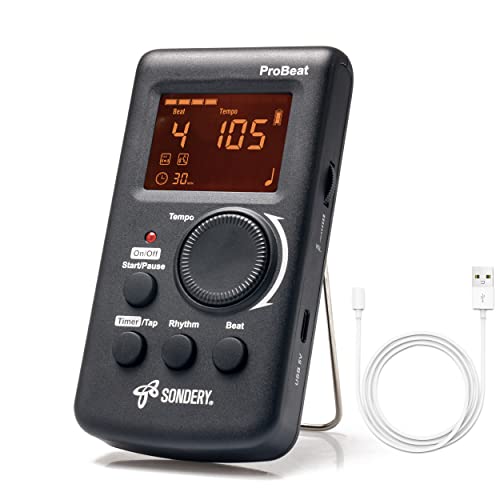
Best Digital Practice Features – Sondery ProBeat Metronome
The Sondery ProBeat is a versatile option for players seeking metronomes for electric guitars with more rhythm-training controls. It offers a rotary tempo dial, tap tempo, vocal counting, multiple sounds and beat patterns, plus an LED indicator and headphone output for flexible practice.
Best For: Electric guitarists who want guided counting, varied rhythm patterns, and quiet practice options.
Pros:
- Provides vocal counting, three digital sounds, and ten beat patterns.
- Tempo can be set from 40 to 208 BPM with a rotary dial or tap function.
- Headphone jack supports practicing without relying on the speaker.
- Rechargeable Li battery, USB charging, timer settings, and pocket-sized design add convenience.
Cons:
- Its feature-rich controls may take more setup than a basic mechanical metronome.
- The notes specify a 3.5mm audio jack but do not state whether headphones are included.
ProBeat stands out for structured rhythm work, especially when vocal counting or different subdivisions can help build timing. Its headphone output and lightweight rechargeable design also suit focused home practice and travel.
Compact Practice Companion – Aroma 3-in-1 Digital Metronome Tuner
For musicians comparing metronomes for electric guitars, the Aroma AMT-560 is a practical pocket-sized option that combines timing practice with chromatic tuning and tone generation. Its adjustable tempo, multiple beat patterns, backlit display, and headphone output make it suitable for focused practice at home, in lessons, or on the go.
Best For: Electric guitarists who want one compact device for metronome practice, tuning, and reference tones.
Pros:
- Combines a metronome, chromatic tuner, and tone generator in one compact unit.
- Offers 30–260 BPM, 10 beat patterns, and eight rhythm styles.
- Provides a 45° backlit LCD, LED rhythm cues, adjustable volume, and a headphone jack.
Cons:
- The supplied notes specify that the AMT-560 is not suitable for piano tuning.
- Requires two AAA batteries rather than rechargeable power.
The AMT-560 is a versatile choice when portability and multiple practice functions matter more than a dedicated metronome-only design. Its broad tempo range and silent-practice support are especially useful for electric guitar routines.
Progressive Tempo Pick – Rechargeable LCD Digital Metronome
Among metronomes for electric guitars, this rechargeable LCD model stands out for simple controls and progressive tempo practice. It supports 40–208 BPM, includes 10 rhythm patterns, and uses a clear display to show tempo, beat, rhythm, battery status, and timer information.
Best For: Players who want a portable, rechargeable metronome with volume control and gradual speed-building features.
Pros:
- Rechargeable design includes a USB-C cable and a stated one-year guarantee.
- Tempo can be adjusted from 40–208 BPM across 10 rhythm patterns.
- Automatic tempo increases and a headphone jack support structured, focused practice.
- Non-slip sponge base and compact construction help with portability and stable placement.
Cons:
- Its tempo range starts at 40 BPM, narrower than some alternatives.
- The supplied notes do not identify a built-in tuner or tone generator.
This model is a sensible choice for guitarists who primarily need dependable beat practice and a convenient rechargeable format. Its automatic speed progression can help organize gradual technique work.
Feature-Rich MetroTuner – Sondery Rechargeable Vocal Metronome Tuner
For electric guitarists looking beyond basic beat keeping, the Sondery MetroTune combines a vocal metronome, tuner, and tone generator in a rechargeable pocket-sized device. It adds tap tempo, English vocal counting, cable detection, a jog dial, and a color screen for flexible practice and tuning workflows.
Best For: Electric guitar players who want rechargeable power, vocal counting, broad tuning support, and hands-on controls.
Pros:
- Combines metronome, tuner, and tone generator with 30–260 BPM, tap tempo, and eight rhythms.
- Supports electric guitar tuning through its internal microphone or enclosed pickup cord.
- Includes vocal counting, headphone output, volume wheel, folding kickstand, and jog dial.
- Rechargeable USB-C battery and color LCD with LED indicators suit portable practice.
Cons:
- The extra functions may be more than needed for players seeking a basic metronome.
- Rechargeable operation requires access to a 5V USB power source for charging.
MetroTune is the most feature-dense option of these three, particularly for musicians who value vocal timing cues and flexible tuning methods. Its electric-guitar tuning mode and pickup connection make it well suited to amplified-instrument practice.
How We Picked the Best Metronomes for Electric Guitars
We focused on features that matter during real guitar practice rather than simply counting tempo. The selection includes digital and mechanical models, with attention to tempo range, beat and rhythm options, readability, sound projection, tuner functionality, and power convenience. Rechargeable designs can reduce battery waste and suit frequent practice, while mechanical metronomes remain appealing for players who want simple operation and a strong audible pulse.
Because electric guitars may be played through an amplifier, headphones, or with other musicians, useful metronomes should offer a pulse that is easy to hear without becoming distracting. Combination tuner-metronomes also earned consideration because they can consolidate two common practice tools.
Quick Comparison
- Best for all-around practice: A rechargeable 3-in-1 digital tuner-metronome with a tone generator.
- Best for simplicity: A mechanical metronome with a visible pendulum and no charging requirement.
- Best for portability: A compact LCD digital model with rechargeable power.
- Best for guitarists who tune frequently: A digital metronome with chromatic tuner support.
- Best for loud practice spaces: A mechanical unit or digital model with a strong speaker and adjustable volume.
Key Buying Factors for Metronomes for Electric Guitars
Tempo and Rhythm Control
Look for a broad BPM range and adjustable beat subdivisions if you practice alternate picking, syncopation, triplets, or gradually increasing speed. Tap-tempo functionality is useful for finding a starting pace quickly, while accent settings can help you feel the beginning of each measure.
Volume, Tone, and Visibility
The click must remain clear beside an amplified guitar. A loud mechanical model can work well in an open room, but digital units offer more control through volume adjustment, different sounds, or visual indicators. A bright LCD screen or flashing beat light helps when the click is difficult to hear.
Tuner, Tone Generator, and Power
A built-in chromatic tuner is convenient for guitarists who want fewer accessories. Check whether the tuner supports your preferred tuning method and whether the display responds quickly. Rechargeable models are practical for regular use; battery-powered units may be preferable for travel or emergency use if replacement batteries are easy to find.
Size and Controls
Choose a compact unit for a pedalboard, gig bag, or lessons. Larger controls can be easier to operate between takes, while a mechanical design requires more physical space but has an immediate, tactile interface.
Who Should Buy Which Metronomes for Electric Guitars?
Choose a digital tuner-metronome if you want one device for timing and tuning. Choose a mechanical metronome if you prefer a traditional pulse, visible pendulum, and straightforward controls. Choose a rechargeable model for frequent home practice or lessons, especially when you do not want to keep spare batteries available. Choose a model with visual indicators and flexible subdivisions if you practice silently, use headphones, or work on advanced rhythm patterns.
For most electric-guitar players, the best choice is the model that makes regular, measurable practice easiest. Prioritize an audible or visible click, comfortable tempo controls, and dependable power over extra features you are unlikely to use.