Plosive sounds can overwhelm an otherwise clean recording, especially when a dynamic microphone is positioned close to the speaker. The right pop filter or windscreen helps soften bursts from sounds such as “P” and “B” without making your setup complicated.
This roundup compares 10 microphone pop filters for dynamic microphones, including foam covers, layered shields, and universal-fit designs for podcasting, streaming, vocals, and voice-over work.
Best 10 Microphone Pop Filters for Dynamic Microphones Picks for 2026
Best Adjustable Dual-Layer Shield
Universal Gooseneck Pop Filter

- Dual-layer screen helps contain air blasts
- Flexible gooseneck supports precise placement
- Rotating clamp fits many stands and booms
Best For: Vocal recording, streaming, and spoken-word setups
Best Foam Multipack

- Includes five soft foam covers
- Fits most standard handheld microphones
- Helps protect against saliva and moisture
Best For: Karaoke, performances, interviews, and shared handheld mics
Best Studio-Style Pick

- Dual-layer screen helps manage plosives
- Adjustable steel gooseneck enables flexible placement
- Rotating clamp fits various tubular stands
Best For: Studio vocals, streaming, and spoken-word recording
Best Compact Nylon Screen

- 4.75-inch dual-layer nylon mesh screen
- Flexible 8-inch gooseneck for positioning
- Universal mic stand adapter included
Best For: Studio vocal recording with stand-mounted microphones
Three-Layer Handheld Shield
PEMOTech Three-Layer Mic Cover

- Foam, metal mesh, and etamine layers
- Fits 45–61 mm microphones
- Not compatible with Blue Yeti
Best For: Vocal recording and compatible handheld or studio microphones
Blue Yeti Foam Fit
ienza Blue Yeti Pop Filter Cover

- Made for Blue Yeti and Yeti PRO
- Breathable, washable foam design
- Fits compatible mics up to 2.5 inches
Best For: Blue Yeti-family voice and video recording
Universal Elastic Sleeve
POP SHIELD Three-Layer Mic Filter

- Three-layer mesh, metal, and foam design
- Elastic sleeve installs without hardware
- Listed for approximately 35–60 mm mics
Best For: Portable podcasting, streaming, and vocal recording setups
Adjustable Sponge Shield

- Fits microphones about 24–70 mm wide
- Adjustable clip changes angle and distance
- Thick sponge reduces plosives and wind
Best For: Users needing a flexible filter for multiple compatible microphones
Three-Layer Recording Shield
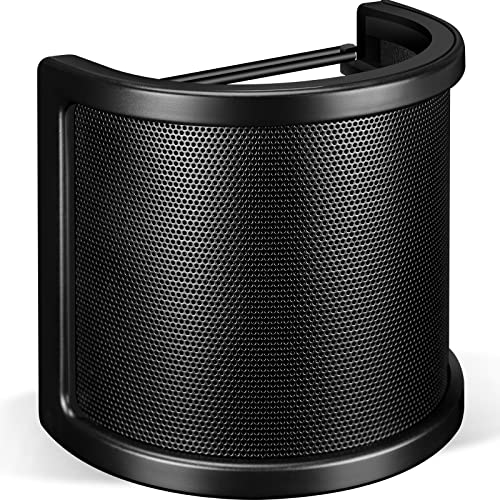
- Combines foam, metal mesh, and etamine layers
- Fits many 45–63 mm microphones
- Elastic bands and rubber ring secure the shield
Best For: Vocal recording and streaming with compatible studio microphones
Best Adjustable Dual-Layer Shield – Universal Gooseneck Pop Filter
For shoppers comparing microphone pop filters for dynamic microphones, this model offers a dual-layer screen, a flexible gooseneck, and a rotating clamp. Its adjustable positioning makes it practical for singers, streamers, and speakers using different stand or boom setups.
Best For: Vocal recording, streaming, and spoken-word use where adjustable positioning and splash protection matter.
Pros:
- Dual-layer design helps disperse and contain air blasts.
- Flexible steel gooseneck adjusts the filter’s angle and distance.
- Rotating clamp supports a variety of tubular stands and booms.
- Helps reduce plosives, hissing, and lisping sounds.
Cons:
- The clamp-and-gooseneck setup is larger than a simple foam cover.
- Compatibility depends on having a suitable tubular stand or boom.
With its metal-and-plastic construction, swivel mount, and stated warranty coverage, this is a versatile choice for users who want a traditional studio-style pop filter with flexible placement.
Best Foam Multipack – Mudder Handheld Mic Covers
These five foam covers are a straightforward option for shoppers seeking microphone pop filters for dynamic microphones in handheld applications. Their soft, elastic ball shape fits most standard handheld microphones and helps shield the mic from saliva and moisture.
Best For: Karaoke, stage performances, interviews, conferences, and other shared handheld-microphone situations.
Pros:
- Five covers provide replacements for repeated use or multiple microphones.
- Soft, thick foam has elasticity for a snug fit.
- Helps keep handheld microphones away from saliva and moisture.
- Useful for KTV, news interviews, conferences, and stage performances.
Cons:
- Designed for standard handheld microphones, not headset microphones.
- Covers are compressed in the package and need time to regain shape.
- Foam covers are less adjustable than clamp-mounted pop filters.
This multipack prioritizes convenience, hygiene, and quick replacement rather than studio-style positioning. It is a practical fit for handheld dynamic microphones used by multiple performers or presenters.
Best Studio-Style Pick – NEEWER Dual-Layer Pop Filter
The NEEWER Professional Microphone Pop Filter is a solid consideration for anyone comparing microphone pop filters for dynamic microphones in a studio or streaming setup. Its dual-layer screen, adjustable steel gooseneck, and clamp are designed to help manage plosives while allowing flexible placement.
Best For: Singers, streamers, and actors who want adjustable pop protection on a stand or boom.
Pros:
- Dual-layer screen helps reduce the effect of air blasts.
- Steel gooseneck allows angle and distance adjustments.
- Scratch-proof rotating clamp supports various tubular stands and booms.
- Swivel mount makes installation, removal, and repositioning easier.
Cons:
- Microphone is not included.
- Its clamp-mounted design requires a compatible stand or boom.
- At 8.3 ounces, it is heavier than a basic foam windscreen.
For users who prefer a conventional screen over a slip-on cover, the NEEWER combines adjustable mounting with a dual-layer design and broad stand compatibility.
Best Compact Nylon Screen – Samson PS04 Pop Filter
The SAMSON PS04 is a focused option for shoppers looking at microphone pop filters for dynamic microphones in studio settings. It uses a 4.75-inch dual-layer nylon mesh screen and an 8-inch gooseneck to reduce P-pops while keeping the filter position adjustable.
Best For: Studio vocal recording with microphones mounted on a compatible mic stand.
Pros:
- Dual-layer nylon mesh screen is designed to reduce P-Pops.
- Flexible 8-inch gooseneck makes positioning straightforward.
- Universal mic stand adapter supports use with most microphones in a studio setting.
- Steel construction provides a durable frame.
Cons:
- The 4.75-inch screen is smaller than some full-size pop filters.
- It is intended primarily for stand-mounted studio use.
- The notes do not specify a clamp for boom-mounted setups.
The PS04 keeps the design simple: a dual-layer nylon screen, flexible gooseneck, and universal stand adapter. It suits buyers who want a compact studio-oriented solution with stated one-year parts-and-labor coverage.
Three-Layer Handheld Shield – PEMOTech Three-Layer Mic Cover
For shoppers comparing microphone pop filters for dynamic microphones, the PEMOTech cover offers a slip-on design for microphones measuring 45–61 mm in diameter. Its foam, metal mesh, and etamine layers are intended to reduce plosives, breath sounds, wind interference, and recording crackles.
Best For: Vocal recording, speaking, singing, streaming, and compatible handheld or studio microphones.
Pros:
- Three-layer construction combines foam, metal mesh, and etamine.
- Elastic bands and an inner rubber ring provide a quick, secure fit.
- Metal mesh helps keep saliva away from the microphone.
- Fits a stated 45–61 mm microphone diameter range.
Cons:
- Not compatible with Blue Yeti microphones.
- Microphone is not included.
- Fit depends on the microphone measuring within the stated range.
This is a practical choice when you want a compact, easy-to-install shield with multiple filtering layers. Confirm your microphone’s diameter before buying, especially if it has an unusually shaped head.
Blue Yeti Foam Fit – ienza Blue Yeti Pop Filter Cover
Among microphone pop filters for dynamic microphones, this foam cover is specifically designed around the Blue Yeti and Yeti PRO form factor. It slips over compatible microphone heads and is intended to reduce wind and other unwanted noise during voice or video recording.
Best For: Blue Yeti, Yeti PRO, Yeti Nano, and other compatible microphones up to approximately 2.5 inches in diameter.
Pros:
- Designed specifically for Blue Yeti and Yeti PRO microphones.
- Also listed as compatible with Blue Yeti Nano, MXL, and Audio-Technica models.
- Breathable foam helps filter wind and unwanted noise.
- Washable foam is listed as a special feature.
Cons:
- Compatibility with other microphones depends on the model and dimensions.
- Foam-only construction may offer less layered protection than mesh-and-foam designs.
- Microphone is not included.
If you own a Blue Yeti-family microphone, this cover is a straightforward alternative to a larger external pop filter. Check the microphone’s diameter and shape before using it with another model.
Universal Elastic Sleeve – POP SHIELD Three-Layer Mic Filter
For buyers seeking microphone pop filters for dynamic microphones, the POP SHIELD uses an elastic sleeve intended to fit a broad range of microphone heads. Its mesh, metal, and foam layers target plosives and sibilance while the lightweight design is easy to move between recording setups.
Best For: Podcasting, streaming, vocal recording, and compatible microphones measuring about 35–60 mm in diameter.
Pros:
- Three-layer mesh, metal, and foam construction helps address plosives and sibilance.
- Elastic sleeve allows quick installation without complicated hardware.
- ABS frame and fine mesh screen are designed for regular studio or home use.
- Lightweight, portable design suits changing recording environments.
Cons:
- Not compatible with Blue Yeti microphones.
- Notes provide varying size descriptions, so measuring the microphone is important.
- Microphone is not included.
This model stands out for broad listed compatibility and a simple slip-on installation. Verify your microphone’s actual diameter against the seller’s current fit guidance before ordering.
PodMic Plosive Guard – PodMic Foam Cover
If you use a Rode PodMic and want a simple option among microphone pop filters for dynamic microphones, this fitted foam cover is designed for that specific microphone. It helps reduce plosives, breath noise, wind, and saliva while also providing a protective barrier against dust and moisture.
Best For: Rode PodMic owners who want a snug, low-profile foam windscreen for podcasting, streaming, gaming, or broadcast audio.
Pros:
- Designed to fit the Rode PodMic closely.
- Helps reduce plosives, breath, wind, and background noise.
- Protects the microphone from spittle, dust, and moisture.
- Lightweight foam construction weighs about 10 grams.
Cons:
- Compatibility is focused on the Rode PodMic.
- Does not include the Rode PodMic.
This is a practical choice if you already own a PodMic and prefer a fitted foam cover rather than an adjustable external shield. Its main limitation is the narrow, microphone-specific fit.
Adjustable Sponge Shield – Universal Mic Pop Filter
For shoppers comparing microphone pop filters for dynamic microphones, this adjustable sponge cover offers broad compatibility with microphones measuring about 24–70 mm in diameter. Its thick sponge is intended to reduce plosives, wind interference, saliva spray, hissing, and lisping during recording or live speaking.
Best For: Singers, streamers, podcasters, voiceover artists, and broadcasters who need an adjustable filter for several compatible microphone sizes.
Pros:
- Fits microphones approximately 24–70 mm in diameter.
- Adjustable clip allows changes to height, angle, and distance.
- Thick sponge helps reduce plosives, wind interference, and saliva spray.
- Suitable for recording, singing, podcasts, vlogs, and broadcasting.
Cons:
- The relatively wide 4.5-inch screen may be less compact than a fitted cover.
- Compatibility should be checked against the microphone’s diameter before purchase.
Choose this model when adjustability and broad size compatibility matter more than a microphone-specific fit. The clip-based design also makes it useful for users who change microphone positioning between sessions.
Three-Layer Recording Shield – Metal Mesh Mic Filter
This three-layer option is one of the more versatile microphone pop filters for dynamic microphones, supporting microphones roughly 45–63 mm in diameter. The foam, metal mesh, and etamine layers work together to reduce plosives, crackles, wind interference, and breath sounds during vocals, speech, streaming, and video recording.
Best For: Home-studio vocalists, streamers, and video creators using compatible microphones who want a layered shield with a secure elastic-band and rubber-ring attachment.
Pros:
- Three-layer construction combines foam, metal mesh, and etamine.
- Designed to reduce plosives, pops, crackles, wind, and breath sounds.
- Works with many microphones measuring approximately 45–63 mm in diameter.
- Elastic bands and an inner rubber ring help keep it firmly attached.
Cons:
- It will not fit the Blue Yeti according to the supplied notes.
- Its compatibility range is narrower than filters supporting 24–70 mm microphones.
- Installation requires fitting the elastic-band and rubber-ring assembly.
This model is a strong fit for creators who value layered pop protection and broad compatibility with common studio microphones. Confirm the microphone diameter first, especially if you use a Blue Yeti or another unusually sized model.
How We Picked These Microphone Pop Filters for Dynamic Microphones
We focused on practical fit, material construction, coverage, installation, and likely use cases. The selection includes foam windscreens for handheld or broadcast-style microphones, external mesh filters for stand-mounted setups, and layered designs intended to provide additional protection against plosives and wind. We also considered compatibility claims for popular microphones such as the Blue Yeti and RØDE PodMic, while noting that model-specific products should still be checked against your microphone’s dimensions.
A pop filter can reduce unwanted air bursts, but it cannot correct poor microphone placement, excessive gain, room echo, or background noise. The best choice depends on your microphone’s shape, grille size, and how closely you speak to it.
Quick Comparison
- Best for flexible desk setups: A clamp- or arm-mounted mesh shield gives adjustable positioning between your mouth and the microphone.
- Best for handheld microphones: A foam cover slips over the grille and remains practical while moving or performing.
- Best for broadcast microphones: A fitted foam windscreen can provide a clean appearance with minimal setup.
- Best for extra filtration: Three-layer mesh, foam, and fabric designs offer multiple barriers, though they may slightly affect high-frequency clarity.
- Best for targeted compatibility: Model-specific covers are convenient when the product is designed around your microphone’s grille dimensions.
Key Buying Factors
Fit and Microphone Diameter
Measure the widest part of the microphone grille before buying. Elastic sleeves and foam covers often list a diameter range, while external filters use a clamp, gooseneck, or flexible mount. A loose cover can slip or rattle; one that is too tight may be difficult to install and could compress unevenly.
Foam, Mesh, or Layered Construction
Foam windscreens are compact and effective against light wind and breath noise. Mesh pop filters create a physical gap between the speaker and microphone, which is useful for close-mic vocals and speech. Layered products add foam or fabric to the mesh, but more material is not automatically better if it dulls consonants or makes the filter hard to clean.
Placement and Maintenance
Position the filter between your mouth and the microphone without blocking your natural speaking angle. Washable or replaceable covers are useful for frequent podcasting, streaming, or shared equipment. Check seams, elastic strength, and attachment hardware periodically, particularly on products used outdoors or during live performances.
Who Should Buy Which Microphone Pop Filters for Dynamic Microphones?
Podcasters and streamers should generally choose a stable mesh shield or a thick fitted foam cover, depending on desk space and microphone design. Singers and voice-over artists may prefer a larger adjustable filter that maintains consistent distance while allowing clear articulation. Handheld performers will usually benefit from a lightweight foam windscreen that stays attached during movement. Owners of Blue Yeti or PodMic models should prioritize a compatible, model-specific cover when available, but verify the exact microphone version before ordering. If you switch between microphones, a universal elastic or adjustable design offers greater flexibility.