Choosing the right controller can make live sets faster, tighter, and easier to perform. The best options balance playable keys, reliable pad control, and a layout that keeps your hands moving.
This roundup focuses on compact, performance-friendly models that work well for backing tracks, synth parts, drum triggering, and hands-on DAW control on stage.
Best 10 MIDI Controller Keyboard for Live Performance Picks for 2026
Live Clip Launcher
Akai APC Key 25 MK2 25-Key USB MIDI Keyboard Controller
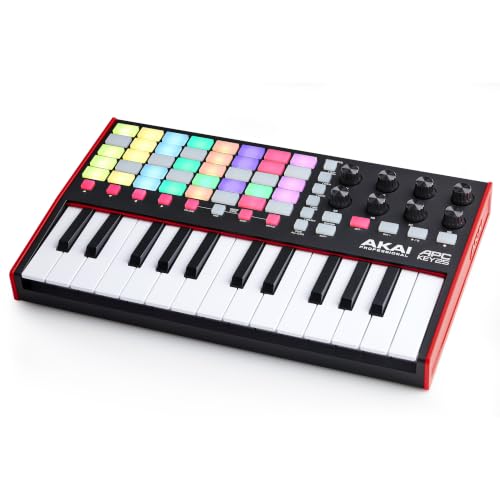
- 40 RGB pads for clip launching with visual feedback
- Pre-mapped 1:1 with Ableton Live 11.2.7+
- 8 knobs and USB power suit stage use
Best For: Ableton Live performers who want compact clip-launch control
Desk-Friendly Performer
M-AUDIO Keystation 49 MK3 USB MIDI Controller

- 49 full-size velocity-sensitive keys
- Pitch/mod wheels plus transport and fader
- Plug-and-play USB with no power supply needed
Best For: Keyboard players who want simple live control and a fuller key range
Hybrid Beat Station
Akai MPK Mini Plus 37-Key USB MIDI Keyboard Controller

- 37 mini keys with 8 RGB MPC pads
- 64-step sequencer works without a computer
- MIDI/CV/Gate I/O for external gear
Best For: Beat makers and performers who want sequencing plus hardware connectivity
Full-Range Workhorse
M-AUDIO Keystation 61 MK3 USB MIDI Controller

- 61 full-size semi-weighted velocity-sensitive keys
- Pitch/mod wheels plus transport and volume fader
- Plug-and-play USB for Mac and PC
Best For: Keyboardists who want more range and a straightforward live setup
Studio-Friendly Live Control
Akai MPK Mini Plus 37-Key Controller

- 37 keys for a wider live playing range
- 8 RGB pads and 8 knobs for hands-on control
- 64-step sequencer plus MIDI/CV/Gate I/O
Best For: performers and beat makers who want compact control with hardware integration
DAW-Ready Performance Pad
Novation Launchkey Mini 25 MK4
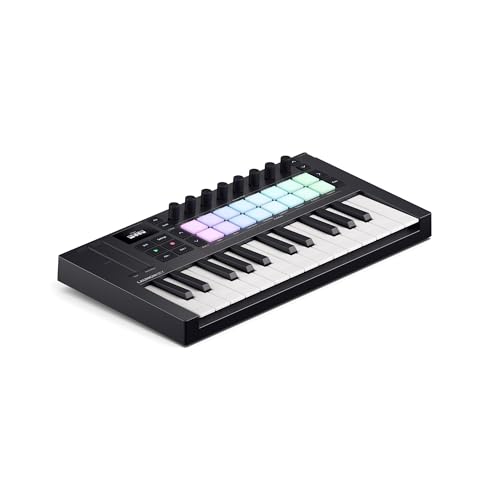
- 16 FSR pads with polyphonic aftertouch
- Scale, chord, and arpeggiator tools for live ideas
- Broad DAW support with bundled software
Best For: live triggering and DAW-based performers who want expressive pads in a small footprint
Wireless Portable Performer
M-VAVE 25-Key Bluetooth MIDI Controller

- Bluetooth and USB for flexible connectivity
- 2,000 mAh battery rated for about 16 hours
- 8 pads, 8 knobs, and touch strips for control
Best For: mobile musicians who want a wireless, ultra-portable controller for practice and live sketching
Ultra-Portable Starter Pick
Akai Professional LPK25 25-Key USB MIDI Keyboard Controller

- 25 velocity-sensitive mini keys
- Built-in arpeggiator and sustain
- USB-powered, plug-and-play setup
Best For: Travel-friendly live playing and simple setups
Best All-Around Performance Pad Controller
Akai Professional MPK Mini MK3

- 25 velocity-sensitive mini keys
- 8 MPC pads and 8 assignable knobs
- Thumbstick, arpeggiator, and NKS support
Best For: Hands-on live control in a compact controller
Best for Compact Black Stage Rig
Akai Professional MPK Mini MK3 Black

- 25 velocity-sensitive mini keys
- 8 MPC pads and 8 knobs
- Black finish with portable USB power
Best For: Compact stage setups that need tactile control
Live Clip Launcher – Akai APC Key 25 MK2 25-Key USB MIDI Keyboard Controller
If you want a MIDI controller keyboard for live performance that leans hard into Ableton control, the APC Key 25 MK2 is built for fast clip launching and hands-on mixing. Its 25 velocity-sensitive mini keys, 40 RGB pads, and 8 knobs make it easy to trigger clips, shape sounds, and move through a set without reaching for the mouse.
Best For: Ableton Live users who need a compact, performance-focused controller for clip launching and macro control.
Pros:
- 40 RGB pads provide a bright 5×8 clip-launching grid with visual feedback.
- 1:1 integration with Ableton Live 11.2.7 and later keeps live control straightforward.
- 8 assignable knobs are useful for volume, pan, sends, and Device mode macros.
- USB-powered, compact, and portable for studio-to-stage use.
Cons:
- Mini keys may feel small if you prefer a larger piano-style keybed.
- It is strongly centered on Ableton rather than being a broad, all-purpose controller.
Overall, this is a focused live-performance controller rather than a general keyboard. If your set depends on launching clips, tweaking parameters, and keeping everything tightly mapped in Ableton, it delivers exactly that workflow.
Desk-Friendly Performer – M-AUDIO Keystation 49 MK3 USB MIDI Controller
The Keystation 49 MK3 is a straightforward MIDI controller keyboard for live performance when you want more playable range without a lot of extra complexity. With 49 full-size velocity-sensitive keys, pitch and mod wheels, and transport controls, it gives you the essentials for expressive parts and basic software control on stage.
Best For: Players who want a simple, full-size keybed for live parts, sketching ideas, and general DAW control.
Pros:
- 49 full-size velocity-sensitive keys offer a natural playing feel.
- Pitch/mod wheels, octave buttons, and sustain pedal input support expressive performance.
- Volume fader and transport buttons add practical control during sessions or sets.
- Plug-and-play USB connection works without drivers or a power supply.
Cons:
- It does not include pads for clip launching or finger-drumming.
- Control layout is more basic than performance-first controllers built for live workflow.
This model makes sense if your priority is playing keys comfortably while keeping your setup simple. It is less flashy than pad-heavy options, but the full-size keybed and basic controls are dependable for live and studio use.
Hybrid Beat Station – Akai MPK Mini Plus 37-Key USB MIDI Keyboard Controller
For a MIDI controller keyboard for live performance that also handles beat-making duties, the MPK Mini Plus adds more depth than a basic mini controller. It combines 37 velocity-sensitive mini keys, 8 MPC pads, a 64-step sequencer, and MIDI/CV/Gate I/O, so you can perform, sequence, and connect to other gear from one compact board.
Best For: Beat makers and performers who want portable keys, pad control, and hardware connectivity in one controller.
Pros:
- 37-key layout gives you three full octaves in a compact footprint.
- Built-in 64-step sequencer allows recording and composing without a computer.
- MIDI/CV/Gate I/O expands control to modular gear and sound modules.
- 8 RGB MPC pads and 8 assignable knobs support performance and mixing tasks.
Cons:
- Mini keys may not suit players who want a full-size keybed.
- Its many features can be more than you need if you only want basic keyboard control.
This is a strong pick if you want one controller to cover live triggering, sequencing, and external hardware control. It is especially appealing for performers who like to build sets around pads, knobs, and connected synths.
Full-Range Workhorse – M-AUDIO Keystation 61 MK3 USB MIDI Controller
If you need a MIDI controller keyboard for live performance with more room to play, the Keystation 61 MK3 offers a practical 61-key layout and simple hands-on controls. Its full-size semi-weighted keys, pitch and mod wheels, and transport section make it a solid choice for longer melodic parts, splits, and general stage control.
Best For: Keyboardists who want a larger key range for live playing and a clean, no-frills control layout.
Pros:
- 61 full-size velocity-sensitive semi-weighted keys provide a more substantial feel.
- Transport buttons, directional controls, and a volume fader cover everyday performance tasks.
- Pitch/mod wheels, octave buttons, and sustain pedal input add expressive control.
- Plug-and-play USB operation keeps setup simple on Mac or PC.
Cons:
- No pads or sequencer for clip launching or beat performance.
- Larger size takes up more desk or stage space than compact controllers.
This is the most traditional keyboard-style option in the group, aimed at players who value range and feel over pad-based performance features. If your live set is centered on actually playing keys, the 61 MK3 gives you the most room to work.
Studio-Friendly Live Control – Akai MPK Mini Plus 37-Key Controller
If you want a MIDI controller keyboard for live performance with more hands-on control than a basic mini board, the Akai MPK Mini Plus is built for that role. The 37-key layout gives you three full octaves, while the MPC pads, assignable knobs, and onboard sequencer help you shape parts in real time without relying entirely on the mouse.
Best For: Beat makers and performers who want compact keys plus deeper control for DAW and hardware setups.
Pros:
- 37 velocity-sensitive mini keys provide a wider range than typical 25-key controllers.
- 8 RGB MPC pads support dynamic performance and music creation.
- Built-in 64-step sequencer lets you record and compose without a computer.
- MIDI/CV/Gate I/O makes it easier to connect with modular gear, synths, and sound modules.
Cons:
- USB-powered design means it is still centered around a controller workflow, not a standalone instrument.
- Mini keys may not suit players who prefer full-size keys for live parts.
The MPK Mini Plus stands out when you need compact portability but still want performance tools that go beyond the basics. Its sequencing, pad workflow, and hardware connectivity make it a practical choice for live sets and hybrid studio rigs.
DAW-Ready Performance Pad – Novation Launchkey Mini 25 MK4
The Novation Launchkey Mini 25 MK4 is a strong pick if you want a MIDI controller keyboard for live performance that leans heavily into DAW workflow. Its 16 FSR pads, Scale Mode, Chord Mode, and arpeggiator give you quick performance options, while broad compatibility with major DAWs keeps setup straightforward.
Best For: Players who want compact keys, expressive pads, and seamless DAW integration for live triggering.
Pros:
- 16 responsive FSR pads handle drumming, clip launching, step sequencing, and chord triggering.
- Scale Mode and Chord Mode help you stay in key and build richer parts quickly.
- Works with major DAWs including Ableton Live, Logic, Cubase, Reason, Reaper, FL Studio, and Ardour.
- Includes a software bundle with Ableton Live Lite, Cubase LE, sounds, and lessons.
Cons:
- 25 mini keys keep it very compact, but limit melodic range for two-handed playing.
- Its strengths are clearly DAW-centered, so it is less focused on external hardware control.
For live performers who trigger clips, pads, and arps inside a DAW, this controller offers a polished and efficient workflow. It is especially appealing if you want expressive pads and creative modes in a travel-friendly format.
Wireless Portable Performer – M-VAVE 25-Key Bluetooth MIDI Controller
The M-VAVE 25 Key USB MIDI Keyboard Controller is aimed at players who want a MIDI controller keyboard for live performance with maximum portability and wireless freedom. Along with 25 velocity-sensitive keys, it adds 8 RGB pads, 8 knobs, pitch control strips, and Bluetooth connectivity, making it easy to sketch ideas or perform on the go.
Best For: Mobile musicians who want a compact wireless controller for practice, songwriting, and portable live setups.
Pros:
- Bluetooth and USB connectivity offer flexible use with computers and mobile devices.
- Built-in 2,000 mAh battery is rated for about 16 hours of use.
- 8 RGB pads and 8 assignable knobs support beat making and sound shaping.
- Compatible with Windows, Mac OS, Android, and iOS, plus many major DAWs.
Cons:
- 25 keys keep it highly portable but more limited for complex live parts.
- Its lightweight design is better for mobility than for a large performance surface.
This model makes the most sense when portability matters as much as performance control. If you want a compact controller that can leave the cable behind and still cover the essentials, it is a compelling option.
Ultra-Portable Starter Pick – Akai Professional LPK25 25-Key USB MIDI Keyboard Controller
If you want a compact MIDI controller keyboard for live performance that is easy to toss in a bag and quick to set up, the Akai Professional LPK25 keeps things simple. Its 25 velocity-sensitive mini keys, octave shift buttons, sustain, and built-in arpeggiator give you enough hands-on control for melodies, bass lines, and sketching ideas on the fly.
Best For: Players who need a small, plug-and-play controller for live ideas, travel, and minimal setups.
Pros:
- 25 velocity-sensitive mini keys for expressive playing.
- Octave up/down buttons and sustain support performance flexibility.
- Built-in arpeggiator and clock add creative live control.
- USB power and plug-and-play compatibility make setup easy.
Cons:
- No pads or knobs for deeper hands-on control.
- Mini keys may not suit players who prefer a full-size feel.
- Designed for simplicity, so it offers fewer live-performance features than larger controllers.
Overall, the LPK25 is a strong pick if portability and fast setup matter more than extra controls. It covers the essentials well for live triggering and sketching parts without taking up much space.
Best All-Around Performance Pad Controller – Akai Professional MPK Mini MK3
The Akai Professional MPK Mini MK3 is a more performance-ready MIDI controller keyboard for live performance, thanks to its mix of keys, pads, knobs, and thumbstick control. With 25 velocity-sensitive mini keys, 8 MPC-style pads, 8 knobs, and a built-in arpeggiator, it gives beat makers and keyboard players more ways to shape sounds in real time.
Best For: Live performers who want compact keys plus pads and knobs for more hands-on control.
Pros:
- 8 velocity-sensitive MPC-style pads for drums, samples, and DAW triggering.
- 8 assignable knobs offer direct control over plugins and synth parameters.
- 4-way thumbstick adds dynamic pitch and modulation control.
- Built-in arpeggiator and NKS integration broaden creative options.
Cons:
- Mini keys keep it portable but less piano-like than full-size keys.
- Best suited to USB-based setups rather than traditional standalone use.
- Feature-rich layout may be more than you need if you only want basic note input.
For live use, this model stands out because it combines compact size with enough tactile controls to stay expressive on stage or in rehearsal. It is a good choice when you want one small controller that can handle keys, beats, and parameter tweaks.
Best for Compact Black Stage Rig – Akai Professional MPK Mini MK3 Black
The black Akai Professional MPK Mini MK3 gives you the same compact live-ready layout in a darker finish that can blend neatly into a stage or studio rig. It includes 25 velocity-sensitive mini keys, 8 MPC pads, 8 knobs, a 4-way thumbstick, and a built-in arpeggiator, making it a practical MIDI controller keyboard for live performance when you want a small footprint with plenty of control.
Best For: Players who want the MPK Mini MK3 feature set in a black finish for stage or studio use.
Pros:
- Compact 25-key layout with velocity-sensitive mini keys.
- 8 backlit MPC-style pads support drum programming and sample triggering.
- 8 360-degree knobs and thumbstick provide hands-on control.
- USB-powered design keeps it easy to integrate into portable setups.
Cons:
- Mini keys are still a trade-off for players who want larger keys.
- Performance focus may be more than needed for simple note entry.
- USB-only connectivity limits it to computer-based rigs.
If you like the MPK Mini MK3 workflow but want a black finish, this version is an easy recommendation. It remains a flexible small controller for triggering drums, shaping sound, and playing parts without adding bulk to your setup.
How We Picked the Best MIDI Controller Keyboard for Live Performance
For this MIDI Controller Keyboard for Live Performance guide, we prioritized stage usefulness over studio extras. That means portable size, responsive velocity-sensitive keys, dependable pads, transport and assignable controls, and broad DAW compatibility. We also looked at whether a controller supports quick workflow changes during a set, such as switching sounds, launching clips, or triggering drums without breaking your flow.
Quick Comparison
Broadly, these controllers fall into three groups: ultra-compact 25-key models for laptop rigs and travel, 37-key options for players who want a little more range without losing portability, and 49-/61-key boards for performers who need both hands to cover more notes and fewer octave shifts. Pad-heavy controllers suit finger drumming and clip launching, while simpler keyboards favor melodic playing and a cleaner stage footprint.
Key Buying Factors for a MIDI Controller Keyboard for Live Performance
Key Count and Playability
Choose the smallest keyboard that still fits your playing style. Twenty-five keys are ideal for tight setups, but they can feel restrictive for piano parts or split-handed performance. Thirty-seven keys offer a useful middle ground, while 49 and 61 keys reduce octave jumping and are better for more expressive parts.
Pads, Knobs, and Hands-On Control
If you trigger clips, drums, or samples live, pads matter. Backlit pads are easier to read on dark stages, and rotary knobs help adjust filter, effects, or mix parameters in real time. For a MIDI Controller Keyboard for Live Performance, physical controls should be easy to reach without menu diving.
DAW and Software Integration
Strong software integration can save time during sound checks and rehearsals. Look for controllers that map quickly to your DAW, support transport control, and make it simple to switch between instruments or session views.
Portability and Power
Many performers rely on bus power or USB connection alone, which is convenient for compact rigs. If you travel often, a lightweight chassis and durable controls may matter more than premium extras.
Who Should Buy Which MIDI Controller Keyboard for Live Performance?
Pick a 25-key controller if you need maximum portability, clip launching, or a compact synth rig. Choose a 37-key model if you want better melodic range while staying mobile. Go with 49 or 61 keys if your live set includes more complex chord work, left-hand bass parts, or piano-style playing. If your performance is centered on launching samples and triggering drums, prioritize pad layout and workflow speed over key count alone.
In the end, the best choice depends on how you perform live, not just how many features the spec sheet lists. Focus on the controls you will actually use on stage, and your setup will feel faster and more musical from the first rehearsal.