Choosing the right MIDI interface can make recording feel instantly smoother, especially when you need tight timing, dependable sync, and simple setup.
This roundup highlights options for home studios, keyboard rigs, and compact recording setups, with picks that balance connectivity, portability, and value.
Best 10 Midi Interfaces for Recording Picks for 2026
Compact MIDI routing
CME U6MIDI Pro 3-in-3-out MIDI Interface

- 3-in/3-out with routing, filtering, split, merge, and thru
- Works across macOS, Windows, iOS, Android, Linux, and Chrome OS
- Supports clock, sysex, timecode, and MPE with low latency
Best For: Hybrid studios and musicians who need compact, reliable MIDI routing
Starter studio bundle
PreSonus AudioBox USB 96 25th Anniversary Studio Recording Package

- Includes interface, microphone, headphones, stand, cables, and software
- Audio/MIDI interface supports home recording and MIDI hardware
- 2-channel USB setup with 24-bit/96 kHz recording
Best For: Beginners who want a full recording bundle with MIDI support
USB host bridge
CME H2MIDI Pro Compact USB Host MIDI Interface

- USB host mode connects class-compliant USB MIDI gear to DIN hardware
- USB-C mode provides 2-in/2-out virtual MIDI ports
- Routing, filtering, mapping, splitting, and preset storage included
Best For: Hybrid MIDI setups that need USB host support and legacy hardware connection
Portable recording interface
PreSonus AudioBox 96 25th Anniversary USB Audio Interface
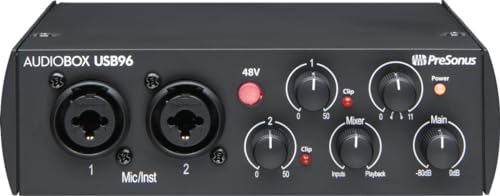
- 2-channel USB interface with MIDI I/O
- Two Class-A mic preamps and two instrument inputs
- Bus-powered with 24-bit/96 kHz recording support
Best For: Solo recording setups that need MIDI plus compact audio inputs
USB-C MIDI Cable

- 1 in / 1 out with signal indicators
- Plug-and-play for Windows, Mac, and iPad
- Supports up to 16 MIDI channels
Best For: Simple keyboard and synth MIDI recording
Compact USB Audio Interface
Focusrite Scarlett Solo 3rd Gen

- Bright mic preamp with Air mode
- 24-bit/192kHz recording and playback
- Includes software for getting started
Best For: Solo vocal and instrument recording
4x4 USB Audio/MIDI Interface

- 4x4 audio plus dedicated MIDI I/O
- 24-bit/192kHz with low latency
- Four MIDAS mic preamps and metal chassis
Best For: Home studios needing multiple inputs and MIDI
Compact 2-Channel Starter
M-AUDIO M-Track Duo USB Audio Interface
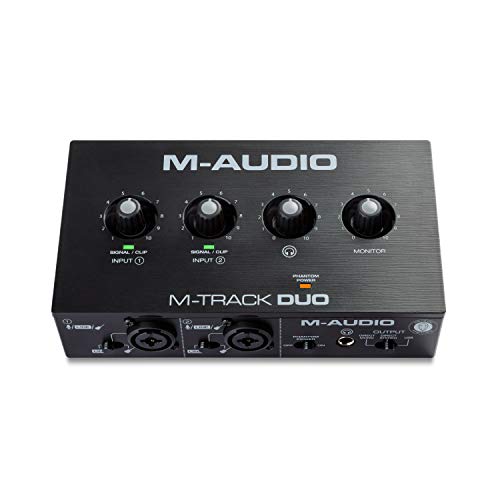
- Two combo XLR/Line/Instrument inputs
- Zero-latency monitoring with USB/Direct switch
- Includes MPC Beats software
Best For: Beginners recording vocals, guitar, and podcasts
MIDI-Ready Portable Recorder
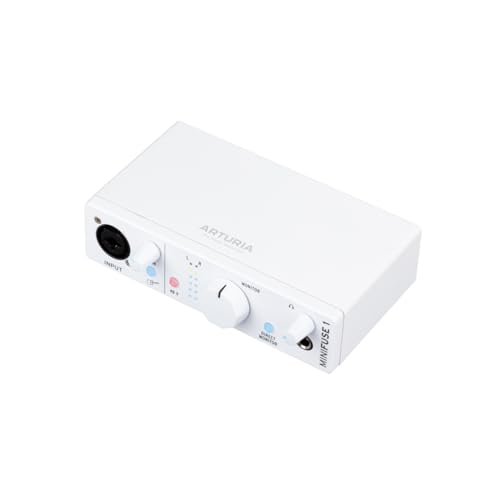
- 5-pin MIDI input and output
- 192kHz max sample rate
- Includes Ableton Live Lite and extras
Best For: Portable recording setups that need MIDI support
Compact MIDI routing – CME U6MIDI Pro 3-in-3-out MIDI Interface
If you want a flexible pick for midi interfaces for recording, the CME U6MIDI Pro focuses on clean routing, low-latency performance, and broad device support. It works as a plug-and-play USB-C interface on major desktop and mobile operating systems, while also handling standalone routing when you need to connect hardware without a computer.
Best For: Musicians who need a compact MIDI interface for DAW setups, hardware routing, and multi-platform recording.
Pros:
- 3-in/3-out MIDI I/O with routing, filtering, split, merge, and thru functions.
- Compatible with macOS, Windows, iOS, Android, Linux, and Chrome OS.
- Supports all MIDI channels and messages, including clock, sysex, timecode, and MPE.
- Very small, lightweight design with USB-C plug-and-play operation.
Cons:
- MIDI-only device, so it does not record audio.
- Advanced configuration depends on the free software tool.
Overall, this is a strong choice if your recording workflow needs dependable MIDI handling more than extra audio features. Its routing tools and broad compatibility make it especially useful for hybrid studio setups.
Starter studio bundle – PreSonus AudioBox USB 96 25th Anniversary Studio Recording Package
For buyers comparing midi interfaces for recording and wanting a complete home-studio bundle, this PreSonus package stands out because it combines an audio/MIDI interface with the basics you need to start tracking right away. The AudioBox USB 96 handles vocals, instruments, and MIDI hardware, while the included microphone, headphones, cables, and software reduce the need for separate purchases.
Best For: Beginners and home-recording users who want an all-in-one package with MIDI input/output and extra studio gear.
Pros:
- Includes AudioBox USB 96 audio/MIDI interface plus mic, headphones, stand, and cables.
- Works with major DAWs and includes Studio One Artist and Studio Magic software.
- 2-channel USB interface with 24-bit/96 kHz recording and playback.
- Portable, bus-powered design makes it easy to use on a desktop or on the go.
Cons:
- Only 2 channels, so it is not ideal for larger tracking sessions.
- Bundled gear may be more than you need if you only want the interface.
This package is practical if you want to start recording quickly with minimal setup. It is best viewed as a beginner-friendly bundle rather than a bare-bones interface purchase.
USB host bridge – CME H2MIDI Pro Compact USB Host MIDI Interface
If your setup mixes modern controllers with older gear, this is one of the more specialized midi interfaces for recording and live control. The CME H2MIDI Pro can act as a standalone USB host for class-compliant MIDI devices, or connect to a computer through USB-C with virtual MIDI ports and advanced routing tools.
Best For: Players and producers who need to connect USB MIDI gear directly to 5-pin DIN hardware without relying on a computer.
Pros:
- Standalone USB host mode connects USB MIDI devices to 5-pin DIN hardware.
- Supports up to 8 USB MIDI device ports with a standard USB hub.
- USB-C computer mode offers 2-in/2-out virtual MIDI ports.
- Handles complex messages like clock, sysex, MTC, and MPE with routing tools.
Cons:
- Only 1-in/1-out on the DIN side, so it is not a large hardware patchbay.
- Best suited to MIDI workflows rather than audio recording.
This is a smart pick if you need a bridge between USB MIDI controllers and legacy hardware in a recording setup. It is especially appealing for users who want flexibility, presets, and compact size in one box.
Portable recording interface – PreSonus AudioBox 96 25th Anniversary USB Audio Interface
For musicians shopping midi interfaces for recording who also need basic audio capture, the PreSonus AudioBox 96 is a straightforward 2-channel USB interface with MIDI I/O. It is designed for personal and portable recording, with bus power, built-in mic preamps, instrument inputs, and software bundled in to help you get started quickly.
Best For: Solo musicians and home recordists who want a compact USB audio interface with MIDI connectivity.
Pros:
- Includes MIDI I/O alongside 2 mic preamps and 2 instrument inputs.
- Supports up to 24-bit/96 kHz recording and playback.
- USB bus-powered design is convenient for mobile use.
- Bundled with Studio One Artist, Ableton Live Lite, and Studio Magic plugins.
Cons:
- Only 2 channels, so it is limited for larger recording sessions.
- Best for basic setups rather than expanded multi-input studios.
This interface makes sense if you want a simple recording solution with MIDI support and do not need a lot of inputs. It balances portability, software value, and essential connectivity in a compact package.
USB-C MIDI Cable – LEKATO USB-C MIDI Cable
If you need a straightforward option among midi interfaces for recording, this LEKATO USB-C MIDI cable keeps the setup simple: one input, one output, and plug-and-play connection for common keyboard and synth workflows. It’s aimed at quick MIDI capture and editing on Windows, Mac, and even iPad setups, with built-in indicators to help you confirm signal flow.
Best For: Keyboardists and synth users who want a simple USB-C MIDI connection for recording and editing.
Pros:
- 1 in / 1 out design with indicators for easier troubleshooting
- Supports up to 16 input and 16 output channels
- Plug-and-play with built-in driver for Windows and Mac
- LED lights show power and signal transfer status
Cons:
- Designed for standard MIDI setups, so compatibility should be checked first
- Some older or vintage synths may need specific driver settings
For basic MIDI recording and editing, this cable focuses on speed, stability, and ease of use rather than extra routing features. It’s a practical choice if you mainly need a reliable bridge between a MIDI device and your computer.
Compact USB Audio Interface – Focusrite Scarlett Solo 3rd Gen
While not a dedicated MIDI interface, the Scarlett Solo is worth considering in midi interfaces for recording workflows when you also need mic and instrument inputs in a compact USB-C interface. It’s built around a high-quality mic preamp, a Hi-Z instrument input, and clean 24-bit/192kHz conversion for recording vocals, guitars, and other sources.
Best For: Solo creators who need a compact USB interface for vocals and instruments, alongside MIDI-capable studio software workflows.
Pros:
- High-performing mic preamp with switchable Air mode
- Hi-Z instrument input with gain halos to avoid clipping
- 24-bit/192kHz converters for studio-quality recording
- Includes recording software and effects bundles
Cons:
- Only 2 channels, so it’s limited for larger recording setups
- No MIDI I/O listed in the supplied details
This is a strong small-studio interface for audio capture, but it’s best chosen when your priority is mic and instrument recording rather than standalone MIDI connectivity. If you only need a simple recording hub, it offers a polished, beginner-friendly package.
4×4 USB Audio/MIDI Interface – Behringer UMC404HD
If you want more flexibility from midi interfaces for recording, the Behringer UMC404HD adds 4×4 audio I/O plus dedicated MIDI in and out in one rugged USB interface. It’s built for multi-source recording, with 24-bit/192kHz resolution and MIDAS-designed mic preamps for capturing microphones and instruments with low latency.
Best For: Home studios that need multiple inputs, MIDI I/O, and a durable interface for recording sessions.
Pros:
- 4×4 audio plus 1 MIDI I/O for broader recording setups
- 24-bit/192kHz resolution with ultra-low latency
- Four MIDAS-designed mic preamps with +48V phantom power
- Metal chassis built for durability
Cons:
- Bulkier than a simple cable-style MIDI solution
- Compatibility details in the notes are more limited than some newer devices
This interface is the most complete pick here if you need both audio recording and MIDI connectivity in one box. It suits users who want a sturdier, more expandable setup than a basic MIDI cable can provide.
Compact 2-Channel Starter – M-AUDIO M-Track Duo USB Audio Interface
If you want midi interfaces for recording that also handle basic vocal and instrument capture, the M-AUDIO M-Track Duo is a straightforward budget-friendly option. It gives you two combo XLR/line/instrument inputs, 48kHz recording, and zero-latency monitoring, making it practical for simple home sessions, podcasting, and live streaming.
Best For: Beginners and home recordists who need a simple two-input interface for vocals, guitar, and basic monitoring.
Pros:
- Two combo XLR/Line/Instrument inputs with phantom power
- USB/Direct switch supports zero-latency monitoring
- Transparent Crystal Preamps for cleaner mic capture
- Includes MPC Beats software for getting started
Cons:
- Maximum sample rate is limited to 48kHz
- Does not list dedicated 5-pin MIDI I/O
- Best suited to basic setups rather than larger rigs
Overall, this is a practical entry-level interface if your recording needs are focused on a couple of sources at a time. It keeps the workflow simple while covering the essentials for voice, guitar, and monitoring.
MIDI-Ready Portable Recorder – Arturia MiniFuse 1
The Arturia MiniFuse 1 is a compact choice for midi interfaces for recording when you want USB recording plus physical MIDI connections in a small, portable unit. It supports a mic, guitar, or line input alongside 5-pin MIDI in and out, so it can fit both audio and synth-based setups without taking much desk space.
Best For: Musicians and home producers who need a portable interface with MIDI in/out and a broad software bundle.
Pros:
- Includes 5-pin MIDI input and output connections
- 192kHz maximum sample rate for high-resolution recording
- Loopback feature is useful for voiceovers and in-app audio
- Comes with Ableton Live Lite and other creative software
Cons:
- Only one channel, so it is not ideal for multi-mic sessions
- Single combo input limits simultaneous recording options
- Requires external gear for larger MIDI or studio setups
For users who need MIDI connectivity in a compact interface, the MiniFuse 1 stands out for its flexibility and included software. It is a strong pick for recording at home, on the go, or in a small studio where simplicity matters.
Budget USB Recording Interface – Kmise USB Audio Interface
For buyers comparing midi interfaces for recording on a tight budget, the Kmise USB Audio Interface focuses on the essentials: dual-channel recording, 48V phantom power, and low-latency monitoring. It is designed for simple vocal, guitar, podcast, and general computer recording setups where plug-and-play convenience matters more than advanced features.
Best For: Beginners and budget-conscious users who want a simple two-channel interface for recording voices and instruments.
Pros:
- 24-bit/192kHz recording resolution
- Low-latency driver support for real-time monitoring
- 48V phantom power for condenser microphones
- Plug-and-play setup with Mac/PC and mobile support
Cons:
- Maximum sample rate listed in details is 48kHz
- Warranty is only half a year
- No dedicated MIDI I/O is listed
This is a simple all-in-one interface for users who mainly need basic recording functions without extra complexity. It offers the core tools for clean capture, monitoring, and cable management in a compact footprint.
How We Picked the Best Midi Interfaces for Recording
We focused on Midi Interfaces for Recording that offer reliable connection quality, practical I/O for common studio gear, and easy integration with modern computers and DAWs. We also favored models that suit both keyboard-based producers and users who need a broader audio recording setup.
Quick Comparison
The list spans compact USB-MIDI solutions, USB host-capable interfaces, and audio interfaces with built-in MIDI support. If you mainly connect one controller or synth, a simple interface may be enough. If you want to record vocals, instruments, and hardware instruments together, an audio interface with MIDI can be the better all-in-one choice.
Key Buying Factors for Midi Interfaces for Recording
Connectivity
Check whether you need standard 5-pin MIDI I/O, USB MIDI, or USB host support for class-compliant controllers and keyboards. Matching the interface type to your gear avoids adapters and compatibility headaches.
Latency and Timing
For tight performances, low-latency communication and stable clocking matter more than flashy specs. A dependable interface helps keep drum parts, sequenced synths, and recorded takes locked together.
Audio Needs
If you only need MIDI, a dedicated interface keeps things simple. If you also track microphones or guitars, choose a unit with enough audio inputs, phantom power if needed, and monitor control.
Portability and Power
Bus-powered models are convenient for mobile setups, but desktop users may prefer interfaces with stronger connectivity and more physical controls.
Who Should Buy Which Midi Interfaces for Recording?
Choose a compact MIDI-only option if your priority is connecting a keyboard, synth, or drum machine to a DAW with minimal clutter. Pick an audio interface with MIDI support if you want one box for recording instruments, vocals, and hardware sequencing. For larger setups, look for more MIDI ports and extra audio channels so your rig can grow without needing a replacement too soon.
In short, the best choice depends on whether you want a simple bridge for hardware MIDI or a fuller recording hub that handles both audio and MIDI in one place.