Traveling musicians need MIDI gear that is compact, dependable, and easy to connect in unfamiliar setups. The best options save space without creating extra routing headaches.
Below, we’ve focused on practical choices that balance portability, compatibility, and clean signal handling for live performance, studio sessions, and mobile rigs.
Best 10 Midi Interfaces for Traveling Musicians Picks for 2026
Portable USB-C MIDI Router
CME U6MIDI Pro 3-in-3-out MIDI Interface

- USB-C MIDI on major OS platforms
- Standalone 3-in-3-out routing and filtering
- Ultra-light 3.49 oz travel-friendly build
Best For: Traveling musicians who need flexible routing and broad device support
Computer-Free USB-to-DIN Bridge
DigitalLife BridgeCore MIDI Host Box

- USB MIDI host to 5-pin DIN without a computer
- LED indicators and plug-and-play setup
- Compact metal housing for mobile rigs
Best For: Traveling musicians connecting class-compliant USB gear to DIN hardware
Portable MIDI Distribution Box
CME MIDI Thru5 WC 1-in-5-out MIDI Thru

- One-in/five-out MIDI distribution
- USB-C power only, no MIDI data over USB
- Compact, sturdy housing for tight setups
Best For: Travel rigs that need simple MIDI splitting to multiple devices
Minimal USB Host Adapter
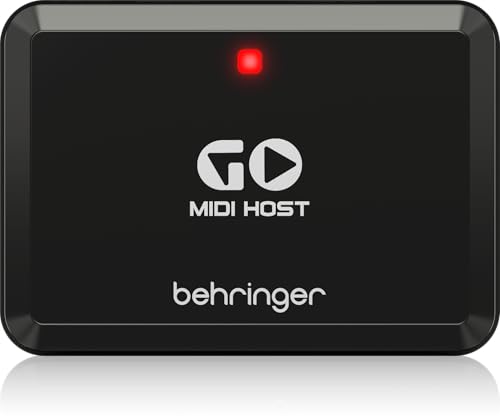
- Compact plug-and-play USB MIDI host
- Built for keyboard connectivity
- Very small, travel-first footprint
Best For: Keyboard players wanting a minimal USB host solution on the road
Travel-Ready USB-C MIDI Cable Interface
LEKATO USB-C MIDI Cable MIDI Interface

- 1-in/1-out MIDI with USB-C connection
- Plug-and-play on Windows, Mac, and iPad workflows
- LED indicators simplify signal checks
Best For: Travelers who need a compact, simple MIDI cable interface
Compact Host-to-Device MIDI Router
CME H2MIDI Pro Compact USB Host MIDI Interface

- Standalone USB host for class-compliant MIDI devices
- USB-C client mode with 2-in/2-out virtual ports
- Routing, filtering, mapping, and preset storage
Best For: Travel setups that need USB host support and DIN routing in one box
Portable 4x4 DIN MIDI Hub
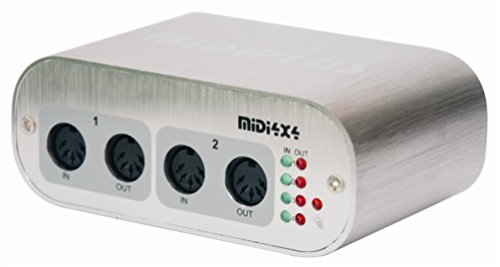
- 4-in/4-out MIDI interface for larger hardware rigs
- USB powered with no driver needed
- Per-port MIDI activity indicators
Best For: Travelers who need multiple DIN MIDI connections in a compact unit
Portable Creator Hub
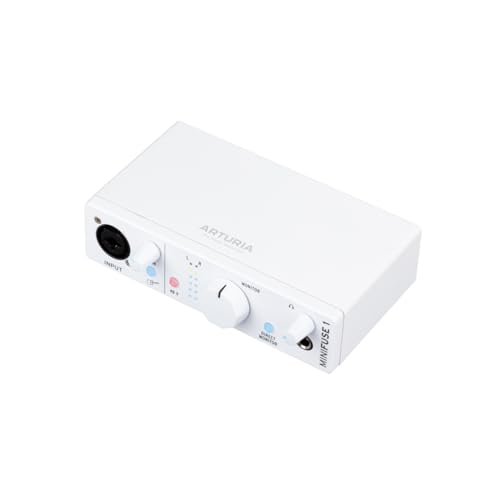
- 5-pin MIDI in/out for synths, controllers, and drum machines
- Compact USB interface with plug-and-play workflow
- 5-year warranty and included software bundle
Best For: Traveling musicians who need a compact MIDI-capable interface for simple recording
Road-Ready Multichannel Pick

- 4x4 USB audio/MIDI interface with 1x MIDI I/O
- Four MIDAS-designed mic preamps with phantom power
- Impact-resistant metal chassis for rugged use
Best For: Traveling musicians who want more inputs and a sturdy interface
Compact DSP Traveler

- USB-C 2-in/2-out interface with MIDI I/O
- 32-bit/192 kHz support plus DSP-powered monitoring
- Rugged full-metal housing with broad platform support
Best For: Traveling musicians who want compact USB-C recording with onboard DSP
Portable USB-C MIDI Router – CME U6MIDI Pro 3-in-3-out MIDI Interface
If you need midi interfaces for traveling musicians that can handle both simple connections and more advanced routing, the CME U6MIDI Pro is a compact, low-latency option worth a look. It works over a single USB-C port on computers and also functions as a standalone 3-in-3-out MIDI interface with routing and filtering tools, which makes it flexible for stage rigs and mobile studios.
Best For: Musicians who want a compact MIDI interface with USB-C support, standalone routing, and broad device compatibility while traveling.
Pros:
- Single USB-C connection with support for macOS, iOS, Windows, Android, Linux, and Chrome OS
- Standalone 3-in-3-out operation with MIDI router, filter, split, thru, merge, and mapping options
- Close to zero latency and no jitter, with support for notes, controllers, clock, sysex, timecode, and MPE
- Very lightweight at 3.49 ounces, which helps keep a travel setup compact
Cons:
- Routing and filtering setup depends on the free UxMIDI Tools software
- Only MIDI-focused, so it is not an audio interface
For traveling players who want one interface that can work with computers, tablets, and standalone MIDI gear, this model is especially versatile. Its small footprint and broad OS support make it a practical choice for flexible live and rehearsal setups.
Computer-Free USB-to-DIN Bridge – DigitalLife BridgeCore MIDI Host Box
For midi interfaces for traveling musicians who want to connect USB MIDI gear directly to 5-pin DIN hardware without a computer, the DigitalLife BridgeCore is built around simple standalone operation. It is designed for class-compliant USB MIDI devices, includes LED activity indicators, and aims to keep setup straightforward for rehearsal, studio, and live use.
Best For: Players who need a computer-free USB-to-DIN bridge for compatible keyboards, controllers, and synths.
Pros:
- Converts USB MIDI to standard 5-pin DIN MIDI without requiring a computer
- Plug-and-play operation with built-in LED indicators for power and MIDI activity
- Designed for studio, rehearsal, and live performance environments
- Compact metal housing and a 2-year limited warranty
Cons:
- Not for use with computers
- USB hubs are not supported
- May not work with USB MIDI devices that use non-standard protocols
This is a focused adapter rather than a full-featured interface, so it fits best when you need one job done reliably. If your travel setup centers on a class-compliant USB controller or keyboard and a 5-pin MIDI rig, it keeps the signal path simple.
Portable MIDI Distribution Box – CME MIDI Thru5 WC 1-in-5-out MIDI Thru
CME MIDI Thru5 WC 1-in-5-out MIDI Thru | 5-pin DIN, High-speed, Optional Bluetooth
Check Price On AmazonWhen you need midi interfaces for traveling musicians to distribute one MIDI source to multiple destinations, the CME MIDI Thru5 WC is a compact 1-in-5-out thru box built for stage and studio use. It runs from standard 5V USB-C power, supports low-latency wired transmission, and is designed to stay out of the way when space is tight.
Best For: Players who need a small, powered MIDI thru solution for pedalboards, road cases, and multi-device setups.
Pros:
- One MIDI input to five MIDI outputs for easy device distribution
- USB-C powered from any standard 5V USB source
- Close to zero latency with support for notes, controllers, clock, sysex, timecode, and MPE
- Lightweight, sturdy housing that suits travel and pedalboard use
Cons:
- USB port is for power only, not MIDI data
- No routing or filtering features like a full MIDI interface
For musicians who mainly need reliable MIDI distribution rather than USB connectivity, this is a clean utility piece. Its small footprint and bus-power approach make it easy to integrate into a compact touring rig.
Minimal USB Host Adapter – Behringer GO MIDI HOST
Behringer GO MIDI HOST Compact MIDI/USB Host Interface for Plug-and-Play Connectivity
Check Price On AmazonIf you are comparing midi interfaces for traveling musicians and want the smallest possible USB-to-host solution, the Behringer GO MIDI HOST is a compact plug-and-play option. It is designed as a USB host interface for keyboards and keeps the feature set simple, which can be useful when portability matters more than advanced routing.
Best For: Keyboard players who need a minimal USB MIDI host in a very small travel setup.
Pros:
- Compact USB MIDI host interface for plug-and-play connectivity
- Simple form factor that suits travel-oriented setups
- Designed specifically for keyboard use
Cons:
- Only one channel is listed, so it is not aimed at complex multi-port setups
- Limited published detail compared with more full-featured interfaces
This is the most stripped-down option in the group, so it makes sense when you only need basic USB host connectivity. If your rig is centered on a keyboard and you want to keep baggage and setup time low, it offers a straightforward approach.
Travel-Ready USB-C MIDI Cable Interface – LEKATO USB-C MIDI Cable MIDI Interface
If you want one of the simpler midi interfaces for traveling musicians, this LEKATO USB-C MIDI cable keeps the setup light. It offers 1-in/1-out MIDI with plug-and-play operation on Windows, Mac, and even iPad-compatible workflows, making it a practical choice for quick keyboard or synth connections on the road.
Best For: Players who want a compact USB-C MIDI cable for straightforward keyboard, synth, or drum pad recording while traveling.
Pros:
- Compact 6.5-foot cable design is easy to pack.
- Built-in driver and plug-and-play setup reduce hassle.
- LED indicators help confirm power and signal activity.
- Supports up to 16 input and output channels.
Cons:
- Designed for standard MIDI setups, so compatibility should be checked first.
- Older or vintage synths may need specific driver settings.
This is a good fit if your priority is portability and fast setup rather than lots of routing options. It stays focused on basic MIDI transfer, which can be ideal for mobile recording rigs and lightweight live rigs.
Compact Host-to-Device MIDI Router – CME H2MIDI Pro Compact USB Host MIDI Interface
For traveling musicians who need more than a basic cable, this CME H2MIDI Pro is one of the more flexible midi interfaces for traveling musicians. It can work as a standalone USB host for class-compliant devices or as a USB-C MIDI interface with computers, tablets, and mobile platforms, which makes it useful for hybrid rigs on the move.
Best For: Musicians who need a tiny MIDI router for connecting USB controllers and 5-pin DIN gear without relying on a computer.
Pros:
- Standalone USB host mode connects class-compliant USB MIDI gear directly to 5-pin DIN hardware.
- USB-C client mode provides 2-in/2-out virtual MIDI ports.
- Supports routing, filtering, mapping, splitting, and preset saving.
- Very compact design with dual power mode and broad OS compatibility.
Cons:
- Advanced features may require using the HxMIDI Tools software.
- Designed around MIDI routing, so it is more specialized than a simple cable interface.
If your travel setup includes both modern USB controllers and legacy DIN hardware, this model gives you serious flexibility in a small footprint. Its routing tools and host support make it a strong option for performers who need to adapt quickly.
Portable 4×4 DIN MIDI Hub – MIDI 4×4 USB MIDI Interface
If your travel rig needs multiple hardware connections, this 4×4 USB MIDI interface offers a more expanded MIDI setup while staying compact. With 4 inputs, 4 outputs, low-latency USB operation, and no-driver support on Mac and Windows, it works well for musicians who carry several MIDI devices on the road.
Best For: Players who need a compact multi-port interface for several keyboards, modules, or hardware MIDI devices.
Pros:
- 4-in/4-out layout supports more complex hardware setups.
- USB powered, so no external power supply is needed.
- No driver required for quick setup on Mac and Windows.
- Per-port activity indicators help monitor MIDI traffic.
Cons:
- Uses USB-B, which may be less convenient than newer connector types.
- Only listed for PC and Mac use, so it is less flexible than some newer interfaces.
This interface is a practical middle ground between a tiny cable and a full routing box. It is especially useful when a traveling musician needs several DIN connections without adding much bulk.
Portable Creator Hub – Arturia MiniFuse 1
If you’re shopping for midi interfaces for traveling musicians, the Arturia MiniFuse 1 is a compact option that keeps setup simple without giving up useful connectivity. It pairs USB recording with 5-pin MIDI in and out, so you can hook up synths, controllers, and drum machines while still capturing vocals or instruments on the go.
Best For: Traveling musicians who want a small, beginner-friendly interface with MIDI I/O and included software.
Pros:
- Includes 5-pin MIDI input and output for external MIDI gear
- Compact USB interface with plug-and-play workflow for quick setup
- Built with durable materials and backed by a 5-year warranty
- Includes useful software and tutorials for new users
Cons:
- Only 1 analog input channel, so it is not ideal for larger recording setups
- Best suited to simple mobile rigs rather than multi-input tracking
The MiniFuse 1 makes sense if you want a travel-ready interface that covers MIDI plus basic recording in a small footprint. It is especially appealing for musicians who value durability, a straightforward workflow, and bundled creative tools.
Road-Ready Multichannel Pick – Behringer UMC404HD
For musicians comparing midi interfaces for traveling musicians, the Behringer UMC404HD stands out if you need more inputs and a rugged build. It combines 4×4 USB audio/MIDI connectivity with four MIDAS-designed mic preamps, making it a practical choice when a portable rig has to handle multiple sources.
Best For: Traveling musicians who need a tougher interface with four inputs and MIDI I/O for more flexible recording sessions.
Pros:
- 4×4 USB audio interface with 1x MIDI I/O
- Four MIDAS-designed mic preamps with +48V phantom power
- 24-bit/192 kHz resolution for high-quality recording
- Impact-resistant metal chassis designed to be rugged
Cons:
- Larger and heavier than compact 2-input travel interfaces
- Windows support is listed in the details, so cross-platform fit may be less straightforward
If your travel setup needs more than a basic two-channel box, the UMC404HD offers useful headroom and durable construction. It is a solid fit for musicians who want extra I/O without moving up to a much more complex system.
Compact DSP Traveler – Yamaha URX22C
The Yamaha URX22C is a compact choice for midi interfaces for traveling musicians who want modern connectivity and onboard processing. With USB-C, MIDI I/O, and 32-bit/192 kHz support, it is built for portable recording setups that still need detailed monitoring and cross-platform flexibility.
Best For: Traveling musicians who want a compact USB-C interface with MIDI I/O and DSP-powered monitoring.
Pros:
- 2-in/2-out interface with MIDI I/O and USB-C connectivity
- 32-bit/192 kHz support for high-resolution recording
- DSP-powered monitoring with REV-X reverb, Channel Strip, and Guitar Amp Classics
- Full-metal housing for durability and iOS, macOS, and Windows compatibility
Cons:
- Only two analog inputs, so it is not intended for larger sessions
- Best for users who will benefit from the included DSP and software ecosystem
For a mobile rig, the URX22C balances portability with polished monitoring tools and broad device support. It is a strong fit if you want a small interface that can handle both recording and low-latency performance work.
How We Picked the Best Midi Interfaces for Traveling Musicians
We prioritized portability, simple power and connectivity, stable USB or host performance, and flexible routing. For Midi Interfaces for Traveling Musicians, the best choice is usually the one that works quickly across different keyboards, laptops, and stage setups without needing a full desk full of adapters.
We also looked for models that make sense for real-world travel: durable construction, compact footprints, and clear status indicators that help reduce setup mistakes in dim venues or hotel rooms.
Quick Comparison
Think of these options in three broad groups: tiny USB or host adapters for the lightest rigs, multi-port MIDI routers for players with several devices, and audio/MIDI interfaces for musicians who want one box to handle recording and connectivity.
If your setup changes often, a straightforward host bridge or compact MIDI interface may be the easiest fit. If you record on the road, an audio interface with MIDI may deliver better overall value.
Key Buying Factors for Midi Interfaces for Traveling Musicians
Portability and Power
Smaller units are easier to pack, but check whether they are bus-powered, need external power, or depend on a USB host device. That detail can make or break a travel setup.
Connectivity and Compatibility
Make sure the interface matches your instruments and destinations. USB-MIDI, DIN MIDI, USB-C, and host functionality all solve different problems, and compatibility with laptops, tablets, and standalone keyboards matters just as much as port count.
Routing Needs
If you only need one keyboard connected to a computer, a simple interface is enough. If you run multiple synths or controllers, a 4×4 or multi-thru design offers more flexibility and less cable swapping.
Recording and Monitoring
Some travelers want MIDI only; others need audio inputs, low-latency monitoring, and onboard DSP for a compact recording rig. Choose based on whether your priority is live control, studio capture, or both.
Who Should Buy Which Midi Interfaces for Traveling Musicians?
Choose a compact host or cable-style interface if you want the smallest possible travel footprint. Pick a multi-port MIDI interface if you manage several devices and need reliable routing on stage. Go with an audio/MIDI interface if your road setup doubles as a recording station.
For most musicians, the best Midi Interfaces for Traveling Musicians are the ones that minimize setup time and reduce the number of extra accessories you must carry. In practice, that usually means buying only as much interface as your actual workflow requires.