Finding the right monitor controller for multiple speaker pairs can make a studio or listening setup far easier to use. The best options simplify A/B switching, volume control, and speaker management without adding noise or confusion.
Below, we focus on practical choices for home studios, multi-room audio, and pro audio setups that need dependable control and straightforward operation.
Best 10 Monitor Controller for Multiple Speaker Pairs Picks for 2026
Passive Studio Control

- Two sources and two monitor pairs
- Mono, mute, and dim controls
- Passive metal desktop design
Best For: Studio users wanting simple, no-power monitor switching
4-Zone Speaker Control
PROZOR Speaker Selector Switch

- Switches one amp to four passive speaker pairs
- Independent zone buttons with master AMP control
- Passive, no-power design with impedance support
Best For: Whole-home or shop audio with multiple passive speaker zones
Bluetooth Monitor Hub

- Bluetooth input with easy pairing
- Balanced TRS inputs and headphone output
- Compact desktop monitor controller
Best For: Small monitor setups needing Bluetooth and subwoofer support
Impedance-Safe Zone Switch
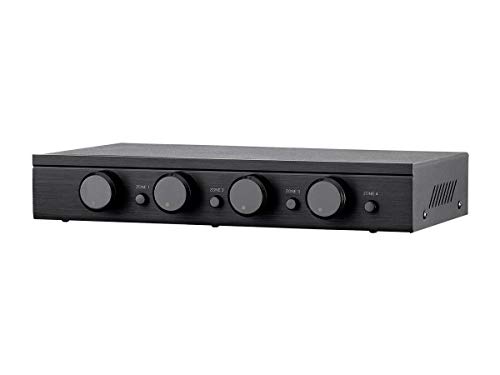
- Four speaker pairs from one amplifier
- Per-zone volume and on/off controls
- Automatic impedance protection
Best For: Safe passive multi-zone audio with individual zone volume control
Passive Precision Control
DYNASTY PROAUDIO PMC-1 Premium Monitor Volume Controller
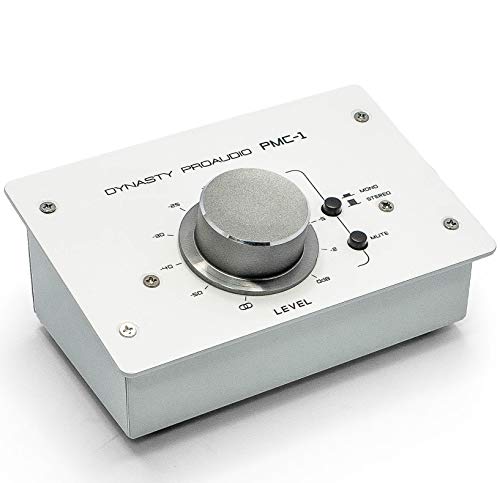
- Passive stereo volume control with a large knob
- Balanced XLR/TRS inputs and TRS outputs
- Solid metal enclosure for desktop or portable use
Best For: Clean, transparent monitor level control in stereo setups
4-Zone Speaker Switching
Pyle PSS4.2 4-Zone Speaker Selector Switch

- Switches up to 4 pairs of speakers from one amplifier
- Individual zone on/off switches for flexible routing
- Built-in protection circuitry with 14-gauge terminal support
Best For: Multi-room systems that need simple speaker pair switching
Independent Zone Volume
Pyle PSLSW4.5 4-Channel Speaker Selector
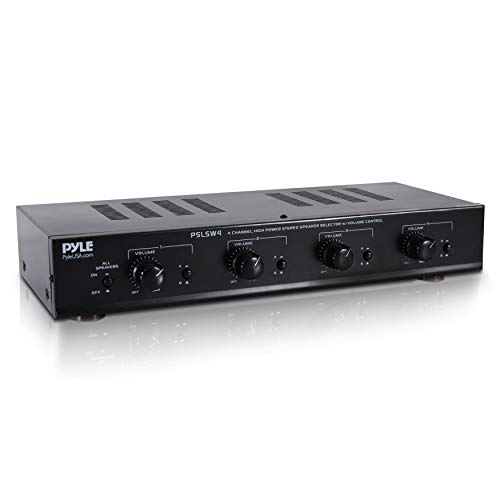
- Supports four pairs of 8-ohm speakers
- Independent volume control on each channel
- Compact design with overload protection
Best For: Users who want per-zone volume control across multiple speaker pairs
8-Zone Distribution Hub
Pyle PSS8 8-Channel Speaker Selector
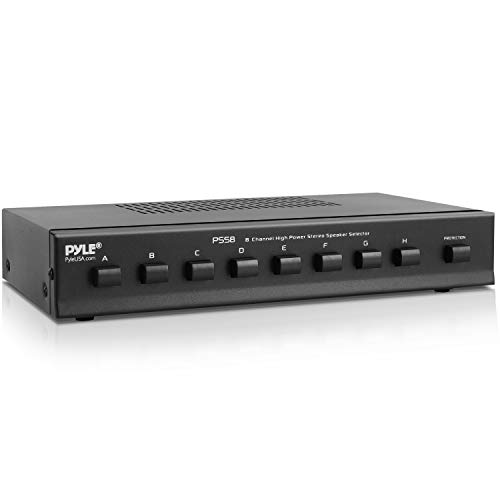
- Supports up to 8 pairs of speakers
- High-power stereo speaker selector
- Compact 16-ounce unit
Best For: Users who want an 8-pair speaker selector for a simple multi-zone stereo setup
4-Channel Volume Control
- Controls up to 4 speaker pairs
- Independent volume controls per channel
- Includes overload protection
Best For: Small home theater or multi-zone setups needing separate volume control
Compact 4-Zone Selector

- Supports up to 4 separate speaker pairs
- Handles 100 watts per channel
- Accepts 14-gauge speaker wire
Best For: Users who need a compact 4-pair speaker selector for a basic stereo system
Passive Studio Control – Mackie Big Knob Passive
If you want a straightforward monitor controller for multiple speaker pairs, the Mackie Big Knob Passive keeps the workflow simple. It gives you source and monitor pair selection plus mono, mute, and dim controls, all in a passive design that aims to preserve audio quality for studio and editing-suite use.
Best For: Engineers or creators who want a no-power desktop controller for switching between two sources and two monitor pairs.
Pros:
- Chooses between two sources and two monitor pairs
- Mono, mute, and dim buttons for fast monitor checks
- Passive, non-powered design with pristine audio quality
- Sturdy metal build for studio use
Cons:
- No powered features or extra processing
- Only covers two sources and two monitor pairs
- Built for studio/editing use rather than multi-room distribution
For users who value simple routing and minimal signal coloration, this is a clean monitor controller choice. It focuses on essential control rather than added features, which makes it a practical fit for compact pro-audio setups.
4-Zone Speaker Control – PROZOR Speaker Selector Switch
This PROZOR unit is a speaker selector switch rather than a studio monitor controller, but it is relevant if your goal is managing multiple speaker pairs from one amplifier. Independent A/B/C/D buttons and a master AMP switch make it easy to turn zones on or off for homes, patios, shops, or other passive speaker setups.
Best For: Passive multi-room systems that need one amplifier shared across up to four speaker pairs.
Pros:
- Controls up to four pairs of passive speakers
- Independent A/B/C/D zone buttons plus AMP master switch
- Passive design requires no external power
- Supports 4–16 ohm speakers and long wire runs
Cons:
- Does not include monitor-controller features like source selection
- Volume is controlled by the amplifier, not the switch box
- Only works with passive speaker systems
For distributed audio, this is a practical and simple way to manage multiple speaker pairs safely. It prioritizes zone switching, impedance-friendly operation, and easy day-to-day use over studio-style monitoring controls.
Bluetooth Monitor Hub – PreSonus MicroStation BT
The PreSonus MicroStation BT is a compact monitor controller for multiple speaker pairs in the sense that it helps you manage a main stereo monitor setup with added Bluetooth and subwoofer connectivity. It uses balanced TRS inputs, Bluetooth source switching, and headphone/aux output in a small desktop footprint for studio or home use.
Best For: Small desktop setups that want Bluetooth input, headphone support, and subwoofer integration with reference monitors.
Pros:
- Stereo Bluetooth input with pairing button and on/off control
- Balanced 1/4-inch TRS and 1/8-inch TRS connectivity
- Includes headphone/aux output for extra flexibility
- Compact tabletop design with subwoofer support
Cons:
- Designed around one main monitor pair, not multiple speaker pairs
- Limited to compact desktop use
- Only 2.1 audio output mode
If your priority is adding wireless playback and simple source switching to a small monitoring rig, this unit is a solid fit. It is more of an affordable desktop hub than a full multi-speaker controller, but it covers the essentials well.
Impedance-Safe Zone Switch – Monoprice SSVC-4.1
The Monoprice SSVC-4.1 is a speaker selector with volume control for handling multiple speaker pairs from a single amplifier. Individual zone on/off buttons, impedance protection, and accurate switching make it a practical choice for safe distribution of audio to several passive zones.
Best For: Users who need safe multi-zone passive speaker control with per-zone volume adjustment.
Pros:
- Controls up to four speaker pairs from one amplifier
- Individual zone on/off buttons with volume controls
- Automatic impedance protection circuitry
- Heavy-duty screw terminals support 12–18 AWG wire
Cons:
- Not a true studio monitor controller with source selection
- Requires a corded power connection
- Built for passive speakers only
For installations where reliability matters, this model stands out for its impedance protection and practical zone control. It is less about front-of-desk monitoring and more about safely distributing one amplifier across several speaker pairs.
Passive Precision Control – DYNASTY PROAUDIO PMC-1 Premium Monitor Volume Controller
If you want a monitor controller for multiple speaker pairs only in the sense of simple, transparent level control between your source and active monitors, the PMC-1 keeps the signal path straightforward. It is a passive stereo volume controller with balanced XLR/TRS inputs and TRS outputs, so it is built for clean attenuation rather than adding features you may not need.
Best For: Users who want a compact passive controller for precise stereo level adjustments in a DAW or desktop monitoring setup.
Pros:
- Large rotary knob makes precise fingertip volume changes easy
- Balanced XLR/TRS inputs and TRS outputs help reduce noisy interference
- Passive design aims for transparent attenuation without compromising audio
- Metal chassis adds a solid, road-ready feel
Cons:
- Limited to basic volume control and monitoring functions
- Does not provide multi-zone speaker switching
- Best suited to analog stereo signal chains
Overall, the PMC-1 makes sense if your priority is clean, hands-on volume control rather than routing between several speaker pairs. It is a practical fit for users who value a simple passive unit with balanced connections and a sturdy enclosure.
4-Zone Speaker Switching – Pyle PSS4.2 4-Zone Speaker Selector Switch
For a monitor controller for multiple speaker pairs, the Pyle PSS4.2 is built around switching rather than source-level coloration. It controls up to four pairs of speakers from one amplifier or receiver, with individual on/off switching for each zone, making it a straightforward hub for distributed listening.
Best For: Whole-home, multi-room, or commercial audio setups that need simple switching for up to four speaker pairs.
Pros:
- Controls up to 4 pairs of speakers from one amp or receiver
- Individual on/off switches let you choose any zone combination
- Built-in protection circuitry helps guard against overload and short circuits
- Spring-loaded terminals support up to 14-gauge wire for easier setup
Cons:
- Does not include independent volume controls per zone
- Designed for switching, not advanced monitoring functions
- Best paired with a compatible amplifier or receiver
This is a practical choice when your main need is distributing one amp to several speaker pairs safely. It keeps operation simple while adding protection circuitry and easy zone switching.
Independent Zone Volume – Pyle PSLSW4.5 4-Channel Speaker Selector
If you need a monitor controller for multiple speaker pairs with per-zone level control, the PSLSW4.5 is the most targeted of the group. It supports up to four pairs of speakers, gives each channel its own volume control, and keeps the design compact enough for a tabletop-friendly setup.
Best For: Home theater or stereo users who want four-speaker-pair switching with independent volume adjustment for each zone.
Pros:
- Supports up to four pairs of 8-ohm speakers
- Each channel has its own volume control for zone-by-zone tuning
- Compact design fits neatly into home audio setups
- Screw-type connectors support up to 14AWG wire and simplify installation
Cons:
- Maximum power is limited to 100W per channel
- Requires compatible 8-ohm speakers for best fit
- Advanced monitoring features are not included
For buyers who want more control than a basic selector offers, this model stands out because it adds independent volume adjustment to each zone. That makes it a smart pick when different rooms or speaker pairs need different listening levels.
8-Zone Distribution Hub – Pyle PSS8 8-Channel Speaker Selector
If you need a monitor controller for multiple speaker pairs, the Pyle PSS8 is built for simple multi-zone routing from one stereo amplifier. It supports up to 8 pairs of speakers, making it a practical choice when you want to switch or distribute audio across several rooms or listening areas without adding a lot of complexity.
Best For: Users who want an 8-pair speaker selector for a basic multi-zone stereo setup.
Pros:
- Handles up to 8 pairs of speakers
- Designed for high-power stereo speaker selection
- Compact 16-ounce unit for straightforward placement
- Compatible with amplifier, stereo system, and audio source use
Cons:
- Listed details do not include independent zone volume controls
- Uses RCA connector type in the supplied notes, which may not fit every setup
Overall, the PSS8 is a straightforward distribution box for larger speaker counts, especially if your priority is switching multiple pairs from one stereo source. It is best suited to users who want capacity and simplicity more than advanced monitoring features.
4-Channel Volume Control – Pyle PSLSW4 Speaker Selector
For a monitor controller for multiple speaker pairs with more hands-on control, the Pyle PSLSW4 lets you manage up to 4 speaker pairs from one stereo amplifier. Its independent volume controls and push-button switching make it a useful fit when you want to balance different listening zones instead of sending the same level everywhere.
Best For: Small home theater or multi-zone setups that need separate volume control for each speaker pair.
Pros:
- Controls up to 4 speaker pairs
- Independent audio source volume controls for each channel
- Push-button design for selecting pairs individually
- Includes overload protection circuitry
Cons:
- Rated at 100 watts max per channel
- Designed for 8-ohm impedance speakers
- Limited to 4 pairs, not larger multi-room systems
The PSLSW4 stands out if you want more control than a basic selector box provides. It is a practical middle ground for smaller systems where per-pair volume adjustment matters more than maximum speaker count.
Compact 4-Zone Selector – Pyle PSS4 Speaker Switch Box
If you want a monitor controller for multiple speaker pairs in a smaller system, the Pyle PSS4 gives you a simple way to route up to 4 separate pairs from one stereo setup. It is rated for 100 watts per channel with 8-ohm minimum impedance speakers, so it fits straightforward home audio applications where easy switching is the main goal.
Best For: Users who need a compact 4-pair speaker selector for a basic stereo system.
Pros:
- Supports up to 4 separate speaker pairs
- Handles 100 watts per channel
- Accepts speaker wire up to 14-gauge
- Compact footprint for smaller setups
Cons:
- No independent volume controls listed
- Requires speakers with minimum 8-ohm impedance
- Limited to 4 zones, not larger multi-room use
The PSS4 is a no-frills selector for users who mainly need reliable switching rather than extra control features. Its compact size and simple 4-pair layout make it a good fit for modest stereo setups.
How We Picked the Best Monitor Controller for Multiple Speaker Pairs
We focused on control layout, switching convenience, load handling, and overall usability for anyone comparing a Monitor Controller for Multiple Speaker Pairs. Priority also went to models that make it easy to route audio cleanly, avoid accidental overdriving, and keep day-to-day operation simple.
Because these products serve different use cases, our selection includes passive monitor controllers, speaker selectors, and zone-distribution solutions. That gives buyers more flexibility depending on whether the goal is studio monitoring, home audio, or multi-zone playback.
Quick Comparison
For studios, passive desktop controllers are usually the best fit when you want transparent level control and fast access to mute, dim, or mono functions. For larger speaker-distribution setups, multi-zone selector boxes are better when you need one source feeding several speaker pairs with separate on/off or volume control.
If Bluetooth or compact desktop convenience matters, look at units that add wireless input or a smaller footprint. If you are driving several zones from one amplifier, impedance protection and power ratings become especially important.
Key Buying Factors for a Monitor Controller for Multiple Speaker Pairs
Channel Routing and Speaker Count
Match the controller to your actual speaker layout. Some units are built for studio A/B monitoring, while others are designed for 4-zone or even 8-zone distribution. Choosing the right format prevents overbuying and improves ease of use.
Passive Vs. Powered Design
Passive controllers are often preferred in monitoring chains because they keep the signal path simple. Powered or feature-rich units may add convenience, but they can also bring extra complexity that is not always necessary.
Protection and Load Management
For speaker selectors, impedance protection and power handling are critical. These features help reduce strain on an amplifier when multiple pairs are active. Always check the rated wattage and confirm the device is suitable for your system.
Control Features That Matter
Look for practical controls such as large volume knobs, individual zone buttons, mute, mono, dim, or independent level adjustment. These features make a Monitor Controller for Multiple Speaker Pairs much easier to live with in real-world use.
Who Should Buy Which Monitor Controller for Multiple Speaker Pairs?
If you want a simple desktop monitoring solution, choose a compact passive controller with clean level adjustment and basic utility functions. If your setup involves several rooms or zones, a speaker selector with independent channel controls is usually the better fit.
Buyers who need wireless playback or a hybrid studio/home setup should consider a model with Bluetooth input. And if you are building a larger distributed audio system, prioritize a higher-zone selector with solid power ratings, clear labeling, and protection features.
In short, the best choice depends on whether you are controlling monitor pairs in a studio or distributing sound across multiple speaker zones. Focus on the control style, the number of pairs, and the protection features that match your system.