The right passive audio crossover can help each speaker reproduce the frequencies it handles best, improving clarity, balance, and system reliability without adding another amplifier channel.
We selected 10 options for car audio and home hi-fi setups, ranging from compact two-way designs to three-way boards. Use the guide below to match crossover type, impedance, power handling, and frequency ranges to your speakers.
Best 10 Passive Audio Crossovers Picks for 2026
Compact Car Audio Upgrade
Audiopipe CRX-203 2-Way Crossover

- Two-way crossover pair for car audio
- 150W RMS/300W peak handling
- Gold-plated terminals and ABS enclosure
Best For: Stereo vehicle speaker installations
High-Power Cabinet Builder

- Three-way 500Hz/5kHz crossover points
- 400W rating at 8 ohms
- Board-only design for custom cabinets
Best For: DIY PA and pro-audio speaker cabinets
Punch Pro Component Match
Rockford Fosgate PP4-X Passive Crossover

- Designed for 4-ohm Punch Pro components
- Dual woofer outputs for two midranges
- 125W RMS/250W maximum handling
Best For: Rockford Fosgate Punch Pro car-audio systems
Three-Way Focal System Upgrade
Focal A3-XO 3-Way Crossover Pair

- Three-way passive car crossover pair
- 12/12dB-per-octave filtering
- 300Hz to 4kHz crossover range
Best For: Compatible Focal three-way component systems
High-Power PA Pick
Eminence PXB33K5 3-Way Crossover
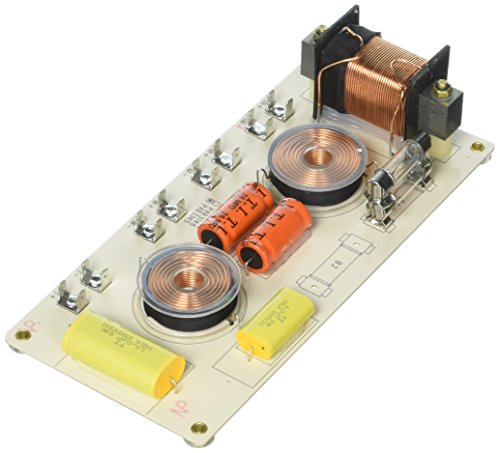
- 400-watt, three-way passive design
- 500 Hz and 3.5 kHz crossover points
- Board-only format for custom PA builds
Best For: High-power 8-ohm PA cabinets
Custom Two-Way Build
Eminence PXB21K6 Crossover Board

- 400-watt two-way passive design
- 1.6 kHz crossover point
- Board-only format for retrofits
Best For: DIY 8-ohm two-way speaker cabinets
Best Easy-Install Pick

- Screw terminals simplify installation
- 860Hz and 6,000Hz crossover points
- Two-pack supports 4–8 ohm speakers
Best For: DIY car or home audio systems with 4.5-inch-plus midrange speakers
Best Compact 2-Way Design

- 2-way design with bass inductor
- Solderless plug-in connection
- Heat-dissipating ABS housing
Best For: Simple car speaker upgrades with easy wiring
Compact Car Audio Upgrade – Audiopipe CRX-203 2-Way Crossover
300 Watts 2 Way Crossover - (2 Pack) Passive Car Audio Speaker Tweeter Mids and Highs CRX-203
Check Price On AmazonThe Audiopipe CRX-203 is a practical two-way option for car-audio installations that need passive audio crossovers for separating tweeter and woofer frequencies. This two-pack uses wired connections, gold-plated screw terminals, and an ABS enclosure for a straightforward installation.
Best For: Car-audio builds using 6.5-inch woofers and separate tweeters.
Pros:
- Supplied as a two-pack for stereo installations.
- Handles 150 watts RMS and 300 watts peak per crossover.
- Uses high-grade polymer capacitors and gold-plated screw terminals.
- Specified crossover ranges cover woofer and tweeter duties.
Cons:
- Designed for car audio rather than home or PA systems.
- It is not waterproof.
- The supplied notes do not specify adjustable crossover settings.
Choose the CRX-203 when you want a compact, wired two-way crossover pair for a vehicle system and your drivers fit its stated power and frequency ranges.
High-Power Cabinet Builder – Eminence PXB3:5k0 3-Way Board
The Eminence PXB3:5k0 is a board-only solution for custom passive audio crossovers in pro-audio cabinets and PA builds. Its three-way design separates lows, mids, and highs at 500Hz and 5kHz, with an 8-ohm impedance and 400-watt rating.
Best For: DIY cabinet builders and pro-audio users working with 8-ohm multi-driver systems.
Pros:
- Three-way design provides dedicated low, mid, and high frequency paths.
- Rated for 400 watts at 8 ohms.
- Uses Butterworth filtering with 12dB, 6dB, and 18dB slopes.
- Board-only format allows flexible custom installation.
Cons:
- It is a board only, so it requires a suitable cabinet installation.
- Designed around 8-ohm systems rather than a broad range of impedances.
- Less convenient for users seeking a pre-installed crossover enclosure.
For a high-power custom speaker project, this Eminence board offers clearly specified crossover points and filtering. Confirm driver impedance and cabinet space before installation.
Punch Pro Component Match – Rockford Fosgate PP4-X Passive Crossover
The Rockford Fosgate PP4-X is a dedicated 4-ohm passive audio crossover for Punch Pro midrange and tweeter systems. It includes dual woofer outputs, a 6dB-per-octave low-pass filter, mounting hardware, and power handling of 125 watts RMS or 250 watts maximum.
Best For: Rockford Fosgate Punch Pro 4-ohm component installations requiring dual midrange outputs.
Pros:
- Designed specifically for Punch Pro midrange and tweeter components.
- Dual woofer outputs support two Punch Pro midrange drivers.
- Includes mounting hardware and a one-year manufacturer warranty.
- Compact car-mount format uses speaker-wire connectivity.
Cons:
- Compatibility is limited to Rockford Fosgate Punch Pro speakers.
- Sold as one crossover rather than a pair.
- Its 4-ohm design is not intended for every speaker system.
The PP4-X makes the most sense as part of a matching Punch Pro build. It is a specialized component, so verify speaker compatibility and quantity before ordering.
Three-Way Focal System Upgrade – Focal A3-XO 3-Way Crossover Pair
The Focal A3-XO pair is built for three-way car component systems that need passive audio crossovers between the low, mid, and high drivers. It uses 12/12dB-per-octave filtering with stated crossover points from 300Hz to 4kHz and comes as two wired crossover units.
Best For: Focal-oriented three-way car component systems needing a matched crossover pair.
Pros:
- Three-way design provides separate paths for multi-driver systems.
- 12/12dB-per-octave crossover configuration is clearly specified.
- 300Hz to 4kHz crossover range suits the listed three-way application.
- Pair format supports a stereo installation.
Cons:
- Designed for car component systems rather than general-purpose speaker builds.
- It is not waterproof or water resistant.
- The supplied notes do not list power handling or impedance.
The A3-XO is a sensible choice when building around a compatible Focal three-way setup and you want a matched pair. Check the system’s power and impedance requirements, which are not specified here.
High-Power PA Pick – Eminence PXB33K5 3-Way Crossover
The Eminence PXB33K5 is a practical choice for builders seeking passive audio crossovers for high-wattage PA cabinets. Its three-way design separates lows, mids, and highs at 500 Hz and 3.5 kHz, with filtering intended to improve clarity and protect connected drivers.
Best For: DIY PA cabinets, installed sound systems, and professional sound-reinforcement builds using 8-ohm components.
Pros:
- Handles up to 400 watts for high-power speaker applications.
- Three-way filtering provides dedicated low-, mid-, and high-frequency separation.
- Board-only format offers flexibility for custom cabinet layouts and repairs.
Cons:
- Does not include cabinet mounting hardware.
- Designed for 8-ohm systems, limiting compatibility with other impedances.
Choose this model when you need a robust three-way passive crossover for a custom or professional PA enclosure. Its board format requires more installation work, but it gives builders control over the final cabinet design.
Car Audio Upgrade – DS18 PRO-CFX 2-Way Crossover
The DS18 PRO-CFX is a two-way option for shoppers comparing passive audio crossovers for car audio systems. Sold as a two-pack, it filters frequencies between tweeters and mid-range speakers while supporting up to 300 watts RMS per supplied notes.
Best For: Car audio installations pairing tweeters and mid-range speakers with a wired amplifier setup.
Pros:
- Two-way design helps direct appropriate frequencies to two speaker components.
- 300-watt RMS power handling suits higher-output car audio systems.
- Compact 6.3-by-3.5-by-1.5-inch dimensions simplify installation.
- Two crossovers are included in the pack.
Cons:
- Intended specifically for car audio rather than general PA cabinet construction.
- Its listed 3.5 kHz frequency response may not suit every driver combination.
This is a straightforward pick for a compact automotive system where you want one amplifier channel to serve two filtered speakers. Confirm the crossover specifications match your tweeter and mid-range drivers before installation.
Custom Two-Way Build – Eminence PXB21K6 Crossover Board
The Eminence PXB21K6 is a board-style choice for passive audio crossovers in two-way speaker projects. It uses a 1.6 kHz crossover point with 12 dB/octave low-pass and 18 dB/octave high-pass slopes, making it suited to custom PA cabinets and retrofits.
Best For: DIY speaker builders and repair projects using compatible 8-ohm drivers.
Pros:
- Supports up to 400 watts in professional speaker builds.
- 1.6 kHz crossover point provides defined low/high frequency division.
- Butterworth filtering and steep slopes help reduce unwanted frequency overlap.
- Board-only construction works well for retrofits and custom enclosures.
Cons:
- Requires the buyer to provide mounting and enclosure hardware.
- Two-way design is less flexible than a three-way crossover for multi-driver systems.
- Compatibility is centered on 8-ohm drivers.
For a conventional two-way cabinet, this Eminence board offers high power handling and clearly specified filtering. It is best suited to hands-on builders who can install the component and verify driver impedance and crossover needs.
Best Easy-Install Pick – HiFi 3-Way Passive Crossover
For DIY car or home audio upgrades, this 3-way passive crossover combines screw-terminal installation with components designed to separate bass, midrange, and treble. It supports 4–8 ohm speakers and is rated for up to 200 watts peak.
Best For: HiFi bookshelf, car, or home audio systems using a 4.5-inch-or-larger midrange speaker.
Pros:
- Screw terminals avoid soldering during installation.
- 3-way design uses 860Hz and 6,000Hz division points.
- Includes two crossovers and supports 4–8 ohm impedance.
Cons:
- 200-watt rating is lower than some competing options.
- Designed for a 12V DC supply.
- Speaker compatibility requires attention to the recommended midrange size.
This is a practical choice among passive audio crossovers when straightforward wiring and three-band speaker separation matter more than maximum power handling.
Best High-Power Car Audio Pick – 300W 3-Way Crossover
This 3-way passive crossover is built for car audio setups that need a higher stated power limit. Its 300-watt maximum rating and separate woofer, midrange, and tweeter frequency ranges make it a flexible option for multi-driver systems.
Best For: 4-ohm car audio systems using separate woofer, midrange, and tweeter drivers.
Pros:
- 300-watt maximum power rating.
- Provides distinct woofer, midrange, and tweeter ranges.
- Uses high-grade polymer capacitors plus ferrite and air-cooled spools.
Cons:
- Specified for 4-ohm systems, limiting compatibility with other impedances.
- Not waterproof or water resistant.
- The supplied details list a one-count unit count despite the product title describing a two-pack.
Among these passive audio crossovers, this model stands out for its higher power handling and clearly defined three-way frequency ranges, provided your system matches the 4-ohm requirement.
Best Compact 2-Way Design – Universal 300W Car Crossover
300 Watts 2 Way Crossover, Car Audio Crossover Universal Heat Dissipation Speaker Frequency Divider
Check Price On AmazonThis 2-way passive crossover focuses on simple connections, bass support, and housing durability. A plug-in socket, bass inductor, heat-dissipation ABS enclosure, and overcurrent protection make it a practical fit for straightforward car speaker upgrades.
Best For: Car audio users who want a simple 2-way crossover with easy wiring and a heat-dissipating enclosure.
Pros:
- 300-watt design with a bass inductor for improved bass response.
- Solderless plug-in socket supports easier connections.
- Double-layer ABS housing is designed for heat dissipation and durability.
Cons:
- 2-way design offers less driver separation than a 3-way crossover.
- The supplied notes do not specify crossover frequency points or impedance.
- Protection and performance details are described broadly rather than with specific limits.
This is a sensible option among passive audio crossovers for users prioritizing uncomplicated installation and a rugged enclosure over detailed published specifications.
How We Picked These Passive Audio Crossovers
We focused on passive network designs suited to common two-way and three-way speaker systems, including car audio component sets, pro-audio drivers, and home hi-fi builds. The selection considers stated power handling, impedance compatibility, crossover configuration, installation format, and whether the product is sold as a single unit or pair.
Because specifications and real-world results can vary by speaker sensitivity, enclosure, amplifier, and installation, treat published wattage as a matching reference rather than a guarantee of output quality. A crossover should be evaluated as part of the complete speaker system.
Quick Comparison
| Best For | Recommended Type | What to Check First |
|---|---|---|
| Car tweeter and midrange pairing | Two-way passive crossover | Impedance, power rating, and included pair quantity |
| Home hi-fi three-driver systems | Three-way board crossover | Woofer, midrange, and tweeter crossover points |
| Professional or high-output drivers | Heavy-duty two- or three-way network | Continuous power handling and driver sensitivity |
| Custom speaker builds | Board-style crossover | Terminal layout, component access, and mounting space |
Key Buying Factors for Passive Audio Crossovers
Two-Way or Three-Way Design
A two-way crossover typically divides the signal between a woofer or midrange driver and a tweeter. Choose a three-way model when the system has separate woofer, midrange, and tweeter drivers. Using the wrong layout can leave a driver underused or expose it to frequencies it cannot reproduce safely.
Impedance and Crossover Frequency
Match the crossover’s nominal impedance to the connected drivers, commonly 4 or 8 ohms. Also verify the crossover frequency or frequencies against the manufacturer’s recommended operating range. The goal is a smooth handoff between drivers, not simply a higher or lower cutoff.
Power Handling
Compare the network’s stated power capacity with the amplifier’s clean output and the speakers’ ratings. Avoid assuming that a peak wattage figure equals continuous handling. An amplifier driven into clipping can damage tweeters even when its nominal rating appears suitable.
Installation and Connections
Check enclosure room, mounting holes, terminal types, polarity markings, and whether heat dissipation is adequate. Board-style units may suit custom cabinets, while enclosed car-audio crossovers can be easier to secure and wire. Maintain correct polarity and use appropriate speaker cable.
Who Should Buy Which Passive Audio Crossovers?
Choose a two-way car-audio crossover for a typical tweeter-and-midrange installation, especially when you want a straightforward passive solution. A three-way model is the better fit for a speaker cabinet with dedicated woofer, midrange, and tweeter drivers. Board crossovers are useful for DIY builders who need access to the network and can provide a protected mounting location.
Before ordering, confirm the driver impedance, recommended crossover range, amplifier output, and available space. If your speakers already include a matched crossover, replacing it with a generic network may change tonal balance and protection characteristics. For the most predictable result, use a crossover designed around the electrical and acoustic behavior of your specific drivers.