Choosing the right monitor system can make a live band mix feel instantly tighter, clearer, and easier to perform with. A good personal mixer lets each player shape their own monitor blend without slowing down the front-of-house workflow.
In this roundup, we focus on practical options for rehearsal rooms, club gigs, and touring stages, with choices ranging from simple belt-pack units to advanced digital systems.
Best 10 Personal Monitor Mixer for Live Bands Picks for 2026
Digital stage control
Behringer POWERPLAY P16-M 16 Channel Digital Personal Mixer

- 16-channel digital stereo personal mixer
- Built for Behringer Powerplay distribution systems
- Lightweight corded desktop unit
Best For: Players who need hands-on control in a Powerplay-based live band monitor rig
Compact monitor station
Rolls PM351 Personal Monitor Station

- Tiny 5 x 5 x 5 inch footprint
- Lightweight at 1.1 pounds
- Straightforward personal monitor station
Best For: Vocalists and musicians needing a minimal, space-saving monitor station
Portable mix and record
Zoom LiveTrak L6max Mixer/Recorder

- 12-channel mixer with 14-track SD recording
- Battery, USB, or mobile pack powered
- Clip-free recording with AI noise reduction
Best For: Bands and musicians who want a portable mixer/recorder for live sessions
Simple loud monitor amp
Rolls PM50s Personal Monitor Amplifier
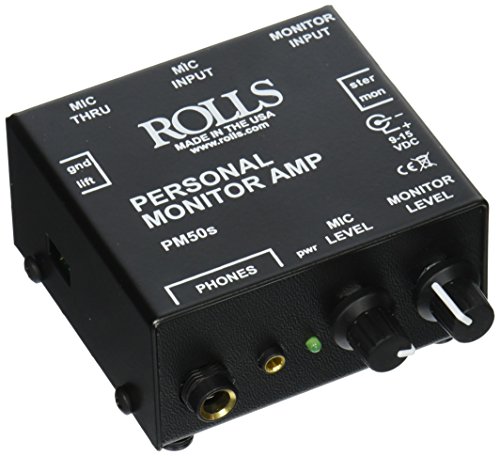
- XLR mic in with pass-through and ground lift
- Mono or stereo 1/4-inch monitor input
- 1/4-inch and 1/8-inch phone outputs
Best For: Singers and performers who need a basic, loud personal monitor amp
Best Overall
Behringer P16-HQ 16-Channel Personal Monitor Mixer

- 16 channels with performer-controlled level, pan, and EQ
- 114dB dynamic range DAC for clearer monitoring
- Backlit controls and solo/mute functions for stage use
Best For: Live bands that want clear, hands-on personal monitor control
Best for Flexible IEM Routing
Xvive PX Personal In-Ear Monitor Amplifier

- Three channels with master and individual volume controls
- Cat-5 cable carries audio and power up to 200 feet
- Runs on PoE or AAA batteries for flexible stage use
Best For: Bands needing simple, customizable in-ear monitoring
Best for Allen & Heath Ecosystems
Allen & Heath ME-500 16-Channel Personal Mixer

- 16 mono/stereo inputs with level and pan control
- 8 user presets plus 2-band EQ and limiter
- 3.5mm and 1/4-inch headphone outputs
Best For: Bands wanting a compact wired mixer with easy recall
Portable Stage Monitor
Bolanle P2 In-Ear Monitor Amplifier

- XLR and 1/4" TRS input flexibility
- Stereo or mono monitoring modes
- AAA battery-powered, belt-clip design
Best For: Musicians needing a compact wired in-ear monitor amp for stage and rehearsal
Personal Blend Mixer
ART MyMONITORII Headphone Monitor Mixer
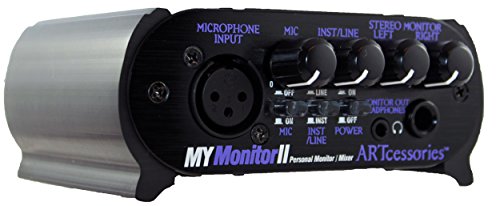
- Blends mic, instrument, and stereo sources
- Passes phantom power for condenser mics
- Mic thru with pop-less mute switch
Best For: Vocalists and players who want a compact wired headphone monitor mixer
Pro Digital Monitor Hub
Midas DP48 48-Channel Personal Mixer

- Dual 48-channel personal monitor mixing
- 12 stereo groups and dual mix control
- SD card recording with ambience microphone
Best For: Bands and engineers using Midas monitoring hubs for advanced personal mixes
Digital stage control – Behringer POWERPLAY P16-M 16 Channel Digital Personal Mixer
If you need a personal monitor mixer for live bands and you already use a Behringer Powerplay distribution system, the POWERPLAY P16-M gives each musician direct control over 16 channels in a compact desktop unit. Its wired, XLR-based setup is aimed at personal monitoring rather than front-of-house mixing, so it fits best in rehearsals, churches, and stage rigs where players want fast access to their own blend.
Best For: Band members and engineers using a Behringer Powerplay ecosystem who want a dedicated 16-channel personal monitor mixer.
Pros:
- 16-channel digital stereo personal monitor mixer
- Designed for use with the Behringer Powerplay distribution system
- Compact and lightweight at 1.8 pounds
- XLR audio input/output support for stage integration
Cons:
- Works best as part of a specific Powerplay setup
- Corded electric power means it is not a battery option
For bands already built around the Powerplay workflow, this is a straightforward way to give players control over their own monitor mix without adding extra clutter. It is a specialized solution, but that focus is exactly what makes it useful on busy stages.
Compact monitor station – Rolls PM351 Personal Monitor Station
The Rolls PM351 is a compact personal monitor mixer for live bands when you want a simple monitor station without a lot of extra hardware. At just 5 x 5 x 5 inches and 1.1 pounds, it is easy to place on a stand or keep close at hand for personal control in small stage setups.
Best For: Vocalists and players looking for a small, straightforward personal monitor station.
Pros:
- Very compact footprint for tight stage spaces
- Lightweight at 1.1 pounds
- Personal monitor station format for simple use
Cons:
- Supplied notes provide limited feature detail
- May be too basic for users wanting advanced channel control
If your priority is a no-frills personal monitor station, the PM351 keeps the footprint small and the setup simple. It makes the most sense when you need a dedicated monitor point more than a fully featured mixer.
Portable mix and record – Zoom LiveTrak L6max Mixer/Recorder
The Zoom LiveTrak L6max is a portable mixer/recorder that can work in live band environments where you also want to capture the performance. It offers 12 channels, up to 14 tracks recorded to SD cards, battery power, and USB connectivity, so it is practical for musicians who move between rehearsal, stage, and recording use.
Best For: Musicians and live performers who want a battery-powered mixer/recorder for band sessions and portable recording.
Pros:
- 12-channel mixer with up to 14-track recording
- Battery powered, with USB bus power and mobile battery pack support
- Clip-free audio via dual AD converters on channels 1-4
- Built-in AI noise reduction and MIDI-synced sound pads
Cons:
- Not a dedicated personal monitor mixer in the traditional sense
- Feature set may be more than some simple monitor-only users need
For bands that want recording and live utility in one box, the L6max is the most versatile option here. It is especially appealing if portability, clip-free capture, and battery operation matter more than a pure monitor-only workflow.
Simple loud monitor amp – Rolls PM50s Personal Monitor Amplifier
The Rolls PM50s is a compact personal monitor mixer for live bands when you want a simple, loud monitor amp with easy input options. It includes XLR mic in and pass-through, mono or stereo 1/4-inch monitor input, and 1/4-inch plus 1/8-inch phone outputs, making it flexible enough for basic stage monitoring needs.
Best For: Singers and performers who want a small, loud personal monitor amplifier with basic wired connections.
Pros:
- XLR mic input with pass-through and ground lift
- Mono or stereo 1/4-inch monitor input
- 1/4-inch and 1/8-inch phone outputs
- Compact 9-volt powered design
Cons:
- Only 2 channels, so it is not for complex mixes
- 90-day warranty is shorter than many buyers prefer
If you need a practical monitor amp rather than an advanced mixer, the PM50s covers the essentials with simple, stage-friendly connections. It is a good fit for players who just need their own signal loud and clear on stage.
Best Overall – Behringer P16-HQ 16-Channel Personal Monitor Mixer
If you want a personal monitor mixer for live bands that puts control in the hands of each performer, the Behringer Powerplay P16-HQ is built for that job. Its 16-channel digital layout, 3-band EQ per channel, and updated backlit controls make it easier to shape an in-ear or wedge mix quickly on stage.
Best For: Bands that want a straightforward, performer-controlled monitoring system with clear sound and easy on-stage adjustment.
Pros:
- 16 independent channels for detailed personal mixes
- 114dB dynamic range DAC and high-quality amplifier stage for improved clarity
- 3-band EQ per channel plus solo and mute functions
- Backlit controls and LED indicators help in dim stage lighting
Cons:
- Uses Ultranet-style setup, so it fits best in compatible systems
- Built around wired, corded operation rather than a wireless workflow
Overall, this is a strong pick if you want a reliable, musician-friendly monitoring mixer that keeps setup simple while giving players real control over their monitor blend. It leans toward clarity, flexibility, and practical stage usability.
Best for Flexible IEM Routing – Xvive PX Personal In-Ear Monitor Amplifier
Xvive PX System Personal in-Ear Monitor Amplifier for Stage Monitors Band Live,Recording
Check Price On AmazonThe Xvive PX System is a practical personal monitor mixer for live bands when you want simple, customizable in-ear monitoring with minimal setup. It carries three channels over Cat-5 cable, includes master and individual channel level controls, and adds panning options so players can tailor the mix to their preference.
Best For: Small to mid-sized bands that want plug-and-play personal IEM control with flexible power options.
Pros:
- Three balanced channels with master and individual volume controls
- Cat-5 transmission supports audio and power up to 200 feet
- DIP switches allow left, right, or both-channel panning
- Works with PoE or 2x AAA batteries for added flexibility
Cons:
- Only provides three output channels
- Battery operation is limited to up to 5 hours
- Expansion requires additional PX system components
This is a good fit if your priority is simple setup, compact hardware, and easy personal mix control for singers and players on stage. The PX System stays focused on usability rather than packing in lots of channels.
Best for Allen & Heath Ecosystems – Allen & Heath ME-500 16-Channel Personal Mixer
For bands already using an Allen & Heath-style monitoring setup, the ME-500 is a capable personal monitor mixer for live bands that keeps the controls familiar and efficient. It offers 16 mono/stereo inputs, level and pan control, a master 2-band EQ, and limiter protection to help each performer dial in a workable mix.
Best For: Players who want a compact, wired personal mixer with easy presets and standard headphone outputs.
Pros:
- 16 mono/stereo inputs with level and pan control
- Master 2-band EQ and limiter for basic mix shaping
- 8 user presets for quick recall
- 3.5mm and 1/4-inch headphone outputs for broad compatibility
Cons:
- Uses wired power and cable-based connectivity
- Mic stand bracket and headphone hanger are sold separately
The ME-500 is a solid utility choice when you want hands-on personal monitoring without a complicated feature set. Its preset support and standard outputs make it easy to integrate into a rehearsal or live-band workflow.
Portable Stage Monitor – Bolanle P2 In-Ear Monitor Amplifier
If you need a personal monitor mixer for live bands that stays simple and portable, the Bolanle P2 is built for straightforward in-ear monitoring on stage and at rehearsal. It accepts XLR or 1/4" TRS inputs, supports stereo or mono operation, and runs on AAA batteries so you can place it anywhere without worrying about charging or phantom power.
Best For: Keyboardists, drummers, guitarists, and bass players who want a compact wired monitor amp with flexible input options.
Pros:
- XLR and TRS input support makes it easy to connect to pro audio gear.
- Stereo/mono switch adds flexibility for different stage monitoring setups.
- Battery-powered design keeps the unit cordless and stage-ready.
- All-metal chassis and belt clip suit regular gigging and travel.
Cons:
- Requires 2 AAA batteries, so you'll need spares for long gigs.
- Single-output design keeps it focused on one personal mix at a time.
The P2 is a practical pick when you want a rugged, no-fuss way to hear your mix clearly on loud stages. Its direct connection options and compact build make it especially useful for musicians who need dependable personal monitoring without extra setup.
Personal Blend Mixer – ART MyMONITORII Headphone Monitor Mixer
The ART MyMONITORII is a practical personal monitor mixer for live bands when you want to blend your own sources into a headphone mix. It combines microphone, instrument, and stereo monitor inputs, includes a mic thru with pop-less mute, and passes phantom power for use with condenser mics.
Best For: Vocalists and players who need a small wired mixer to combine mic, instrument, and stereo monitor feeds for personal monitoring.
Pros:
- Blends microphone, instrument, and stereo sources for a customized monitor mix.
- Mic input includes thru and pop-less on/off mute switch.
- Passes phantom power for condenser microphone use.
- Instrument/line input and stereo monitor blend control add routing flexibility.
Cons:
- Wired design means it is not a wireless monitoring solution.
- Limited to a simple 2-channel personal monitoring format.
For musicians who want more control than a basic headphone amp, the MyMONITORII offers useful blending features in a compact, battery-powered unit. It fits well in rehearsal and live settings where combining a few essential sources is the main priority.
Pro Digital Monitor Hub – Midas DP48 48-Channel Personal Mixer
If you're shopping for a higher-end personal monitor mixer for live bands, the Midas DP48 is built for larger monitoring systems and more detailed mix control. It works with Midas personal monitoring system hubs, offers dual 48-channel mixing, and adds an SD card recorder plus a stereo ambience microphone for a more natural on-stage listening experience.
Best For: Bands and engineers using a Midas personal monitoring system who need advanced dual-mix control and rehearsal recording.
Pros:
- Dual 48-channel personal monitor mixing supports complex band setups.
- 12 stereo groups help speed up mix creation and balancing.
- Dual mix feature allows two complete monitor mixes to be controlled independently.
- SD card recording/playback and ambience mic add rehearsal and live-use value.
Cons:
- Designed specifically for compatibility with Midas personal monitoring system hubs.
- More advanced than needed for simple one-source monitor setups.
The DP48 is the most capable option here for players who need serious channel count and flexible control in a professional monitoring ecosystem. Its recording and ambience features also make it useful beyond basic in-ear monitoring.
How We Picked the Best Personal Monitor Mixer for Live Bands
We focused on Personal Monitor Mixer for Live Bands setups that balance sound quality, ease of use, channel capacity, and stage practicality. Priority went to units that are useful in real band environments, including wired in-ear monitoring, fast level control, and dependable hardware for repeated setup and teardown.
We also considered whether a model suits simple stereo monitor duties or more demanding multi-channel mixing, since bands often have very different needs depending on size, stage volume, and monitoring style.
Quick Comparison
Basic belt-pack monitor amps are best for straightforward singer or instrumentalist setups. Digital personal mixers are a stronger fit when players need independent control over several sources, like drums, keys, click, backing tracks, and multiple vocals. Hybrid monitor/recording units can be helpful for small teams that want extra utility beyond stage monitoring.
Key Buying Factors for a Personal Monitor Mixer for Live Bands
Channel Count and Source Flexibility
Count the signals each musician actually needs. A drummer or keyboard player may want many inputs, while a vocalist may only need a stereo band mix plus their own mic. Choose enough headroom so the system does not feel cramped as your setup grows.
Control Style and Speed
Some players want simple volume and pan control, while others need detailed access to every stem. The best option is the one your band can adjust quickly during soundcheck and between songs without confusion.
Connectivity and Integration
Check whether the unit works with your console, stage box, or analog split. XLR, TRS, and networked digital systems each have advantages, but compatibility matters more than features on paper.
Durability and Power
For live work, rugged enclosures, locking connectors, and reliable power are worth prioritizing. Battery or remote power options can also reduce cable clutter and simplify stage management.
Who Should Buy Which Personal Monitor Mixer for Live Bands?
If you need a simple, affordable monitor feed, a compact belt-pack model is often enough. If your band wants precise control over multiple channels, a digital personal mixer is usually the better long-term choice. Larger acts, louder stages, and players who depend on detailed in-ear mixes should look toward higher-channel systems with stronger routing and expansion options.
For most live bands, the best Personal Monitor Mixer for Live Bands is the one that matches both your current stage input count and your band’s comfort level with setup and control. Start with the simplest system that solves the problem, then move up only if your monitoring demands justify it.