Choosing the right monitor system can make a huge difference in rehearsal speed, stage confidence, and vocal or instrumental performance. A good personal monitor mixer for musicians puts control back in the player’s hands without adding complexity.
Below, we focus on practical options for bands, churches, and live crews that want cleaner in-ear mixes, straightforward setup, and reliable performance on stage.
Best 10 Personal Monitor Mixer for Musicians Picks for 2026
Ultranet-Ready 16-Channel Pick

- 16-channel digital stereo personal mixer
- Works with Behringer Powerplay distribution
- Lightweight 1.8-pound corded unit
Best For: Musicians needing a simple 16-channel personal monitor mixer in a Powerplay setup
Feature-Rich 40-Channel Choice

- 40-channel personal monitor mixer
- 16 assignable keys and one-knob control
- OLED screen with USB port
Best For: Bands wanting flexible channel access and simple hands-on control
High-Headroom Upgrade Pick

- 16-channel digital personal monitoring mixer
- 114dB dynamic range DAC and amp stage
- Backlit controls with per-channel 3-band EQ
Best For: Musicians wanting clearer monitoring and easier stage visibility
Compact Monitor Station Option

- Tiny 5 x 5 x 5-inch footprint
- Lightweight 1.1-pound monitor station
- Simple, compact personal monitoring design
Best For: Musicians who want a very small and basic monitor station
Flagship Dual-Mix Control
Midas DP48 Dual 48 Channel Personal Monitor Mixer

- Dual 48-channel personal mixing
- 12 stereo stem groups for faster setup
- Built-in ambience mic and SD recording
Best For: Players who need two detailed monitor mixes and advanced stage features
Networked Rack-Style Option
Presonus EarMix 16M 16X2 AVB Personal Monitor Mixer

- 16x2 AVB networked personal mixing
- Strong headphone amp for low-impedance IEMs
- Stores up to 16 mix scenes locally
Best For: AVB users who want a compact, recall-friendly monitor mixer
Portable Beltpack Pick
Coda Ultra-Compact Dual-Channel IEM Amp

- Ultra-compact belt-clip design
- XLR and TRS hybrid input support
- Mono, dual mono, and stereo panning
Best For: Musicians who want a portable IEM amp for simple personal monitoring
Complete Monitoring Bundle
Behringer P16-HQ 16-Channel Bundle

- 16 channels with volume, pan, and EQ control
- Includes mixer, mounting bracket, and headphones
- Less than 0.9 ms monitoring delay
Best For: Musicians who want an all-in-one personal monitoring setup
Custom Preset Mixer
Aviom A320 16-Channel Personal Mixer

- Supports 16 mono or stereo sources
- Eight customizable mix presets
- 3-band tone control for monitor shaping
Best For: Performers who want recallable mixes and tone control
Compact Headphone Monitor
ART MyMONITORII Personal Mixer
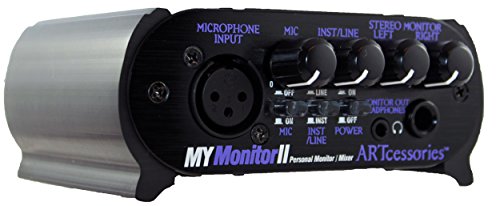
- Blends mic, instrument, and stereo sources
- Battery-powered for portable use
- Phantom power support for condensers
Best For: Solo performers and small portable monitoring rigs
Ultranet-Ready 16-Channel Pick – Behringer POWERPLAY P16-M
The Behringer POWERPLAY P16-M is a practical personal monitor mixer for musicians who want direct control over a 16-channel in-ear or headphone mix. It connects through Behringer’s Powerplay distribution approach and is built as a corded, 16-channel digital stereo personal monitor mixer with XLR audio input and output.
Best For: Players and vocalists who want a straightforward 16-channel personal mix station tied into a Powerplay setup.
Pros:
- 16 channels give each performer plenty of mix detail.
- Digital stereo design is made for personal monitoring use.
- XLR input and output keep it compatible with pro audio setups.
- Compact and lightweight at about 1.8 pounds.
Cons:
- Designed to be used with the Behringer Powerplay distribution system.
- Does not list onboard extras like screens or USB control.
For musicians building a shared monitoring rig, this model focuses on the essentials: channel count, direct personal control, and a compact footprint. It is a solid fit when you need a personal monitor mixer for musicians that stays simple and integrates into an existing Ultranet/Powerplay-style workflow.
Feature-Rich 40-Channel Choice – Allen & Heath ME-1
The Allen & Heath ME-1 is built for musicians who want a more advanced personal monitor mixer for musicians, with 40 channels and quick-access control. It uses 16 assignable keys, a one-knob control layout, an OLED screen, and USB connectivity for a streamlined monitor workflow.
Best For: Bands and performers who want lots of channel access with simple on-unit control.
Pros:
- 40 channels provide broad mix access.
- 16 assignable keys help customize the control surface.
- OLED screen and one-knob control make operation more direct.
- USB port adds connectivity flexibility.
Cons:
- Heavier than some compact personal mixers at 4 pounds.
- More advanced feature set may be more than needed for basic setups.
If you need more routing flexibility than a basic personal mixer can offer, the ME-1 stands out for channel count and hands-on control. It suits performers who want a polished monitor station with clear display feedback and configurable buttons.
High-Headroom Upgrade Pick – Behringer Powerplay P16-HQ
The Behringer Powerplay P16-HQ is a 16-channel digital personal monitoring mixer designed for performers who want clearer headphone or in-ear monitoring. It adds a 114dB dynamic range DAC, a high-quality amplifier stage, backlit controls, LED indicators, and per-channel 3-band EQ for more precise mix shaping.
Best For: Musicians who want a modern, easy-to-read personal monitor mixer with better headphone output performance.
Pros:
- 114dB dynamic range DAC supports improved audio clarity.
- 3-band EQ per channel adds useful tone control.
- Backlit controls and LED indicators help on dim stages.
- Single-connection Ultranet setup simplifies power and audio.
Cons:
- Still limited to 16 channels.
- Requires a compatible Ultranet-style setup to realize its simplified wiring benefits.
This version is aimed at musicians who want an easier time dialing in a monitor mix and reading the controls on stage. It is especially appealing if you value headphone/earbud clarity and want a personal mixer that feels more refined than a basic 16-channel unit.
Compact Monitor Station Option – Rolls PM351
The Rolls PM351 is a compact personal monitor station for musicians who want a very small, simple monitoring solution. With a 5 x 5 x 5-inch footprint and a 1.1-pound weight, it is built for minimal space and easy placement in a live rig.
Best For: Musicians who need a basic, space-saving personal monitor station.
Pros:
- Very compact size fits tight spaces easily.
- Lightweight at 1.1 pounds for simple placement.
- Minimalist monitor-station design keeps the setup straightforward.
Cons:
- Supplied details do not list channel count or advanced controls.
- Less feature information is available than on digital personal mixers.
If your priority is keeping the monitor station small and unobtrusive, the PM351 makes a strong case. It is best suited to players who want a compact personal monitor mixer for musicians without needing a long feature list.
Flagship Dual-Mix Control – Midas DP48 Dual 48 Channel Personal Monitor Mixer
If you need a personal monitor mixer for musicians that can handle complex stage setups, the Midas DP48 is built for serious in-ear monitoring. Its dual 48-channel design, 12 stereo stem groups, and built-in ambience mic make it easier to shape a detailed mix while still keeping a natural sense of the room.
Best For: Musicians and engineers who want two full personal mixes plus deep routing and recording features.
Pros:
- Dual 48-channel personal mixing with independent control of two complete monitor mixes
- 12 stereo groups help speed up creation and balancing of stem-based mixes
- Built-in stereo ambience microphone reduces the isolated feeling of in-ear monitoring
- Integrated SD card recorder supports rehearsal and performance capture
Cons:
- Designed to work with Midas personal monitoring system hubs, so it is not a standalone solution
- More advanced than simpler personal mixers if you only need basic monitor control
For players who want detailed control and the ability to manage two mixes at once, this is the most feature-rich option in the group. It stands out when precision, recall, and on-stage realism matter more than simplicity.
Networked Rack-Style Option – Presonus EarMix 16M 16X2 AVB Personal Monitor Mixer
The Presonus EarMix 16M is a practical personal monitor mixer for musicians working in an AVB-based live or studio setup. With 16×2 monitoring, a strong headphone amp, and local scene storage, it gives performers a compact way to manage in-ear mixes from a networked system.
Best For: AVB/StudioLive users who want a compact networked personal mixer with easy recall.
Pros:
- 16×2 AVB-network personal monitoring in a compact unit
- Headphone amp can drive low-impedance in-ear monitors
- 3-band EQ and limiter on all channels and the main mix
- Stores up to 16 mix scenes locally for quick recall
Cons:
- Requires an AVB/StudioLive Series III ecosystem for full routing and expansion
- Mic stand mounting option is sold separately
This model makes the most sense when you already use compatible Presonus hardware and want a networked personal monitor mixer with straightforward control. It is especially useful for players who value scene recall, clear headphone output, and tidy rack-style integration.
Portable Beltpack Pick – Coda Ultra-Compact Dual-Channel IEM Amp
The Coda Ultra-Compact Personal in Ear Monitor Amplifier is a simple, portable personal monitor mixer for musicians who want flexible input options and quick mix control on stage. It supports mono, dual mono, and stereo mix panning, and the built-in limiter adds a basic layer of protection for loud gigs and rehearsals.
Best For: Musicians who want a compact belt-clip IEM amp with flexible XLR/TRS inputs.
Pros:
- Ultra-compact design with belt clip for easy transport and wear
- Hybrid XLR and TRS inputs offer flexible connection options
- Supports mono, dual mono, and stereo mix panning
- Built-in limiter helps protect hearing from unexpected peaks
Cons:
- Only 2 output channels, so it is better for straightforward monitoring than complex mixing
- Less feature-rich than larger networked personal monitor mixers
If you want a lightweight, no-fuss beltpack for in-ear monitoring, this Coda amp is the most portable choice here. It is a practical fit for musicians who want to customize their own mix without carrying a larger control unit.
Complete Monitoring Bundle – Behringer P16-HQ 16-Channel Bundle
If you want a personal monitor mixer for musicians that is ready to integrate into a live or studio rig, this Behringer bundle gives you the P16-HQ mixer plus a mounting bracket and headphones. It offers control over volume, pan, and EQ across 16 channels, with low-latency monitoring and flexible Ultranet connectivity for practical onstage use.
Best For: Players and bands that want a complete, portable personal monitoring setup with headphones included.
Pros:
- Includes the P16-HQ mixer, mounting bracket, and Turnstile Audio headphones.
- 16-channel control with individual volume, pan, and EQ adjustment.
- 24-bit A/D conversion at 44.1/48 kHz with a 20 Hz-20 kHz frequency response.
- Less than 0.9 ms delay from P16-I to P16-HQ for real-time monitoring.
Cons:
- Requires Ultranet-compatible integration to use its full routing setup.
- Wired, corded-electric design is less flexible than battery-powered options.
Overall, this is the most complete option in the group if you want a musician-focused personal monitor mixer with fast response and all the basics bundled together.
Custom Preset Mixer – Aviom A320 16-Channel Personal Mixer
The Aviom A320 is a personal monitor mixer for musicians who want detailed control over a 16-channel monitor feed. It supports 16 mono or stereo sources, includes eight customizable mix presets, and adds 3-band tone control for shaping your monitor sound during rehearsals or performances.
Best For: Musicians and performers who want saved monitor mixes and tone shaping on a 16-channel system.
Pros:
- Handles 16 mono or stereo sources.
- Eight customizable mix presets help recall preferred monitor settings.
- 3-band tone control provides extra sound shaping.
- XLR audio input and A-Net connectivity for system integration.
Cons:
- Wired, corded-electric operation only.
- Does not include extras like headphones or mounting hardware in the supplied details.
This model stands out if you care about quick access to saved mixes and want a more configurable monitor workflow rather than a simple one-knob solution.
Compact Headphone Monitor – ART MyMONITORII Personal Mixer
If you need a straightforward personal monitor mixer for musicians, the ART MyMONITORII is built around blending a microphone, instrument, and stereo source for headphone monitoring. It adds a mic input and thru with pop-less mute switching, instrument/line jacks, and a stereo monitor blend control for simple personal control.
Best For: Solo performers and practice setups that need a simple, battery-powered headphone monitor mixer.
Pros:
- Blends microphone, instrument, and stereo source for personal monitoring.
- Mic input and thru include a pop-less on/off mute switch.
- Passes phantom power for condenser microphone use.
- Battery-powered design adds flexibility for portable setups.
Cons:
- Only 2 channels, so it is less expandable than 16-channel mixers.
- Best suited to smaller monitoring needs rather than full band systems.
For musicians who only need a compact way to combine a few sources in their headphones, this is the simplest and most portable option in the lineup.
How We Picked the Best Personal Monitor Mixer for Musicians
We looked for Personal Monitor Mixer for Musicians options that balance sound quality, channel flexibility, ease of use, and real-world stage practicality. We prioritized units that fit common live workflows, whether you need a simple headphone feed or a networked multi-channel monitor solution.
Quick Comparison
Think of the lineup in three broad groups: compact personal monitor stations for simple rigs, 16-channel digital mixers for most band and church applications, and advanced systems with more routing, presets, or recording features for players who want deeper control.
Key Buying Factors for a Personal Monitor Mixer for Musicians
Channel Count and Source Type
Choose based on how many sources you actually need. A small setup may only need a stereo mix or a few inputs, while larger ensembles benefit from 16-channel or higher systems that let each performer shape their own balance.
Wired Vs. Networked Workflow
Wired systems are usually simpler and cheaper, with fewer setup variables. Networked mixers can offer cleaner cabling and more expansion, but they depend on compatible infrastructure and may require more planning.
Control Layout and Speed
The best Personal Monitor Mixer for Musicians should be fast to operate during a soundcheck. Look for clear buttons, logical grouping, memory presets, and easy access to volume, pan, and tone controls.
Compatibility with Your Rig
Make sure the unit works with your console, stagebox, or digital audio network. Also check whether it supports headphones, in-ear monitors, stereo or mono input, and any mounting or powering needs.
Durability and Stage Use
Since these units live on crowded stages, durability matters. Compact housings, secure connectors, and a layout that is easy to read in low light can save time and reduce mistakes.
Who Should Buy Which Personal Monitor Mixer for Musicians?
If you want a simple, affordable monitoring solution, look at compact personal stations and headphone mixers. If you need a full-featured setup for a band, worship team, or studio-to-stage workflow, a 16-channel digital model is usually the better fit. Players who want the most control, presets, or advanced routing should consider higher-end systems with more channel capacity and expansion options.
In short, match the mixer to your stage size, number of sources, and how much control each musician needs. The best choice is the one that makes monitoring easier, not more complicated.