Building a portable modular synthesizer setup is about balancing size, patchability, sequencing, and performance control. The best picks give you hands-on sound design without turning your rig into a studio-sized project.
In this roundup, we focus on compact synths and controllers that work well for mobile composition, live jamming, and hybrid setups.
Best 10 Portable Modular Synthesizer Setup Picks for 2026
Portable West Coast Starter
Korg Volca Modular Semi-Modular Synth
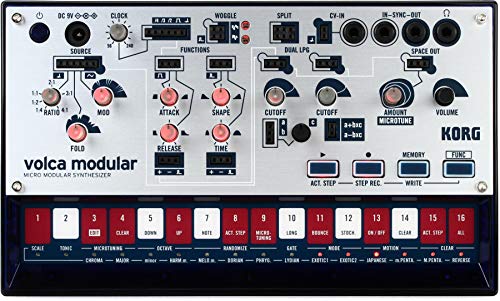
- Eight-module semi-modular design
- 50 patch points for routing experiments
- Battery or AC power with built-in speaker
Best For: portable experimental patching and West Coast-style synthesis
Controller Hub for Modular
Akai MPK Mini Plus 37-Key MIDI Controller

- 37-key USB-powered controller with pads
- MIDI/CV/Gate I/O for modular gear
- 64-step sequencer for drums and melodies
Best For: hybrid modular and DAW control in a compact rig
Compact Experimental Voice
Arturia MicroFreak Experimental Hybrid Synth
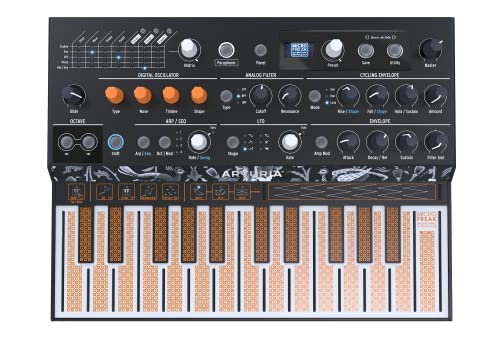
- 17 paraphonic oscillator modes
- CV pitch, gate, and pressure outputs
- Poly-aftertouch touch keyboard with sequencer features
Best For: compact experimental sound design with modular integration
Portable Hybrid Voice
Behringer Pro VS Mini Portable 5-Voice Hybrid Synthesizer

- 4-voice hybrid synth with vector morphing oscillators
- Analog low-pass filter plus sequencer and arpeggiator
- Includes sync in for gear integration
Best For: Compact hybrid sound design in portable rigs
Ambient Portable Centerpiece
Sonicware Liven Evoke Acoustronic Synthesizer
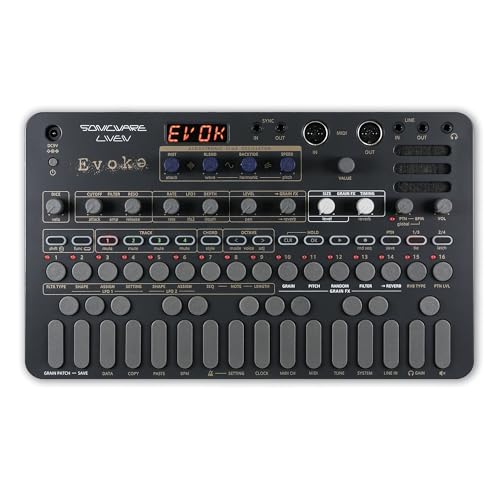
- Battery-powered with built-in speaker
- Granular Grain FX and deep reverbs for textures
- 4-track sequencer with MIDI and SYNC
Best For: Cinematic ambient and post-classical sound design
Semi-Modular Foundation
Moog Mother-32 Semi-Modular Analog Synthesizer

- Analog voice with Moog ladder filter
- 32-step sequencer with up to 64 sequences
- Tabletop use or 60HP Eurorack installation
Best For: Building a portable semi-modular system that can expand
Portable FM Desktop Starter
Wireless Portable FM Synthesizer

- Battery-powered with built-in speaker
- 6 operators, 32 algorithms, and effects
- 128 presets plus FM SYSEX import
Best For: Portable sketching and FM sound design without extra gear
Classic Semi-Modular Filter Box
Korg MS20 Mini Semi-Modular Synthesizer

- Flexible patching system for semi-modular routing
- Self-oscillating HP/LP filters with distortion
- USB MIDI plus 5-pin MIDI support
Best For: Compact analog patching and distinctive filter-driven sound
Hands-On Sequence Hub
Arturia MiniBrute 2S Semi-Modular Synthesizer

- 48-point CV and Gate patchbay
- Built-in sequencer with 64 memories
- Two VCOs, two LFOs, and analog filter
Best For: Hands-on sequencing and modular-style patching in a portable rig
Portable West Coast Starter – Korg Volca Modular Semi-Modular Synth
The Korg Volca Modular is a strong pick if you want a portable modular synthesizer setup that encourages hands-on patching without taking up much space. Its eight independent modules, 50 patch points, and compact battery-or-AC design make it easy to experiment with West Coast-style sound design at home or on the go.
Best For: Players who want a compact, battery-friendly semi-modular synth for experimental patching and portable jams.
Pros:
- Eight independent modules and 50 patch points for flexible routing.
- Built-in 16-step sequencer with two playback modes for pattern work.
- Randomize function helps generate unexpected sound combinations.
- Built-in speaker and battery power make it easy to use anywhere.
Cons:
- Compact layout is best for experimentation, not traditional keyboard-style playing.
- Small size may feel limiting if you want a larger control surface.
Overall, this is a practical entry point for portable modular experimentation, especially if you value immediacy and creative patching over deep preset-based workflow.
Controller Hub for Modular – Akai MPK Mini Plus 37-Key MIDI Controller
The Akai MPK Mini Plus is a practical centerpiece for a portable modular synthesizer setup because it combines compact keys, pad control, sequencing, and CV/Gate I/O in one USB-powered unit. It’s useful when you want to drive modular gear, software instruments, or both from a small controller.
Best For: Beat makers and hybrid setup users who want compact keyboard control plus MIDI/CV integration.
Pros:
- 37 velocity-sensitive keys give you 3 octaves of playing range.
- MIDI and CV/Gate I/O make it compatible with modular gear and synths.
- Built-in 64-step sequencer supports drums, melodies, and chords.
- 8 RGB MPC pads and assignable knobs add hands-on control.
Cons:
- It is a controller, so it does not generate sound on its own.
- Best value comes when you use its sequencing and connectivity features actively.
For a compact studio or portable rig, this is a versatile command center that helps connect modular hardware with DAW-based production.
Hybrid Drum-Noise Engine – Behringer Grind Semi-Modular Hybrid Synth
The Behringer Grind is aimed at users who want a portable modular synthesizer setup with a more hybrid, rhythm-focused personality. With 24 digital oscillators, 10 percussion and noise engines, an analog ladder filter, and a 32-step sequencer, it offers a lot of sound-design range in a semi-modular format.
Best For: Producers who want a compact semi-modular synth focused on hybrid textures, percussion, and sequencing.
Pros:
- 24 digital oscillators plus 10 percussion/noise engines for broad sound options.
- Analog ladder filter adds classic hardware character.
- 32-step sequencer supports pattern-based performance.
- Semi-modular layout suits experimental routing and setup flexibility.
Cons:
- It is geared more toward hybrid textures and rhythm work than traditional subtractive synth routines.
- Larger metal chassis may be less pocketable than ultra-compact portable units.
If you want an adventurous semi-modular instrument with a strong rhythmic edge, the Grind brings a lot of engine variety into a still-manageable footprint.
Compact Experimental Voice – Arturia MicroFreak Experimental Hybrid Synth
The Arturia MicroFreak fits well in a portable modular synthesizer setup when you want a small instrument that still reaches into experimental sound design. Its many oscillator modes, analog filter, CV outputs, and compact touch keyboard make it a flexible controller and sound source for hybrid rigs.
Best For: Players who want a compact experimental synth with CV connectivity and a wide range of digital oscillator modes.
Pros:
- 17 paraphonic oscillator modes cover physical modeling, wavetable, and more.
- CV pitch, gate, and pressure outputs support modular integration.
- 25-key poly-aftertouch touch keyboard offers expressive control.
- Spice and Dice functions plus modulation matrix encourage happy accidents.
Cons:
- Flat PCB-style keyboard may not suit players wanting a traditional keybed.
- Its experimental workflow may be less direct for straightforward sound creation.
This is a smart choice if you want a small, modern synth that can feed a modular system or stand alone as a bold sound-design tool.
Portable Hybrid Voice – Behringer Pro VS Mini Portable 5-Voice Hybrid Synthesizer
If you’re building a portable modular synthesizer setup and want a compact voice that can cover wavetable-style movement and classic filtering, the Behringer Pro VS Mini is an easy way to add variety. Its 4-vector morphing oscillators per voice, analog low-pass filter, sequencer, and arpeggiator make it useful for sketching ideas fast and shaping sounds on the fly.
Best For: Players who want a small hybrid synth module with sequencing and morphing sounds for portable rigs.
Pros:
- 4-voice hybrid synthesis with 4 vector morphing oscillators per voice
- Analog low-pass filter for classic tone shaping
- Built-in 16-step sequencer and arpeggiator
- Includes sync in for integration with other gear
Cons:
- Smaller format means less hands-on control than larger synths
- Best suited to adding one focused voice rather than serving as a full system
This is a practical pick if you want a compact hybrid synth that fits neatly into a portable modular synthesizer setup. It balances modulation-friendly sound design with straightforward sequencing tools, making it a flexible utility voice for writing and live jamming.
Ambient Portable Centerpiece – Sonicware Liven Evoke Acoustronic Synthesizer
The Sonicware Liven Evoke fits a portable modular synthesizer setup when you want battery-powered sound design with a more atmospheric focus. Its acoustronic flux oscillator, granular Grain FX, deep reverbs, and 4-track sequencer are geared toward cinematic ambient and post-classical textures, while MIDI and SYNC help it play nicely with other gear.
Best For: Ambient-focused players who want a battery-powered synth with granular textures and sequencing.
Pros:
- Battery-powered with a built-in speaker for true portability
- Acoustronic flux oscillator combines acoustic tones and wavetables
- Grain FX granular effect can also process external sources via line in
- 4-track sequencer with parameter locking, random/probability playback, MIDI, and SYNC
Cons:
- Sound set is tailored more to cinematic and ambient use than general-purpose synthesis
- Best results depend on the more specialized Grain FX and reverb workflow
If your portable modular synthesizer setup leans toward evolving soundscapes, this is a strong creative centerpiece. It offers a broad palette of organic tones and granular processing in a compact format that can work alone or alongside other instruments.
Semi-Modular Foundation – Moog Mother-32 Semi-Modular Analog Synthesizer
For a portable modular synthesizer setup that still feels like a real modular instrument, the Moog Mother-32 brings classic analog sound and patchable flexibility in a compact format. It pairs a voltage-controlled oscillator and ladder filter with a 32-step sequencer, MIDI in, and an extended patchbay, so it can work as a standalone tabletop synth or a Eurorack module.
Best For: Musicians who want a semi-modular analog synth that can grow into a Eurorack system.
Pros:
- Analog signal path with VCO, white noise generator, and Moog ladder filter
- 32-note step sequencer with up to 64 on-board sequences
- Works as a tabletop synth or a 60HP Eurorack module
- Extended patchbay and MIDI in support flexible integration
Cons:
- Semi-modular design may be less immediate for users wanting a fully self-contained keyboard synth
- Expansion-focused design may invite additional gear to unlock its full potential
This is the most modular-minded choice here for players who want an instrument that can start simple and expand over time. Its analog voice, patching options, and Eurorack compatibility make it a strong foundation piece for a portable modular synthesizer setup.
Portable FM Desktop Starter – Wireless Portable FM Synthesizer
If you’re building a portable modular synthesizer setup, this compact FM synth is an easy way to keep a full sound engine in a grab-and-go format. It runs on battery power, includes a built-in speaker, and still gives you 6 operators, 32 algorithms, 128 preset sounds, plus onboard effects and sequencing for quick sketching anywhere.
Best For: Players who want a battery-powered FM synth with built-in sound, presets, and sequencing for portable composition.
Pros:
- Battery operation and built-in speaker make it genuinely portable.
- 6 operators and 32 algorithms provide a wide FM palette.
- 128 presets and direct FM SYSEX import expand the sound library.
- Arpeggiator and 16-step sequencer help with quick pattern building.
Cons:
- 27 silicone keys are compact, so it is not a full-size keyboard experience.
- FM synthesis can still take time to learn if you want to program from scratch.
This is a practical choice if you want a portable sketchpad that can play and sequence without extra gear. It is less about deep modular patching and more about self-contained FM convenience in a very compact format.
Classic Semi-Modular Filter Box – Korg MS20 Mini Semi-Modular Synthesizer
The Korg MS20 Mini fits a portable modular synthesizer setup if you want a compact semi-modular instrument with strong character. Its flexible patching system, self-oscillating high-pass and low-pass filters, and external signal processor make it a hands-on way to explore aggressive analog textures.
Best For: Synth players who want a compact semi-modular analog voice with patching and distinctive filters.
Pros:
- Flexible patching system supports semi-modular routing.
- Self-oscillating high-pass and low-pass filters add signature tone shaping.
- External signal processor expands sound-processing options.
- USB MIDI and 5-pin MIDI improve compatibility with other gear.
Cons:
- It is a focused mono synth, not a full production workstation.
- Hands-on patching and analog control may be less immediate than preset-based instruments.
If your priority is classic analog tone and patchable experimentation, the MS20 Mini brings a very specific personality to a portable rig. It is best treated as a character synth and processor rather than a broad all-in-one solution.
Hands-On Sequence Hub – Arturia MiniBrute 2S Semi-Modular Synthesizer
For a portable modular synthesizer setup centered on sequencing and patching, the Arturia MiniBrute 2S is a strong fit. It combines two VCOs, two LFOs, a 48-point CV and Gate patchbay, and a built-in sequencer with 64 memory slots, so you can build and recall evolving patterns without extra boxes.
Best For: Players who want a semi-modular analog synth with deep sequencing and a large patchbay.
Pros:
- 48-point CV and Gate patchbay supports extensive modular-style routing.
- 16 pads, 16 encoders, and sequencer controls make pattern work hands-on.
- 64 sequence memories help store ideas for later use.
- Two VCOs and a Steiner-Parker filter provide a solid analog core.
Cons:
- Its focus on sequencing and patching may be more than a beginner needs.
- It is a performance-oriented semi-modular unit, not a self-contained preset machine.
The MiniBrute 2S is a good centerpiece if you want a compact rig that leans into CV control and hands-on sequencing. It is especially useful when your portable setup needs both sound generation and pattern building in one device.
How We Picked These Portable Modular Synthesizer Setup Options
For a practical Portable Modular Synthesizer Setup, we prioritized gear that is genuinely playable on the move: compact footprints, battery-friendly or bus-powered operation where available, semi-modular patching, onboard sequencing, and enough control to avoid constant menu diving. We also looked for instruments that can stand alone or integrate easily with external gear.
Quick Comparison: What Each Type Brings
Not every item in a Portable Modular Synthesizer Setup serves the same role. Some are self-contained sound engines, others are controller-first devices, and some are semi-modular voices that expand best with patch cables and external processors. If you want immediate sound creation, a compact synth is ideal. If you want to shape a larger rig, a keyboard controller or sequencer can be the better buy.
Key Buying Factors for a Portable Modular Synthesizer Setup
Size and Power
Check whether the unit is truly portable in daily use, not just physically small. Battery power, USB power, built-in speaker, or low-power operation can make a big difference if you plan to write or perform away from a desk.
Patching and Expansion
If modular flexibility matters, look for CV/gate connectivity, patch points, and Eurorack compatibility. A compact synth with limited routing can still be useful, but a more open architecture gives your Portable Modular Synthesizer Setup room to grow.
Sequencing and Performance Tools
Built-in sequencers, arpeggiators, pads, and knob-per-function layouts help you sketch ideas quickly. For live use, these controls often matter more than raw voice count.
Sound Character
Choose a voice that matches your goals. Analog-style bass and leads, physical modeling, wavetable textures, granular atmospheres, and hybrid engines each fit different workflows. A strong Portable Modular Synthesizer Setup usually mixes one main voice with one utility or controller-focused piece.
Who Should Buy Which Portable Modular Synthesizer Setup?
If you want the most hands-on modular learning experience, choose a semi-modular synth with patch points and a sequencer. If you need a compact songwriting and control hub, a keyboard controller with pads and sequencing can anchor the rest of the rig. Ambient and experimental musicians may prefer synths with rich motion, modulation, and texture options, while players focused on classic analog tones should look for straightforward subtractive voices.
For many buyers, the best approach is to start with one portable main instrument, then add a controller or sequencer that complements it. That keeps the setup flexible without becoming bulky or expensive too quickly.