Choosing a powered mixer for live bands comes down to more than wattage. You need enough inputs, clean vocal headroom, and simple controls that hold up under real gig pressure.
This roundup focuses on practical, stage-ready options for small clubs, rehearsal spaces, and mobile setups, with an eye toward flexibility, ease of use, and value.
Best 10 Powered Mixer for Live Bands Picks for 2026
Editor’s Pick
Rockville RPM870 8-Channel Powered Mixer
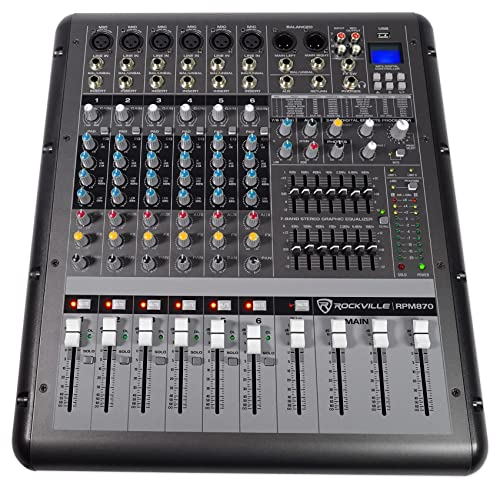
- 8 channels with USB, Bluetooth, and recording support
- 6 XDR2 mic preamps plus +48V phantom power
- 24-bit FX, dual 7-band EQ, and channel EQ control
Best For: bands wanting an all-in-one powered mixer with flexible routing
Portable Venue Solution
Peavey PVi 6500 Compact Powered Mixer
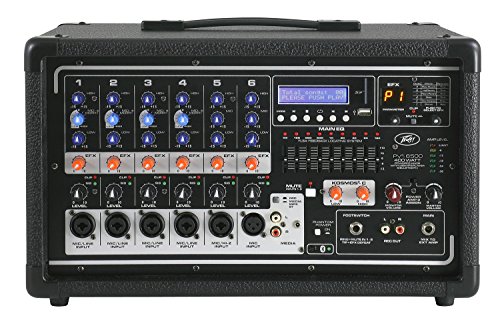
- 5-channel powered mixer for small venues and events
- Combination XLR/1/4-inch inputs with master mute
- FLS Feedback Locating System for feedback control
Best For: smaller bands needing a straightforward portable mixer
High-Channel Workhorse
Rockville RPM109 V2 12-Channel Mixer

- 12 channels with 6 mono and 3 stereo inputs
- 8 mic preamps, phantom power, and pad switches
- Bluetooth, USB, SD, and 24 digital effects
Best For: bands and venues needing more channels and onboard playback
Budget Slimline Option
FULUODE CT-120S 12-Channel Slim Mixer

- 12 channels with 48V phantom power and USB recording
- Bluetooth input plus large LED display
- Ultra-thin 1.57-inch design for tight spaces
Best For: budget buyers needing a slim mixer for live events
Power-Driven Compact Mixer
Rockville RPM85 8-Channel Powered Mixer

- 2400W peak, 300W x 2 RMS at 4 ohms
- 8 mic/line inputs with Bluetooth, USB/SD, and RCA AUX
- 5-band EQ plus adjustable echo/delay
Best For: Small bands and mobile events that need a simple powered all-in-one setup
Feature-Rich Analog Console
16 Channel Mixer with 99 DSP Effects

- 16 channels with XLR and stereo line inputs
- 99 DSP effects and 7-band main EQ
- Bluetooth and USB playback/recording support
Best For: Performers who want a flexible mixer with extensive channel control
Stage-Ready Powered Workhorse
Rockville RPM80BT 8-Channel Powered Mixer

- 2400W peak and 500W RMS total output
- 8 XLR and 8 TRS inputs with Bluetooth and USB
- 5-band EQ, reverb, delay, and 48V phantom power
Best For: Live bands and rehearsal setups that need powered output and versatile inputs
Compact Live Mix Control
Pyle PMXU63BT 6-Channel Bluetooth Mixer
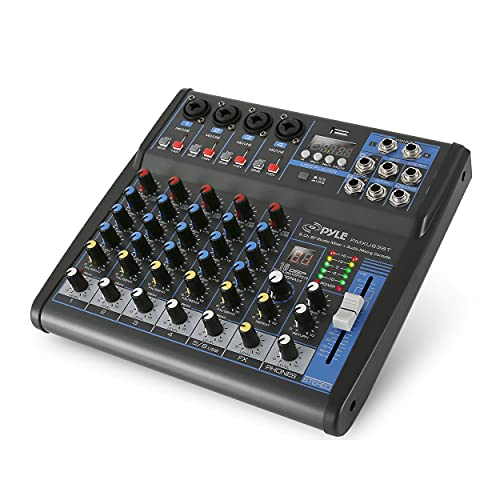
- Bluetooth streaming for easy playback
- USB/computer/flash drive compatibility
- XLR and 1/4" inputs with phantom power
Best For: Small bands and karaoke-style live setups
Powered Venue Workhorse
Rockville RPM48S 2000W Mixer/Amp

- 2000W peak powered mixer/amp design
- 4 XLR and 4 1/4" inputs
- Bluetooth, USB/SD, and 3-band EQ
Best For: Small to medium live bands and event DJs
Ultra-Slim Stage Console
FULUODE CT-80S 8-Channel Mixer

- 8 channels with mic and instrument support
- Bluetooth 5.0 plus USB recording
- Ultra-thin design with LED display
Best For: Small bands and event setups needing more channels
Editor’s Pick – Rockville RPM870 8-Channel Powered Mixer
If you need a powered mixer for live bands that can handle vocals, instruments, and backing tracks in one box, the Rockville RPM870 is built for that kind of job. It combines 8 channels, Bluetooth, USB playback/recording, and a built-in effects section with enough routing to cover rehearsals, small gigs, and streaming setups.
Best For: Bands that want an all-in-one powered mixer with flexible inputs, onboard FX, and simple playback/recording options.
Pros:
- 6 low-noise XDR2 mic preamps with +48V phantom power for vocals and instruments
- USB playback/recording plus Bluetooth streaming for easy media use
- 24-bit effects processor with 16 presets and FX footswitch input
- Dual 7-band EQ and 4-band EQ per channel for detailed control
Cons:
- Large feature set may be more than very simple setups need
- Best suited to users who will actually use the onboard effects and EQ controls
Overall, the RPM870 stands out as a feature-heavy powered mixer for live bands that want strong input flexibility and onboard processing without adding extra gear.
Portable Venue Solution – Peavey PVi 6500 Compact Powered Mixer
The Peavey PVi 6500 is a practical powered mixer for live bands playing smaller rooms, karaoke nights, or church events. Its 5-channel layout keeps things straightforward, while combination XLR/1/4-inch inputs and built-in effects defeat give it the essentials needed for compact live sound.
Best For: Smaller bands and portable live sound setups that prioritize simplicity and easy transport.
Pros:
- Compact all-in-one powered mixer design for gigging and portable use
- Combination XLR and 1/4-inch input jacks for flexible connections
- Master mute and channel mute features for quick control
- FLS Feedback Locating System helps manage feedback
Cons:
- 5 channels may be limiting for larger live band setups
- Fewer modern media features than USB- or Bluetooth-heavy mixers
If your band needs a simple powered mixer that travels well and covers the basics cleanly, the PVi 6500 is a solid no-frills option.
High-Channel Workhorse – Rockville RPM109 V2 12-Channel Mixer
For a powered mixer for live bands that need more channels and stronger output flexibility, the Rockville RPM109 V2 is geared toward bigger sessions. It offers 12 channels, Bluetooth, USB, SD playback, 8 mic preamps with phantom power, and dual SpeakON outputs for a more capable live or studio setup.
Best For: Bands and venues that need a higher-channel powered mixer with onboard media playback and extensive EQ control.
Pros:
- 12 channels with 6 mono and 3 stereo inputs for expanded routing
- 8 mic preamps with +48V phantom power and pad switches
- Built-in Bluetooth, USB, and SD support for playback
- Dual 7-band stereo master EQ plus 24 digital effects
Cons:
- More complex than a basic mixer if you only need a few channels
- Rugged wood enclosure adds size compared with ultra-compact models
The RPM109 V2 is a strong pick when your band needs channel count, flexible media inputs, and detailed sound shaping in one powered mixer.
Budget Slimline Option – FULUODE CT-120S 12-Channel Slim Mixer
The FULUODE CT-120S is a slim, 12-channel mixer aimed at live performance, karaoke, and conference use when space is tight. It includes Bluetooth, USB recording, 48V phantom power, and a large LED display, making it a practical powered mixer-style choice for basic band and event needs.
Best For: Budget-minded users who want a thin, feature-packed mixer for live performance and general event audio.
Pros:
- 12 channels with 48V phantom power for mic and instrument use
- Bluetooth and USB input with USB recording support
- Very slim 1.57-inch body for easy placement
- Large LED display for visible status and song info
Cons:
- Product notes emphasize features more than output power details
- More basic feel than premium live-band powered mixers
For users who want a compact mixer with modern playback features and phantom power, the CT-120S offers a practical low-profile setup.
Power-Driven Compact Mixer – Rockville RPM85 8-Channel Powered Mixer
If you need a powered mixer for live bands that can handle vocals, playback, and small-to-medium venue sound reinforcement, the Rockville RPM85 gives you a flexible all-in-one setup. It combines powered outputs, multiple mic/line inputs, Bluetooth, USB/SD playback, and onboard EQ/effects in a compact cabinet.
Best For: Small bands, mobile performers, and event setups that want a powered mixer with built-in playback and effects.
Pros:
- 2400W peak power with 300W x 2 RMS at 4 ohms for driving speakers in smaller venues
- 8 mic/line inputs plus Bluetooth, USB/SD, RCA AUX, and dual speaker outputs
- 5-band graphic EQ and adjustable echo/delay for basic live sound shaping
- +15V phantom power supports condenser microphones
Cons:
- Best suited to small to medium spaces rather than larger rooms
- Uses +15V phantom power instead of the more common 48V standard
- Single-unit design may be less flexible than a separate mixer-and-amp rig
The RPM85 is a practical choice if you want a portable powered mixer for live bands that keeps setup simple without giving up core controls. Its input count, built-in playback, and onboard processing make it especially useful for rehearsals, small gigs, and event work.
Feature-Rich Analog Console – 16 Channel Mixer with 99 DSP Effects
This is a good option if your powered mixer for live bands needs more channel capacity and built-in processing. With 16 channels, 99 DSP effects, Bluetooth, USB, and detailed channel controls, it is geared toward users who want more mixing flexibility for stage work, DJ sets, karaoke, or recording.
Best For: Bands and performers who need a feature-heavy mixer with lots of routing and sound-shaping control.
Pros:
- 16 channels with XLR and stereo line inputs for larger input needs
- 99 DSP effects and a 7-band main output EQ for broader sound control
- Independent gain, EQ, AUX, pan, and mute on each channel
- Bluetooth and USB/MP3 playback plus recording support
Cons:
- No built-in power amplification listed, so it is not a full powered mixer
- Feature depth may be more than needed for simple plug-and-play setups
- Designed around line-level mixing rather than an all-in-one powered speaker drive system
For buyers comparing live-band mixers, this model stands out for channel count and processing rather than amplification. It makes the most sense if you already have an external amp or powered speakers and want a mixer with more control over the final sound.
Stage-Ready Powered Workhorse – Rockville RPM80BT 8-Channel Powered Mixer
The Rockville RPM80BT is built for buyers who want a powered mixer for live bands with enough output and connectivity to cover gigs, rehearsals, or karaoke nights. It combines powered amplification, Bluetooth, USB, multiple input types, and adjustable EQ/effects in a compact 8-channel design.
Best For: Live bands, DJs, and rehearsal spaces that want a powered mixer with stronger output and broad input support.
Pros:
- 2400W peak power with 500W RMS total output for speaker drive
- 8 XLR and 8 1/4″ TRS inputs plus RCA AUX, USB, and Bluetooth
- 5-band master EQ with per-channel bass, treble, reverb, echo, and delay
- 48V phantom power supports condenser microphones
Cons:
- 8 channels may be limiting for larger bands with many microphones
- Heavier than some compact mixers at 24 pounds
- Best suited to users comfortable managing onboard amplification and effects
If you want a more capable powered mixer for live bands than a bare-bones practice unit, the RPM80BT offers a strong mix of output, routing, and sound control. Its built-in amp and full feature set make it a practical choice for small venues and mobile performance setups.
Compact Live Mix Control – Pyle PMXU63BT 6-Channel Bluetooth Mixer
If you need a powered mixer for live bands and also want straightforward streaming and playback, the Pyle PMXU63BT is built around flexibility. It combines 6 channels, Bluetooth, USB/computer input, and a built-in MP3 player, so you can handle vocals, backing tracks, and simple live setups from one compact board.
Best For: Small bands, karaoke setups, and live gigs that need Bluetooth playback and basic recording-friendly inputs.
Pros:
- Bluetooth wireless streaming from phones and tablets
- USB, computer, and flash drive playback/recording support
- XLR and 1/4″ mic/line inputs with +48V phantom power
- 3-band EQ plus LED peak level indicator for basic tone control
Cons:
- Not a powered mixer, so it does not drive passive speakers directly
- 6 channels may feel limited for larger live band setups
- Best suited to compact gigs rather than full-scale stage rigs
The PMXU63BT makes sense if you want a versatile small-format mixer with modern media inputs and dependable live-gig essentials. It is a practical fit when convenience and portability matter more than lots of channels or built-in speaker amplification.
Powered Venue Workhorse – Rockville RPM48S 2000W Mixer/Amp
For anyone shopping for a powered mixer for live bands, the Rockville RPM48S stands out because it combines mixing and amplification in one portable unit. With 2000W peak power, multiple mic/instrument inputs, Bluetooth, and USB/SD playback, it is aimed at small to medium venues that need a simple all-in-one solution.
Best For: Live bands, DJs, and event setups that want built-in amplification and flexible input options.
Pros:
- Powered design delivers up to 2000W peak output
- 4 XLR and 4 1/4″ inputs with individual volume controls
- Bluetooth plus USB/SD playback for music sources
- 3-band EQ and echo/delay for basic sound shaping
Cons:
- Best suited to small to medium venues rather than larger systems
- At 17.08 lb, it is portable but still heavier than a basic mixer
- Only a 4-channel layout for mixing duties
If you want an actual powered mixer that can simplify a live-band setup, this Rockville model is the most direct match in the group. It focuses on practical stage connectivity and integrated power instead of extra complexity.
Ultra-Slim Stage Console – FULUODE CT-80S 8-Channel Mixer
The FULUODE CT-80S is a slim 8-channel mixer for live music, karaoke, and event use when you want more inputs in a lightweight format. It supports wired and wireless connections, includes Bluetooth 5.0, USB recording, and 48V phantom power, making it useful for small band and conference-style rigs.
Best For: Bands, KTV, and event users who need an ultra-thin mixer with 8 channels and recording support.
Pros:
- 8 channels with support for mic and instrument connections
- Bluetooth 5.0, MP3/USB input, and USB recording
- 48V phantom power for compatible microphones
- Ultra-thin body with a large LED display
Cons:
- Not a powered mixer, so it does not amplify speakers on its own
- 110V U.S. plug only, which limits portability abroad
- Designed more for compact setups than heavy-duty touring rigs
This is a solid option if you need extra channel count and recording features without a bulky console. For live bands, it works best in smaller spaces where a lightweight mixer and broad connectivity are the priorities.
How We Picked the Best Powered Mixer for Live Bands
We looked for powered mixers that make sense for live band use: sufficient mic and line inputs, useful onboard EQ and effects, reliable connectivity, and output power matched to common small-venue needs. We also favored models with Bluetooth or USB only when they added real convenience without compromising core mixing features.
Quick Comparison
If you need the simplest setup, choose a compact 4- to 6-channel unit for vocals, keys, and backing tracks. For a typical bar band or rehearsal rig, 8-channel models are often the sweet spot. Larger 10- to 12-channel options fit fuller drum-mic setups, multi-vocal bands, or groups that run several instruments through the board.
Key Buying Factors for a Powered Mixer for Live Bands
Channel Count and Inputs
Count every source you plan to plug in, including lead vocals, backing vocals, instruments, and playback devices. Leave a few extra channels open so you are not maxed out on your first upgrade.
Power and Speaker Matching
Look for real-world RMS power and match it to your passive speakers and room size. More power is not always better, but underpowered systems clip faster and sound harsher at higher volumes.
EQ, Effects, and Feedback Control
Onboard EQ helps shape vocals and instruments quickly, while built-in effects can reduce the need for extra gear. A clean, usable EQ is often more valuable than flashy presets.
Connectivity and Workflow
Bluetooth, USB, and media playback can be helpful for walk-in music or break tracks, but they should not replace solid analog inputs. A straightforward layout matters when you are setting up fast between songs or in dim venues.
Who Should Buy Which Powered Mixer for Live Bands?
Smaller duos, acoustic acts, and karaoke-style setups usually do best with compact 4- to 6-channel models. Cover bands, rehearsal rooms, and small clubs often benefit from 8-channel powered mixers for live bands because they balance flexibility and portability. Larger groups, DJs with live instruments, and bands running multiple microphones should lean toward higher-channel mixers with stronger processing and more headroom.
If you are building a dependable gig rig, prioritize clean gain, enough channels, and speaker compatibility first. Extra features are useful, but the best choice is the one that makes setup faster and keeps your mix clear when the room gets loud.