Choosing a professional broadcast studio microphone is less about specs on paper and more about how cleanly it captures your voice in a real workspace. The best options deliver strong speech clarity, controlled proximity effect, and reliable off-axis rejection.
Below, we focus on microphones that suit radio, podcasting, streaming, voiceover, and home or pro studio use, with an eye toward practical setup, accessory needs, and long-term value.
Best 10 Professional Broadcast Studio Microphone Picks for 2026
Industry Standard Voice
Electro-Voice RE20 Broadcast Announcer Microphone

- Variable-D design for close-up voice work
- Internal pop filter and shock mount
- Classic FM-radio-style broadcast tone
Best For: Broadcasters and voiceover studios that want a trusted XLR mic
Rich Broadcast Detail
Audio-Technica BP40 Large-Diaphragm Broadcast Microphone

- Large-diaphragm design with natural sound
- Hypercardioid pattern for focused pickup
- Humbucking coil helps reduce EMI
Best For: Studio voices that need a fuller, controlled broadcast sound
Built-In Gain Control

- Built-in preamp with +18 dB or +28 dB gain
- Cardioid isolation for cleaner vocals
- Rear EQ switches for tone shaping
Best For: Streamers and podcasters who want easier XLR gain setup
Podcast-Ready Broadcast
RØDE PodMic Cardioid Dynamic Broadcast Microphone

- Cardioid dynamic capsule rejects background noise
- Integrated swing mount with internal pop filter
- XLR-only for interface-based setups
Best For: Podcasters and streamers building an XLR broadcast rig
Classic Broadcast Voice
Electro-Voice RE20 Broadcast Announcer Bundle

- Classic FM radio voice sound
- Variable-D reduces proximity effect
- Includes shockmount and broadcast arm
Best For: Radio hosts and announcers who want a proven broadcast-style dynamic mic
Mix-Ready Studio Condenser
Shure SM4 XLR Studio Condenser Kit

- Dual-diaphragm capsule with smooth highs
- Integrated pop filter helps cut plosives
- Includes shock mount and carrying case
Best For: Home studios and vocal recording setups needing clean, controlled condenser sound
Deep Voice Workhorse
HEiL PR40 Broadcast Studio Bundle

- Large-diameter dynamic cardioid mic
- 28 Hz to 18 kHz frequency response
- Bundle includes arm, shockmount, and XLR cable
Best For: Broadcast and voice setups that want a dynamic mic with included mounting gear
OBS-Certified Streaming Pick
Shure MV7+ USB-C & XLR Podcast Dynamic Mic

- OBS-certified for streaming and creator workflows
- USB-C and XLR support flexible setups
- Voice isolation, denoiser, and auto level help clean vocals
Best For: Streamers and podcasters who want a flexible broadcast-style mic
Project Studio Value Choice
Audio-Technica AT2020 Cardioid Condenser XLR Microphone
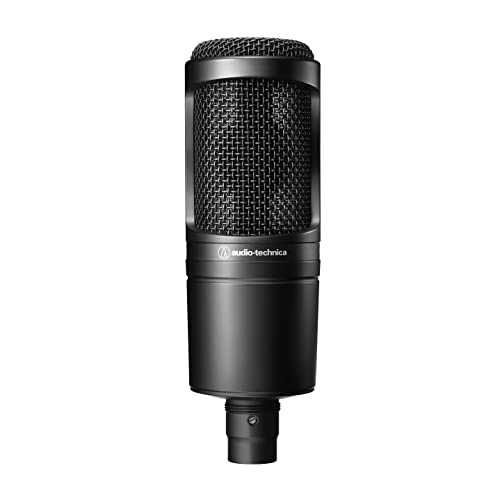
- Project/home-studio focused condenser mic
- Cardioid pattern improves isolation from sides and rear
- High SPL handling and wide dynamic range add flexibility
Best For: Home-studio recording with an XLR condenser setup
Broadcast-Style XLR Workhorse
Shure MV7X XLR Dynamic Podcast Microphone

- Voice-isolating dynamic cardioid design
- Integrated shock mount helps cut vibrations
- All-metal XLR mic for podcasting and vocal recording
Best For: Podcasters and creators using an XLR-only studio setup
Industry Standard Voice – Electro-Voice RE20 Broadcast Announcer Microphone
The Electro-Voice RE20 is a professional broadcast studio microphone known for close-up voice work, podcasting, streaming, voiceover, and radio. Its Variable-D design and internal pop filter help keep spoken audio controlled and consistent, while the internal shock mount reduces vibration noise.
Best For: Broadcasters, voiceover talent, and studio hosts who want a classic radio sound with dependable XLR performance.
Pros:
- Variable-D design helps manage proximity effect for close-in speech.
- Heavy-duty internal pop filter supports cleaner vocal takes.
- Internal shock mount reduces handling and vibration noise.
- Humbucking coil helps guard against line hum.
Cons:
- Requires an XLR setup and compatible audio gear.
- Heavier build may be less convenient for lightweight desk setups.
Overall, the RE20 is a proven choice when you want an established broadcast voice without relying on external processing. It is built for serious spoken-word recording and remains a familiar option in studios for good reason.
Rich Broadcast Detail – Audio-Technica BP40 Large-Diaphragm Broadcast Microphone
The Audio-Technica BP40 is a professional broadcast studio microphone built for rich, natural spoken-word capture with a condenser-like character. Its large-diaphragm design, hypercardioid pattern, and humbucking coil make it a strong fit for controlled studio voice work.
Best For: Broadcasters and studio creators who want a fuller voice presentation with strong rejection of unwanted noise.
Pros:
- Large diaphragm construction is tuned for rich, natural sound.
- Hypercardioid pattern helps focus on the speaker.
- Humbucking coil helps prevent electromagnetic interference.
- Built for wired XLR use in studio and broadcast setups.
Cons:
- Needs an XLR interface or mixer to operate.
- Hypercardioid pickup can be less forgiving in untreated rooms.
For buyers who want a broadcast microphone with a more detailed and open vocal character, the BP40 stands out. It is aimed at serious speech capture rather than casual plug-and-play use.
Built-In Gain Control – Shure SM7dB Dynamic Vocal Mic
The Shure SM7dB is a professional broadcast studio microphone for streaming, podcasting, and recording when you want the familiar SM7-style vocal sound with less gain hassle. Its built-in preamp adds selectable clean gain, so it can work with an XLR interface without an external booster.
Best For: Creators who want an SM7-style broadcast mic with onboard gain for simpler XLR setups.
Pros:
- Built-in preamp offers selectable +18 dB or +28 dB gain.
- Cardioid pattern and air suspension isolation help reject noise and handling vibration.
- Rear EQ switches let you shape bass roll-off and mid-range presence.
- Rugged all-metal construction with electromagnetic shielding.
Cons:
- Still requires an XLR interface or mixer.
- Heavier body may be less ideal for compact mounts.
The SM7dB makes a lot of sense if you like a studio broadcast sound but want to simplify the gain chain. It keeps the core vocal-focused design while adding onboard flexibility for modern creator setups.
Podcast-Ready Broadcast – RØDE PodMic Cardioid Dynamic Broadcast Microphone
The RØDE PodMic is a professional broadcast studio microphone built for podcasting, streaming, and voice recording through an XLR interface. It pairs a cardioid dynamic capsule with an integrated swing mount and internal pop filter, making it a practical option for spoken-word setups.
Best For: Podcasters and streamers who want an XLR broadcast mic with built-in vocal accessories.
Pros:
- Cardioid dynamic capsule helps reject room noise and background sound.
- Integrated swing mount and internal pop filter reduce accessory needs.
- Broadcast-grade build with internal shock mount.
- Rich, balanced voice tone suited to spoken-word recording.
Cons:
- XLR-only design requires an audio interface.
- Does not connect directly to a computer by USB.
The PodMic is a straightforward choice for creators building a real broadcast-style rig. If you already have an interface, it delivers a focused voice mic package without extra clutter.
Classic Broadcast Voice – Electro-Voice RE20 Broadcast Announcer Bundle
If you want a professional broadcast studio microphone with the familiar sound of FM radio voices, the Electro-Voice RE20 is built for that job. Its Variable-D design helps keep the tone smooth and controlled, while the true cardioid pattern reduces coloration off-axis for more consistent spoken-word capture.
Best For: Radio hosts, announcers, and voice-focused studios that want a classic broadcast sound with bundled mounting gear.
Pros:
- Classic FM radio voice character with a smooth, natural sound
- Variable-D design minimizes proximity effect
- True cardioid pickup helps avoid coloration from the sides and rear
- Bundle includes a mic shockmount and broadcast arm
Cons:
- Dynamic XLR mic may not suit users wanting condenser-style detail
- Handheld form factor may be less convenient for some fixed studio setups
The RE20 is a strong choice when voice clarity and familiar broadcast tone matter more than extra studio coloration. If you want a proven announcer mic with mounting accessories included, this bundle keeps the setup straightforward.
Mix-Ready Studio Condenser – Shure SM4 XLR Studio Condenser Kit
The Shure SM4 is a practical professional broadcast studio microphone option for creators who want clean, controlled recordings with less cleanup later. Its dual-diaphragm capsule, uniform cardioid pattern, and integrated pop filter are aimed at smooth vocals, good off-axis rejection, and mix-ready sound.
Best For: Home studios, vocal recording, and livestream setups that need a detailed condenser mic with strong noise control.
Pros:
- Brass 1-inch dual-diaphragm capsule for smooth audio reproduction
- Uniform cardioid pattern improves off-axis rejection
- Integrated pop filter and Faraday cage help reduce plosives and RF noise
- High SPL handling up to 140 dB with all-metal construction
Cons:
- Requires phantom power to operate
- XLR setup means you need an audio interface
- May be more mic than casual users need for simple voice calls
Overall, the SM4 is a well-equipped condenser kit for people who want cleaner source audio and fewer problems in post. The included shock mount, pop filter, and carrying case add value for studio and camera-friendly use.
Deep Voice Workhorse – HEiL PR40 Broadcast Studio Bundle
The HEiL PR40 is a large-diameter dynamic cardioid option for anyone shopping for a professional broadcast studio microphone with a strong spoken-word focus. With a wide frequency response of 28 Hz to 18 kHz and a bundled shockmount, broadcast arm, and XLR cable, it is aimed at practical studio and voice setups.
Best For: Voice recording, broadcasting, and studio talk setups that benefit from a dynamic cardioid mic and included mounting accessories.
Pros:
- Dynamic cardioid design suited to speech-focused use
- Wide 28 Hz to 18 kHz frequency response
- Bundle includes shockmount, two-section broadcast arm, and XLR cable
- Compatible with audio mixers, amplifiers, cameras, and PCs
Cons:
- Frequency response tops out at 18 kHz, which may not appeal to everyone
- Windscreen is available separately
- Table-array form factor may not match every studio workflow
This bundle makes the PR40 easier to deploy right out of the box, especially for broadcast-style desks and voice work. It is a sensible pick if you want a sturdy dynamic mic with mounting gear already included.
OBS-Certified Streaming Pick – Shure MV7+ USB-C & XLR Podcast Dynamic Mic
If you want a professional broadcast studio microphone that can move between podcasting, live streaming, YouTube, and recording, the Shure MV7+ is built for that kind of flexible workflow. Its dynamic design, voice isolation technology, and built-in DSP are aimed at keeping vocals clean while the USB-C and XLR options make it easy to fit into either a simple creator setup or a more advanced studio.
Best For: Streamers, podcasters, and creators who want a broadcast-style mic with USB-C and XLR flexibility.
Pros:
- OBS-certified with seamless integration for streaming workflows.
- Voice Isolation Technology and real-time denoiser help reduce ambient noise and room echo.
- Auto Level Mode and digital pop filter support smoother, more balanced vocal capture.
- USB-C and XLR connectivity makes it adaptable for beginner and pro setups.
Cons:
- Designed around spoken-word use rather than general-purpose studio recording.
- Requires app control for deeper sound and appearance customization.
Overall, the MV7+ is a strong choice if you want a broadcast-ready mic that emphasizes clarity, convenience, and easy integration. It offers a polished feature set without forcing you into one connection type, which makes it especially practical for creators who expect their setup to evolve.
Project Studio Value Choice – Audio-Technica AT2020 Cardioid Condenser XLR Microphone
The Audio-Technica AT2020 is a practical professional broadcast studio microphone option for project and home studio use, especially if you want a condenser sound with a simple wired XLR connection. Its low-mass diaphragm, wide dynamic range, and cardioid pickup pattern are geared toward clear vocal capture and better isolation from sounds coming from the sides and rear.
Best For: Home-studio users who want an affordable condenser mic for vocals and recording.
Pros:
- Price/performance focus makes it a popular studio starter choice.
- Cardioid pattern helps reduce off-axis pickup for better isolation.
- High SPL handling and wide dynamic range add versatility.
- Low-mass diaphragm supports extended frequency response and quick transient response.
Cons:
- Requires phantom power and an audio interface.
- XLR-only design is less convenient than USB for plug-and-play use.
The AT2020 makes sense if you want a straightforward studio condenser that focuses on clean capture rather than extra onboard features. It is best viewed as a reliable project-studio tool for users who already have, or plan to use, the rest of an XLR recording chain.
Broadcast-Style XLR Workhorse – Shure MV7X XLR Dynamic Podcast Microphone
If your search for a professional broadcast studio microphone points toward a no-frills XLR dynamic mic, the Shure MV7X is designed around focused voice capture. Its voice-isolating technology, integrated shock mount, and all-metal construction make it a practical fit for podcasting, streaming, and vocal recording where clean spoken-word audio matters most.
Best For: Podcasters and vocal creators who want a durable XLR-only broadcast-style mic.
Pros:
- Dynamic cardioid design helps reduce room noise and background distractions.
- Integrated shock mount reduces unwanted vibrations.
- Broadcast-inspired form factor suits spoken-word and streaming setups.
- All-metal build adds durability for regular studio use.
Cons:
- XLR-only output requires an audio interface or mixer.
- No USB option for direct computer connection.
The MV7X is a strong pick when you want classic broadcast-style performance without extra digital controls or USB features. It keeps the focus on vocal clarity and dependable physical build quality, which is exactly what many studio and podcast setups need.
How We Picked the Best Professional Broadcast Studio Microphone
We prioritized microphones that are well suited to spoken-word production, with an emphasis on intelligible midrange, low self-noise where relevant, solid build quality, and stable performance in less-than-perfect rooms. For this category, compatibility matters too: a strong Professional Broadcast Studio Microphone should pair cleanly with common interfaces, boom arms, and studio accessories without creating avoidable setup issues.
Quick Comparison
Dynamic microphones are generally the safest choice for untreated rooms because they reject more background noise and room reflections. Condenser microphones usually sound more detailed and open, but they demand better acoustics and more careful gain staging. USB/XLR hybrids offer convenience for beginners and flexibility for future upgrades, while XLR-only models tend to fit more established studio chains.
Key Buying Factors for a Professional Broadcast Studio Microphone
Voice Character
Look for a tonal balance that matches your voice and format. Some voices benefit from a fuller low end and smooth top end, while others need extra presence to cut through a mix or live broadcast.
Room Noise Rejection
If your space has computer fans, echo, or street noise, prioritize tight pickup patterns and dynamic designs. This matters more than almost any marketing claim.
Connection Type
XLR remains the standard for studio routing and cleaner upgrade paths. USB-C can be useful for creators who want a simpler setup, but many buyers prefer the flexibility of XLR or dual-output designs.
Gain Requirements
Some broadcast mics need a lot of clean gain. Check whether your interface can drive the microphone properly or whether an inline preamp or dedicated gain stage may be helpful.
Accessories and Mounting
A good mount, arm, or shock isolation can improve real-world results as much as the microphone itself. Factor these into the total cost before deciding.
Who Should Buy Which Professional Broadcast Studio Microphone?
If you want the most forgiving choice for a noisy room, lean toward a dynamic broadcast microphone. If you already have a treated space and want more detail, a condenser may be the better fit. Creators who want a simpler desk setup may prefer USB-C or hybrid USB/XLR models, while radio, voiceover, and studio users who value consistency and upgradeability will usually be happiest with a traditional XLR Professional Broadcast Studio Microphone.
The best pick for you is the one that matches your voice, room, and workflow—not just the one with the biggest reputation.