Choosing a professional electronic wind instrument is about more than sound count. The right model should feel responsive, support your playing style, and fit your practice, recording, or live-performance setup.
In this roundup, we focus on pro-ready options with strong build quality, flexible connectivity, and expressive control so you can find the best match for your budget and workflow.
Best 10 Professional Electronic Wind Instrument Picks for 2026
Editor's Pick

- Over 300 sounds with SuperNATURAL and ZEN-Core engines
- Traditional sax fingering and low-latency response
- Bluetooth, USB MIDI, and built-in speaker support
Best For: players who want a premium, highly expressive wind controller
Wireless Performer

- Wireless 2.4 GHz connectivity with included receiver
- Air-pressure and bite sensors for expressive play
- 3 GB onboard acoustic and synth sound library
Best For: performers who want a lightweight EWI with wireless connectivity
Value Studio Tool

- 250+ sounds with SuperNATURAL and ZEN-Core engines
- Onboard speaker and USB MIDI support
- Includes case and 2-year warranty
Best For: players who want a versatile wind instrument with a strong sound engine
Budget Feature Pick
AP 300 Pro Electronic Wind Instrument

- 108 tones with tone storage for quick recall
- Bluetooth audio/MIDI and OTG recording support
- 6000mAh battery with LCD display
Best For: right-handed players who want an affordable wind instrument with Bluetooth
Classic Sax-Style Playability

- Acoustic sax-compatible fingering
- Soprano, alto, tenor, and baritone sax tones
- Breath sensor supports vibrato and pitch control
Best For: Sax players wanting a familiar, expressive electronic wind instrument
Budget Performance Wind Synth
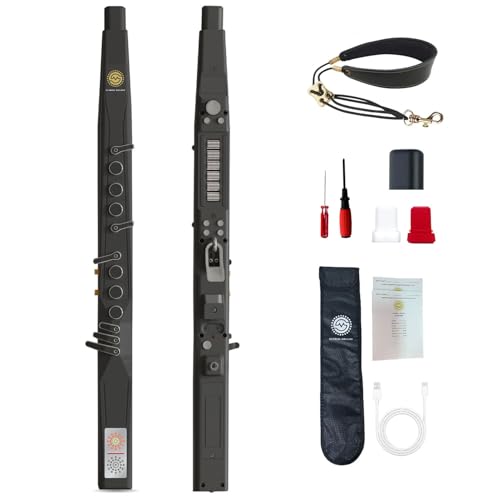
- 68 built-in sounds
- Rechargeable with OTG recording
- 5W cavity speaker for onboard playback
Best For: Portable players who want recording and built-in speaker output
Premium Sound Engine Pick
- Over 250 acoustic and electronic sounds
- SuperNATURAL tones with ZEN-Core technology
- Bluetooth and USB audio/MIDI connectivity
Best For: Serious players seeking premium sounds and modern connectivity
Compact Starter Pick

- 10 tones with saxophone, flute, trumpet, and more
- MIDI Bluetooth works with major devices and software
- Portable body with speaker, headphone jack, and case
Best For: Beginners who want an affordable, portable practice instrument
Most Expressive Controls
EX M2 wind instrument with vibrato and transpose

- 12 tones with 3 fingering modes for broader versatility
- 5 sensitivity levels plus auto vibrato and reverb control
- Bluetooth MIDI, speaker, headphones, and included case
Best For: Players who want expressive control and flexible practice options
Best Value Range
S56 13-tone Bluetooth wind synthesizer

- 13 tones with saxophone, clarinet, flute, and more
- Bluetooth MIDI plus 12-semitone transposition
- Built-in 2W speaker and 4-hour rechargeable battery
Best For: Players wanting a simple, versatile instrument with solid value
Editor's Pick – Roland AE-30 Aerophone Pro
If you want a professional electronic wind instrument with a wide sound range and polished playability, the Roland AE-30 Aerophone Pro is built to cover a lot of ground. It combines traditional saxophone fingering with low-latency sensors, over 300 sounds, and deep onboard editing so you can move from acoustic realism to synth textures without changing instruments.
Best For: Players who want a premium, highly expressive wind controller with extensive sound options and pro connectivity.
Pros:
- Over 300 acoustic, electronic, and world sounds, plus SuperNATURAL and ZEN-Core engine options
- Traditional saxophone fingering with low-latency sensors for a familiar, responsive feel
- Bluetooth audio and MIDI, USB MIDI, and traditional MIDI ports for flexible setup
- Built-in speaker, headphone jack, and battery power for playing anywhere
Cons:
- Premium feature set may be more than casual players need
- Battery operation requires 6 AA batteries, which are not included
The AE-30 is the most feature-rich option here, especially if you value expressive control and broad sound design capability. It stands out as a serious professional electronic wind instrument for stage, studio, and practice use.
Wireless Performer – Akai Professional EWI5000
The Akai Professional EWI5000 is a professional electronic wind instrument focused on portability, wireless freedom, and responsive performance. With multiple fingering modes, air-pressure and bite sensors, and a large onboard sound library, it offers a streamlined setup for players who want flexibility without giving up expressive control.
Best For: Performers who want a lightweight EWI with wireless connectivity and a ready-to-play sound set.
Pros:
- 2.4 GHz ultra-low latency wireless connectivity with included receiver
- Air-pressure level and bite sensors for responsive expression
- 3 GB onboard library of acoustic and synth sounds from SONiVOX
- Rechargeable battery plus USB-MIDI and audio output options
Cons:
- Only 12 keys, so it may feel different from traditional wind instruments
- Included components are limited according to the supplied details
This model is a strong choice if you prioritize mobility and stage freedom. Its wireless design and performance-ready sound set make it a practical professional electronic wind instrument for live players.
Value Studio Tool – Roland Aerophone AE-20
The Roland Aerophone AE-20 is a practical professional electronic wind instrument for players who want core performance features in a compact package. It offers 250+ sounds, Roland’s SuperNATURAL engine, ZEN-Core synthesis, and an onboard speaker, making it useful for practice, recording, and MIDI control.
Best For: Players who want a versatile wind instrument with a strong sound engine and simpler feature set than the flagship model.
Pros:
- 250+ sounds powered by SuperNATURAL and ZEN-Core engines
- Onboard speaker for convenient practice and quick play sessions
- USB connectivity for MIDI integration
- Includes a case and a 2-year warranty
Cons:
- Fewer features than the AE-30 flagship model
- Connectivity details are more limited in the supplied specs
The AE-20 keeps the experience focused on essential performance tools rather than maximum expansion. If you want a capable professional electronic wind instrument without the AE-30’s top-end complexity, this is a sensible middle-ground option.
Budget Feature Pick – AP 300 Pro Electronic Wind Instrument
The AP 300 Pro is a budget-minded professional electronic wind instrument that still includes several useful modern features. It offers 108 tones, Bluetooth audio and MIDI, OTG recording, and an LCD display, making it a straightforward option for players who want easy operation and portable power.
Best For: Right-handed players who want an affordable wind instrument with Bluetooth and recording features.
Pros:
- Bluetooth audio and Bluetooth MIDI for wireless playback and control
- LCD display makes selected tones and key settings easy to check
- Built-in OTG recording helps capture cleaner audio
- 6000mAh battery provides up to 6 hours of use
Cons:
- 108 tones is a smaller library than higher-end alternatives
- Designed for right-handed players
The AP 300 Pro focuses on convenience first, with wireless connectivity, recording support, and simple tone storage. It is a practical professional electronic wind instrument choice if you want useful features without paying for a flagship model.
Classic Sax-Style Playability – Roland Aerophone AE-10G
The Roland Aerophone AE-10G is a professional electronic wind instrument built for players who want sax-style familiarity with modern sound flexibility. Its acoustic sax-compatible fingering, responsive breath sensor, and built-in selection of sax voices make it a practical option if you want an electronic wind instrument that feels close to home while opening up more tonal options.
Best For: Sax players who want a familiar fingering layout and expressive electronic versatility.
Pros:
- Compatible with acoustic saxophone fingering for an easier transition.
- Includes soprano, alto, tenor, and baritone sax sounds.
- Breath sensor and reed structure support vibrato and pitch control.
- Also adds clarinet, flute, trumpet, violin, and synth sounds.
Cons:
- 6 AA batteries are not included.
- Some players may prefer a more specialized synth-focused layout.
As a professional electronic wind instrument, the AE-10G stands out for its playable sax feel and wide tonal range. It is a strong fit for performers who value expression first and want a reliable all-around wind controller with plenty of acoustic and electronic colors.
Budget Performance Wind Synth – MK EWI Performance Wind Synth
The MK EWI is a performance-grade electronic wind instrument aimed at players who want a compact wind synth with built-in recording and speaker output. With 68 sounds, rechargeable power, and an onboard 5W cavity speaker, it is positioned as a straightforward choice for practice, portable playing, and performance use.
Best For: Players who want a portable, rechargeable wind synth with onboard sound and recording.
Pros:
- Built-in OTG recording for direct capture.
- Rechargeable design supports portable use.
- Includes 68 sounds for varied playing options.
- 5W high-power cavity speaker provides built-in output.
Cons:
- Sound library is smaller than higher-end multi-engine models.
- Product details are limited compared with more established wind instrument lines.
For buyers comparing a professional electronic wind instrument against more compact, feature-focused alternatives, the MK EWI emphasizes convenience and self-contained play. It makes the most sense if you want recording, battery-free charging, and built-in audio in a simpler package.
Premium Sound Engine Pick – Roland AE-20 Aerophone
The Roland AE-20 Aerophone is a premium electronic wind instrument built for players who want advanced sound engines and strong expressive control. It combines SuperNATURAL acoustic tones, ZEN-Core technology, and low-latency breath and bite sensors, making it a versatile option for practice, live use, and sound exploration.
Best For: Serious players who want a versatile, premium wind instrument with broad sound coverage.
Pros:
- Over 250 acoustic and electronic sounds for wide creative range.
- SuperNATURAL acoustic tones deliver authentic response.
- Low-latency breath and bite sensors improve playability.
- Bluetooth and USB connectivity support audio and MIDI use.
Cons:
- Higher feature set may be more than casual users need.
- Its compact design still may feel large compared with simpler controllers.
If you want a professional electronic wind instrument with deep sound options and modern connectivity, the AE-20 is the most expansive model in this group. Its built-in speaker, headphone jack, and battery power also make it easy to use anywhere.
Compact Starter Pick – KONIX DC02 Pro beginner EWI
If you want a practical professional electronic wind instrument for learning and casual performance, the KONIX DC02 Pro keeps things simple while still offering useful flexibility. It includes 10 onboard tones, two fingerstyle playing options, adjustable blowing sensitivity, and both speaker and headphone use for easy practice at home or on the go.
Best For: Beginners who want a lightweight, portable EWI with basic MIDI support and a straightforward practice setup.
Pros:
- 10 built-in tones including saxophone, clarinet, flute, trumpet, and recorder sounds
- MIDI Bluetooth support for Android, iOS, macOS, and Windows via apps and DAWs
- Two fingerstyle options plus 3 adjustable blowing sensitivity settings
- Built-in speaker, headphone connection, and 4-hour rechargeable battery
Cons:
- Only 10 tones, so it is less expansive than some rivals
- Battery life is limited to around 4 hours per charge
- Plastic-and-silicone build is aimed more at portability than premium feel
The DC02 Pro is a good fit if you want an easy entry into electronic wind instruments without a steep learning curve. Its accessory bundle and compact body make it especially appealing for practice, travel, and first-time players.
Most Expressive Controls – EX M2 wind instrument with vibrato and transpose
The EX M2 stands out as a professional electronic wind instrument for players who want more control over tone shaping and transposition. With 12 tones, 3 fingering modes, 5 blow-sensitivity levels, auto vibrato, and a 3-octave range, it gives you a broader performance toolkit than a basic starter model.
Best For: Players who want a flexible digital wind instrument for practice, songwriting, and expressive performance.
Pros:
- 12 onboard tones and 3 fingering modes: Flute, Piano, and Hulusi
- 5 blow sensitivity levels, auto vibrato, and reverb control for expressive playing
- 3-octave range with transpose up or down by 12 semitones
- Bluetooth MIDI plus speaker, headphones, USB charging, and carrying case
Cons:
- More features may take longer to learn for absolute beginners
- 90-day manufacturer warranty is shorter than some buyers may prefer
- At 170 g, it is light, but the feature set is the main reason to choose it
For buyers who care about versatility and controllability, the M2 offers one of the more complete setups in this group. It is especially appealing if you want an instrument that can adapt to different fingering styles and playing environments.
Best Value Range – S56 13-tone Bluetooth wind synthesizer
The S56 is a practical professional electronic wind instrument if you want a broad sound palette and straightforward features in a compact setup. It offers 13 tones, 3 blowing sensitivity levels, 12-semitone transposition, Bluetooth MIDI, and a built-in 2W HiFi speaker, making it a strong all-around option for practice and experimenting with different sounds.
Best For: Beginners through adults who want a versatile digital wind instrument with simple controls and a built-in speaker.
Pros:
- 13 tone options, including saxophone, clarinet, flute, trumpet, and more
- Bluetooth MIDI connectivity for Windows, iOS, and Android devices
- 2W HiFi built-in speaker plus headphone support for private practice
- 800mAh rechargeable battery with about 4 hours of playtime
Cons:
- Only 3 sensitive keys, so the control layout is relatively simple
- Battery life is adequate but not especially long for extended sessions
- Accessory list is limited to a case in the supplied details
The S56 is a smart pick if you want a capable electronic wind instrument without overcomplicating the learning process. Its mix of tone variety, transposition, and easy playback makes it useful for students, teens, teachers, and adult hobbyists alike.
How We Picked These Professional Electronic Wind Instruments
We prioritized instruments that balance playability, sound quality, and real-world utility. That means responsive fingering, solid breath control, useful tone libraries, reliable power options, and connections that work for practice, studio recording, and live use. We also considered whether each Professional Electronic Wind Instrument offers enough flexibility for beginners moving up, as well as experienced players who want a dependable secondary instrument.
Quick Comparison: What Matters Most
When comparing models, focus less on the largest tone count and more on how well the instrument supports your playing. A smaller but better-designed sound engine can outperform a feature-heavy unit with weaker response. Look at breath sensitivity, onboard speaker quality, headphone support, MIDI or Bluetooth options, battery life, and whether the fingering system matches what you already know.
Key Buying Factors for a Professional Electronic Wind Instrument
Expressive Response
A good wind controller should track breath, articulation, and vibrato naturally. For professional use, the feel of the instrument matters as much as the number of presets.
Sound Engine and Tone Quality
Choose a model with convincing acoustic emulations, useful synth voices, and enough editing depth to shape tone for different genres. Premium models often deliver more realism and better dynamics.
Connectivity and Workflow
Many players need USB-MIDI, Bluetooth MIDI, audio output, or OTG recording for home studios and mobile setups. If you perform live, dependable connectivity can be just as important as onboard sounds.
Portability and Power
Battery life, charging method, and overall weight affect how often you’ll actually use the instrument. A lightweight model may be better for travel, while a heavier pro unit may offer a more refined feel.
Fingering and Learning Curve
Some players want sax-style fingering, while others prefer a system that is easier to learn or switch between. Make sure the layout suits your background and long-term goals.
Who Should Buy Which Professional Electronic Wind Instrument?
If you want the most polished performance and studio-ready control, choose a flagship model with advanced sound design and premium connectivity. If you’re upgrading from a beginner unit, a midrange option with good breath response and familiar fingering may offer the best value. Players who need portability and casual versatility should look for lighter, battery-powered designs with Bluetooth or onboard recording. For serious performers and producers, the best Professional Electronic Wind Instrument is usually the one that gives you the most expressive control, not simply the most preset sounds.