Adding speakers to multiple rooms should not require guesswork about amplifier load or constant trips back to the receiver. The best speaker selector switches with impedance protection make it easier to control separate zones while helping protect compatible audio equipment.
This roundup compares 10 models across four-, six-, eight-, and 12-zone layouts, including options with independent volume controls, dual-source support, and high-power handling. Use the guide below to match the switch to your system size, wiring, and listening habits.
Best 10 Speaker Selector Switches with Impedance Protection Picks for 2026
Best Multi-Room Value
OSD Audio ISS4 4-Zone Selector
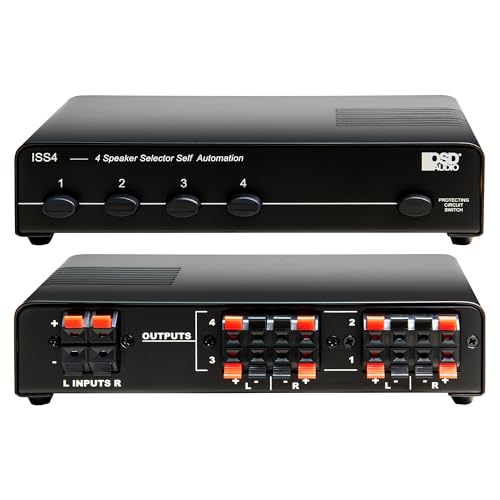
- Four independently selectable speaker zones
- Selectable impedance-matching protection
- Up to 70W per channel with protection
Best For: Multi-room systems with up to four zones
Best Simple A/B/C/D Control

- Connects four speaker pairs
- Push-button plug-and-play operation
- Handles 100W per channel with 8-ohm systems
Best For: Basic four-pair stereo distribution
Best High-Capacity Protection

- Supports eight stereo speaker zones
- Maintains at least a 5-ohm amplifier load
- 100W protected or 200W unprotected per channel
Best For: Large multi-zone home theater and audio systems
Best Straightforward 8-Zone Control
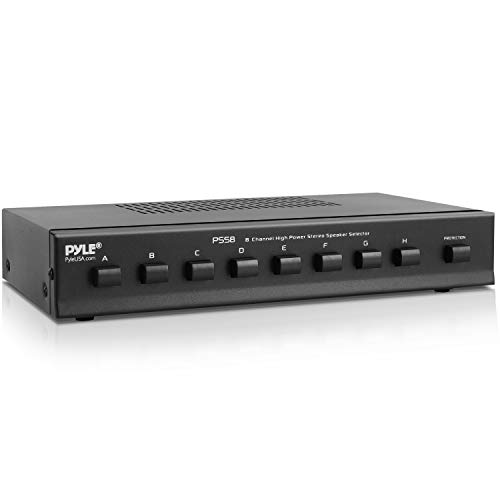
- Controls eight speaker pairs independently
- Includes amplifier and speaker protection buttons
- Supports systems up to 100W per channel
Best For: Simple eight-zone multi-room stereo systems
12-Zone Power Hub

- Connects up to 12 speaker pairs or zones
- Impedance-matching transformers distribute power safely
- Front-panel zone and source controls
Best For: Large multi-zone audio installations
Compact Multi-Zone Controller
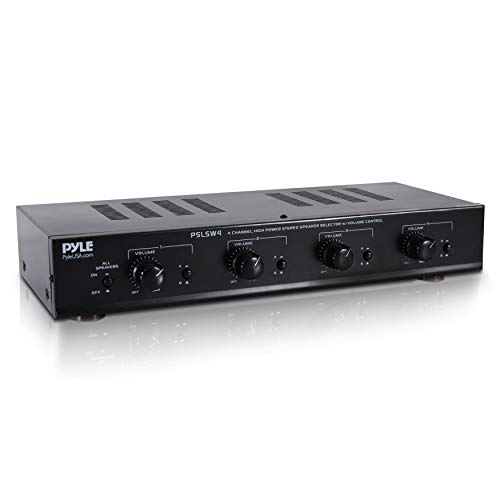
- Controls four speaker pairs
- Independent volume controls for each pair
- Overload protection and 8-ohm support
Best For: Four-pair home stereo and theater systems
Precision Impedance Control
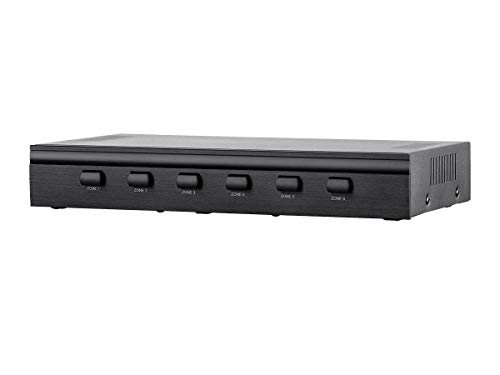
- Automatic impedance protection
- Six individual zone on/off buttons
- Supports 12–16 AWG speaker wire
Best For: Six-zone systems needing flexible wiring and protection
Best Value
4-Channel Impedance-Protected Selector

- Four speaker zones
- Optional impedance protection
- Up to 70W per channel with protection
Best For: Simple multi-room home audio distribution
Best With Volume Controls
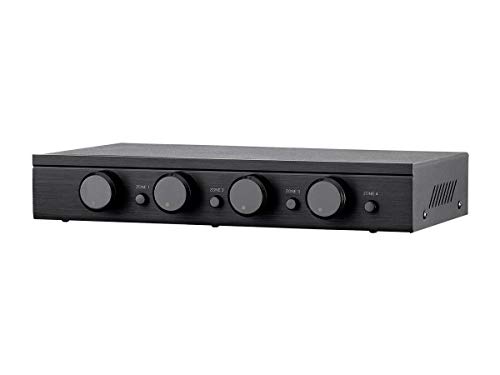
- Automatic impedance protection
- Individual zone volume controls
- 100W continuous per channel
Best For: Multi-zone systems needing independent adjustments
Best Premium Switch

- Automatic impedance protection
- 100W RMS per channel
- Supports 12–16 AWG wire
Best For: Robust four-zone installations with heavier wiring
Best Multi-Room Value – OSD Audio ISS4 4-Zone Selector
For shoppers comparing speaker selector switches with impedance protection, the OSD Audio ISS4 is a practical four-zone option. It lets one amplifier serve multiple listening areas, with individual on/off controls and selectable impedance-matching protection.
Best For: Multi-room systems with up to four speaker zones.
Pros:
- Supports four listening zones and any selected pair.
- Selectable impedance protection supports multiple speaker pairs.
- Accepts up to 70 watts per channel with protection engaged.
- Removable Phoenix connectors and screw-down terminals simplify wiring.
Cons:
- Designed for four zones rather than larger installations.
- Protection circuitry limits operation to 70 watts per channel when engaged.
Its low-profile steel construction, clear zone controls, and five-year limited warranty make the ISS4 a well-rounded choice for straightforward home audio distribution.
Best Simple A/B/C/D Control – Pyle PSS4 4-Channel Selector
The Pyle PSS4 is a compact choice for anyone seeking speaker selector switches with impedance protection for up to four speaker pairs. Its push-button design provides simple zone selection, while its stated power handling suits compatible 8-ohm systems.
Best For: Budget-conscious setups using up to four pairs of 8-ohm speakers.
Pros:
- Connects up to four separate speaker pairs.
- Push-button operation supports simple plug-and-play setup.
- Accepts speaker wire up to 14-gauge.
- Handles 100 watts per channel with speaker systems having a minimum 8-ohm impedance.
Cons:
- Its power specification requires speakers with at least 8 ohms impedance.
- Offers four channels, fewer than the eight-zone alternatives.
With a compact 7.48-by-4.72-by-1.97-inch footprint, the PSS4 is suited to basic stereo distribution where straightforward physical controls matter more than advanced installation features.
Best High-Capacity Protection – Monoprice 8-Channel Selector
For larger installations, the Monoprice 108230 stands out among speaker selector switches with impedance protection by supporting up to eight stereo zones. Its built-in circuitry is designed to keep amplifier impedance from dropping below 5 ohms as zones are selected.
Best For: Home theater or whole-home audio systems requiring up to eight stereo zones.
Pros:
- Supports up to eight stereo speaker zones.
- Impedance matching keeps the overall load from dropping below 5 ohms.
- Handles up to 100 watts per channel with protection enabled.
- Can handle up to 200 watts per channel with protection disabled.
Cons:
- Higher-power operation requires disabling the protection circuit.
- The supplied notes list no warranty.
The eight-channel capacity and included zone-identification stickers make this a strong fit when a single selector must manage many rooms, provided the stated power and protection settings are observed.
Best Straightforward 8-Zone Control – Pyle PSS8 Speaker Selector
The Pyle PSS8 is a straightforward option among speaker selector switches with impedance protection, offering independent control for up to eight speaker pairs. Clearly labeled terminals and protection buttons make it suitable for managing multiple rooms from one control center.
Best For: Multi-room stereo systems using up to eight speaker sets and amplifiers rated to 100 watts per channel.
Pros:
- Controls up to eight speaker pairs independently.
- Built-in protection buttons help safeguard the amplifier and speakers from overload.
- Clearly labeled controls simplify zone selection.
- Compatible with stereo receivers or amplifiers up to 100 watts per channel.
Cons:
- The supplied notes do not specify a detailed impedance threshold.
- Its feature set is focused on basic selection and protection rather than advanced zone management.
If you want broad eight-zone coverage with simple controls, the PSS8 provides a practical distribution hub for a compatible high-powered stereo system.
12-Zone Power Hub – SS-Pro 12 Speaker Selector
For larger distributed-audio systems, the Monoprice SS-Pro 12 is a speaker selector switch with impedance protection designed to connect up to 12 speaker pairs or listening zones. Its impedance-matching transformers help distribute power safely, while front-panel controls make zone and source selection straightforward.
Best For: Multi-zone home audio systems that need up to 12 separately selectable speaker pairs.
Pros:
- Supports up to 12 speaker pairs or listening zones.
- Uses audiophile-grade impedance-matching transformers.
- Includes front-panel zone controls and source selection.
- Rated for 300 watts peak.
Cons:
- Its 12-zone capacity may be more than smaller systems require.
- The supplied notes do not specify independent volume controls for each zone.
This is the strongest fit when expansion and broad zone coverage matter most. Its transformer-based impedance protection makes it a practical choice for distributing amplifier power across many connected speaker pairs.
Compact Multi-Zone Controller – Pyle PSLSW4 Speaker Selector
The Pyle PSLSW4 is a compact speaker selector switch with impedance protection for systems using up to four pairs of 8-ohm speakers. It adds independent volume controls for each pair, along with push-button selection and overload protection for practical home-theater or stereo distribution.
Best For: Home stereo and theater setups needing four selectable speaker pairs with individual volume adjustment.
Pros:
- Controls up to four speaker pairs from one stereo amplifier.
- Provides independent audio-source volume controls for each pair.
- Offers overload safety protection circuitry.
- Accepts speaker wire up to 14 AWG through screw terminals.
Cons:
- Designed for 8-ohm speakers rather than a broad range of impedance loads.
- Maximum power is listed as 100 watts per channel.
- Supports fewer zones than the 12-pair Monoprice model.
Choose this model when simple zone volume control is more important than maximum capacity. Its tabletop design and screw-terminal connections keep installation relatively direct for a four-pair system.
Precision Impedance Control – Monoprice SS-6 Selector
The Monoprice SS-6 is a six-channel speaker selector switch with impedance protection for connecting multiple speaker pairs to one amplifier. Automatic impedance protection, individual zone buttons, heavy-duty terminals, and support for 12–16 AWG wire make it a focused option for reliable zone switching.
Best For: Installations needing six zones, automatic impedance management, and flexible speaker-wire connections.
Pros:
- Provides automatic impedance protection circuitry.
- Includes individual on/off buttons for each zone.
- Supports 12–16 AWG speaker wire with heavy-duty screw connectors.
- Handles up to 100 watts RMS per channel.
Cons:
- Its six-zone capacity is smaller than the SS-Pro 12.
- The supplied impedance specifications may require careful system matching.
- It does not list independent zone volume controls.
This model offers a useful middle ground between compact four-zone selectors and larger 12-zone units. Its automatic protection and isolated left/right circuit grounds are particularly valuable for compatible amplifiers, including floating-ground or bridged configurations.
Best Value – 4-Channel Impedance-Protected Selector
If you need speaker selector switches with impedance protection for distributing audio around the home, this four-channel Monoprice model offers a straightforward, budget-conscious setup. It supports up to four speaker zones and lets you choose between protection-enabled operation up to 70 watts per channel or up to 140 watts per channel without the protection circuit.
Best For: Home audio systems that need simple four-zone speaker distribution at a fair price.
Pros:
- Supports up to four separate speaker zones.
- Optional impedance protection helps keep the amplifier’s seen impedance constant as speakers are added.
- Handles up to 70 watts per channel with protection enabled.
- Compatible with audio amplifiers, audio sources, and receivers.
Cons:
- Protection-enabled power handling is lower than the 140-watt maximum.
- Does not list individual zone volume controls.
This is a practical choice when zone distribution and basic impedance management matter more than advanced controls. Its four-channel layout makes it easy to expand a compatible home audio system.
Best With Volume Controls – SSVC-4.1 Zone Selector
For buyers comparing speaker selector switches with impedance protection and per-room adjustment, the Monoprice SSVC-4.1 combines automatic protection with individual zone controls. It supports four speaker pairs from one amplifier, with on/off buttons and volume controls for each zone.
Best For: Multi-zone systems where listeners need independent zone volume and power control.
Pros:
- Automatic impedance protection circuitry.
- Individual zone on/off buttons and volume controls.
- 100 watts per channel continuous and 200 watts peak power handling.
- Heavy-duty screw terminals support 12–18 AWG speaker wire.
Cons:
- Requires attention to the stated minimum amplifier impedance when multiple speakers are selected.
- Its 6.9-pound weight may make it less convenient to move.
The SSVC-4.1 is the more control-oriented option in this group. Its automatic protection, zone-level volume adjustment, and isolated left/right grounds make it well suited to more involved amplifier and speaker installations.
Best Premium Switch – SS-4 Four-Channel Selector
The Monoprice SS-4 is a premium four-channel choice for shoppers seeking speaker selector switches with impedance protection and robust wiring support. It uses automatic impedance protection, provides individual zone on/off buttons, and is rated for 100 watts RMS per channel.
Best For: Installations using heavier speaker wire and requiring dependable four-zone switching.
Pros:
- Automatic impedance protection circuitry.
- 100 watts RMS per channel power capacity.
- Supports 12–16 AWG speaker wire with heavy-duty screw connectors.
- Isolated left/right grounds support amplifiers with floating grounds or bridged configurations.
Cons:
- Provides zone on/off control but does not list individual zone volume controls.
- The specified impedance limits still apply when multiple speaker pairs are selected.
Choose the SS-4 when wiring compatibility and amplifier connection flexibility are priorities. It offers a focused set of switching and protection features without adding per-zone volume controls.
How We Picked the Best Speaker Selector Switches with Impedance Protection
We focused on practical features that affect installation and everyday use: the number of supported zones, impedance protection or matching, power-handling claims, speaker-wire compatibility, source flexibility, zone controls, and build format. We also included both compact four-zone units and larger selectors for whole-home systems, so the list covers apartments, dedicated theaters, and multi-room installations.
Specifications should be treated as system limits rather than performance guarantees. Confirm that a selector’s power rating and impedance requirements are compatible with your receiver or amplifier, speakers, and intended wiring arrangement.
Quick Comparison
| Best For | Look For | Typical Configuration |
|---|---|---|
| Small multi-room setup | Four zones, impedance protection | Living room plus three additional areas |
| Larger whole-home audio | Six to eight zones | Several rooms or speaker pairs |
| Large installations | 12-pair capacity or dual-source input | Many zones and flexible source routing |
| Room-level adjustment | Independent volume controls | Different listening levels by zone |
Key Buying Factors for Speaker Selector Switches with Impedance Protection
Zone Count and Speaker Layout
Choose a selector with enough outputs for the speaker pairs you will use now, plus modest room for expansion. A four-zone unit is often sufficient for a typical home, while six- or eight-zone models make more sense when several rooms, patios, or additional speaker pairs are involved.
Impedance Protection and Amplifier Compatibility
Impedance protection helps reduce the risk of presenting an excessively difficult load when multiple speaker zones are active. It does not replace checking specifications. Verify the selector’s supported speaker impedance, your amplifier’s minimum rating, and whether the protection circuit remains engaged with several zones switched on.
Power Handling and Wiring
Compare continuous or per-channel ratings carefully, since manufacturers may describe power differently. Use appropriately sized cable and check terminal compatibility before installation. Models supporting 12- to 16-AWG wire can be useful for longer runs, but connectors and cable routing still matter.
Controls and Source Flexibility
Individual on/off buttons allow unused zones to be disconnected, while independent volume controls can prevent one room from overwhelming another. If you plan to use two amplifiers or sources, choose a model specifically designed for dual-source operation rather than relying on a basic selector.
Who Should Buy Which Speaker Selector Switches with Impedance Protection?
Choose a Four-Zone Model for Straightforward Expansion
Four-channel selectors suit most small and medium homes, especially when you want simple push-button control and impedance protection without a large rack footprint.
Choose Six or Eight Zones for Whole-Home Coverage
These models are better for multiple rooms, outdoor speakers, or future expansion. They reduce the need to replace the selector when your system grows.
Choose a High-Capacity or Dual-Source Model for Complex Systems
If you need many speaker pairs, multiple amplifiers, or separate source routing, prioritize higher zone capacity and dual-source features. For rooms with frequently changing listening levels, an option with independent volume controls may be worth the added cost.