Choosing the right monitors can make a bigger difference in your mixes than almost any plugin. The best studio monitor speakers for mixing give you clarity, honest low end, and a balanced midrange so you can make decisions faster.
Below, we focus on compact, dependable options for home studios, desktop setups, and small project rooms—so you can match the speaker to your space, workflow, and budget.
Best 10 Studio Monitor Speakers for Mixing Picks for 2026
Reference-Grade Pair
Yamaha HS5 Powered Studio Monitor Pair

- Neutral tuning for accurate mix decisions
- 5-inch woofer, 1-inch tweeter, 54 Hz–30 kHz
- Balanced XLR and TRS inputs
Best For: Mixers who want a clear, uncolored nearfield reference
Compact Desktop Pick
M-AUDIO BX4 4.5" Wired Studio Monitors Pair

- Compact 4.5-inch Kevlar woofer design
- Rear EQ controls plus multiple wired inputs
- Made for zero-latency desktop monitoring
Best For: Desktop mixers, streamers, and small-studio setups
Small-Room Choice
Yamaha HS4 Powered Studio Monitor Pair

- Compact 4.5-inch powered studio monitors
- Room control and high trim tuning
- XLR/TRS, RCA, and stereo mini inputs
Best For: Compact rooms and desktop creators needing a small footprint
Mix Translation Pick
PreSonus Eris E5 Pair 5.25" Near Field Monitors
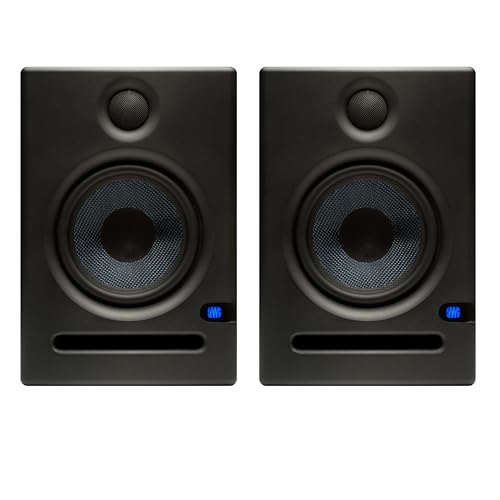
- 5.25-inch woofer with controlled low end
- Acoustic tuning controls for room adjustment
- Balanced XLR, 1/4-inch, and RCA inputs
Best For: Home and project studios focused on mix translation
Compact Nearfield Pick
Yamaha HS3 Powered Studio Monitor in Black, Pair

- 3.5-inch woofer fits small desks and nearfield setups
- XLR/TRS, RCA, and stereo mini inputs
- Room control and high trim help tune the response
Best For: Small home studios and desktop mixing setups
Value Flat-Response Choice
Edifier MR4 Studio Monitor Speakers
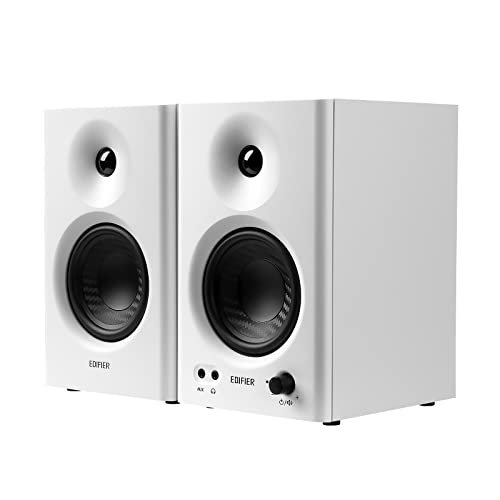
- Near-flat tuning aimed at creators and mixing
- TRS, RCA, AUX, and front headphone output
- 4-inch woofers and silk-dome tweeters for clear detail
Best For: Budget-conscious creators who want flexible desktop monitors
Feature-Rich Desktop Pair
PreSonus Eris 3.5 Powered Studio Monitors, Pair

- 50W pair with 3.5-inch woven-composite woofers
- High- and low-frequency tuning controls
- TRS, RCA, aux, and front headphone jack
Best For: Small studios needing flexible inputs and easy room tuning
Compact Near-Field Pick
PreSonus Eris E4.5-2-Way 4.5" Near Field Studio Monitor (Pair)

- 50W Class AB power for desktop monitoring
- 4.5-inch woofer and silk-dome tweeter for clear sound
- TRS, RCA, and front aux inputs with room tuning
Best For: Small studios and desk-based mixing
Feature-Rich Budget Alternative
Ortizan C7 Powered Studio Monitors Pair with Bluetooth 5.3

- 24-bit USB DAC and Bluetooth 5.3 for flexible use
- 3.5-inch woofer with 0.75-inch silk dome tweeter
- Balanced TRS, RCA, AUX, and headphone output
Best For: Compact home studios that need lots of connection options
Ultra-Compact Desktop Favorite
PreSonus Eris 3.5 Powered Studio Monitors, Pair

- 50W built-in amplification for near-field monitoring
- 3.5-inch woofer and 1-inch silk-dome tweeter
- TRS, RCA, aux, and headphone jack on the desk
Best For: Tight desks and close-range mixing
Reference-Grade Pair – Yamaha HS5 Powered Studio Monitor Pair
If you want studio monitor speakers for mixing that lean toward accuracy, the Yamaha HS5 pair is built around sonic purity rather than added color. The 5-inch woofer, 1-inch dome tweeter, and bi-amplified design aim to reveal what is actually in your mix, while the balanced XLR and TRS inputs keep them easy to integrate into a home or project studio.
Best For: Mixers who want a straightforward nearfield monitor with a neutral, uncolored presentation for critical listening.
Pros:
- Designed to emphasize sonic purity without coloring the original sound
- 5-inch woofer and 1-inch dome tweeter with 54 Hz to 30 kHz response
- Bi-amped 70-watt system for nearfield studio use
- XLR and TRS inputs support balanced or unbalanced connections
Cons:
- 5-inch size may not provide deep low-end on its own
- No wireless monitoring features
For mixing, the HS5 is a classic “hear the mix as it is” choice. If your room is already treated and you value clarity over extra bass, this pair gives you a practical monitoring baseline.
Compact Desktop Pick – M-AUDIO BX4 4.5" Wired Studio Monitors Pair
The M-AUDIO BX4 pair is a compact option for studio monitor speakers for mixing when desktop space is limited. These wired monitors use 4.5-inch Kevlar woofers, silk dome tweeters, and a bass reflex cabinet to deliver a fuller sound than typical computer speakers, with rear EQ controls to help tailor the output.
Best For: Desktop producers, streamers, and home mixers who need a small wired monitor set with flexible inputs.
Pros:
- Zero-latency wired monitoring for recording and mixing
- 4.5-inch Kevlar woofers and silk dome tweeters for clear stereo imaging
- Rear 1/4-inch, 1/8-inch, and RCA inputs add easy compatibility
- High and low EQ dials help adjust the sound to your space
Cons:
- Smaller 4.5-inch drivers are not ideal for very deep bass playback
- Best suited to desktop setups rather than larger rooms
This is a practical pick if you want a compact monitoring setup without giving up basic tuning controls. It makes the most sense for close-range mixing on a desk or in a small room.
Small-Room Choice – Yamaha HS4 Powered Studio Monitor Pair
The Yamaha HS4 pair is a compact take on studio monitor speakers for mixing, aimed at creators who need a smaller footprint without losing the brand’s monitoring approach. With a 4.5-inch woofer, 1-inch tweeter, room control and high trim controls, and XLR/TRS, RCA, and stereo mini inputs, it fits neatly into tight desk setups.
Best For: Producers working in compact rooms who want Yamaha monitoring in a smaller, easier-to-place design.
Pros:
- Compact 4.5-inch 2-way powered design
- Room control and high trim help adapt the response
- Multiple inputs include XLR/TRS combo, RCA, and stereo mini
- Pair includes cable and anti-slip pads
Cons:
- Smaller size may limit low-end depth versus larger monitors
- Only 26 W + 26 W output power
If your studio is short on space, the HS4 gives you a disciplined monitoring option with useful tuning controls. It is especially appealing when you need Yamaha sound in a white, compact package.
Mix Translation Pick – PreSonus Eris E5 Pair 5.25" Near Field Monitors
For studio monitor speakers for mixing, the PreSonus Eris E5 pair focuses on helping your mixes translate. The 5.25-inch woven composite woofer, silk-dome tweeter, acoustic tuning controls, and front-firing port are all aimed at a balanced nearfield monitoring experience with solid low-end detail and adjustable response.
Best For: Home and project studios that want nearfield monitors with tuning controls and strong mix translation.
Pros:
- 5.25-inch woofer delivers solid low-end with minimal bass distortion
- 1-inch silk-dome tweeter helps reduce harshness
- 80-watt Class AB bi-amplification adds headroom
- Balanced XLR and 1/4-inch plus unbalanced RCA inputs offer broad connectivity
Cons:
- Larger than compact desktop models
- Best results depend on using the acoustic controls for your room
The Eris E5 is a sensible middle ground for mixers who want more room to hear low-end detail without jumping to a much larger speaker. It is a strong fit if you value tuning flexibility and a straightforward nearfield layout.
Compact Nearfield Pick – Yamaha HS3 Powered Studio Monitor in Black, Pair
If you want studio monitor speakers for mixing on a small desk, the Yamaha HS3 is built for straightforward, close-up reference listening. This powered pair keeps the footprint modest while giving you XLR/TRS, RCA, and stereo mini inputs, plus room control and high trim adjustments to help tailor the sound.
Best For: Desktop producers and home studios that need a compact, wired monitor pair with flexible inputs.
Pros:
- Compact 3.5-inch woofer design works well on tight desks and small production spaces.
- Multiple input options: XLR/TRS combo, RCA, and stereo mini.
- Room control and high trim help compensate for different setups.
- Includes speaker cable, stereo mini-to-RCA cable, and anti-slip pads.
Cons:
- 70 Hz low end is limited compared with larger monitors.
- 26W output is best suited to nearfield use rather than larger rooms.
- No wireless connectivity.
The HS3 makes sense if accuracy at short listening distance matters more than big bass or loud playback. It is a practical, no-frills option for mixing on a desk where size and connectivity flexibility are both important.
Value Flat-Response Choice – Edifier MR4 Studio Monitor Speakers
The Edifier MR4 is a strong budget-friendly option for studio monitor speakers for mixing if you want a near-flat response without moving up to a larger, pricier system. Its 4-inch woofers, silk-dome tweeters, and MDF cabinet are aimed at clear, smooth playback for creators who work at a desk.
Best For: Music creators and home studio users who want a balanced, versatile desktop monitor with easy connections.
Pros:
- Professionally tuned near-flat response is designed for music production.
- Balanced 1/4-inch TRS, RCA, and AUX inputs support several source types.
- Dual mode design lets you switch between monitor and music listening.
- Front headphone output adds convenient private monitoring.
Cons:
- Plastic enclosure is less substantial than MDF or wood cabinets.
- No dedicated wireless feature is highlighted in the main specs.
- Best suited to nearfield desktop use rather than larger spaces.
For mixing on a budget, the MR4 offers a lot of useful studio features in one package. It balances flexible inputs, basic tone controls, and a creator-focused sound profile in a form that works well on a desk.
Feature-Rich Desktop Pair – PreSonus Eris 3.5 Powered Studio Monitors, Pair
The PreSonus Eris 3.5 is a compact stereo pair for studio monitor speakers for mixing, but it is also built to double as an everyday desktop listening system. With 50W of amplification, 3.5-inch woven-composite woofers, and adjustable acoustic tuning controls, it is set up for tight, controlled monitoring in small rooms.
Best For: Home studio owners and desktop users who want a compact monitor pair with strong connectivity and room tuning.
Pros:
- 50W built-in amplification provides clear output for desktop and nearfield use.
- High- and low-frequency tuning controls help adapt sound to the room.
- Balanced TRS, RCA, and front aux input make it easy to connect many devices.
- Front headphone jack supports private listening when needed.
Cons:
- 3.5-inch drivers and 80 Hz low-end limit deep bass extension.
- Designed mainly for nearfield listening, not bigger control rooms.
- Wireless features are secondary to the wired connection focus.
The Eris 3.5 is a practical all-rounder for people who want one compact monitor set for mixing, casual listening, and everyday computer audio. Its combination of tuning controls and broad input support makes it easy to integrate into a small studio.
Compact Near-Field Pick – PreSonus Eris E4.5-2-Way 4.5" Near Field Studio Monitor (Pair)
If you want studio monitor speakers for mixing in a compact desktop setup, the PreSonus Eris E4.5 pair is built for accurate listening without taking up much space. They combine balanced TRS and RCA inputs, front aux input, and room tuning controls, so they can fit a home studio, bookshelf, or casual reference setup.
Best For: Mixing on a small desk, bedroom studio, or hybrid listening setup where you want accurate sound and flexible connectivity.
Pros:
- 50W Class AB amplification gives the pair enough output for desktop monitoring.
- 4.5-inch woven-composite woofers and 1-inch silk-dome tweeters are tuned for clear, accurate sound.
- High- and low-frequency controls help you adapt the speakers to your room.
- Balanced TRS, RCA, and front-panel aux inputs make hookup easy with pro or consumer gear.
Cons:
- The 4.5-inch woofer size limits deep bass extension without a subwoofer.
- Best suited to near-field use rather than filling a larger room.
Overall, the Eris E4.5 is a practical entry-point choice for mixing when you need honest sound, straightforward connections, and a compact footprint. If you later want more low end, the notes also point to pairing them with a compatible subwoofer.
Feature-Rich Budget Alternative – Ortizan C7 Powered Studio Monitors Pair with Bluetooth 5.3
The Ortizan C7 is a compact option for studio monitor speakers for mixing if you want multiple input choices and a small-footprint desktop design. Its balanced TRS input, USB DAC, RCA, AUX, and Bluetooth 5.3 support make it easy to connect a mixer, computer, or phone in a home studio.
Best For: Home studios, content creation, and mixed-use desktop audio where flexible connectivity matters most.
Pros:
- Built-in 24-bit DAC supports clean USB playback with reduced signal loss.
- 3.5-inch carbon fiber woofer and 0.75-inch silk dome tweeter are tuned for precise, layered sound.
- Flat-response tuning is aimed at balanced, true-to-source monitoring.
- Balanced 6.35mm TRS input works with mixers, consoles, and other pro gear.
Cons:
- The 3.5-inch driver size is compact, so low-end output is naturally limited.
- Its gaming- and lifestyle-focused feature set may matter less if you only want a pure studio monitor.
As a mixing tool, the C7 stands out more for versatility than sheer output. It makes sense if you need a compact monitor pair that can move between production, streaming, and everyday listening without much setup hassle.
Ultra-Compact Desktop Favorite – PreSonus Eris 3.5 Powered Studio Monitors, Pair
For studio monitor speakers for mixing on a tight desk, the PreSonus Eris 3.5 keeps the focus on accurate near-field monitoring in a very small footprint. The pair offers 50W of built-in amplification, tuning controls, and multiple input options, making it easy to use with a computer, interface, mixer, or turntable.
Best For: Desktop mixing, small creative setups, and users who need a compact monitor pair with straightforward hookups.
Pros:
- 50W amplification delivers clear, distortion-free sound for near-field use.
- 3.5-inch woven-composite woofers and 1-inch silk-dome tweeters aim for balanced, accurate audio.
- High- and low-frequency tuning controls help tailor the response to your room.
- Balanced TRS, RCA, front aux, and headphone jack make desk integration simple.
Cons:
- The compact 3.5-inch woofers are not ideal if you want strong sub-bass on their own.
- Best for small rooms and close listening rather than bigger studio spaces.
The Eris 3.5 is the most space-saving option here, and that makes it appealing if you need honest monitoring without crowding your workstation. It’s a practical fit for creators who care more about clear reference sound than room-shaking output.
How We Picked These Studio Monitor Speakers for Mixing
We prioritized models that are commonly chosen for home and project studios, with an emphasis on neutral sound, practical sizing, and value. For Studio Monitor Speakers for Mixing, the goal is not hype or heavy bass; it is translation, detail, and consistency at near-field listening distances.
We also considered connectivity, cabinet size, driver configuration, and whether the speakers make sense for desk setups, small rooms, or more dedicated production spaces.
Quick Comparison: Which Type Fits Your Space?
Smaller 3.5-inch and 4-inch monitors are usually best for tight desks, low-volume editing, and very small rooms. They are easier to place and often more forgiving in untreated spaces, though they may not reach deep bass without help from a subwoofer.
4.5-inch and 5.25-inch models typically offer a fuller low end and more headroom, making them a better fit for users who want a more complete mixing reference without moving to larger speakers.
Key Buying Factors for Studio Monitor Speakers for Mixing
Accuracy Over Excitement
Look for monitors that present vocals, guitars, kick, and snare with honesty. A flatter response helps you avoid mixes that sound impressive on your speakers but weak everywhere else.
Room Size and Placement
In small rooms, speaker size matters as much as sound quality. Compact monitors can reduce bass buildup on a desk or near walls, while larger models may need more careful positioning and some acoustic treatment.
Inputs and Connectivity
Choose the connections that fit your interface or desktop setup. Balanced inputs are preferable for cleaner signal routing, while some budget speakers also offer unbalanced or convenience features for general use.
Low-End Extension
If you mix bass-heavy genres, you may want a larger woofer or a subwoofer-ready setup. If not, a tighter, more controlled low end can be more useful than extra bass quantity.
Listening Distance
Near-field monitors are designed to sound best at short distances, which helps reduce room influence and keeps detail focused. That makes them especially suitable for desktop production and small studios.
Who Should Buy Which Studio Monitor Speakers for Mixing?
If you need maximum compactness, smaller desktop monitors are the easiest fit for cramped spaces and casual production. If you want a more rounded mixing reference for ongoing music work, step up to 4.5-inch or 5.25-inch models.
For beginners and budget-conscious buyers, entry-level powered monitors can be a strong starting point. For more serious mixing, choose the most neutral option you can afford and place it carefully before chasing bigger drivers or extra features.