Choosing studio monitors for electronic music means balancing clarity, bass response, and room size. The right pair should reveal synths, kicks, and sidechain movement without adding flattering color.
Below, we’ve narrowed the field to ten popular options that suit different budgets, desk setups, and production needs, from compact desktop speakers to larger monitors built for fuller low-end detail.
Best 10 Studio Monitors for Electronic Music Picks for 2026
Reference Pair
Yamaha HS5 W 5-Inch White Bundle

- Flat, accurate nearfield monitoring
- 5-inch powered stereo pair
- XLR input for studio use
Best For: Small-studio producers who want a clean reference pair
Desktop Starter
M-AUDIO BX3 Compact Wired Pair

- Zero-latency wired monitoring
- 3.5-inch Kevlar woofer pair
- Multiple input options and headphone out
Best For: Small desktop studios and beginner producers
Classic Reference
Yamaha HS5 Studio Monitor Pair

- Neutral, uncolored monitoring
- Bi-amplified 5-inch design
- XLR and TRS inputs
Best For: Mixing-focused producers who want a trusted reference
Budget Reference
Edifier MR4 4-Inch Active Speakers
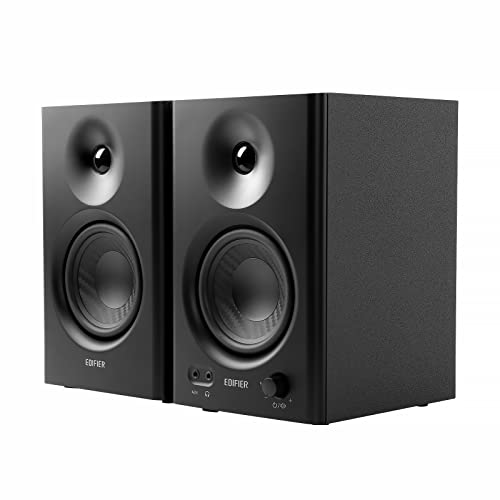
- Almost-flat tuning for creators
- 4-inch woofer with silk dome tweeter
- TRS, RCA, and AUX connectivity
Best For: Budget-minded home producers in small spaces
Compact Nearfield Pick
Yamaha HS3 Powered Studio Monitor Pair

- 3.5-inch two-way pair for close-range desktop use
- Room control and high trim help tune the response
- XLR/TRS, RCA, and stereo mini inputs included
Best For: Small studios and desktop producers who need a compact wired monitor pair
Desktop Versatility Pick
Mackie CR3.5 Creative Reference Monitors

- Tone knob can add bass and treble lift or stay more neutral
- Desktop and bookshelf modes adapt to different listening distances
- TRS, RCA, 3.5 mm, and headphone output support flexible use
Best For: Desktop producers who also want speakers for gaming and casual listening
Feature-Rich 5-Inch Pick

- 5-inch pair with DSP-driven room tuning for setup control
- Low-diffraction baffle aims for lower distortion and better imaging
- XLR and 1/4-inch TRS combo input supports studio gear
Best For: Producers and mixers who want a more advanced 5-inch monitor pair
Compact Desktop Pick
PreSonus Eris 3.5 Powered Studio Monitors

- 50W active stereo pair
- TRS, RCA, and front aux inputs
- High/low tuning controls for room setup
Best For: Bedroom producers and small desks
Midrange Mixing Choice
Yamaha HS7 7-Inch Powered Studio Monitor Pair

- 7-inch woofer with bi-amp power
- 43Hz–30kHz frequency response
- XLR and TRS inputs for balanced signals
Best For: Producers needing a larger near-field monitor
Big Low-End Pick
Yamaha HS8 8-Inch Powered Studio Monitor Pair

- 8-inch woofer with 120W bi-amp power
- 38Hz–30kHz frequency response
- XLR wired studio connection
Best For: Producers wanting stronger bass extension
Reference Pair – Yamaha HS5 W 5-Inch White Bundle
If you want studio monitors for electronic music that prioritize accuracy over hype, the Yamaha HS5 W pair is built for that job. These nearfield reference monitors are designed to deliver a flat response and a clear sound image, which makes them useful when you need to hear mix decisions without extra color.
Best For: Producers who want a compact, honest reference pair for mixing and production in a small studio.
Pros:
- Nearfield design focuses on accuracy and high-resolution playback.
- 5-inch powered monitors suit desktop and tabletop studio setups.
- XLR connectivity is a solid fit for professional studio wiring.
- White finish and 2-pack bundle make it easy to set up a stereo pair.
Cons:
- 5-inch size may not deliver the deepest low end on its own.
- Designed around reference accuracy rather than added warmth or bass boost.
The HS5 W is a straightforward option if your priority is making balanced mix choices for electronic tracks. It is most appealing to users who value clear detail and a true-to-source monitoring approach.
Desktop Starter – M-AUDIO BX3 Compact Wired Pair
The M-Audio BX3 is a compact pick for studio monitors for electronic music when you want desktop-friendly size without giving up useful production features. Its 3.5-inch Kevlar woofers, silk dome tweeters, and wired zero-latency design make it a practical choice for beat-making, editing, and casual mixing.
Best For: Desktop producers, streamers, and beginners who need small wired monitors with flexible inputs.
Pros:
- Zero-latency wired connection supports real-time monitoring.
- 3.5-inch Kevlar woofers and silk dome tweeters provide a full desktop sound.
- Rear 1/4-inch, 1/8-inch, and RCA inputs offer broad compatibility.
- Front headphone input and included software add convenience for home setups.
Cons:
- Smaller 3.5-inch drivers are less suited to larger rooms or deep bass needs.
- More of a compact multimedia monitor than a full-size studio reference speaker.
For a small workspace, the BX3 offers a lot of usability in a minimal footprint. It is a sensible entry point if you want straightforward monitoring and easy connectivity for electronic production.
Classic Reference – Yamaha HS5 Studio Monitor Pair
The Yamaha HS5 pair is a classic choice for studio monitors for electronic music because it is built around sonic purity and a very neutral presentation. With 5-inch woofers, 1-inch dome tweeters, and balanced or unbalanced input support, it is aimed at serious music production and studio monitoring.
Best For: Producers who want a proven reference monitor pair for mixing and studio work.
Pros:
- Emphasizes a pure, uncolored sound for critical listening.
- Bi-amplified 2-way design with 70 watts total power.
- XLR and TRS inputs accept balanced or unbalanced signals.
- 5-inch woofer and wide frequency response support detailed monitoring.
Cons:
- Reference-style tuning may feel less exciting than bass-forward speakers.
- 5-inch drivers may not satisfy users wanting very heavy low-end output.
This is the kind of monitor pair many producers choose when accuracy matters most. If your electronic music workflow depends on hearing what is actually in the mix, the HS5 remains a dependable benchmark.
Budget Reference – Edifier MR4 4-Inch Active Speakers
The Edifier MR4 is a practical budget option for studio monitors for electronic music, especially if you want a flatter tuning than typical bookshelf speakers. Its 4-inch woofer, silk dome tweeter, and dual-mode design make it useful for both production listening and everyday playback.
Best For: Home producers who want affordable reference monitors with flexible inputs and simple controls.
Pros:
- Professionally tuned to an almost flat curve for music creators.
- 4-inch woofer and 1-inch silk dome tweeter provide clear stereo detail.
- TRS, RCA, and AUX inputs support a range of source devices.
- Dual-mode design lets you switch between monitor and music listening.
Cons:
- 4-inch drivers are compact and may not deliver strong deep bass alone.
- Single speaker package means you are getting one monitor, not a pair bundle.
The MR4 is a strong fit if you need a lower-cost reference speaker with useful controls and broad connectivity. It makes sense for smaller rooms and producers who want a sensible balance of monitoring and casual listening.
Compact Nearfield Pick – Yamaha HS3 Powered Studio Monitor Pair
If you want studio monitors for electronic music in a very small setup, the Yamaha HS3 pair is built for nearfield listening on a desk or tabletop. The 3.5-inch woofer, 0.75-inch tweeter, and room control/high trim switches give you basic tools to tailor the response when producing beats, programming synths, or checking mixes in a tight room.
Best For: Producers who need a compact, wired monitor pair for desktop music production and close-range mixing.
Pros:
- Compact 3.5-inch two-way design suits small desks and tight studio spaces.
- Room control and high trim help adjust the sound for your setup.
- Multiple wired inputs: XLR/TRS combo, RCA, and stereo mini.
- Includes speaker cable, stereo mini-to-RCA cable, and anti-slip pads.
Cons:
- 70 Hz low-end response means you may want a sub for deeper bass checking.
- 26 W output is best suited to nearfield use rather than larger rooms.
Overall, the HS3 is a practical entry-level choice if you value a small footprint and straightforward connectivity over heavy bass output. For electronic music work at a desk, it offers a clean, compact monitoring setup with useful room-tuning controls.
Desktop Versatility Pick – Mackie CR3.5 Creative Reference Monitors
The Mackie CR3.5 is a flexible option for studio monitors for electronic music when your setup also has to handle gaming, casual listening, or general desktop audio. Its tone knob lets you keep a more transparent monitor-style sound or add extra bass and high-end sparkle, while the location switch helps adapt the speakers for nearfield desktop use or a farther bookshelf placement.
Best For: Producers who want small monitors that can shift from studio work to everyday listening.
Pros:
- Tone knob lets you shape the sound from neutral to more bass and treble emphasis.
- Desktop and bookshelf modes help optimize placement.
- 3.5-inch woven woofer and silk dome tweeter provide a clean stereo setup.
- TRS, RCA, and 3.5 mm input options plus a headphone output add convenience.
Cons:
- 3.5-inch drivers are better for compact setups than full-range bass monitoring.
- Enhanced low-end performance may require the optional CR8SBT subwoofer.
For producers who need a desktop monitor that does more than one job, the CR3.5 is easy to integrate and easy to live with. It is especially appealing if you want a small speaker that can be tuned for production, gaming, or casual playback without changing gear.
Feature-Rich 5-Inch Pick – KRK ROKIT 5 G5 Monitor Pair
The KRK RP5G5 ROKIT 5 pair is aimed squarely at electronic music production, with a 5-inch driver size, DSP-driven room tuning, and a low-diffraction baffle design for lower distortion and better stereo imaging. If you want studio monitors for electronic music that are more suited to detailed mixing and tighter placement control than basic desktop speakers, this model brings several production-focused features.
Best For: Producers and engineers who want a more capable 5-inch monitor pair for mixing electronic tracks.
Pros:
- 5-inch design offers more monitoring scale than compact 3.5-inch models.
- DSP-driven room tuning helps adapt the response to your space.
- Low-diffraction baffle is designed for better stereo imaging and lower distortion.
- XLR and 1/4-inch TRS combo input supports common studio connections.
Cons:
- Still a nearfield monitor, so very deep sub-bass may need a separate subwoofer.
- More advanced features may be unnecessary for ultra-simple setups.
For electronic music work, the ROKIT 5 G5 stands out as the most production-forward option in this group. Its tuning tools, 5-inch driver, and imaging-focused design make it a strong pick when you want more control and detail from your monitoring chain.
Compact Desktop Pick – PreSonus Eris 3.5 Powered Studio Monitors
If you want studio monitors for electronic music on a small desk, the PreSonus Eris 3.5 is a practical entry point. The 3.5-inch woven-composite woofers and silk-dome tweeters are tuned for clear, balanced playback, and the built-in high- and low-frequency controls help you adapt the sound to your room without extra gear.
Best For: Bedroom producers, compact desks, and all-in-one desktop listening setups.
Pros:
- 50W built-in amplification keeps the sound clean and dynamic at modest listening levels.
- Front-panel, RCA, and balanced TRS inputs make it easy to connect a computer, interface, mixer, or phone.
- High- and low-frequency tuning controls help tailor the monitors to different rooms.
- Front headphone jack adds a convenient private-listening option.
Cons:
- 3.5-inch woofers are better for near-field desktop use than for deep bass-heavy monitoring.
- The frequency range is narrower than larger studio monitor pairs.
- Best suited to smaller spaces rather than full-size production rooms.
Overall, this pair makes sense if you need an affordable, space-saving monitor set for programming beats, editing tracks, or general production work. It delivers the core features most beginners and desktop producers need without taking over the workspace.
Midrange Mixing Choice – Yamaha HS7 7-Inch Powered Studio Monitor Pair
The Yamaha HS7 is a strong middle-ground option for studio monitors for electronic music when you want more size and headroom than a compact desktop speaker. Its 7-inch woofer, bi-amped design, and 43Hz–30kHz response make it a solid fit for mixing tasks where you need detail and better low-end reach.
Best For: Producers who want a larger near-field monitor for mixing and balanced playback.
Pros:
- 7-inch woofer gives more low-end presence than smaller 3.5-inch monitors.
- Bi-amp system with 60W LF and 35W HF power supports controlled, detailed playback.
- XLR and TRS inputs accept balanced or unbalanced signals.
- Frequency response reaches from 43Hz to 30kHz for broader monitoring coverage.
Cons:
- Larger size needs more desk or stand space than compact monitors.
- Not the best match for tiny rooms or ultra-portable setups.
- Sold as a pair of studio monitors, but cables are not mentioned in the notes.
For electronic music production, the HS7 is a useful step up if you want a monitor that can reveal more mix detail and give you a fuller low end than smaller desktop speakers. It is a sensible choice for producers moving beyond starter monitors.
Big Low-End Pick – Yamaha HS8 8-Inch Powered Studio Monitor Pair
If your priority is monitoring low-end energy in studio monitors for electronic music, the Yamaha HS8 gives you a larger 8-inch woofer and more total power than the HS7. The 38Hz–30kHz response and 120W bi-amped design make it a better fit for producers who want a bigger monitor with stronger bass reach for mixing in a studio environment.
Best For: Producers who want a larger monitor pair with stronger low-end extension.
Pros:
- 8-inch woofer helps deliver more low-end presence for electronic tracks.
- 120W bi-amp system provides higher overall power output.
- 38Hz–30kHz frequency response reaches lower than the HS7.
- XLR connectivity supports a straightforward wired studio setup.
Cons:
- Bigger cabinets need more room on a desk or monitor stands.
- Not ideal for compact bedrooms or tight desktop setups.
- XLR cables are not included according to the supplied notes.
The HS8 is the most room-filling option in this roundup and makes sense when you want more bass extension and scale from your monitors. For bigger production spaces, it offers a more serious monitoring platform for electronic music work.
How We Picked These Studio Monitors for Electronic Music
We focused on monitors that are commonly used for electronic production, with an emphasis on honest midrange detail, usable low-end extension, and practical size options for home studios. We also looked at feature sets that matter in real sessions, including input flexibility, onboard EQ controls, and models that are easy to place in smaller rooms.
Quick Comparison: Which Size Fits Your Space?
Smaller 3.5-inch and 4-inch monitors are best for compact desks, late-night editing, and near-field use where bass can be supplemented with headphones or a sub later. 5-inch models are the most versatile choice for many producers, offering a stronger balance of detail and low-end reach. 7-inch and 8-inch monitors suit larger rooms and users who want more physical bass output without depending as much on a subwoofer.
Key Buying Factors for Studio Monitors for Electronic Music
Low-End Accuracy
Electronic music depends on kick drums, basslines, and sub-heavy elements, so look for monitors that stay controlled through the low end rather than simply sounding big. A speaker that is overly boosted in bass can make mixes translate poorly.
Room Size and Placement
In small rooms, oversized monitors can exaggerate bass buildup and make mixing harder. Match the cabinet size to your space, and leave room for proper positioning at ear level with enough distance from walls when possible.
Connectivity and Controls
Balanced inputs are helpful for cleaner signal paths, while rear-panel room or high-frequency controls can make it easier to tune the speakers to your space. Features like tone shaping can be useful for casual listening, but flatter voicing is usually better for production decisions.
Use Case
If your workflow is mostly beat-making, arrangement, and sound design, compact monitors may be enough. If you mix full tracks or want more reliable low-end judgment, stepping up to 5-inch or larger Studio Monitors for Electronic Music is often the smarter move.
Who Should Buy Which Studio Monitors for Electronic Music?
Choose 3.5-inch or 4-inch models if you need a compact, affordable desktop setup. Go with 5-inch monitors if you want the best all-around option for producing and mixing in a typical home studio. Pick 7-inch or 8-inch speakers if your room is larger and you want more bass extension and headroom from your main monitors. If you already work at lower volumes or in a treated space, prioritize accuracy over raw output for the most dependable results.