Choosing studio monitors with eight inch woofers can make a major difference in how you hear bass, low mids, and stereo balance while mixing or producing.
This roundup focuses on 10 strong options for creators who want a fuller, more accurate nearfield monitoring setup in 2026.
Best 10 Studio Monitors with Eight Inch Woofers Picks for 2026
Reference-Grade 8-Inch Pick
Yamaha HS8 Studio Monitor, Black, 8 Inch (Pack of 2)

- 8-inch woofer with 1-inch dome tweeter
- Room control and high-trim switches
- XLR and TRS wired inputs
Best For: Home or project studios needing a classic wired reference monitor
Most Versatile Desktop Monitor
Mackie CR8BT 8" Creative Reference Powered Studio Monitors

- 8-inch woven woofer with silk dome tweeter
- Bluetooth plus RCA, TRS, and 3.5 mm inputs
- Tone knob and location switch for easy tuning
Best For: Desktop users who want studio monitors with extra playback flexibility
Low-End Detail Leader

- 33 Hz low-end extension
- 8-inch woofer with U-ART tweeter
- XLR, RCA, and TRS compatibility
Best For: Bass-heavy mixing, production, and scoring work
Club-Style Performance Pick
Pioneer DJ VM-80 8-inch Active Studio Monitor Speaker

- 8-inch active monitor with punchy bass
- Room-tunable for different spaces
- Suited to DJing and home studio use
Best For: DJs and producers who want a tunable monitor with impact
Mix Accuracy Pick
Mackie MR824 8-inch Powered Monitor

- 8-inch polypropylene woofer
- Logarithmic waveguide for wide dispersion
- XLR, TRS, and RCA inputs
Best For: Home and project studios focused on accurate mixing
Room-Tuning Choice

- 8-inch Kevlar aramid woofer
- 25 boundary and tuning EQ options
- XLR and TRS combo input
Best For: Producers needing a monitor pair with room-tuning flexibility
High-Output Pick
Mackie HR824mk2 8.75-inch Studio Monitor
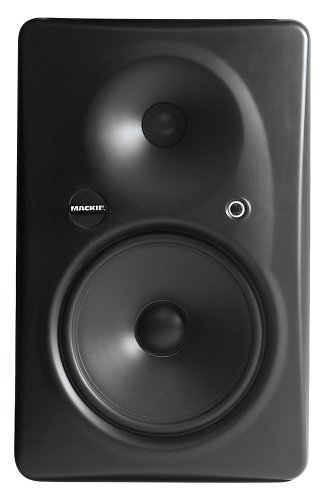
- 8-inch woofer with 150W max output
- Acoustic Space Control for room adaptation
- Built for recording and surround applications
Best For: Recording and surround rooms that need more output and calibration
Powered Reference Monitor
YORKVILLE YSM8 8-inch Powered Studio Monitor

- 8-inch woofer and 1-inch dome tweeter
- Biamped powered design with 85w+30w output
- High/low frequency trim controls included
Best For: Mixing and recording setups that need a simple powered 8-inch reference monitor
Wireless-Ready Studio Monitor
KRK Kreate 8 Powered Studio Monitor

- 8-inch glass aramid woofer with 1-inch textile dome tweeter
- Bluetooth input for wireless streaming
- Multiple audio inputs for flexible connectivity
Best For: Users who want an 8-inch monitor with Bluetooth and wide device support
Three-Way Reference Pair
DYNAUDIO LYD 48 3-Way Powered Studio Monitor Pair

- 3-way design with 8-inch woofer, 4-inch midrange, 1-inch tweeter
- 180W powered reference pair
- Aimed at professional monitoring
Best For: Professional reference rooms that benefit from a three-way 8-inch monitor pair
Reference-Grade 8-Inch Pick – Yamaha HS8 Studio Monitor, Black, 8 Inch (Pack of 2)
If you want studio monitors with eight inch woofers for mixing and music production, the Yamaha HS8 is built around a straightforward, wired studio-monitor design with an 8-inch cone woofer and 1-inch dome tweeter. It focuses on a low-distortion sound with a defined bottom end, plus room and high-trim controls to help tailor the response to your space.
Best For: Home or project studios that want a classic, wired nearfield monitor with adjustable room controls.
Pros:
- 8-inch woofer and 1-inch tweeter for full-range monitoring
- Room control and high-trim switches help fine-tune the sound
- XLR and TRS inputs support common studio connections
- Bi-amp design with 120W max output
Cons:
- Wired-only design, with no wireless support
- Pack includes two monitors, which may be more than some buyers need
The HS8 is a practical choice if you want a familiar studio reference with useful EQ controls and enough low-end reach to work confidently. Its feature set is focused on accurate monitoring rather than extra convenience features.
Most Versatile Desktop Monitor – Mackie CR8BT 8" Creative Reference Powered Studio Monitors
For shoppers comparing studio monitors with eight inch woofers, the Mackie CR8BT stands out for mixing studio-style sound with Bluetooth and everyday listening features. It uses an 8-inch woven woofer, silk dome tweeter, tone knob, and location switch, so you can adapt it for close-up desktop use or more relaxed bookshelf listening.
Best For: Desktop producers, gamers, and listeners who want studio-style monitors with extra convenience.
Pros:
- 8-inch woven woofer and silk dome tweeter for clean sound
- Bluetooth, RCA, TRS, and 3.5 mm connectivity
- Tone knob lets you add bass and treble as needed
- Location switch helps optimize desktop or bookshelf placement
Cons:
- Bluetooth and tone shaping add convenience, but this is less stripped-down than a pure studio reference monitor
- Subwoofer is optional and not included
The CR8BT is a flexible pick if you want one pair of monitors for music production, gaming, and casual playback. Its feature set is broader than a basic studio monitor, which makes it easier to live with day to day.
Low-End Detail Leader – ADAM Audio T8V Studio Monitor
If you need studio monitors with eight inch woofers and strong bass extension, the ADAM Audio T8V is built for mixing, producing, and scoring work that benefits from low-end detail. Its 8-inch woofer, U-ART tweeter, and HPS waveguide are designed to deliver a wide sweet spot, defined bass, and reduced high-frequency fatigue.
Best For: Bass-heavy production, mixing, and film scoring where low-end reach matters.
Pros:
- 33 Hz bass extension for deep low-end monitoring
- 8-inch woofer and U-ART tweeter for detailed stereo playback
- HPS waveguide creates a more controlled sweet spot
- XLR, RCA, and 1/4″ TRS compatibility
Cons:
- Wired-only setup
- Uses a single speaker per listing, so buyers need to confirm pair quantity
The T8V is a strong option if you want a monitor that reaches low without losing clarity up top. Its feature set makes the most sense for producers who want detailed listening and a larger working sweet spot.
Club-Style Performance Pick – Pioneer DJ VM-80 8-inch Active Studio Monitor Speaker
The Pioneer DJ VM-80 is a straightforward choice if you want studio monitors with eight inch woofers and a punchy, room-tunable sound. Its active design is aimed at delivering clear audio with fast-attacking bass, while the room adjustment makes it easier to adapt the speaker for DJ or studio use.
Best For: DJs and producers who want a tunable monitor with a punchy low end.
Pros:
- 8-inch active monitor with clear, punchy bass
- Room tuning helps match different spaces
- Designed for both DJ use and music production
- Compact single-speaker design for flexible setup planning
Cons:
- Limited supplied details compared with the other models
- No connectivity or EQ specifics provided in the notes
The VM-80 looks like a good fit if you want a monitor that can adapt between club-style playback and flatter production work. It keeps the focus on bass response and room matching rather than extra features.
Mix Accuracy Pick – Mackie MR824 8-inch Powered Monitor
If you want studio monitors with eight inch woofers for mixing, the Mackie MR824 is built around translation and accuracy. Its 8-inch polypropylene woofer, 1-inch silk dome tweeter, and logarithmic waveguide are aimed at a wide sweet spot and detailed stereo imaging, while the XLR, TRS, and RCA inputs make it easy to hook into a range of studio setups.
Best For: Home and project studios that need a balanced, accurate nearfield monitor for mixing and production.
Pros:
- 8-inch polypropylene woofer for responsive low-end output.
- Logarithmic waveguide for wide dispersion and improved stereo imaging.
- 1-inch silk dome tweeter for clear high frequencies and vocal detail.
- XLR, TRS, and RCA inputs add flexible wired connectivity.
Cons:
- Single monitor listing means you may need to buy a pair separately.
- No wireless support, so it is strictly a wired studio speaker.
The MR824 is a practical choice if you value straightforward monitoring features and a design focused on mix translation. It offers the core 8-inch format many producers want, with connectivity and dispersion features that suit everyday studio work.
Room-Tuning Choice – KRK ROKIT 8 G5 Pair
The KRK RP8G5 is a strong option if you are comparing studio monitors with eight inch woofers and want built-in room adjustment. Each monitor uses an 8-inch woven Kevlar aramid fiber woofer, plus 25 boundary and tuning EQ combinations, so you can tailor the sound to your space while keeping a tight low and low-mid response.
Best For: Producers who want an 8-inch monitor pair with tuning controls for different room setups.
Pros:
- 8-inch woven Kevlar aramid fiber woofer for controlled low-end performance.
- 25 boundary and tuning EQ combinations help address room issues.
- Low Diffraction Baffle Design is intended to reduce distortion and improve imaging.
- XLR and 1/4-inch TRS combo input supports common analog connections.
Cons:
- Only analog wired connectivity is listed.
- The package is a pair, which may be more than some solo buyers need.
As an 8-inch monitor pair, the RP8G5 stands out for flexibility and setup control. It is especially appealing if your room is not perfectly treated and you want options to fine-tune the monitors rather than work around them.
High-Output Pick – Mackie HR824mk2 8.75-inch Studio Monitor
The Mackie HR824mk2 is aimed at users who want studio monitors with eight inch woofers and a more substantial output stage. It pairs an 8-inch woofer with an 8.75-inch speaker size, 150-watt maximum output, Acoustic Space Control, and a waveguide design intended to improve natural, accurate reproduction in recording and surround setups.
Best For: Recording studios and surround monitoring setups that need higher output and room adaptation.
Pros:
- 150-watt maximum output for strong monitoring headroom.
- Acoustic Space Control helps adapt the monitor to different rooms.
- Optimized waveguide and Zero Edge baffle are intended to improve accuracy.
- Designed for recording studios, audio production, and surround applications.
Cons:
- Heavier and larger than many compact nearfield monitors.
- RCA connectivity is listed, with no broader modern input set noted.
The HR824mk2 makes sense when output, control, and accuracy matter more than a minimal footprint. If your setup benefits from a monitor that can be adapted to the room and push more volume, this one is built for that role.
Powered Reference Monitor – YORKVILLE YSM8 8-inch Powered Studio Monitor
If you want studio monitors with eight inch woofers for tracking or mixing, the YORKVILLE YSM8 is built as a powered reference monitor with an 8-inch woofer and 1-inch dome tweeter. It uses XLR connectivity, includes high and low frequency trim controls, and is aimed at studio recording and mixing setups.
Best For: Mix rooms and project studios that want a straightforward powered 8-inch reference monitor with trim control.
Pros:
- 8-inch woofer with 1-inch dome tweeter for full-range monitoring
- Powered biamped design with 85w+30w output and clip/power LEDs
- High and low frequency trim controls for room adjustment
- Includes XLR and 1/4-inch TRS cables plus wall mount support
Cons:
- No wireless connectivity
- Single-monitor listing may require buying a pair separately
- More utilitarian than feature-heavy alternatives
This is a practical pick if you value studio-focused basics and adjustable tone over extra features. The YSM8 stays centered on reference monitoring, which makes it a sensible choice for users who want an 8-inch powered monitor for mixing and recording.
Wireless-Ready Studio Monitor – KRK Kreate 8 Powered Studio Monitor
The KRK Kreate 8 is a powered option in the studio monitors with eight inch woofers category, pairing an 8-inch glass aramid woofer with a 1-inch textile dome tweeter. It also adds Bluetooth input and multiple audio inputs, making it flexible for studio recording, podcasting, and audio editing.
Best For: Creators who want an 8-inch monitor with wireless streaming and broad device compatibility.
Pros:
- 8-inch glass aramid woofer for clear midrange and tight bass
- 1-inch textile dome tweeter for detailed highs
- Bluetooth input for wireless audio streaming
- Multiple audio inputs for universal connectivity
Cons:
- Wireless feature may be unnecessary for purist studio workflows
- Heavier than some compact monitors at 24.5 pounds
- Designed as a single monitor in the listing
If you want flexibility along with an 8-inch driver, the Kreate 8 is appealing because it covers both studio and casual playback use. Its mix of Bluetooth and wired inputs makes it especially practical for setups that serve more than one source.
Three-Way Reference Pair – DYNAUDIO LYD 48 3-Way Powered Studio Monitor Pair
For buyers comparing studio monitors with eight inch woofers, the DYNAUDIO LYD 48 stands out as a 3-way powered reference monitor with an 8-inch woofer, 4-inch midrange, and 1-inch tweeter. This black pair is rated at 180W and is positioned for professional monitoring where a more detailed three-way layout is useful.
Best For: Professional users who want a 3-way 8-inch monitor pair with dedicated midrange handling.
Pros:
- 3-way design with 8-inch woofer, 4-inch midrange, and 1-inch tweeter
- 180W powered reference monitor pair
- Sold as a left-side and pair configuration in black
- Built for professional reference use
Cons:
- More complex than a simple 2-way monitor
- Pair configuration may be more than some setups need
- No connectivity details provided in the supplied notes
The LYD 48 is the most specialized option here, especially if you want an 8-inch monitor with a dedicated midrange driver. That added three-way structure makes it a strong fit for professional reference environments where separation and detail matter.
How We Picked These Studio Monitors with Eight Inch Woofers
We prioritized models with proven monitoring-focused design, useful connectivity, sensible power output, and a reputation for honest sound reproduction. We also looked for options that suit different room sizes and workflows, from casual production to more critical mix environments.
Because room acoustics matter as much as speaker specs, we favored monitors that are widely used and easy to place in real studios. For Studio Monitors with Eight Inch Woofers, the goal is not just more bass—it is controlled low-end extension without losing midrange clarity.
Quick Comparison: What Sets the Best Options Apart
Across this group, the main differences come down to voicing, inputs, amplifier design, and feature set. Some models are better for flat, revealing playback, while others add convenience features like Bluetooth or onboard tuning controls.
If you need the most neutral monitoring possible, prioritize accuracy and room-adjustment tools. If your setup is more casual or hybrid, features such as multiple input types or wireless playback may matter more than absolute precision.
Key Buying Factors for Studio Monitors with Eight Inch Woofers
Room Size and Placement
Eight-inch monitors can sound powerful in small rooms, but they also reveal room problems quickly. In untreated spaces, bass buildup and reflections can make mixes misleading. If your room is compact, pay attention to placement, isolation, and basic acoustic treatment.
Frequency Response and Low-End Control
Look for speakers that extend low without becoming muddy. A strong low-end spec is useful, but controlled bass matters more than raw depth. For Studio Monitors with Eight Inch Woofers, the best models balance extension with tight transient response.
Connectivity and Signal Chain
Check whether you need XLR, TRS, RCA, or Bluetooth. Balanced inputs are usually preferred for studio use because they help reduce noise and integrate better with audio interfaces and mixers.
Amplification and Headroom
More headroom can help monitors stay clean at higher levels, but wattage alone is not a guarantee of quality. Focus on how the speaker handles peaks and whether it remains composed at normal mixing volumes.
Voicing and Workflow
Some engineers prefer a highly revealing monitor, while others want a slightly more forgiving sound. Choose the voicing that matches your work: detailed reference playback for mixing, or a more versatile tuning for production and everyday listening.
Who Should Buy Which Studio Monitors with Eight Inch Woofers?
If you mix regularly and want dependable translation, choose the most neutral, well-documented option that fits your room. If you produce beats, record vocals, or work in a hybrid setup, a feature-rich model may be the better fit.
For larger rooms or users who want fuller low-end from a single pair, Studio Monitors with Eight Inch Woofers are a smart step up from smaller nearfields. For untreated bedrooms or small desks, consider whether you can position them properly before buying.
In short, the best choice is the one that matches your room, your interface, and how critical your monitoring needs are—not just the one with the biggest woofer.