Studio monitors with front port design are a smart choice when your desk sits close to a wall or your room leaves little breathing space behind the speakers. By moving the bass port to the front, these monitors can be easier to place without immediately overloading the low end.
In this roundup, we focus on practical options for home studios, music production, editing, and casual listening, with picks that balance clarity, placement flexibility, and overall value.
Best 10 Studio Monitors with Front Port Design Picks for 2026
Front-Port Imaging Pair

- Slip Stream front port supports controlled bass.
- Image Control Waveguide widens the sweet spot.
- Boundary EQ and HF Trim help room tuning.
Best For: Nearfield mixing, podcasting, and compact home studios.
Flat-Response Front-Port Monitor

- Front port reduces chuffing and hissing.
- DSP aims for a flat, accurate response.
- Boundary EQ helps in desk or wall setups.
Best For: Home studios needing accurate sound and flexible placement.
Balanced Front-Port Pair
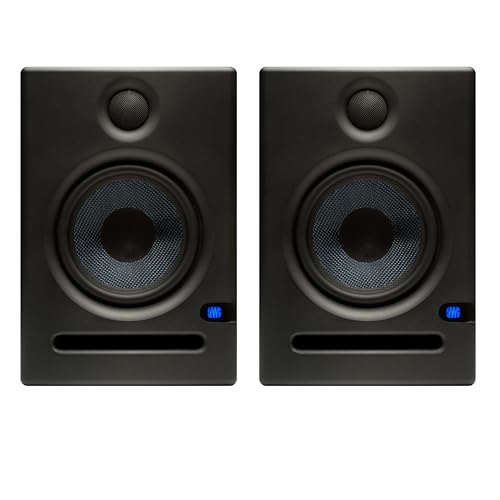
- Front-firing port supports bass output.
- Acoustic tuning controls help room matching.
- XLR, 1/4-inch, and RCA inputs included.
Best For: Nearfield mixing and home studios with flexible input needs.
Versatile Desktop Monitor

- Hi-Res Audio certification for detailed playback.
- Bluetooth plus TRS/RCA/AUX inputs.
- Music, Monitor, and Custom modes available.
Best For: Desktop creators who want wired and wireless flexibility.
Compact Nearfield Choice

- New boundary EQ helps near walls or on a desk.
- Broad sweet spot supports off-axis listening.
- 6.5-inch two-way powered pair with XLR input.
Best For: Desktop and bedroom studios needing flexible placement.
Room-Tuning Monitor

- EBM waveguide creates a wide sweet spot.
- Five acoustic controls help tailor response to the room.
- 6.55-inch woofer and 1.25-inch silk-dome tweeter.
Best For: Mixing rooms that need adjustable sound shaping.
Budget Multi-Input Pick

- USB DAC and Bluetooth 5.3 add easy connectivity.
- Flat tuning aims for balanced playback.
- Front headphone output suits quick monitoring.
Best For: Small creative setups needing lots of input options.
Front-Port Flagship Pick
Focal Alpha 80 Evo 8-inch powered studio monitor

- 8-inch Slatefiber woofer and aluminum tweeter
- Laminar port plus high-SPL bi-amp design
- TRS, XLR, and RCA inputs with room tuning
Best For: Producers needing a powerful nearfield monitor with flexible connectivity
Compact Desktop Pair
PreSonus Eris 3.5 powered studio monitor pair

- Compact 3.5-inch powered stereo pair
- Front aux input and headphone jack for easy use
- HF and LF controls for room tuning
Best For: Small desks, beginner production, and casual listening
Reference Accuracy Pick
Yamaha HS5 powered studio monitor pair

- 5-inch nearfield monitors with 1-inch tweeters
- Bi-amped 70W system for clean output
- XLR and TRS inputs for studio connectivity
Best For: Producers who want a neutral, uncolored reference monitor
Front-Port Imaging Pair – JBL 305P MkII 5" Pair
If you want studio monitors with front port design that still deliver a wide, detailed image, the JBL 305P MkII pair is a strong fit for desktop production. The Slip Stream port helps support low end, while the Image Control Waveguide is built to give you a broad sweet spot for mixing, podcasting, and content work.
Best For: Producers, podcasters, and creators who need accurate nearfield monitoring with a wide listening area.
Pros:
- Patented Image Control Waveguide supports precise, immersive imaging.
- Slip Stream port helps reinforce bass while keeping the response controlled.
- Boundary EQ and HF Trim help adapt the sound to different rooms.
- XLR/TRS inputs add flexible wired connectivity.
Cons:
- Smaller 5-inch woofer may not satisfy users wanting deeper bass output.
- Designed as a wired studio pair, not a wireless speaker setup.
The 305P MkII is a practical option if you want a compact monitor pair with tuning controls and a front-ported design that works well on a desk or in a small studio.
Flat-Response Front-Port Monitor – Kali LP-6 V2 6.5"
The Kali Audio LP-6 V2 is built for buyers looking for studio monitors with front port design and a flat, honest sound. Its front port is tuned to reduce chuffing and hissing, and the updated boundary EQ makes placement easier whether the speaker sits on a desk, near a wall, or on a stand.
Best For: Music producers and home recording users who want a budget-conscious monitor with strong placement flexibility.
Pros:
- Front port is designed to minimize turbulence and unwanted noise.
- Updated DSP aims for a flatter, more accurate response.
- Boundary EQ helps the speaker adapt to different room positions.
- 80W bi-amped design and 6.5-inch driver offer solid output.
Cons:
- Sold as a single speaker, so a stereo setup requires purchasing two.
- Large 6.5-inch size may be less convenient on very small desks.
If you need a front-ported monitor that focuses on accuracy and flexible placement, the LP-6 V2 is an easy model to evaluate for a home studio build.
Balanced Front-Port Pair – PreSonus Eris E5 Pair
The PreSonus Eris E5 pair is a sensible choice if you want studio monitors with front port design and a straightforward nearfield setup. Its front-firing acoustic port is meant to improve bass-frequency reproduction, while the acoustic tuning controls help you shape the response for your room.
Best For: Home studio users and mixers who want a practical, balanced monitor pair with easy connectivity.
Pros:
- Front-firing acoustic port supports better bass reproduction.
- 5.25-inch woofer and silk-dome tweeter aim for balanced sound.
- 80W Class AB bi-amplification provides useful headroom.
- XLR, 1/4-inch, and RCA inputs cover many setups.
Cons:
- Smaller cabinet size limits deep bass compared with larger monitors.
- No wireless options are included.
Overall, the Eris E5 pair is a dependable front-ported option for users who want clear connections, room controls, and a compact footprint.
Versatile Desktop Monitor – Edifier MR3
The Edifier MR3 is a flexible pick if you want studio monitors with front port design in a compact, feature-rich package. It offers Hi-Res Audio certification, multiple wired inputs, and Bluetooth, making it useful for both monitor-style listening and everyday desktop use.
Best For: Creators and listeners who want a versatile monitor with app control and wireless convenience.
Pros:
- Hi-Res Audio certification supports detailed, accurate playback.
- TRS, RCA, AUX, and Bluetooth give you broad connectivity.
- Music, Monitor, and Custom modes add listening flexibility.
- App-based EQ control helps tailor the sound.
Cons:
- 3.5-inch mid-low drivers are smaller than many dedicated studio monitors.
- Designed as a versatile speaker, so it may appeal less to purists wanting a fully traditional monitor layout.
For buyers who value convenience as much as monitoring, the MR3 offers a practical mix of front-ported cabinet design, wireless support, and user-friendly tuning.
Compact Nearfield Choice – JBL 306P MkII 6.5" Pair
JBL Professional 306P MkII Next-Generation 6" 2-Way Powered Studio Monitor (306PMKII) (Pair)
Check Price On AmazonIf you want studio monitors with front port design that can sit closer to a wall or work surface, the JBL 306P MkII is a practical pick. Its updated HF and LF transducers are built for better transient response and lower harmonic distortion, while the new boundary EQ helps restore neutral low-end balance in tighter placements.
Best For: Bedroom studios, desktop setups, and creators who need a wider sweet spot for mixing.
Pros:
- New boundary EQ helps when the speakers are placed near walls or on a desk.
- Broad sweet spot supports more consistent off-axis listening while you fine-tune mixes.
- 6.5-inch two-way design with updated drivers for deep bass and cleaner response.
- Includes a modern, studio-friendly look and XLR connectivity.
Cons:
- No built-in wireless playback is listed in the supplied notes for this model.
- As a powered pair, they still need dedicated power and studio cabling.
Overall, this is a strong fit if your priority is accurate nearfield monitoring with a little more flexibility around placement. The boundary EQ and wide sweet spot make it easier to work in compact spaces without giving up a serious studio-monitor feel.
Room-Tuning Monitor – PreSonus Eris E7 XT
PreSonus Eris E7 XT 2-Way Active Studio Monitor with EBM Waveguide (Pack of 1)
Check Price On AmazonFor buyers comparing studio monitors with front port design, the PreSonus Eris E7 XT stands out for its tuning flexibility and controlled imaging. It uses a wide EBM waveguide for a broad sweet spot, and its acoustic controls let you tailor the response to the room instead of relying on a one-size-fits-all setup.
Best For: Mixing spaces that need adjustable voicing and solid stereo imaging.
Pros:
- EBM waveguide delivers a wide sweet spot and solid imaging.
- Acoustic tuning controls include Level, HPF, LF Trim, HF Trim, and Acoustic Space.
- 6.55-inch woven composite woofer and 1.25-inch silk-dome tweeter for deep lows and smooth highs.
- Includes Studio One Prime and Studio Magic plug-in suite in the package.
Cons:
- Supplied notes list a single monitor per pack, so a stereo pair means buying two.
- More tuning options may take extra setup time for first-time users.
This model makes sense if you want a monitor that can be shaped to the room while still staying focused on accurate playback. The combination of waveguide imaging and flexible acoustic controls is especially useful in small or imperfect spaces.
Budget Multi-Input Pick – Ortizan C7 Powered Pair
If you need studio monitors with front port design for a compact creative space, the Ortizan C7 is aimed at convenience and versatility. It combines a 3.5-inch carbon fiber woofer, 0.75-inch silk dome tweeter, and a professional flat tuning curve, plus multiple input options for easy switching between devices.
Best For: Small desks, casual content creation, and budget-conscious multi-device setups.
Pros:
- Built-in 24-bit DAC over USB helps preserve signal quality.
- Supports RCA, Bluetooth 5.3, 3.5mm AUX, TRS, and Type-C connections.
- Front-panel headphone output makes quick monitoring easier.
- Flat tuning is designed for balanced playback across highs, mids, and lows.
Cons:
- 3.5-inch woofer size is smaller than many traditional studio monitors.
- Supplied notes focus on convenience features more than pro-studio calibration tools.
The C7 is a flexible option if your setup needs easy connectivity and a monitor-style sound in a small footprint. It’s less about high-end studio complexity and more about giving you practical, clear playback across everyday creative tasks.
Front-Port Flagship Pick – Focal Alpha 80 Evo 8-inch powered studio monitor
If you want studio monitors with front port design-style bass support and a serious nearfield presentation, the Focal Alpha 80 Evo is built for detailed listening in larger workspaces. Its 8-inch Slatefiber woofer, aluminum tweeter, and laminar port aim for full-range monitoring with enough output to stay controlled at higher levels.
Best For: Producers and engineers who need a powerful 8-inch monitor with flexible inputs and room tuning.
Pros:
- 8-inch Slatefiber woofer plus 1-inch aluminum tweeter for detailed, balanced monitoring
- Laminar port design and high-SPL output help it reach deep low end cleanly
- TRS, XLR, and RCA inputs support up to three sources at once
- LF/HF shelving and sensitivity controls make room tuning straightforward
Cons:
- Sold individually, so a stereo setup requires buying two
- Large cabinet size may be more than small desks can comfortably handle
- Higher-output design may be overkill for very compact rooms
The Alpha 80 Evo is a strong fit when you want a monitor that can deliver depth, control, and connectivity without sacrificing adjustment options. It makes more sense for users who need a serious reference speaker than for casual desktop listening.
Compact Desktop Pair – PreSonus Eris 3.5 powered studio monitor pair
For compact studio monitors with front port design benefits on a desktop, the PreSonus Eris 3.5 is an easy, practical choice. The small powered pair is aimed at close listening, with a front-panel aux input and headphone jack that make it simple to connect everyday devices.
Best For: Desktop setups, beginner music production, and everyday listening in small spaces.
Pros:
- Compact 3.5-inch powered pair fits easily on a desk or bookshelf
- Front-panel aux input and headphone jack add convenient everyday use
- High- and low-frequency tuning controls help adapt sound to the room
- Balanced TRS and RCA inputs cover common connection needs
Cons:
- Small drivers are not ideal if you want deep bass or high-output monitoring
- Best suited to near-field listening rather than larger rooms
- Sold as a desktop-oriented pair, not a full-size studio solution
The Eris 3.5 makes sense if you want a compact, easy-to-connect monitor pair that keeps setup simple. It is a smart pick for smaller spaces where convenience matters as much as accurate playback.
Reference Accuracy Pick – Yamaha HS5 powered studio monitor pair
If you are comparing studio monitors with front port design options, the Yamaha HS5 stands out for its straightforward nearfield reference approach. These 5-inch monitors focus on sonic purity rather than added coloration, with bi-amplified power and balanced XLR/TRS input support for studio work.
Best For: Music production and monitoring when you want a clean, uncolored reference sound.
Pros:
- 5-inch woofer and 1-inch dome tweeter for nearfield monitoring
- Bi-amplified design with 45W LF and 25W HF output
- XLR and TRS inputs accept balanced or unbalanced signals
- Voicing emphasizes sonic purity without added coloration
Cons:
- No front-panel convenience features like aux input or headphone jack
- Bass response is limited compared with larger 8-inch monitors
- May be more demanding in placement for the best results
The HS5 is a dependable reference monitor for users who prioritize accuracy over extras. It is especially appealing in production spaces where a clean, honest sound matters more than desk-friendly conveniences.
How We Picked These Studio Monitors with Front Port Design
We prioritized models that offer reliable nearfield performance, sensible cabinet tuning, and easy placement for real-world desks and compact rooms. We also looked at driver size, amplification, frequency response, connectivity, and how well each option fits different budgets and use cases.
Because front-port designs can make bass behavior a little more forgiving near walls, we favored monitors that still aim for balanced mids and usable detail rather than exaggerated low end.
Quick Comparison
If you need maximum desktop flexibility, smaller models are usually easier to place and less demanding of your room. If you want fuller bass and higher output, larger 6.5-inch to 8-inch monitors are a better fit, but they benefit from more space and careful setup.
Among Studio Monitors with Front Port Design, the best choice depends on whether you value compact size, neutral imaging, or stronger low-frequency extension.
Key Buying Factors for Studio Monitors with Front Port Design
Room Size and Placement
Front ports help reduce rear-wall interaction, but they do not eliminate room acoustics. Measure your desk depth, side clearance, and listening distance before choosing driver size.
Driver Size and Bass Extension
3.5-inch and 5-inch monitors are typically better for small spaces and editing. 6.5-inch and 8-inch models deliver more bass authority, which can be useful for production and mixing, but they may need more careful acoustic treatment.
Connectivity and Inputs
Look for balanced TRS or XLR inputs if you plan to connect to an audio interface. Bluetooth and auxiliary inputs can be convenient for casual playback, but they should not be the main factor for critical monitoring.
Accuracy Vs. Convenience
Some models lean toward a more revealing, neutral sound, while others add features like built-in wireless streaming or consumer-friendly tuning. For studio work, prioritize accuracy first and extra features second.
Who Should Buy Which Studio Monitors with Front Port Design?
Choose compact front-port monitors if you are building a small home studio, working at a desk, or need easier wall-adjacent placement. Go with larger models if you mix bass-heavy material, want more headroom, or have enough room to position them properly.
If your priority is dependable everyday use, Studio Monitors with Front Port Design can offer a practical middle ground between placement flexibility and honest monitoring. Match the speaker size to your room, your workflow, and how much low end you truly need.