Choosing the right synthesizer workstation for church musicians is about more than sounds alone. You need dependable live control, easy splits and layers, and a keyboard that fits your worship setup.
This roundup focuses on practical options for modern services, from compact 61-key boards to full-size 88-key workstations for players who need more range and expressive control.
Best 10 Synthesizer Workstation for Church Musicians Picks for 2026
Compact Worship Workhorse
Korg Kross 2-61 61-Key Workstation

- 61-key synth-action keybed
- Mic/line inputs for live use
- Step/MIDI sequencers plus audio recorder
Best For: Church musicians needing a portable all-in-one workstation
Organ-and-Piano Specialist
Nord Electro 6D 61 Stage Piano

- Semi-weighted waterfall keybed
- Three sound sections for layers or splits
- Six split points with crossfade support
Best For: Worship players who need organ, piano, and layered live sounds
Budget-Friendly Production Board
Yamaha MX61BK 61-Key Synthesizer

- Class-compliant USB audio/MIDI
- 128-note polyphony for live use
- Motif engine with layer and zone control
Best For: Church musicians wanting simple USB connectivity and performance flexibility
Extended Range Live Keyboard
Nord Electro 6D 73 Stage Piano

- 73-key semi-weighted waterfall keybed
- Three-layer Organ, Piano, and Sample Synth design
- Six split points with crossfade functionality
Best For: Worship keyboardists needing more range in a live-focused stage board
Compact Stage Partner
Yamaha MX49BK Music Production Synthesizer

- Class-compliant USB audio/MIDI for simple setup
- Motif engine with layer, zone, and switch controls
- 128-note polyphony for live playing and sequences
Best For: Church musicians who want a portable, easy-to-connect workstation
Flagship Worship Command Center
Roland Fantom 8 EX 88-Key Workstation Bundle
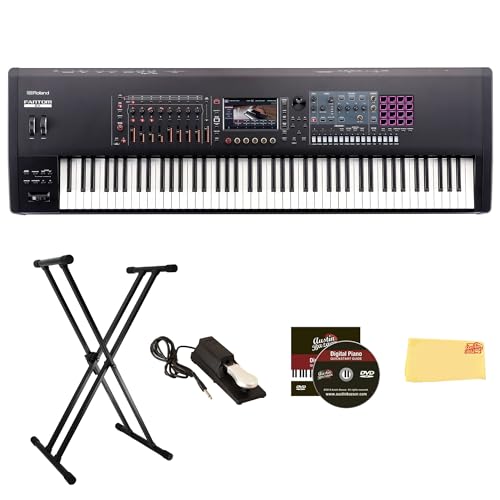
- Multiple premium sound engines, including ACB and ZEN-Core
- Over 7,000 onboard tones with deep production tools
- Includes stand, pedal, lessons, DVD, and cloth
Best For: Advanced church musicians who want a flagship 88-key workstation
Full-Range Worship Keys
Yamaha MX88 88-Key Weighted Action Synthesizer

- 88-note GHS weighted action for piano-style feel
- Class-compliant USB audio/MIDI for easy connection
- 128-note polyphony with Motif sound engine tools
Best For: Pianists who want a weighted 88-key synth for church services
Premium Flagship
Roland JUPITER-X Professional Iconic Synthesizer

- ZEN-Core engine recreates classic Roland sounds
- 5 parts and lots of polyphony for layered patches
- All-metal 61-key build with aftertouch
Best For: Church musicians needing a premium, highly flexible stage synth
Weighted 88-Key
Korg Kross 2-88-MB Synthesizer Workstation

- 88-key natural weighted hammer action keybed
- EDS-i engine with step sequencers and audio recorder
- Mic/line inputs and 38.5-pound build
Best For: Worship players who want weighted keys and workstation features
Compact Crossover
Roland JD-XI 37-Key Interactive Synthesizer
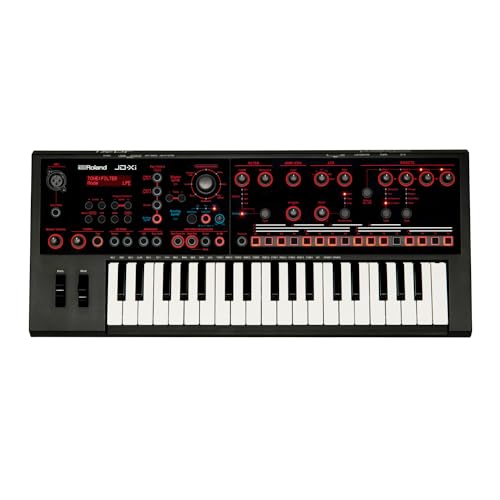
- Analog and digital engines in one compact board
- Four-track pattern sequencer with rhythm sounds
- Includes mic for vocoder and AutoPitch
Best For: Church musicians needing a lightweight synth for compact worship setups
Compact Worship Workhorse – Korg Kross 2-61 61-Key Workstation
If you want a synthesizer workstation for church musicians that can cover keys, basic sequencing, and simple recording in a single portable board, the Korg Kross 2-61 is built around that kind of flexibility. Its 61-key synth-action layout, mic/line inputs, and EDS-i sound engine make it a practical option for worship players who need one instrument to handle multiple roles.
Best For: Church musicians who need a lightweight all-in-one workstation with recording and input flexibility.
Pros:
- 61-key synth-action keybed for playable, responsive parts
- Mic/line inputs support simple live use and input routing
- Built-in step and MIDI sequencers add songwriting and arrangement tools
- Audio recorder helps capture ideas or rehearsals
Cons:
- Synth-action keys may not suit players who prefer semi-weighted feel
- Smaller 61-key range can feel limited for split-heavy worship setups
- Focused on workstation utility rather than a piano-style action
Overall, the Kross 2-61 is a strong practical pick if your church rig needs portability, built-in creation tools, and input options in one compact instrument. It is especially appealing for musicians who value versatility more than a weighted keyboard feel.
Organ-and-Piano Specialist – Nord Electro 6D 61 Stage Piano
The Nord Electro 6D 61 fits church musicians who need fast organ access, strong piano sounds, and a flexible split/layer setup in a stage-ready format. With three independent sections—Organ, Piano, and Sample Synth—it works well when you need to move between worship pads, piano parts, and organ textures without changing instruments.
Best For: Church players who prioritize organ, piano, and layered worship parts on a compact keyboard.
Pros:
- Semi-weighted waterfall keybed is suited to quick organ-style playing
- Three sound sections can be layered or split simultaneously
- Six split points and crossfade support flexible live setups
- Sample Synth and Piano sections offer expanded library and polyphony
Cons:
- 61 keys may be limiting for players who want more range on stage
- Focused on organ, piano, and sample work rather than full workstation features
- May suit performance-focused players more than sound-design users
For churches that need dependable stage performance and easy switching between organ, piano, and layered sounds, the Electro 6D 61 is highly purpose-built. It is less of a production workstation and more of a streamlined live instrument.
Budget-Friendly Production Board – Yamaha MX61BK 61-Key Synthesizer
The Yamaha MX61BK is a solid synthesizer workstation for church musicians who want modern connectivity and dependable polyphony in a compact 61-key board. Its class-compliant USB audio/MIDI, Motif sound engine, and 128-note polyphony make it a practical choice for players who need a straightforward live-and-production keyboard.
Best For: Church musicians looking for an easy USB-connected synth board with full live performance support.
Pros:
- Class-compliant USB audio/MIDI for plug-and-play use
- Motif sound engine offers layered, zoned, and switchable voices
- 128-note polyphony supports fuller live parts and sequences
- Single-cable recording and playback of stereo audio and 16 MIDI channels
Cons:
- 61 keys may not be enough for larger split or two-handed setups
- Not designed around organ-specific features like waterfall keys
- Uses a plastic body, which may matter to players seeking a more premium chassis
As a practical church keyboard, the MX61BK stands out for its USB workflow and performance flexibility. It is a strong fit when you want a synth-focused board that connects easily to recording or software-based setups.
Extended Range Live Keyboard – Nord Electro 6D 73 Stage Piano
The Nord Electro 6D 73 is a strong choice for church musicians who like the Electro format but want more range for splits, pads, and two-handed playing. It keeps the semi-weighted waterfall keybed and the three-section Organ, Piano, and Sample Synth layout, while adding extra keys that can make worship arrangements feel less cramped.
Best For: Worship keyboardists who want Nord live-play features with a little more range than a 61-key board.
Pros:
- 73-key waterfall keybed gives extra range for live worship parts
- Organ, Piano, and Sample Synth sections can run together
- Six split points and crossfade support flexible stage setups
- Enhanced Sample Synth memory expands sound options
Cons:
- Still not a full 88-key piano-style board
- Focused on live performance sections rather than deep workstation sequencing
- More size and weight than the 61-key version
If you like the Nord approach but need more room for worship arrangements, the 73-key model offers a meaningful upgrade in playability. It is built for live keyboardists who value organ feel, split control, and stage-ready sound sections.
Compact Stage Partner – Yamaha MX49BK Music Production Synthesizer
If you need a synthesizer workstation for church musicians that is easy to connect and quick to use, the Yamaha MX49BK is a practical choice. Its class-compliant USB audio/MIDI support keeps setup simple, while the Motif sound engine and 128-note polyphony give you dependable sounds for live worship playing, layering, and sequences.
Best For: Keyboard players who want a lightweight, plug-and-play workstation for church services and rehearsals.
Pros:
- Class-compliant USB audio/MIDI for true plug-and-play connectivity.
- Motif sound engine supports layer, zone, switch, cycle, and randomize functions.
- 128-note polyphony helps prevent note dropouts in live playing or 16-track sequences.
- VCM effects model vintage processors and signal behavior.
Cons:
- 49 keys may feel limiting for players who want a full 88-key range.
- No bundled stand or pedal included in the supplied notes.
The MX49BK is a solid fit when portability and straightforward USB connection matter more than a large keyboard. For church musicians who need dependable sounds without a complicated setup, it covers the essentials well.
Flagship Worship Command Center – Roland Fantom 8 EX 88-Key Workstation Bundle
For church musicians who want a powerful synthesizer workstation with deep sound shaping, the Roland Fantom 8 EX offers a very broad feature set. It combines multiple premium sound engines, over 7,000 onboard tones, and strong computer integration, making it a serious all-in-one option for worship teams that build complex parts and arrangements.
Best For: Advanced players and worship leaders who want a full-size workstation with expansive sounds and production tools.
Pros:
- Multiple sound engines including ACB, ZEN-Core, V-Piano, and SuperNATURAL.
- Over 7,000 onboard tones plus ACB expansions for classic synth sounds.
- Deep DAW integration, sampling, clip-based workflow, and a TR-REC style sequencer.
- 88-key format with included stand, sustain pedal, lessons, DVD, and polishing cloth.
Cons:
- Large 88-key body and 61.1-pound bundle are less portable than compact boards.
- Bundle extras are useful, but the overall setup is more involved than a basic stage keyboard.
The Fantom 8 EX is built for musicians who want a centerpiece instrument for both live and studio use. If your church workflow benefits from expansive sounds, sequencing, and computer connectivity, this is the most capable option here.
Full-Range Worship Keys – Yamaha MX88 88-Key Weighted Action Synthesizer
The Yamaha MX88 is a strong synthesizer workstation for church musicians who want weighted piano feel without giving up Motif-style synth sounds. Its 88-note GHS action suits players moving between piano parts and layered worship textures, and the class-compliant USB audio/MIDI connection keeps integration straightforward.
Best For: Pianists and keyboardists who want an 88-key weighted synth for live church playing and sequencing.
Pros:
- 88-note GHS weighted action feels heavier in the low keys and lighter in the high keys.
- Class-compliant USB audio/MIDI supports plug-and-play connectivity.
- Motif sound engine offers layer, zone, switch, cycle, and randomize control.
- 128-note polyphony helps avoid dropouts during live sets or full sequences.
Cons:
- Heavier at 30.6 pounds, so it is less travel-friendly than smaller keyboards.
- No bundled accessories are listed in the supplied notes.
If your church music calls for piano-style feel plus versatile synth programming, the MX88 hits a useful middle ground. It is especially appealing for players who want a full-length board that can handle both worship keys and production duties.
Premium Flagship – Roland JUPITER-X Professional Iconic Synthesizer
If you want a synthesizer workstation for church musicians that can cover classic pads, bright keys, and layered textures, the Roland JUPITER-X brings a deep ZEN-Core engine in a premium stage-ready package. Its sound set reaches across Roland’s history, so it can move from vintage-style analog tones to modern digital sounds without feeling limited.
Best For: Players who need a high-end, all-metal workstation with deep hands-on control for live worship and studio programming.
Pros:
- ZEN-Core synthesis with recreations of classic Roland instruments and drum machines
- 5 parts, lots of polyphony, and multiple layers for spacious worship sounds
- Aftertouch-enabled 61-key keyboard built for precise performance
- Solid metal construction designed for stage use
Cons:
- Larger and heavier than compact keyboards at 47 pounds
- More advanced than a simple plug-and-play board
This is a strong choice when sound quality, flexibility, and durability matter more than portability. For church musicians building expressive live sets, it offers enough sonic range to handle both traditional and modern service arrangements.
Weighted 88-Key – Korg Kross 2-88-MB Synthesizer Workstation
The Korg Kross 2-88-MB is a practical synthesizer workstation for church musicians who want an 88-key weighted feel for piano-led sets and a workstation layout that can handle more than just one sound at a time. Its matte black finish and lighter 38.5-pound build make it a usable option for players who still need full-size keys without moving into a bulky rig.
Best For: Keyboardists who want weighted 88-key action for worship piano parts plus workstation features in a relatively portable package.
Pros:
- 88-key natural weighted hammer action keybed
- EDS-i sound engine with step MIDI sequencers and audio recorder
- Mic/line inputs for flexible setup options
- Full-size workstation format in a manageable weight class
Cons:
- Plastic body construction instead of metal
- Large 88-key footprint may be harder to fit on smaller stages
For churches that rely on realistic piano parts but still want synth and sequencing tools, this model is a balanced middle ground. It is especially appealing if weighted keys matter as much as workstation versatility.
Compact Crossover – Roland JD-XI 37-Key Interactive Synthesizer
The Roland JD-XI is a compact synthesizer workstation for church musicians who need analog-style bass and lead sounds, digital layers, and simple sequencing in a very portable format. With its crossover design, built-in rhythm sounds, and included gooseneck mic, it can cover smaller worship setups without taking much space.
Best For: Players who want a small, lightweight synth for live worship patches, vocoder parts, and pattern-based ideas.
Pros:
- Analog and digital sound engines in one crossover synth
- Four-track pattern sequencer with built-in rhythm sounds
- Included gooseneck mic for vocoder and AutoPitch use
- Very portable at 4.14 pounds
Cons:
- 37-key layout limits full two-handed keyboard work
- Less workstation-style than larger 88-key models
This is the best fit when portability and quick creativity matter more than a full workstation keyboard. For church musicians who need a compact second board or a small live synth, it brings a lot of sound tools into a tiny footprint.
How We Picked the Best Synthesizer Workstation for Church Musicians
We looked for instruments that make sense in real church use: strong piano, pad, organ, and ambient textures; quick patch changes; usable performance controls; and keybeds suited to rehearsal and Sunday sets. Portability, MIDI flexibility, and the ability to cover multiple roles also mattered.
Quick Comparison
Compact 61-key models are easier to move and set up, making them a strong fit for volunteer teams and smaller stages. 73-key and 88-key instruments give more range for split-hand playing, layered worship sounds, and pianist-led services. If you need a Synthesizer Workstation for Church Musicians who must cover several parts at once, prioritize control layout and sound switching speed over extra features you may never use.
Key Buying Factors for a Synthesizer Workstation for Church Musicians
Key Count and Action
Choose 61 keys for portability, 73 keys for a balance of range and size, or 88 keys if your team wants piano-like expression. Semi-weighted and weighted actions each have a place depending on whether the player leans more toward synth parts or piano-led worship.
Sound Set and Live Usability
Look for strong acoustic piano, electric piano, organ, strings, pads, and atmospheric layers. A good church board should make it easy to build moving textures without spending too much time programming.
Splits, Layers, and Effects
Many worship arrangements rely on left-hand bass, right-hand piano, and layered pads. Make sure the keyboard can handle splits smoothly and offers enough effects to shape ambience, brightness, and depth.
Connectivity and Expansion
USB-MIDI, audio outputs, sustain support, and expression pedal inputs can matter a lot in church settings. If you route to a mixer, in-ears, or a computer-based rig, connectivity should be simple and stable.
Who Should Buy Which Synthesizer Workstation for Church Musicians?
Choose a compact 61-key workstation if portability and fast setup matter most. Pick a 73-key model if you want more musical range without going full 88 keys. Go with an 88-key workstation if you play piano parts regularly or want the most natural feel for contemporary worship and solo accompaniment. For the player who needs a flexible Synthesizer Workstation for Church Musicians across services, rehearsals, and special events, the best choice is usually the one that balances touch, sounds, and setup speed.