The best synthesizers for church musicians need to cover more than impressive sounds. They should fit the worship team, respond well under pressure, and provide dependable access to pads, strings, organs, pianos, leads, and layered textures.
This roundup compares 10 options across portable workstations, performance synthesizers, analog instruments, and full-size weighted keyboards so you can match your budget and playing style to the right setup.
Best 10 Synthesizers for Church Musicians Picks for 2026
Versatile Worship Workhorse

- 128-note polyphony for complex live arrangements
- USB audio/MIDI with no driver installation required
- Layer, zone, and shape sounds with the Motif engine
Best For: Worship players needing flexible live sounds and computer connectivity
Compact Worship Workstation

- 61-key synth-action keybed
- Step and MIDI sequencers included
- Mic/line inputs add setup flexibility
Best For: Church players wanting sequencing and workstation features
Modern Stage Sound Library

- Over 3,800 ZEN-Core sounds
- USB-C audio/MIDI and mobile battery support
- Built-in eight-track sequencer
Best For: Live worship players needing broad sounds and portability
Analog Texture Specialist

- True analog sound with warm, punchy tones
- Four-voice polyphony and 200 presets
- Motion sequencer and onboard tape-style delay
Best For: Players adding analog pads, leads, and evolving textures
Weighted Stage Piano Synth

- 88 weighted hammer-action keys
- Over 3,800 ZEN-Core sounds
- USB-C audio/MIDI and WAV import
Best For: Church keyboardists needing piano feel and broad live sounds
Warm Analog Performance Synth

- Four VCOs for rich analog tones
- Four-voice polyphonic/paraphonic modes
- 32-step sequencer and arpeggiator
Best For: Adding hands-on analog basses, leads, and textures
Expressive Workstation Synth

- Three engines for instruments and synths
- Eight faders plus Super Knob control
- 76 semi-weighted keys and touchscreen
Best For: Professional worship players needing broad control and stage/studio flexibility
Analog Worship Powerhouse
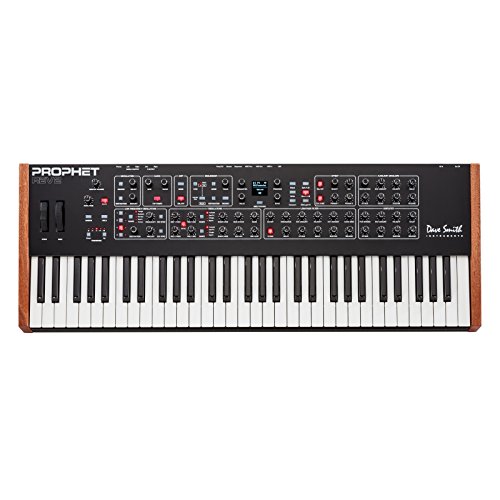
- 16-voice analog polyphony
- Dual DCOs and resonant filters
- Bi-timbral operation with onboard effects
Best For: Worship players who want layered analog pads and hands-on sound shaping
Expressive Workstation

- 88-key GEX action with polyphonic aftertouch
- 400-note polyphony across three engines
- Seamless sound switching for live performance
Best For: Players needing expressive full-range keys and extensive live control
Classic Analog Value

- Eight-voice analog polyphony
- Two VCOs per voice
- Arpeggiator, sequencer, and 400 memories
Best For: Players wanting classic analog chords, leads, and prepared presets
Versatile Worship Workhorse – Yamaha MX61
For church musicians seeking flexible synthesizers for church musicians, the Yamaha MX61 combines a 61-key format with broad sound-shaping and connectivity options. Its 128-note polyphony and USB audio/MIDI support make it practical for live worship setups, sequencing, and computer-based music production.
Best For: Worship players who need reliable live performance, layered sounds, and straightforward USB integration.
Pros:
- 128-note polyphony helps support full arrangements without dropouts.
- USB carries stereo audio and 16 channels of MIDI through one cable.
- Motif Sound Engine supports layering, zoning, switching, and control of up to eight elements.
- Virtual Circuit Modeling provides vintage-style effects and signal processing.
Cons:
- The plastic-and-metal construction may not feel as substantial as heavier stage instruments.
- Its extensive sound and routing features may require setup time for newcomers.
The MX61 is a strong all-around choice when a church musician wants generous polyphony, computer connectivity, and detailed sound control in one keyboard.
Compact Worship Workstation – Korg Kross 2-61
The Korg Kross 2-61 is a practical workstation option for church musicians comparing synthesizers for church musicians. It pairs a 61-key synth-action keybed with an EDS-i sound engine, step and MIDI sequencers, and mic/line inputs for a broad range of performance and arranging tasks.
Best For: Church players who want workstation-style sequencing and input flexibility in a relatively light 61-key instrument.
Pros:
- 61-key synth-action keybed offers a familiar performance format.
- Built-in step and MIDI sequencers support arrangement and pattern creation.
- Mic/line inputs expand its usefulness for connected performance setups.
Cons:
- The supplied notes do not specify the number of onboard sounds or polyphony.
- Its workstation features may be more than needed for players seeking a simple stage keyboard.
With sequencing and mic/line connectivity built in, the Kross 2-61 is suited to worship musicians who want one keyboard for playing, arranging, and broader workstation duties.
Modern Stage Sound Library – Roland JUNO-D6
The Roland JUNO-D6 gives church musicians a portable way to cover common worship parts, from acoustic and electric pianos to organs and synths. Its ZEN-Core engine provides over 3,800 onboard sounds, while USB-C audio/MIDI, battery-power support, and an eight-track sequencer add flexibility for live services and rehearsal work.
Best For: Live worship players who need a broad selection of ready-to-play sounds in a lightweight, transportable keyboard.
Pros:
- Over 3,800 sounds cover pianos, organs, synths, and other stage staples.
- USB-C supports audio/MIDI connections and mobile battery power.
- Eight-track sequencing supports song creation and arrangement.
- User WAV import and Roland Cloud expansion options support customization.
Cons:
- The synth-action keys may be less suitable for players wanting a weighted piano feel.
- Some expansion features depend on Roland Cloud or additional sound content.
The JUNO-D6 stands out for churches that value fast access to many polished sounds, easy transport, and modern connections for computers or mobile setups.
Analog Texture Specialist – Korg Minilogue
The Korg Minilogue offers a different approach for church musicians shopping for synthesizers for church musicians: true analog sound in a compact 37-key format. Four-voice polyphony, 200 presets, a motion sequencer, and an onboard delay make it useful for adding warm pads, leads, and evolving textures to worship arrangements.
Best For: Musicians who want hands-on analog tones, compact size, and creative sequencing for layered worship textures.
Pros:
- True analog synthesis delivers warm, punchy tones.
- Four-voice polyphony supports chords and layered parts.
- Built-in polyphonic step and motion sequencer works for live or studio use.
- 200 presets, filters, modulation, and tape-style delay encourage sound design.
Cons:
- Its 37-key layout is smaller than the 61-key alternatives in this roundup.
- Four-note polyphony may be limiting for dense chordal passages.
- The analog-focused design may be less suited to players needing many acoustic instrument sounds.
The Minilogue is best viewed as a color and texture instrument rather than an all-purpose worship workstation, especially when warm analog character and hands-on control are priorities.
Weighted Stage Piano Synth – Roland JUNO-D8
For church musicians seeking synthesizers for church musicians, the Roland JUNO-D8 combines an 88-note weighted hammer-action keyboard with a broad selection of ready-to-play stage sounds. Its piano-style feel makes it especially suitable for players who regularly cover piano, organ, and layered synth parts.
Best For: Church keyboardists who want authentic weighted action, extensive sounds, and flexible live or mobile setup options.
Pros:
- 88 weighted hammer-action keys provide a piano-style playing experience.
- Includes more than 3,800 ZEN-Core sounds, including pianos, organs, and synths.
- USB-C audio/MIDI connectivity supports computers and mobile devices.
- Supports WAV sample import and expandable Roland Cloud sound libraries.
Cons:
- Its 54.84-inch width and 32-pound weight may be less convenient for smaller setups.
- The weighted action may feel less nimble for highly synth-focused playing.
The JUNO-D8 is a strong fit when church services demand both convincing acoustic-keyboard response and a wide palette of modern sounds. Battery-power support and an intuitive workflow further suit portable performance rigs.
Warm Analog Performance Synth – Behringer POLY D
The Behringer POLY D is a compact choice for church musicians exploring synthesizers for church musicians with a distinctly warm, bass-forward analog character. Its 37 full-size semi-weighted keys and hands-on sequencing tools make it better suited to adding distinctive pads, leads, basses, and rhythmic textures than replacing a primary piano.
Best For: Players who want hands-on analog tones, flexible voice modes, and classic synth textures for worship arrangements.
Pros:
- Four VCOs deliver warm, rich, bass-heavy analog tones.
- Offers mono, unison, polyphonic, and paraphonic modes.
- Includes a 32-step sequencer and arpeggiator for repeating parts.
- 37 velocity-sensitive, semi-weighted full-size keys support expressive playing.
Cons:
- Its 37-key range is more limited than a full-size keyboard.
- The analog sound profile may be less versatile for acoustic piano and organ duties.
- The supplied notes identify mixed connector types without detailing the full connectivity layout.
The POLY D makes sense as a texture-focused instrument in a church rig, particularly when warm analog basses and evolving synth parts are priorities. Its controls encourage real-time sound shaping during rehearsals and performances.
Expressive Workstation Synth – Yamaha MODX M7
The Yamaha MODX M7 is aimed at professional church musicians who need synthesizers for church musicians with extensive sound options and hands-on control. Its 76 semi-weighted keys, three sound engines, touchscreen workflow, and physical faders support everything from realistic instruments to layered modern synth parts.
Best For: Professional worship keyboardists who need expressive control, varied sounds, and stage-to-studio integration.
Pros:
- Three engines cover analog-style, FM, and realistic instrument sounds.
- Eight physical faders and the Super Knob provide real-time control.
- 76 semi-weighted keys offer a substantial, fast-playing synth action.
- Color touchscreen and dedicated display knobs streamline editing and navigation.
Cons:
- The product is listed for professional skill levels, which may mean a steeper learning curve.
- Its 49-inch width may require considerable stand or transport space.
- The advanced feature set may be more than needed for simple piano-focused church duties.
The MODX M7 is a capable centerpiece for a modern worship setup, especially when one keyboard must cover acoustic instruments, synth layers, and programmed parts. Its ESP plugin also extends the workflow into compatible Windows and macOS DAW environments.
Analog Worship Powerhouse – Prophet Rev2 16-Voice
For church musicians seeking synthesizers for church musicians, the Prophet Rev2 offers a focused analog setup with 16 voices, per-voice dual DCOs, and a 61-key format. Its bi-timbral operation, onboard effects, and modulation tools support layered pads, lead sounds, and evolving textures.
Best For: Worship players who want rich analog tones, layered parts, and hands-on sound shaping.
Pros:
- 16-voice polyphony supports full chords and sustained pads.
- Dual DCOs per voice and Curtis resonant lowpass filters provide substantial analog sound design options.
- Includes a polyphonic step sequencer, waveshape modulation, and onboard effects.
- Bi-timbral operation allows two sounds to be used together.
Cons:
- Its 61-key design may be less suitable for players who prefer a full 88-key keyboard.
- The analog-focused architecture may be less versatile than a multi-engine workstation.
The Prophet Rev2 is a strong choice when expressive analog character and layered worship textures matter more than broad workstation functionality.
Expressive Workstation – Yamaha Montage M8X
For church musicians comparing synthesizers for church musicians, the Yamaha Montage M8X combines an 88-key GEX action keyboard with polyphonic aftertouch and three sound engines. Its high polyphony, seamless sound switching, and dedicated performance controls make it suited to complex live arrangements.
Best For: Keyboardists who need a full-range instrument for expressive performances, layered sounds, and changing live scenes.
Pros:
- 400-note total polyphony supports dense arrangements across three engines.
- Polyphonic aftertouch enables pressure-based control for individual held notes.
- Seamless Sound Switching helps transitions between sounds remain smooth.
- Includes dedicated Keyboard, Part, and Scene controls plus an expanded softsynth plugin.
Cons:
- At 61.9 pounds, it is considerably less portable than smaller synthesizers.
- The 88-key flagship format may exceed the needs of players seeking a compact worship rig.
The Montage M8X is the most comprehensive option here for players who value full-range key action, deep sound-engine flexibility, and detailed live control.
Classic Analog Value – Behringer PRO-800
For church musicians seeking synthesizers for church musicians on a focused analog budget, the Behringer PRO-800 delivers eight-voice polyphony with two VCOs per voice and a classic VCF/VCA signal path. Its arpeggiator, sequencer, and 400 program memories make it practical for prepared sounds and repeatable performance setups.
Best For: Musicians who want classic analog chords, detuned leads, and a straightforward sound-focused instrument.
Pros:
- Eight-voice polyphony supports chordal parts and sustained textures.
- Pure analog signal path with two VCOs per voice produces fat, detuned sounds.
- Unison mode provides a 16-oscillator lead and bass configuration.
- Offers an arpeggiator, sequencer, and 400 program memories.
Cons:
- Eight voices provide less polyphonic headroom than the Prophet Rev2 or Montage M8X.
- Its Eurorack-format design may require more planning for a complete keyboard-based setup.
The PRO-800 is appealing for church players who prioritize classic analog tone and useful sequencing features without needing a large multi-engine workstation.
How We Picked the Best Synthesizers for Church Musicians
We evaluated these instruments for the needs of live worship rather than studio specifications alone. Key considerations included sound variety, split and layer capabilities, keyboard feel, portability, hands-on control, reliability, connectivity, and how quickly a player can move between song sections. We also considered the differences between a single-keyboard setup and a larger rig that may include piano, organ, playback, or MIDI controllers.
The selection spans affordable performance keyboards, compact analog synthesizers, advanced workstations, and premium instruments with weighted action. That range makes it easier to compare practical value instead of assuming every church musician needs the same type of synthesizer.
Quick Comparison
| Best For | Look For | Most Relevant Types |
|---|---|---|
| Versatile weekly worship use | Presets, layers, splits, dependable controls | Workstations and performance synthesizers |
| Ambient pads and evolving textures | Polyphony, modulation, effects, sustain control | Digital and analog polyphonic synths |
| Piano-focused players | Weighted action, full range, expressive dynamics | 88-key stage and flagship keyboards |
| Portable secondary rigs | Low weight, compact dimensions, fast setup | 61-key and 37-key synthesizers |
| Sound-design enthusiasts | Hands-on knobs, oscillators, filters, sequencing | Analog synthesizers |
Key Buying Factors for Synthesizers for Church Musicians
Sound Library and Polyphony
For worship, broad coverage is often more useful than a small collection of highly specialized sounds. Check whether the keyboard includes convincing acoustic and electric pianos, organs, strings, pads, basses, and usable effects. Higher polyphony helps sustain layered pads and piano parts without notes cutting off.
Keyboard Action and Size
61 keys are a practical middle ground for most live players, offering enough range for splits while remaining manageable to transport. Choose 76 or 88 keys if piano technique and two-handed range are priorities. Weighted action can feel more natural for piano, while lighter synth action is generally faster for pads, leads, and organ-style parts.
Live Workflow
Look for quick patch changes, registration or scene memories, assignable controls, split and layer functions, and clear displays. A strong live workflow reduces the need to reach across the keyboard or depend on a laptop during a service. Footswitch inputs are also useful for patch changes, sustain, and hands-free control.
Connectivity and Integration
Confirm the available audio outputs, MIDI connections, USB features, sustain and expression inputs, and headphone output. Stereo outputs are particularly useful for wide pads and effects. If the instrument will connect to a mixer, interface, or computer, verify its routing and power requirements before buying.
Portability and Reliability
Measure the instrument with its case, not just the keyboard itself. A premium 88-key model may deliver excellent piano feel but be impractical for frequent setup. For rotating teams or smaller stages, a lighter 61-key board may provide the better long-term choice.
Who Should Buy Which Synthesizers for Church Musicians?
Choose a versatile workstation or performance synthesizer if you need one keyboard to cover most songs and want ready-made sounds, splits, layers, and sequencing tools. These are usually the safest choices for general worship use.
Choose a 61-key model if portability and flexible live playing matter most. Pick a 76- or 88-key keyboard when piano parts, dynamic control, and full-range playing are central to your role. Analog options make sense for musicians who value hands-on sound shaping, distinctive movement, and a dedicated texture instrument rather than an all-purpose preset library.
Finally, consider your team’s complete rig. A compact analog synth can complement an existing digital piano, while a broad workstation may replace several instruments. The best choice is the one that fills your actual sonic gaps, fits your transport routine, and lets you concentrate on leading music instead of managing equipment.