The best synthesizers for live performances balance playable controls, dependable connectivity, inspiring sounds, and a setup that fits your stage workflow. This lineup spans analog, digital, hybrid, modular-style, portable, and controller-based options.
Whether you need hands-on sound shaping, flexible sequencing, sampled textures, or a compact backup instrument, the right choice depends on your playing style, rig, and performance priorities.
Best 10 Synthesizers for Live Performances Picks for 2026
Versatile Live Crossover
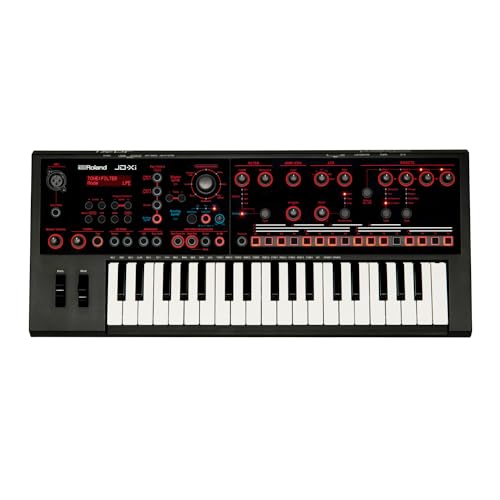
- Analog and digital sound engines
- Four-track sequencer with rhythm sounds
- Vocoder, AutoPitch, and onboard effects
Best For: Compact live setups combining synths, rhythms, and vocal effects
Portable Sampling Hub

- Standalone battery-powered sampler
- 16 pads with chopping and resampling
- Built-in effects and live-ready I/O
Best For: Portable DAWless sampling, sequencing, and beat performance
Expressive Hybrid Synth

- Wavetable and virtual analog engine
- Full-size keys with hands-on controls
- Motional Pad, sequencer, and extensive effects
Best For: Expressive live synthesis and real-time sound shaping
Compact MIDI Control

- 25 velocity-sensitive mini keys
- Eight pads and eight assignable knobs
- Arpeggiator and pitch/modulation thumbstick
Best For: Portable computer-based control of software synths and beats
Expressive Polyphony

- 37 velocity-sensitive full-size keys
- 24-voice polyphony with split/layer support
- 16-band vocoder and 8-step arpeggiator
Best For: Live keyboardists needing layered polyphonic sounds and vocal effects
Analog Lead Power

- Two wavefolding VCOs plus sub-oscillator
- 32 keys with velocity and aftertouch
- 64-step sequencer and extensive connectivity
Best For: Live performers focused on expressive basses, leads, and sequences
Compact Polyphonic Control

- Poly, Unison, Chord, and ARP/Latch modes
- Built-in modulation, reverb, delay, and chorus
- Compact design with OLED oscilloscope
Best For: Portable controller-based live rigs needing flexible polyphonic sounds
Most Playful

- Touch-sensitive stem with roughly four octaves per pitch setting
- Wah and vibrato controls for expressive effects
- 3.5mm output for headphones, speakers, and amplifiers
Best For: Performers wanting a distinctive, portable novelty instrument
Most Hands-On

- Four VCOs deliver thick analog tones
- 37 velocity-sensitive, semi-weighted full-size keys
- Includes sequencer, arpeggiator, chorus, and distortion
Best For: Live players building a full-size analog synth setup
Most Portable
M-VAVE Wireless FM Synthesizer

- Battery-powered with a built-in speaker
- Six-operator FM engine with 32 algorithms and 128 presets
- USB, Bluetooth, and 3.5mm MIDI connectivity
Best For: Mobile performers needing a compact, self-contained synth
Versatile Live Crossover – Roland JD-XI
For performers seeking synthesizers for live performances, the Roland JD-XI combines an analog section for lead and bass sounds with two digital synth sections. Its compact 37-key format, pattern sequencer, onboard effects, vocoder, and included gooseneck microphone make it suited to hands-on stage setups.
Best For: Live performers who want analog and digital sounds, vocal processing, sequencing, and rhythm parts in one compact instrument.
Pros:
- Combines analog and digital sound engines.
- Includes a four-track pattern sequencer and rhythm sounds.
- Built-in vocoder and AutoPitch work with the included gooseneck microphone.
- Offers four simultaneous effects, including delay and reverb.
Cons:
- The 37-key layout may be limiting for players who prefer full-size keyboards.
- Its feature-rich crossover design may require setup time for new users.
The JD-XI is a flexible performance keyboard for musicians who want basses, leads, digital textures, rhythms, and vocal effects without assembling several separate devices.
Portable Sampling Hub – Akai MPC Sample
The Akai MPC Sample is a battery-powered sampler, sequencer, and effects processor for performers who want synthesizers for live performances to work alongside sample-based sets. Its built-in speaker, microphone, rechargeable battery, pads, and standalone operation support portable, computer-free creation and playback.
Best For: DAWless performers, beatmakers, and singer-songwriters who sample, chop, sequence, and manipulate sounds onstage.
Pros:
- Operates standalone with a rechargeable battery, speaker, microphone, and microSD storage.
- Provides 16 responsive pads, sample chopping, timestretching, repitching, and resampling.
- Includes four internal FX processors with 60 effect types.
- Offers line, headphone, MIDI, sync, and USB-C audio/MIDI connectivity.
Cons:
- MIDI DIN connection requires a separately supplied adapter.
- Its sample-focused workflow may not replace a dedicated keyboard synthesizer.
The MPC Sample is a practical live production companion when performance depends on triggering, reshaping, and sequencing samples rather than playing traditional keys.
Expressive Hybrid Synth – Roland GAIA 2
The Roland GAIA 2 is designed for players who want synthesizers for live performances with direct, tactile control. Its hybrid wavetable and virtual analog engine, full-size keys, assignable modulation, Motional Pad, sequencer, and dedicated effects provide room for both quick sound shaping and expressive stage movement.
Best For: Keyboard players who want full-size keys, hands-on synthesis, real-time modulation, and flexible effects for live sets.
Pros:
- Combines wavetable and virtual analog synthesis.
- Full-size keys and a logical control-panel layout support performance playability.
- Motional Pad adds real-time movement and expression.
- Includes a sequencer, 53 MFX types, chorus, delay, and reverb sections.
Cons:
- At 10 pounds, it is less portable than a smaller performance keyboard.
- The broad synthesis and effects feature set may take time to master.
With its full-size keyboard and extensive hands-on controls, the GAIA 2 is a strong choice for performers who value expressive playing and evolving hybrid sounds onstage.
Compact MIDI Control – Akai MPK Mini MK3
The Akai MPK Mini MK3 is a compact USB MIDI controller for performers using software synthesizers for live performances. It combines 25 velocity-sensitive mini keys with MPC-style pads, assignable knobs, a pitch-and-modulation thumbstick, and an arpeggiator for controlling virtual instruments and DAW-based sets.
Best For: Laptop-based performers, producers, and home-studio musicians who need portable control over software synths, beats, and effects.
Pros:
- Compact controller with 25 velocity-sensitive keys.
- Includes eight MPC-style pads with Note Repeat and Full Level.
- Eight assignable knobs provide hands-on plugin and synth control.
- Built-in arpeggiator and four-way thumbstick add performance control.
Cons:
- It is a MIDI controller, not a standalone synthesizer.
- USB connectivity requires a compatible computer or USB device.
- Mini keys may feel cramped for players accustomed to full-size keyboards.
The MPK Mini MK3 is an affordable, space-saving option for controlling software-based live rigs, especially when portability matters more than standalone hardware sounds.
Expressive Polyphony – KingKORG NEO
For musicians seeking synthesizers for live performances, the Korg KingKORG NEO combines 37 velocity-sensitive full-size keys with 24-voice polyphony, making it suitable for expressive layered parts. Its XMT sound engine, broad oscillator and filter selection, split/layer functionality, and performance-focused effects provide substantial flexibility onstage.
Best For: Performers who need expressive polyphonic sounds, splits, layers, and vocal processing in one keyboard.
Pros:
- 37 full-size, velocity-sensitive keys support expressive playing.
- 24-voice polyphony handles rich chords and layered sounds.
- Includes 300 programs, split/layer functionality, effects, an 8-step arpeggiator, and a 16-band vocoder.
Cons:
- The 8-step arpeggiator is less extensive than longer sequencer designs.
- Its large 48.4-inch dimensions may require substantial stage or transport space.
The KingKORG NEO is a versatile live keyboard for players who value immediate access to multiple timbres and performance effects. Its combination of polyphony, full-size keys, and vocoder functionality makes it especially adaptable for keyboard-led sets.
Analog Lead Power – Moog Messenger
The MOOG Messenger is a portable monophonic option among synthesizers for live performances, built around two wavefolding VCOs, a sub-oscillator, and a next-generation ladder filter. Its 32 semi-weighted keys include velocity and aftertouch, while the sequencer, arpeggiator, and broad connectivity support hands-on stage use.
Best For: Artists who want powerful Moog-style basses, leads, expressive keyboard control, and onboard sequencing.
Pros:
- Two continuously variable-shape VCOs, sync, FM, and a sub-oscillator offer substantial sound-shaping range.
- 32 full-size semi-weighted keys provide velocity and aftertouch control.
- Includes a 64-step sequencer, arpeggiator, 256 presets, CV patch points, DIN MIDI, and USB-C MIDI.
Cons:
- Monophonic architecture is designed for single-note lines rather than chords.
- At 5.14 kg, it is less lightweight than some compact live instruments.
The Messenger is a strong fit for performers whose sets rely on basses, leads, and evolving monophonic sequences. Its knob-per-function layout, expressive keys, and extensive analog and MIDI connections make it practical for both live control and studio preparation.
Compact Polyphonic Control – Minilogue XD Module
The Korg minilogue xd Module offers a compact route into synthesizers for live performances, with selectable Poly, Unison, Chord, and ARP/Latch modes. Its microtuning, built-in modulation and time-based effects, OLED oscilloscope, and portable design make it useful for performers adding flexible sound generation to a space-conscious setup.
Best For: Performers and producers who need a compact polyphonic module with multiple voice modes and onboard effects.
Pros:
- Poly, Unison, Chord, and ARP/Latch modes cover varied performance roles.
- Built-in modulation, reverb, delay, and chorus effects reduce reliance on external processing.
- Compact design and OLED oscilloscope support portable live integration and real-time sound shaping.
Cons:
- The supplied notes identify it as a module, so keyboard players may need a separate controller.
- Its listed USB connection is USB B rather than USB-C.
The minilogue xd Module is a practical choice when portability and voice-mode flexibility matter more than an integrated keyboard. It can serve as a compact sound source for a controller-based rig while offering useful visual feedback and built-in effects.
Most Playful – Otamatone Deluxe
For performers seeking synthesizers for live performances with a distinctive visual and sonic personality, the Otamatone Deluxe is a compact, unusual option. Its touch-sensitive stem, face squeeze control, and shake-enabled vibrato make it suited to expressive novelty performances, while the 3.5mm stereo jack supports headphones, speakers, and amplifiers.
Best For: Musicians who want a fun, portable stage instrument with an unconventional look and hands-on pitch control.
Pros:
- Touch-sensitive stem offers sliding pitch control across roughly four octaves per pitch setting.
- Face squeeze and stem-shake controls add wah and vibrato effects.
- 3.5mm stereo jack connects to headphones, amplifiers, and speakers.
- Includes batteries, an auxiliary cable, instruction manual, and strap.
Cons:
- Its intentionally whimsical design may not suit traditional stage setups.
- Pitch control is based on a touch-sensitive stem rather than conventional keys.
The Deluxe version adds a larger body and wider neck for more precise playing than a smaller novelty instrument. It is best viewed as a characterful performance accent rather than a conventional keyboard synthesizer.
Most Hands-On – Behringer POLY D
The Behringer POLY D is a substantial choice for synthesizers for live performances when warm analog sound and direct control matter. It combines four VCOs, a classic ladder filter, a sequencer, arpeggiator, distortion, and stereo chorus in a full-size 37-key format.
Best For: Live electronic musicians who want rich bass-forward analog tones, full-size keys, and flexible mono, unison, paraphonic, or polyphonic operation.
Pros:
- Four VCOs support thick, warm analog sound creation.
- Offers mono, unison, and polyphonic modes in a four-voice design.
- 37 semi-weighted full-size keys include velocity functionality.
- Built-in 32-step sequencer, arpeggiator, stereo chorus, and distortion expand live options.
Cons:
- At 26.1 pounds, it is considerably less portable than compact synths.
- The supplied notes do not specify a battery power option.
With its broad control set and full-size keyboard, the POLY D is built for a more traditional hands-on performance workflow. Its size and weight make it more appropriate for a dedicated live rig than spontaneous, lightweight setups.
Most Portable – M-VAVE Wireless FM Synthesizer
The M-VAVE is a practical pick among synthesizers for live performances when portability and quick setup are priorities. It has battery operation, a built-in speaker, 128 presets, FM synthesis, effects, an arpeggiator, a 16-step sequencer, and USB, Bluetooth, and 3.5mm MIDI connectivity.
Best For: Mobile performers, creators, and MIDI users who need a compact instrument that can operate independently or integrate with other devices.
Pros:
- Battery-powered design and built-in speaker support play-anywhere sessions.
- Six operators and 32 algorithms provide flexible FM sound shaping.
- Includes 128 presets, six effects, an arpeggiator, and a 16-step sequencer.
- Supports USB MIDI, wireless Bluetooth MIDI, and 3.5mm MIDI connections.
Cons:
- The 27 silicone keys are compact rather than full-size.
- Its built-in speaker and small form factor may be less suited to large venues without external equipment.
The M-VAVE offers an unusually broad feature set for a 9.6-ounce portable synth. Its compact keys favor portability over conventional keyboard feel, but the preset library, sequencing tools, and multiple MIDI options make it flexible for compact live rigs.
How We Picked the Best Synthesizers for Live Performances
We evaluated these instruments by focusing on the factors that matter most onstage: sound variety, real-time control, keyboard or pad playability, sequencing, portability, connectivity, and how easily each model can fit into a larger rig. The selection includes full keyboards, desktop modules, groove-oriented samplers, MIDI controllers, and compact instruments so different types of performers can find a practical match.
Not every option produces sound independently. A MIDI controller may require a computer or hardware sound source, while a module needs an external keyboard or controller. Those differences are important when planning a reliable live setup.
Quick Comparison
- Best for broad hybrid sounds: Roland GAIA 2 or Roland JD-Xi.
- Best for workstation-style sampling: Akai Professional MPC Sample.
- Best for classic analog character: Moog Messenger or Behringer Poly D.
- Best for polyphonic analog textures: Korg minilogue xd.
- Best for stage-oriented performance controls: Korg KingKORG NEO.
- Best compact controller: Akai Professional MPK Mini MK3.
- Best portable novelty instrument: Otamatone Deluxe or M-VAVE FM Synthesizer.
Key Buying Factors for Synthesizers for Live Performances
Playability and Control
Consider key count, key size, velocity sensitivity, aftertouch, pads, knobs, and performance controls. Full-size keys can feel more natural for traditional playing, while compact keys and pads save space and support mobile rigs.
Sound Engine and Polyphony
Analog instruments excel at hands-on basses and leads, while digital, wavetable, FM, and hybrid engines offer broader sound palettes. Polyphony matters when you hold chords, layer parts, or use long releases; monophonic synths are better suited to focused bass and lead roles.
Connectivity and Reliability
Check audio outputs, MIDI, USB, pedal connections, and power requirements. A self-contained synthesizer is usually simpler onstage, while a controller or module may add flexibility but creates more dependencies. Confirm that your cables, adapters, and backup power plan match the venue.
Sequencing, Sampling, and Effects
Built-in sequencers, arpeggiators, sample playback, and onboard effects can reduce the need for extra gear. They are especially useful for solo performers and electronic acts that need rhythmic movement without a laptop.
Size and Setup Speed
Measure your stand, case, and available desk space before buying. A smaller instrument that is easy to reach may be more useful live than a larger model with features you rarely access.
Who Should Buy Which Synthesizers for Live Performances?
Choose a hybrid keyboard if you want one instrument to cover leads, pads, basses, and experimental textures. Choose an analog synth if tactile controls and immediate tone shaping matter most. Choose a sampler or groovebox if your performance relies on clips, beats, vocal chops, or one-shot sounds.
Choose a module when you already own a capable MIDI keyboard and want to save space. Choose a controller when software instruments are central to your setup. For beginners, prioritize intuitive controls and dependable presets; experienced performers may benefit more from deeper modulation, sequencing, and routing options.