Cut the cable without giving up tone, timing, or freedom on stage. The best wireless guitar system for electric guitar should feel invisible in use, stay reliable under pressure, and fit the way you actually play.
In this roundup, we focus on range, latency, battery life, ease of setup, and compatibility so you can narrow down the right option fast.
Best 10 Wireless Guitar System for Electric Guitar Picks for 2026
Stage-Ready 5.8GHz Performer
LEKATO 5.8GHz Wireless Guitar System
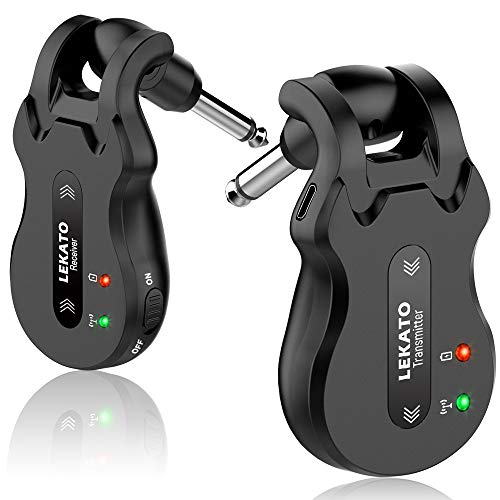
- 5.8GHz design helps reduce interference versus 2.4GHz units.
- 24-bit/48kHz audio with under-6ms latency.
- 4 channels and 220° rotatable plug add flexibility.
Best For: Players who want a simple 5.8GHz wireless setup for electric guitar and bass.
Low-Latency Modern Pick
Positive Grid Spark Link Wireless Guitar System

- Under 3ms latency for tight playing feel.
- 24-bit/48kHz audio with up to 70ft range.
- USB-C charging and hinged plug improve convenience.
Best For: Guitarists who want a fast 2.4G wireless system with easy charging and strong portability.
Travel-Friendly 5.8GHz Choice
Xvive A58 Wireless Guitar System

- 5.8GHz signal with less than 5ms latency.
- Over 100 feet of working range.
- Includes case and USB cable for portability.
Best For: Musicians who want a portable 5.8GHz wireless system with a simple accessory bundle.
Premium Brand Pick
Fender Telepath Wireless System

- 5.8GHz digital system reduces 2.4GHz congestion.
- 4ms latency and 70-foot range suit live use.
- Up to 8 hours of battery life is standout.
Best For: Players who want a premium wireless system with broad compatibility and long runtime.
Budget Plug-and-Play
2.4GHz Rechargeable Wireless Guitar Link

- Automatic plug-and-play pairing
- Low latency under 4ms
- Rechargeable with 100 ft range
Best For: Players who want a simple wireless link for electric guitar and bass
Portable 5.8GHz Option
NUX C-5RC Wireless Guitar System

- 5.8GHz digital connection with low interference
- 24-bit audio and ultra-low latency
- Includes portable charging case
Best For: Traveling musicians who want compact wireless performance
Pro Pedal System
Shure GLXD16+ Dual Band Wireless

- Dual-band 2.4GHz and 5.8GHz operation
- Pedal receiver suits pro rigs
- Up to 12 hours of battery life
Best For: Performers who want a reliable pedal-style wireless system
Reliable 5.8GHz Upgrade
Xvive A58 5.8GHz Wireless Guitar System
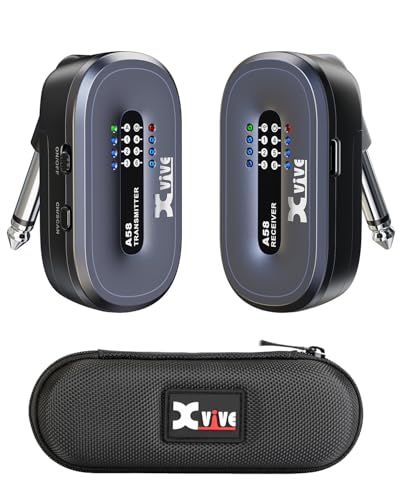
- 5.8GHz true diversity wireless design
- 24-bit/48kHz audio with active/passive modes
- Up to 100 ft range and USB-C charging
Best For: Players who want stable wireless tone and wide pickup compatibility
Low-Latency Budget Pick
JOYO JW-03 2.4GHz Wireless Guitar System
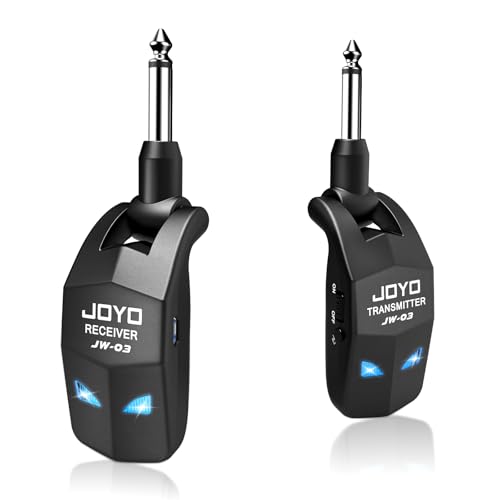
- Less than 5ms latency and clean signal
- Up to 65 ft range with 8-hour battery
- 220° rotatable plug and 4 selectable channels
Best For: Players seeking an affordable wireless setup for practice and small gigs
Long-Run Charging Case Choice
JOYO JW-06 5.8GHz Wireless Guitar System

- 5.8GHz audio with under 6ms latency
- Up to 18 hours total battery life with case
- 4 channels and broad instrument compatibility
Best For: Players who want extended battery life and portable charging convenience
Stage-Ready 5.8GHz Performer – LEKATO 5.8GHz Wireless Guitar System
If you want a wireless guitar system for electric guitar that prioritizes interference resistance and simple setup, the LEKATO 5.8GHz unit is built for practical stage and rehearsal use. Its 24-bit/48kHz audio, sub-6ms latency, and 100-foot range make it a solid choice for players who want to cut the cable without giving up responsiveness.
Best For: Guitarists who want a budget-friendly 5.8GHz wireless system with easy plug-and-play operation and 4-channel flexibility.
Pros:
- 5.8GHz transmission offers stronger anti-interference performance than typical 2.4GHz systems.
- 24-bit/48kHz audio with less than 6ms latency helps preserve playing feel and clarity.
- Supports up to 4 channels, which is useful if you need to switch away from interference.
- 220° rotatable plug works with electric guitars, bass, and electric-acoustic guitars.
Cons:
- Battery life is rated at up to 5 hours, which is shorter than some competing options.
- Uses a micro USB charging cable rather than USB-C.
- Best suited to players who are comfortable manually changing channels when needed.
Overall, this LEKATO system makes sense if you want a straightforward wireless setup that emphasizes stable 5.8GHz performance and broad instrument compatibility. It is especially appealing for rehearsals and gigs where low latency and quick pairing matter.
Low-Latency Modern Pick – Positive Grid Spark Link Wireless Guitar System
The Positive Grid Spark Link is a wireless guitar system for electric guitar players who want a compact, modern design with very low latency. It uses reliable 2.4G transmission, delivers 24-bit/48kHz audio, and offers up to 70 feet of range, making it a practical choice for home practice, rehearsal, or small-stage movement.
Best For: Players who want a fast, easy-to-use wireless system with USB-C charging and a secure hinged plug.
Pros:
- Under 3ms latency is among the quickest in this group.
- 24-bit/48kHz audio and 20Hz to 20kHz frequency response support full-range sound.
- Up to 70 feet of range is enough for most practice and performance spaces.
- USB-C charging and dual-end cables make recharging convenient.
Cons:
- 2.4G operation may be more prone to congestion than 5.8GHz systems in busy environments.
- Rated battery life is up to 6 hours, which may not suit the longest sessions.
- Single-output-channel design keeps the setup simple but less configurable.
If you value speed, convenience, and a clean modern feature set, the Spark Link is an easy recommendation. It is a strong pick for players who want a dependable wireless guitar system without extra setup hassle.
Travel-Friendly 5.8GHz Choice – Xvive A58 Wireless Guitar System
The Xvive A58 is a wireless guitar system for electric guitar players who want 5.8GHz operation, low latency, and a package that is easy to carry. With over 100 feet of range, less than 5ms of latency, and rechargeable battery power for both transmitter and receiver, it fits well into practice rigs and live setups alike.
Best For: Players who want a portable 5.8GHz system with a carrying case and reliable stage range.
Pros:
- 5.8GHz band helps keep the signal clear and reduces crowding concerns.
- Less than 5ms latency supports responsive playing.
- Over 100 feet of working range suits rehearsal rooms and live use.
- Includes a case and USB cable, which adds convenience for transport and storage.
Cons:
- Battery life is limited to up to 5 hours per charge.
- The product details are more focused on the system than on advanced channel features.
- It is positioned as a straightforward kit rather than a highly customizable one.
For players who want a compact 5.8GHz system with a practical accessory bundle, the Xvive A58 is easy to understand and easy to deploy. It balances low latency and strong range in a form that is friendly for on-the-go musicians.
Premium Brand Pick – Fender Telepath Wireless System
The Fender Telepath is a wireless guitar system for electric guitar, bass, and other instruments that leans on 5.8GHz digital transmission and a polished, brand-name design. It offers a 70-foot range, 4ms low latency, and up to 8 hours of rechargeable battery life, making it a practical option for players who want dependable wireless performance with broad compatibility.
Best For: Guitarists and bassists who want a premium-feeling 5.8GHz wireless system with long battery life and universal instrument support.
Pros:
- 5.8GHz digital transmission helps avoid crowded 2.4GHz interference.
- 4ms latency and 70-foot range support smooth live and practice use.
- Works with active and passive guitars, basses, and acoustic-electrics.
- Up to 8 hours of battery life is the longest in this group.
Cons:
- It is the priciest style of option in this roundup by brand positioning.
- Only two output channels are listed, so it is less configurable than 4-channel models.
- The premium design may be more than casual players need.
If you want a wireless system that feels more premium and flexible across instruments, the Fender Telepath stands out quickly. Its combination of 5.8GHz transmission, strong battery life, and broad compatibility makes it a compelling all-around pick.
Budget Plug-and-Play – 2.4GHz Rechargeable Wireless Guitar Link
If you want a wireless guitar system for electric guitar that keeps setup simple, this 2.4GHz set is built for quick plug-and-play use. It offers uncompressed wireless transmission, low latency under 4ms, and over 100 feet of range, so it covers practice rooms and small stages without extra cables.
Best For: Players who want an easy, rechargeable wireless link for electric guitar, bass, and other 1/4-inch instruments.
Pros:
- Plug-and-play connection with automatic transmitter/receiver pairing
- Low-latency transmission under 4ms with over 30m/100 ft range
- Rechargeable batteries with included double-sided USB charging cable
- 270° rotatable 6.35mm plug for broader instrument compatibility
Cons:
- Uses a 5V charger requirement for safe charging
- Battery runtime is listed at about 4 hours
- Built for basic wireless use rather than advanced pedalboard management
This is a practical entry-level option if you want wireless freedom without a complicated setup. The 2.4GHz design, rechargeable battery, and broad instrument support make it a useful everyday pick for straightforward playing.
Portable 5.8GHz Option – NUX C-5RC Wireless Guitar System
The NUX C-5RC is a wireless guitar system for electric guitar players who want a compact, digital setup with low interference. Its 5.8GHz connection, 24-bit audio, and up-to-100-foot line-of-sight range make it a strong fit for practice, rehearsals, and live use where clean signal matters.
Best For: Guitarists and bass players who want a compact wireless system with a charging case and automatic pairing.
Pros:
- 5.8GHz digital wireless helps reduce interference
- 24-bit audio and ultra-low latency for transparent sound
- Included portable charging case is convenient for travel
- Auto-matching setup and mute function make operation easy
Cons:
- Range is specified for clear line of sight
- Designed as a compact system, so it may not suit players wanting a pedal receiver
For players who value portability and quick setup, this NUX system keeps the workflow straightforward. The combination of digital audio quality, low interference, and the included charging case makes it especially appealing for musicians on the move.
Pro Pedal System – Shure GLXD16+ Dual Band Wireless
If you need a wireless guitar system for electric guitar that feels stage-ready, the Shure GLXD16+ is built around a pedal receiver and dual-band digital operation. It automatically scans for the cleanest channel, supports up to 12 hours of battery life, and is designed for transparent audio and reliable performance.
Best For: Serious players and performers who want a pedal-style wireless system with dual-band reliability.
Pros:
- Dual-band operation scans 2.4GHz and 5.8GHz for cleaner channels
- Pedal receiver format is useful for board-based rigs
- Up to 12 hours of runtime from the rechargeable battery
- Automatic pairing and spectrum monitoring simplify setup
Cons:
- More expensive and advanced than basic plug-in systems
- Requires a pedalboard-friendly setup to get the most out of it
This is the most performance-focused option in the group, especially if you want dependable wireless operation on a pedalboard. The dual-band design, smart frequency management, and long battery life make it well suited to demanding live use.
Reliable 5.8GHz Upgrade – Xvive A58 5.8GHz Wireless Guitar System
If you want a wireless guitar system for electric guitar that prioritizes stability and tone clarity, the Xvive A58 is built for both practice and performance. Its 5.8GHz true diversity design and 24-bit/48kHz audio aim to keep your signal clean, while the active/passive modes help it work with a wide range of pickups.
Best For: Players who want a compact 5.8GHz system with strong audio quality and broad pickup compatibility.
Pros:
- 5.8GHz true diversity wireless design for dependable performance
- 24-bit/48kHz audio with 20Hz to 20kHz frequency range
- Supports both active and passive pickup modes
- Up to 100 ft range for freer movement onstage or at home
Cons:
- Battery life is up to 5 hours, which is shorter than some rivals
- Active mode requires a manual channel-button hold
- Best suited to straightforward use rather than extended all-day playing
Overall, the A58 is a practical pick if you care more about stable transmission and clean sound than flashy extras. The included USB-C charging and quick top-up claim make it easy to keep ready between sessions.
Low-Latency Budget Pick – JOYO JW-03 2.4GHz Wireless Guitar System
This wireless guitar system for electric guitar is a strong value option if you need simple cable-free playing for home practice, rehearsals, or small venues. The JOYO JW-03 focuses on clean signal transmission, fast response, and easy pairing, with a rotatable plug that helps fit tighter jack layouts.
Best For: Guitarists who want an affordable, easy-to-use wireless setup for practice and smaller gigs.
Pros:
- Less than 5ms latency for responsive playing feel
- Up to 65 ft range in open areas
- Up to 8 hours of battery life per charge
- 220° rotatable plug fits recessed jacks and tight spaces
Cons:
- Not recommended for large stages
- Performance may be less ideal in Wi-Fi/Bluetooth-heavy environments
- Range is shorter than some 5.8GHz alternatives
For players who mainly need freedom from cables without complex setup, the JW-03 covers the basics well. Its four selectable channels also add flexibility if you need to avoid interference or run multiple units at once.
Long-Run Charging Case Choice – JOYO JW-06 5.8GHz Wireless Guitar System
If you want a wireless guitar system for electric guitar with longer battery support, the JOYO JW-06 stands out thanks to its charging case and extended total playtime. It also uses 5.8GHz transmission with 24-bit/48kHz audio and low latency, so it is aimed at players who want a cleaner, more responsive cable-free setup.
Best For: Players who want a portable wireless system with a charging case and extended total battery life.
Pros:
- 5.8GHz digital transmission with 24-bit/48kHz audio
- Up to 18 hours total battery life with charging case
- Low latency under 6ms
- 4 channels for flexible setup and reduced crosstalk
Cons:
- Open-area range drops when walls or obstructions are present
- Not compatible with 18V active pickups
- Active pickups may require lowering guitar volume to avoid distortion
The JW-06 is a good fit if battery convenience matters as much as sound quality. Its case-based charging and broad compatibility make it a flexible option for practice, rehearsals, and small gigs.
How We Picked the Best Wireless Guitar System for Electric Guitar
We prioritized systems that are practical for real-world players, with an emphasis on stable wireless performance, low latency, and enough battery life for rehearsals or gigs. We also looked for helpful extras like charging cases, pedal-style receivers, multichannel support, and compatibility with active or passive pickups.
Quick Comparison
For most players, the main tradeoff is simplicity versus control. Compact plug-and-play units are easy to travel with, while larger systems often add stronger stage integration, clearer displays, or more flexible routing. If you want a Wireless Guitar System for Electric Guitar mainly for practice and casual playing, convenience may matter more than advanced features. For live work, prioritize reliability, latency, and range first.
Key Buying Factors for a Wireless Guitar System for Electric Guitar
Latency and Feel
Lower latency helps preserve timing and picking feel, especially for fast rhythm parts and precise lead work. Even small delays can become noticeable when monitoring closely or playing with a tight band.
Range and Signal Stability
Manufacturers often quote ideal maximum range, but walls, bodies, and crowded RF environments can reduce real-world performance. Choose more range than you think you need if you plan to move around on stage.
Frequency Band
Both 2.4GHz and 5.8GHz systems can work well, but the best choice depends on your environment. A 5.8GHz Wireless Guitar System for Electric Guitar may offer a cleaner spectrum in some setups, while 2.4GHz models are often widely available and easy to use.
Power and Charging
Battery life matters more than many buyers expect. Look for enough runtime to cover a full rehearsal, worship set, or performance block, plus convenient recharging if you travel often.
Compatibility and Format
Check whether the system supports active or passive pickups, bass, acoustic-electric instruments, and any special connector or pedalboard requirements. Receiver style also matters: some players prefer a compact plug-on design, while others want a pedal receiver for a more permanent rig.
Who Should Buy Which Wireless Guitar System for Electric Guitar?
If you want the simplest setup for practice or home use, choose a compact plug-and-play model. If you gig regularly, look for stronger battery performance, dependable range, and low latency. If you run a pedalboard-heavy setup, a pedal receiver can be the cleanest fit. And if you switch between guitar, bass, or acoustic-electric instruments, pick a multi-instrument system to get more value from one wireless rig.
For most buyers, the right choice comes down to how much movement, how much stage interference, and how much setup convenience you need. Match those priorities first, and the best Wireless Guitar System for Electric Guitar becomes much easier to choose.