The MAONO PM500 XLR Condenser Microphone review starts with one simple question: does this budget-friendly XLR mic sound serious enough for real recording?
For podcasters, singers, and streamers, the answer is often yes.
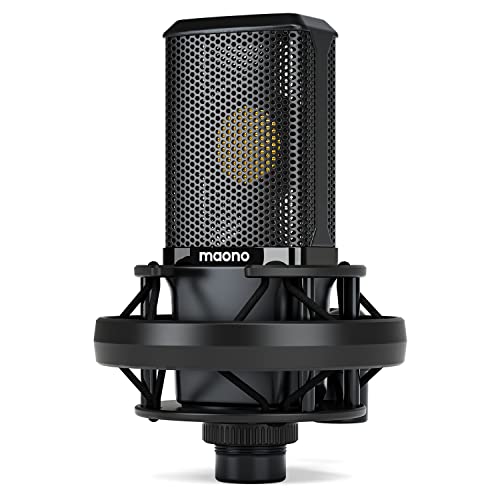
MAONO PM500 Review Summary
The MAONO PM500 XLR Condenser Microphone is a strong fit for creators who want a budget-conscious XLR condenser mic with a more professional signal path than a typical USB mic.
It is especially appealing if you already own, or plan to buy, an audio interface with 48V phantom power and want a microphone that can handle vocals, voice-over, streaming, and light instrument recording without forcing you to buy extra accessories right away.
What makes the MAONO PM500 XLR Condenser Microphone stand out is the combination of a 34 mm large-diaphragm capsule, cardioid pickup pattern, and a useful accessory bundle.
That means you are not just buying the microphone body; you are getting a starter recording package that can help reduce vibration, plosives, and desk clutter from day one.
If your goal is clean spoken-word capture or polished vocal recordings in a home studio, the MAONO PM500 XLR Condenser Microphone makes a compelling case.
It is not the simplest plug-and-play solution, but for buyers who understand the trade-off, it offers better upgrade potential and more studio flexibility than many USB-first alternatives.
Scorecard
| Category | Score | Why it matters |
|---|---|---|
| Sound quality | 8.0/10 | The 34 mm large-diaphragm capsule, 20Hz-20kHz range, and low-noise design support clear, full-bodied vocals. |
| Noise rejection | 8.0/10 | The cardioid/unidirectional pattern helps reduce side and rear noise in home recording spaces. |
| Voice and instrument versatility | 8.0/10 | Well suited to singing, podcasting, streaming, voice-over, ASMR, and several instruments. |
| Build quality | 9.0/10 | The zinc-alloy metal body and multi-layer coating give it a sturdy, studio-ready feel. |
| Accessory value | 9.0/10 | Shock mount, pop filter, desktop stand, XLR cable, and manual make the bundle easy to start with. |
| Setup requirements | 6.0/10 | Needs 48V phantom power and an interface or mixer, so it is less convenient than USB mics. |
| Pro recording fit | 8.0/10 | Balanced XLR output and low self-noise align well with a serious beginner or budget studio build. |
Bottom line: the MAONO PM500 XLR Condenser Microphone is best for creators who want a more traditional recording setup and value sound quality, accessories, and build quality over instant simplicity.
Key Features and Specifications of MAONO PM500
| Spec | Detail |
|---|---|
| Brand | MAONO |
| Model | PM500 XLR Condenser Microphone |
| Microphone type | Condenser microphone |
| Form factor | Large diaphragm |
| Connectivity | XLR |
| Polar pattern | Unidirectional / cardioid |
| Power source | 48V phantom power |
| Frequency response | 20Hz to 20kHz |
| Signal-to-noise ratio | 80 dB |
| Compatible platform | PC / laptop with audio interface, sound card, or mixer |
| Color | Black |
| Included items | Microphone, shock mount, metal pop filter, metal desktop stand, XLR cable, user manual |
| Warranty | 12-month warranty service |
- 34 mm custom-designed gold condenser capsule for more detailed vocal capture.
- XLR balanced output for cleaner integration with interfaces and mixers.
- Cardioid pickup pattern to focus on the voice and reduce room bleed.
- Low-noise design aimed at clearer speech and less hiss in recorded tracks.
- High sensitivity and high SPL handling to handle both spoken word and louder sources.
- Metal body with zinc alloy construction for durability and a more premium feel.
On paper, these specs place the MAONO PM500 XLR Condenser Microphone in the sweet spot between entry-level convenience and more serious studio behavior.
It is not trying to be a flashy all-in-one gadget; it is built to work with standard audio gear and give you room to grow.
Pros and Cons of MAONO PM500
Understanding the MAONO PM500 XLR Condenser Microphone pros and cons is the fastest way to decide whether it fits your setup.
Pros
- Detailed, studio-oriented sound from the large-diaphragm capsule.
- Cardioid pattern helps reject room noise and off-axis sound.
- Solid metal construction feels dependable for regular use.
- Useful for both voice and instruments, which improves value.
- Accessory bundle reduces the need for immediate add-on purchases.
Cons
- Requires 48V phantom power and an interface, so it is not plug-and-play.
- Results depend on mic placement and a decent recording chain.
- The included desktop stand is convenient, but many users may still prefer a boom arm.
The biggest drawback is not sound quality; it is system dependency.
If you are coming from a USB mic and want the simplest path possible, the MAONO PM500 XLR Condenser Microphone may feel slightly more demanding than expected.
Who Should Buy MAONO PM500?
The MAONO PM500 XLR Condenser Microphone is a good purchase for creators who already understand the basics of XLR recording or are willing to learn.
It suits people building a home studio, upgrading from a USB microphone, or assembling a starter podcast chain with an interface.
- Buy it if you want an affordable studio-style condenser microphone for vocals or speech.
- Buy it if you already own a phantom-powered audio interface or mixer.
- Buy it if you want one package with the core accessories included.
- Skip it if you want direct USB or phone recording with zero setup.
- Skip it if your room is very untreated and you are not ready to manage echo or background noise.
For the right buyer, the MAONO PM500 XLR Condenser Microphone is an easy recommendation because it covers the essentials without feeling stripped down.
MAONO PM500 Sound Test
In practical use, the MAONO PM500 XLR Condenser Microphone should be evaluated less like a casual office mic and more like an entry-level studio tool.
The 20Hz to 20kHz frequency range gives it the ability to capture low-end warmth in voices while still preserving top-end detail and articulation.
That matters most for podcasts and voice-over, where clarity and natural tone drive listener comfort.
The large diaphragm can help voices sound fuller, while the cardioid pickup pattern keeps focus on the speaker rather than the room.
For singing, this microphone should perform best when you sing at a controlled distance and use proper pop filtering.
Condenser microphones are typically more revealing than dynamic mics, which is helpful if you want polish but less forgiving if your room is noisy.
That is why positioning and gain staging matter a lot with the MAONO PM500 XLR Condenser Microphone.
For instruments, the PM500 can be a flexible budget option.
Acoustic guitar, guitar cabinets, percussion, and drum applications can all benefit from a condenser microphone with decent transient response and sensitivity.
However, like most mics in this category, it rewards careful placement more than brute-force use.
Included Accessories and Setup
One of the strongest buying arguments for the MAONO PM500 XLR Condenser Microphone is the accessory bundle.
You get a shock mount, metal pop filter, metal desktop stand, XLR cable, and user manual, which gives the package much better day-one usefulness than a bare microphone.
The shock mount helps reduce vibration transfer from the desk or stand.
That is especially important for podcasts, livestreams, and voice-over sessions where tapping, keyboard bumps, and desk movement can ruin a take.
The pop filter is equally useful because it helps control plosives from hard consonants and keeps vocal recordings cleaner.
The included desktop stand is fine for basic tabletop use, but this is one area where some buyers may want to upgrade.
If you plan to stream or record for long sessions, a boom arm or a more stable studio stand may offer better positioning and more ergonomic comfort.
Setup checklist:
- Connect the MAONO PM500 XLR Condenser Microphone to an audio interface, mixer, or sound card.
- Enable 48V phantom power.
- Mount the mic in the shock mount and place the pop filter in front of it.
- Set input gain conservatively and test for clipping.
- Adjust distance and angle to reduce plosives and room echo.
This is not the fastest route, but it is the more flexible one if you care about recording quality and future upgrades.
PM500 for Podcasting vs Singing
For podcasting, the MAONO PM500 XLR Condenser Microphone is arguably at its best.
Spoken word benefits from detail, consistent presence, and reduced off-axis noise, and the cardioid design helps the microphone focus on the voice.
If your room is moderately controlled, you can get a polished, broadcast-style result without needing an expensive upgrade.
For singing, it can still be very good, but the conditions matter more.
Vocal technique, mic distance, and room acoustics will all shape the outcome.
If you want airy detail and studio shimmer, the MAONO PM500 XLR Condenser Microphone can deliver that character.
If you need maximum rejection in a noisy room, a dynamic microphone may be a smarter choice.
That comparison is important because it explains the mic’s identity.
The MAONO PM500 XLR Condenser Microphone is not trying to beat every vocal mic in isolation; it is trying to provide clean condenser capture at an accessible level for users who are ready for XLR.
If your priority is podcast clarity and voice-over consistency, this microphone is an especially logical buy.
If your priority is untreated-room isolation, look hard at dynamic alternatives before you commit.
Build Quality and Desk Footprint
The MAONO PM500 XLR Condenser Microphone has a clear advantage in construction.
The zinc-alloy metal body and multi-layer coating suggest a microphone designed for repeated handling rather than delicate shelf use.
That is valuable for creators who set up and tear down often or simply want gear that feels substantial.
The black finish also gives it a clean, professional look on camera.
For streamers and video creators, appearance matters more than many buyers expect.
A microphone that looks polished on a desk can make a whole setup feel more credible.
As for footprint, the included desktop stand keeps the initial setup compact.
That said, a compact footprint can also come with limitations, especially if you need precise positioning around monitors, a keyboard, or a laptop screen.
In many cases, the PM500 will work better on a boom arm because it opens up placement options and helps keep the mic out of the way.
Practical verdict on design: the MAONO PM500 XLR Condenser Microphone feels more like an entry studio microphone than a disposable starter device, which is a meaningful advantage in this price class.
Alternatives to Consider
If you are comparing the MAONO PM500 XLR Condenser Microphone with other common Amazon options, a few alternatives make sense depending on your priorities:
- Audio-Technica AT2020 XLR condenser microphone – a well-known entry studio choice with a strong reputation for vocal recording.
- Rode NT1 condenser microphone – a more premium-style route if you want a quieter, more refined studio sound.
- MAONO USB podcast microphone – a simpler option if you prefer direct plug-and-play convenience over XLR flexibility.
- Shure SM58 microphone – a classic dynamic mic if your room is noisy and you value ruggedness over condenser detail.
These alternatives highlight the PM500’s position clearly.
The MAONO PM500 XLR Condenser Microphone sits in the accessible studio-condenser lane, while USB options trade flexibility for simplicity and dynamic mics trade detail for better room tolerance.
Buying Advice: How to Decide
Before you buy the MAONO PM500 XLR Condenser Microphone, ask yourself three questions.
First, do you already have phantom power through an interface or mixer?
Second, are you recording in a space that is reasonably controlled?
Third, do you actually want the XLR path instead of the convenience of USB?
If the answer to those questions is yes, this microphone becomes much more attractive.
You are not just buying a mic; you are buying a foundation for a more scalable recording setup.
That matters because an XLR condenser like the PM500 can be easier to integrate into a multi-mic podcast rig, studio workflow, or future equipment upgrade path.
On the other hand, if you want the absolute fastest setup possible, this is not the easiest choice.
The MAONO PM500 XLR Condenser Microphone rewards users who respect the chain: mic placement, phantom power, interface quality, and room control all influence the result.
Is MAONO PM500 Worth It?
Yes, the MAONO PM500 XLR Condenser Microphone is worth it for the right buyer.
It offers a convincing mix of sound quality, solid build, and helpful accessories, which makes it a strong option for anyone building or upgrading a budget home studio.
The main reason to choose it is simple: you get a serious-feeling XLR condenser microphone without having to assemble every accessory separately.
The main reason to pass is equally simple: if you do not already have phantom power and an interface, the setup requirement may outweigh the benefits.
Final verdict: if you want a versatile starter studio mic for vocals, podcasting, streaming, and light instrument work, the MAONO PM500 XLR Condenser Microphone is an easy shortlist pick.
If you want one of the simplest possible recording experiences, look at USB alternatives instead.
Best for: podcasters, streamers, singers, voice-over creators, and home studio users who want a capable XLR condenser with a useful accessory bundle.
Not best for: buyers who need phone-friendly simplicity or true plug-and-play convenience.