The MOSEN MDP-110 Digital Piano review starts with a simple idea: give beginners and home players an 88-key instrument that feels more like a real piano than a toy keyboard.
If you want weighted keys, headphone practice, and a living-room-friendly cabinet, the MOSEN MDP-110 Digital Piano deserves a close look.
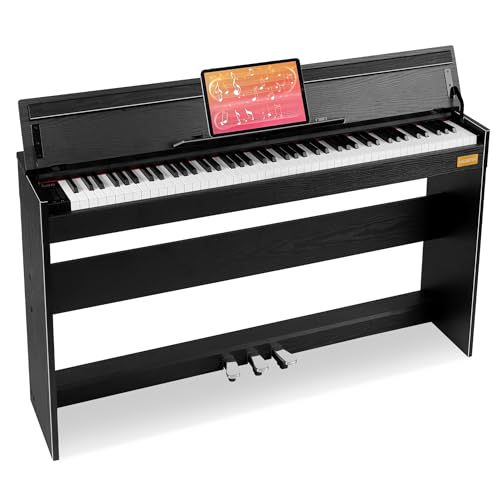
MOSEN MDP-110 Review Summary
The MOSEN MDP-110 Digital Piano is aimed squarely at buyers who want an affordable-feeling but feature-rich home instrument with proper piano-style basics.
It combines full-size 88 keys, graded hammer action, velocity sensitivity, and a furniture-style wood stand, which makes it a strong fit for beginners, students, and families who want a dedicated practice piano that looks at home in a study or living room.
What stands out most is that this is not trying to be a tiny portable keyboard.
The MOSEN MDP-110 Digital Piano is designed for real practice value: quiet headphone play, useful sound variety, USB-MIDI connection for apps and devices, recording support, and an upright-style cabinet that helps it feel like part of the room instead of a temporary gadget.
For a buyer choosing a first digital piano, those design choices matter more than flashy extras.
In practical terms, this model makes the most sense if you want a home digital piano for learning finger technique, dynamics, and consistent practice habits.
It is less compelling if you need a stage-ready instrument, frequent portability, or premium studio-grade sound shaping.
For that buyer, a higher-end Roland, Yamaha, or Casio digital piano may be a better match.
Scorecard
| Category | Score | Buyer Takeaway |
|---|---|---|
| Keyboard Feel | 9.0 | Full-size 88-key layout with weighted, graded hammer action and velocity sensitivity supports proper piano technique. |
| Sound Library | 8.0 | 380 tones, 128 rhythms, and 128-note polyphony give useful variety for practice and casual arranging. |
| Practice Features | 9.0 | Dual headphone jacks, recording modes, built-in speakers, and silent practice support make it home-friendly. |
| Connectivity | 8.0 | USB-MIDI and audio input work well with learning apps, computers, tablets, and backing tracks. |
| Home Furniture Design | 8.0 | The upright-style wood stand and lacquered finish look much more polished than a basic keyboard stand. |
| Setup and Included Accessories | 7.0 | It includes the essentials, but the stand still requires assembly. |
| Value for Beginners | 8.0 | A strong all-around learning piano with a realistic keybed and practical home-use features. |
Bottom line: the MOSEN MDP-110 Digital Piano is best for anyone who wants a serious home practice instrument without jumping into premium pricing territory.
It is especially attractive for beginners, students, and family households that want a piano they will actually use.
Key Features and Specifications of MOSEN MDP-110
The MOSEN MDP-110 Digital Piano is built around the core features buyers expect from a proper home digital piano.
Here is a clear breakdown of the key specs and design choices that shape the buying decision.
| Specification | Details |
|---|---|
| Brand | MOSEN MUSIC |
| Model | MDP-110 |
| Instrument Type | Digital piano |
| Keys | 88 full-size keys |
| Key Action | Weighted, graded hammer-action |
| Touch Response | Velocity-sensitive |
| Voices/Tones | 380 |
| Rhythms | 128 |
| Polyphony | 128-note |
| Speakers | Built-in 15W stereo sound |
| Connectivity | USB-MIDI, audio input |
| Headphone Support | Dual headphone jacks, 3.5mm jack |
| Power | Corded electric |
| Finish | Classic black, lacquered |
| Stand Style | Wooden upright-style cabinet |
| Special Features | Recording, dust cover, desk-style top, built-in speaker |
| Included Accessories | Power adapter, sustain pedal, music stand, assembly instructions |
Those specs matter because they show where the MOSEN MDP-110 Digital Piano is focused.
It is not built around portability or performance-stage versatility.
Instead, it prioritizes home learning, acoustic-style playing feel, and household-friendly practicality.
- 88 keys give you full-range repertoire practice instead of a compressed keyboard layout.
- Weighted, graded hammer action helps develop proper finger strength and control.
- Velocity sensitivity makes dynamics more expressive and closer to a real piano.
- 380 tones and 128 rhythms add variety for lessons, exploration, and simple songwriting.
- 128-note polyphony gives enough headroom for most practice and layered playing needs.
- USB-MIDI connectivity supports modern practice apps and computer-based learning.
- Dual headphone jacks are a major family-use advantage for shared or silent practice.
Pros and Cons of MOSEN MDP-110
Here is the practical MOSEN MDP-110 Digital Piano pros and cons breakdown from a buyer’s point of view.
| Pros | Cons |
|---|---|
| Realistic weighted hammer-action keys | Requires assembly for the stand |
| Good tone and rhythm variety for a home piano | Not ideal if you need portability |
| USB-MIDI helps with app-based learning | More focused on home use than stage performance |
| Dual headphone jacks for silent practice | Audio and connectivity are practical, not premium studio-grade |
| Furniture-style stand looks polished in a room | Needs a power outlet nearby |
| Dust cover and desk-style top add everyday convenience | Less flexible than a portable 88-key keyboard |
| Useful starter accessories included | Setup may take longer than a simple keyboard |
Best strengths: the key action, home-friendly cabinet, and practice features are the main reasons to buy.
Main drawbacks: it is not designed as a lightweight gigging instrument, and buyers seeking advanced sound editing or premium speaker performance should look higher up the market.
How the Weighted Keys Feel to Play
If you are comparing the MOSEN MDP-110 Digital Piano to cheaper unweighted keyboards, the biggest advantage is obvious: the keys are built to feel closer to an acoustic upright.
The full-size 88-key layout matters because it lets learners practice proper hand position, octave spans, and repertoire without constantly adjusting to a shortened range.
The graded hammer-action design is especially valuable for students.
Lower notes typically feel a little heavier than higher notes, which better mimics an acoustic piano and supports natural technique development.
That is not just marketing language; it affects how a beginner learns touch, control, and dynamic balance.
Velocity sensitivity is another important detail.
It means your playing dynamics can change the sound output, so soft and loud passages feel more expressive.
For a first piano, that is a big deal because it trains musical control instead of just note accuracy.
From a buyer perspective, this is where the MOSEN MDP-110 Digital Piano looks strongest.
If your goal is to learn piano seriously, a convincing keybed is more important than dozens of extra sounds.
In that sense, the MOSEN MDP-110 earns its place.
Sound Library and Practice Modes
The MOSEN MDP-110 Digital Piano includes 380 voices, 128 rhythms, and 128-note polyphony, which is a healthy feature set for this category.
You are not buying it as a synthesizer or arranger workstation, but the variety is enough to keep practice sessions interesting and to support different styles of playing.
For beginners, the extra tones can be motivating.
Students often move more willingly through lessons when they can experiment with electric piano, strings, organ, and other voices between standard acoustic piano practice.
The rhythm section also gives you a basic backing framework for simple arrangement work or casual songwriting.
Polyphony at 128 notes is a meaningful spec because it helps the piano handle more complex passages, pedal use, and layered sounds with less note drop-off.
That said, the MOSEN MDP-110 is still primarily a home practice instrument, so expectations should stay realistic.
The sounds should be judged as functional and useful, not as a premium concert or studio voice engine.
The built-in recording modes are another practical plus.
Recording yourself is one of the best ways to improve timing and consistency, and having that feature onboard is especially useful for learners who do not want to rely on external gear.
USB-MIDI and App Compatibility
One of the smarter design decisions on the MOSEN MDP-110 Digital Piano is the USB-MIDI connection.
That matters because many modern learners use apps, online lessons, or computer-based practice tools.
USB-MIDI can let the instrument communicate with computers, smartphones, and tablets, which opens the door to a lot of contemporary learning workflows.
This is where the MOSEN MDP-110 becomes more compelling than older-style entry pianos.
A beginner can connect to a device for lessons, note recognition, backing tracks, or composition tools.
The audio input also gives you flexibility for playing along with playlists or accompaniment tracks, which is useful for practice and casual performance at home.
Still, buyers should be practical here.
Compatibility depends on the app, device, and cable setup you plan to use.
Check your learning app’s USB-MIDI support before buying if app integration is a major reason you want this piano.
The feature is useful, but your exact experience will depend on the rest of your setup.
Wood Stand, Dust Cover, and Desk Function
The cabinet design is a major part of the MOSEN MDP-110 Digital Piano appeal.
Instead of looking like a bare keyboard on a metal X-stand, it uses a wooden upright-style stand with a classic black lacquered finish.
That makes it more suitable for a family room, study, or bedroom where appearance matters as much as function.
The integrated dust cover is another thoughtful touch.
When the top is closed, it helps protect the instrument and gives the unit a tidier appearance.
The added desk-like top surface is genuinely convenient if you want the piano to double as a small utility surface when not in use.
For buyers who live in smaller homes or shared spaces, that design can be a real benefit.
A digital piano that looks like furniture is more likely to stay out and get played regularly.
That is a subtle but important ownership factor.
The trade-off is size and permanence.
This is not the best choice if you move often, play in multiple rooms, or need a lightweight setup.
Its home-first design is a strength and a limitation at the same time.
What Comes in the Box
The MOSEN MDP-110 Digital Piano includes the essentials you need to get started, which is helpful for first-time buyers who do not want to source accessories separately.
- Power adapter
- Sustain pedal
- Music stand
- Assembly instructions
This is a solid starter package.
The sustain pedal alone adds a lot of realism to practice, and the music stand is necessary for sheet music or learning materials.
The main caveat is that the stand still needs assembly, so do not expect a fully plug-and-play furniture piece right out of the box.
Buyer tip: if you are setting this up for a child, student, or shared family space, budget a little time for assembly and placement before the first lesson.
How the MOSEN MDP-110 Compares with Alternatives
Buyers considering the MOSEN MDP-110 Digital Piano are usually weighing it against more established piano brands or simpler portable models.
That is a smart comparison because the right choice depends on what you value most.
If you want a recognized all-around piano brand, a Yamaha digital piano with weighted keys is a natural benchmark.
Yamaha models often bring strong key feel and dependable sound quality, though cabinet-style packages can cost more and vary widely by model.
A Alesis 88-key weighted keyboard piano is another common alternative if you want a more portable 88-key setup.
Alesis often appeals to beginners who need flexibility, but it may not give you the same furniture-style presence as the MOSEN MDP-110.
For buyers who prioritize brand reputation and refined home-piano feel, a Roland home digital piano can be a strong upgrade path.
Roland instruments are frequently praised for action and sound, but they are often positioned at a higher tier.
There is also the Casio furniture-style digital piano category, which makes a better apples-to-apples comparison if your priority is a cabinet instrument for the home.
Casio typically offers strong value and broad beginner appeal.
If you do not need furniture styling, a portable 88-key MIDI keyboard with speakers may be a better fit.
You will gain portability, but you will usually give up the more polished home-piano look and may need a separate stand.
Overall, the MOSEN MDP-110 Digital Piano stands out more for home usability and acoustic-style presentation than for brand prestige or travel convenience.
Who Should Buy MOSEN MDP-110?
The MOSEN MDP-110 Digital Piano is a strong match for buyers who want a realistic practice instrument without overcomplicating the purchase.
It is especially good for:
- Beginners who need a proper 88-key layout and weighted action.
- Students working on finger technique, dynamics, and consistent daily practice.
- Home users who want a piano that looks like furniture instead of a temporary keyboard.
- Quiet-practice buyers who plan to use headphones often.
- Families who want one shared instrument with app connectivity and multiple users.
Who should skip it?
If you are a frequent performer, a touring musician, or someone who wants a very lightweight setup, this is probably not your best option.
Likewise, advanced players with studio-level expectations may prefer a higher-end Yamaha, Roland, or Casio digital piano.
In buyer terms, the MOSEN MDP-110 fits best in the “serious beginner home piano” lane.
Is MOSEN MDP-110 Worth It?
So, is MOSEN MDP-110 Digital Piano worth it?
For the right buyer, yes.
It offers the most important foundations of a good home digital piano: full-size weighted keys, a convincing hammer-action feel, headphone practice, USB-MIDI connectivity, and a cabinet design that encourages regular use.
What makes it appealing is the balance.
You get enough features to support learning and family use without paying for a lot of specialist functions that many beginners never touch.
That makes the MOSEN MDP-110 Digital Piano a sensible pick for shoppers who care more about playability, home presentation, and practice convenience than portable-gig flexibility.
The downsides are equally clear.
It requires assembly, it is not built for easy transport, and its sound and connectivity package is practical rather than elite.
Those are not dealbreakers for a home piano, but they do define the product.
Final verdict: buy the MOSEN MDP-110 Digital Piano if you want a realistic, attractive, and beginner-friendly 88-key home instrument. If you need a lighter keyboard or a higher-end performance piano, keep shopping.
But for home practice and everyday learning, this model makes a lot of sense.
Recommended for: beginners, students, families, and home players who want a furniture-style digital piano with serious practice value.
Less ideal for: performers who need portability, advanced sound design, or premium studio-grade output.