Great monitors can still sound misleading in an untreated room. That’s why studio monitors with room correction are so valuable: they help reduce the effect of reflections, bass buildup, and placement issues.
Whether you’re building a home studio or upgrading a pro setup, the right pair can make your mixes translate more consistently. Below, we focus on practical options with useful calibration features, strong imaging, and real-world flexibility.
Best 10 Studio Monitors with Room Correction Picks for 2026
Compact ARC-Calibrated Nearfields
IK Multimedia iLoud MTM MKII Pair

- Built-in ARC room correction for room-aware monitoring.
- Ultra-flat 36 Hz to 32 kHz response.
- ARC X software adds speaker emulation checks.
Best For: Small studios, mixing, and critical listening
Premium Two-in-One Voicing

- Beryllium tweeter for linearity and dynamics.
- Focus mode provides two voicings in one monitor.
- Manual LF/HF and LMF adjustments help shape response.
Best For: Experienced mixers who want premium voicing control
Reference MTM Calibration
IK Multimedia iLoud Precision MTM MKII
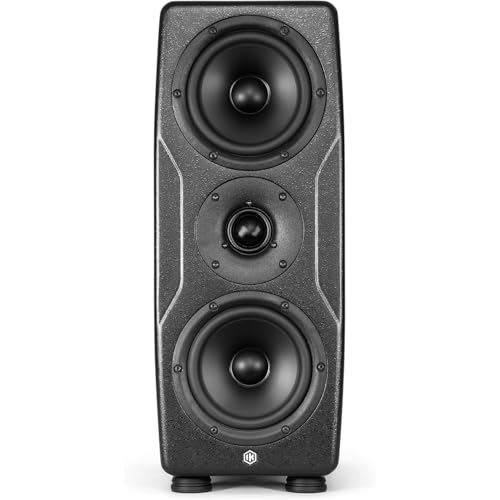
- ARC X auto calibration with included mic.
- Reference-grade +/-1 dB response targets accuracy.
- MTM layout improves imaging and sweet spot.
Best For: Pro mixing, mastering, and immersive audio work
Budget Desktop Monitoring
Ortizan C7 Powered Studio Monitors

- Built-in 24-bit DAC for USB playback.
- Bluetooth 5.3 plus RCA, AUX, TRS, and Type-C inputs.
- Flat-response tuning for balanced sound.
Best For: Home studios, desktop audio, and casual content creation
Room-Ready Reference
Mackie HR824mk2 8" Studio Monitor
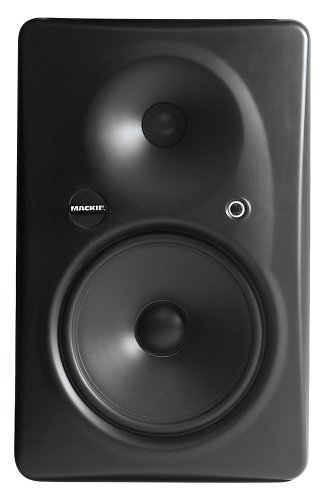
- Acoustic Space Control helps adapt the low end to the room.
- 8.75-inch LF driver and 1-inch tweeter support full-range monitoring.
- Designed for stereo and surround applications with accurate playback.
Best For: Mixing rooms and surround studios needing room-adjustable monitoring.
Correction Hub
IK Multimedia ARC Studio Room Correction System

- Includes microphone, software, and a stand-alone correction processor.
- Aims to improve frequency balance, imaging, and overall monitoring accuracy.
- Works with existing studio monitors in home or pro rooms.
Best For: Studios that want dedicated room correction for existing monitors.
Immersive Tuner
PreSonus Eris Pro 6 Coaxial Studio Monitor

- Acoustic Tuning and Acoustic Space controls help compensate for the room.
- Coaxial design supports a wide sweet spot and strong imaging.
- 140W biamplified output suits stereo and Dolby Atmos work.
Best For: Stereo and immersive studios needing onboard room-compensation controls.
Portable Reference Pick
NUX AXON 3 Compact Studio Monitor

- 90W bi-amp power in an ultra-compact body
- Acoustic correction EQ app with tilt footpads
- USB DAC, Bluetooth, RCA, and AUX inputs
Best For: Compact nearfield setups that need portable room tuning and flexible connectivity
Flexible Room-Tuning Pick
Edifier MR5 Black Studio Monitors

- 3-way active design with 110W RMS output
- Rear knobs and ConneX app room compensation
- XLR, TRS, RCA, AUX, Bluetooth 6.0, and headphone out
Best For: Users who want adjustable monitor voicing with broad input support
Style-Matched Room Control
Edifier MR5 White Studio Monitors

- Same 3-way active MR5 platform as the black model
- Rear knobs and ConneX app for room compensation
- Bluetooth 6.0 and XLR/TRS/RCA/AUX inputs
Best For: Anyone who wants the MR5 tuning features in a white finish
Compact ARC-Calibrated Nearfields – IK Multimedia iLoud MTM MKII Pair
If you want studio monitors with room correction for a compact setup, the iLoud MTM MKII pair is built to help you hear mixes more accurately in imperfect spaces. The built-in ARC room calibration can optimize playback for your room, while the linear-phase design and ultra-flat response aim for precise imaging and low listening fatigue.
Best For: Mixing, critical listening, and small studios that need room correction and flexible placement.
Pros:
- Built-in ARC room correction helps adapt sound to your room.
- Ultra-flat 36 Hz to 32 kHz response supports detailed monitoring.
- Linear phase design reduces phase distortion and ear fatigue.
- ARC X software adds monitor emulation for translation checks.
Cons:
- ARC mic is noted as sold separately in the supplied details.
- Compact 3.5-inch design may not suit users wanting larger cabinets.
- Best results depend on proper calibration and setup.
This is a strong pick if you need compact studio monitors with room correction plus tools for checking mixes across different playback styles. The mounting options also make it easier to place them well in a desk-based studio.
Premium Two-in-One Voicing – Focal ST6 Twin6 Red
The Focal ST6 Twin6 is a high-end studio monitor with room correction-style tuning controls, but it does not include automated calibration. Instead, it focuses on refined driver design and onboard LF/HF shelving plus LMF adjustment so you can tailor the response to your room and workflow.
Best For: Experienced users who want a premium nearfield monitor with detailed manual voicing controls.
Pros:
- Beryllium inverted dome tweeter is designed for excellent linearity and dynamics.
- Focus mode lets it act as two monitors in one.
- LF shelving, HF shelving, and LMF settings provide flexible tuning.
- Composite W-cone aims for neutrality and low distortion.
Cons:
- No built-in automatic room correction is listed in the supplied notes.
- Heavier 54-pound build may be less convenient to move.
- Only one monitor is included.
This model suits buyers who value premium transducer design and adjustable voicing more than automated correction. If your space already sounds well-treated, the Twin6 offers a polished, highly controlled monitoring experience.
Reference MTM Calibration – IK Multimedia iLoud Precision MTM MKII
For studio monitors with room correction in a truly reference-minded design, the iLoud Precision MTM MKII is aimed at accuracy first. It combines ARC X auto calibration, linear-phase performance, and a symmetrical MTM layout to help you work with a tighter image, cleaner translation, and less guesswork in changing rooms.
Best For: Professional mixing, mastering, and immersive audio setups that need calibrated nearfield accuracy.
Pros:
- ARC X auto calibration adapts the monitor to your room in seconds.
- Reference-grade response targets +/-1 dB from 45 Hz to 30 kHz.
- Symmetrical MTM design supports precise imaging and a wide sweet spot.
- Monitor emulation helps test mixes across different playback systems.
Cons:
- Single monitor package, so stereo requires buying more than one.
- XLR connectivity only may limit casual plug-and-play use.
- Designed for serious monitoring, so it may be more than a basic desktop listener needs.
This is one of the most complete options here for users who want automated calibration plus professional-grade monitoring behavior. The included microphone and DSP features make it especially practical for studios that need accuracy across different acoustic environments.
Budget Desktop Monitoring – Ortizan C7 Powered Studio Monitors
If you’re shopping for studio monitors with room correction on a budget, the Ortizan C7 is more of a compact all-rounder than a true calibration system. Its strength is straightforward desktop usability: multiple inputs, Bluetooth 5.3, and a built-in 24-bit DAC that aims to keep playback clean for home studio and content work.
Best For: Home studios, desktop setups, gaming, and casual content creation that need flexible connectivity.
Pros:
- Built-in 24-bit DAC supports direct USB audio with less conversion loss.
- Bluetooth 5.3, RCA, AUX, TRS, and Type-C cover many sources.
- Flat-response tuning is intended for balanced, accurate playback.
- Compact 3.5-inch carbon fiber woofer fits small spaces well.
Cons:
- Only an auto speaker setup feature is listed, not true room calibration.
- Smaller driver size limits low-end output compared with larger monitors.
- More consumer-friendly than professional calibration-focused models.
This is a practical choice if you want compact powered monitors with lots of connection options and a neutral tuning approach. It’s better for flexible desktop use than for buyers specifically seeking advanced room correction.
Room-Ready Reference – Mackie HR824mk2 8" Studio Monitor
If you’re shopping for studio monitors with room correction, the Mackie HR824mk2 is built around a simple idea: give you accurate monitoring and let you adapt it to the room. Its Acoustic Space Control helps tailor the low end to different setups, while the Zero Edge baffle and optimized waveguide are designed to support natural, high-definition playback for mixing and surround work.
Best For: Mixing rooms, surround setups, and users who need room-adjustable monitoring from a large powered speaker.
Pros:
- Acoustic Space Control helps adapt the monitor to different room conditions.
- 8.75-inch LF driver and 1-inch tweeter are aimed at full-range monitoring.
- Optimized waveguide and Zero Edge baffle are designed for more accurate sound reproduction.
- Useful for 5.1 and 7.1 surround production as well as stereo work.
Cons:
- Large size and 38.4-pound weight may be a challenge in smaller setups.
- Wired, powered design is more suited to fixed studio placement than portable use.
- More speaker than many home studios need if space is limited.
This is a strong pick if you want a monitor that prioritizes accuracy and gives you room-compensation control without adding external correction hardware. It fits best in a dedicated studio where its size and tuning features can be put to use.
Correction Hub – IK Multimedia ARC Studio Room Correction System
For buyers comparing studio monitors with room correction, the IK Multimedia ARC Studio is the dedicated correction option in this roundup. It includes a high-precision measurement microphone, calibration software, and a stand-alone processor to optimize your monitoring environment, improve imaging, and balance frequency response across a wide range of studio setups.
Best For: Home and professional studios that want dedicated room correction without relying on constant manual adjustments.
Pros:
- Includes microphone, software, and correction processor in one system.
- Designed to improve frequency balance and stereo imaging.
- Works with studio monitors, audio interfaces, desktops, and laptops.
- Set-it-and-forget-it workflow reduces the need for repeated tweaks.
Cons:
- It is not a monitor itself, so it must be paired with existing speakers.
- Setup depends on using the software and measurement microphone correctly.
- Best value is tied to users who specifically need room correction.
If your main problem is the room rather than the speakers, ARC Studio is the most focused solution here. It is built for users who want calibrated playback and reliable translation from their existing monitor system.
Immersive Tuner – PreSonus Eris Pro 6 Coaxial Studio Monitor
The PreSonus Eris Pro 6 is a strong option if you want studio monitors with room correction features built into the speaker itself. Its Acoustic Tuning controls include HF and midrange adjustment, low-cut settings, and Acoustic Space control for compensating for wall or corner placement, while the coaxial design is meant to improve phase alignment and imaging.
Best For: Stereo mixing, Dolby Atmos rooms, and studios that need onboard tuning controls to compensate for placement and room issues.
Pros:
- Acoustic Tuning controls help tailor the monitor to your room.
- Coaxial single-point-source design supports precise imaging and dispersion.
- 140W Class AB amplification delivers up to 106 dB SPL peak output.
- Balanced XLR, TRS, and RCA inputs make integration flexible.
Cons:
- Only one monitor is included per package.
- Best performance depends on making the tuning adjustments correctly.
- At 9.3 kg, it is still a substantial powered monitor for a desk or stand.
This model stands out for mixing environments that need both accurate monitoring and practical room compensation. If you want a monitor that can be tuned for placement near a wall or corner, the Eris Pro 6 is well matched to that job.
Portable Reference Pick – NUX AXON 3 Compact Studio Monitor
If you want studio monitors with room correction in a highly portable format, the NUX AXON 3 is built for exactly that kind of workflow. It combines 90W bi-amp power, 3-inch woofers, USB DAC playback, Bluetooth, and an acoustic correction EQ app, making it a practical fit for compact desks, mobile production, and quick reference listening.
Best For: Creators who need a compact monitor setup with app-based acoustic correction and flexible input options.
Pros:
- 90W RMS bi-amp design with two 3-inch woofers and 3/4-inch silk dome tweeters
- Acoustic correction EQ app plus magnetic footpads for angle adjustment
- USB DAC, Bluetooth, RCA, 1/4-inch stereo, and 1/8-inch AUX inputs
- Includes a 3/8-inch mounting socket and carrying bag for flexible placement
Cons:
- 3-inch woofers and 55Hz low end limit deep bass output
- Best suited to nearfield use rather than larger rooms
- Room correction is app-based, not a full standalone calibration system
The AXON 3 stands out when desk space, portability, and input flexibility matter more than raw low-end output. For mobile studios, editing stations, and compact nearfield setups, it offers a useful blend of convenience and tuning tools.
Flexible Room-Tuning Pick – Edifier MR5 Black Studio Monitors
The Edifier MR5 is a strong fit if you’re shopping for studio monitors with room correction and want more control over how they behave in your space. Its 3-way active design, rear tuning knobs, and EDIFIER ConneX app compensation features give you several ways to adjust the sound for desktop placement or a small studio.
Best For: Buyers who want a versatile monitor with physical tuning controls and app-based room compensation.
Pros:
- 3-way active crossover with woofer, mid driver, and silk dome tweeter
- Rear High/Low frequency knobs plus app-based room compensation presets
- XLR, TRS, RCA, AUX, Bluetooth 6.0, and headphone output
- 110W RMS output with MDF cabinets for reduced resonance
Cons:
- Room compensation depends on app settings rather than automated measurement
- Larger bookshelf-style cabinet may take up more desk space
- Designed for near-field and mid-sized rooms, not sub-heavy bass use
For users who want tuning flexibility without moving to a more complex system, the MR5 hits a very practical balance. It pairs high-resolution playback, broad connectivity, and room-aware adjustment in a monitor that can serve both studio and general listening duties.
Style-Matched Room Control – Edifier MR5 White Studio Monitors
The white Edifier MR5 gives you the same core appeal as the black version: studio monitors with room correction tools, a 3-way active layout, and flexible wired and wireless connectivity. If you want those features in a lighter finish that better matches a clean desk or modern studio, this version keeps the same tuning approach and output capability.
Best For: Buyers who want the MR5’s room compensation features in a white finish.
Pros:
- 3-way active system with woofer, mid driver, and silk dome tweeter
- Room compensation through rear knobs and the EDIFIER ConneX app
- Bluetooth 6.0 plus XLR, TRS, RCA, AUX, and headphone output
- 110W RMS power and MDF cabinets for controlled, detailed playback
Cons:
- White finish is a color choice, not a performance upgrade
- Same near-field focus as the black model, so not ideal for very large rooms
- App-based tuning may be more involved than simple plug-and-play speakers
If your priority is the MR5 feature set and room-aware tuning, this white version is mostly about aesthetics. It’s a good choice when you want the same practical studio performance but prefer a cleaner visual match for your workspace.
How We Picked These Studio Monitors with Room Correction
We focused on monitors and correction systems that help improve accuracy in real rooms, not just on paper. Priority went to models with built-in DSP, calibration tools, or companion correction software, plus sensible power, driver design, and connectivity for studio work.
We also considered setup difficulty, room-size fit, and whether a product is better suited for nearfield mixing, desktop production, or a more flexible reference-listening role.
Quick Comparison: What Matters Most
Not all Studio Monitors with Room Correction solve the same problem. Some offer built-in calibration and direct adjustment on the speaker, while others rely on external measurement software or a separate correction processor. That difference affects convenience, accuracy, and cost.
If you want the simplest path, look for monitors with automatic calibration. If you already have monitors you like, a dedicated room-correction system may be the smarter upgrade.
Key Buying Factors for Studio Monitors with Room Correction
Correction Method
Built-in DSP correction is easiest to use, but external systems can work with a wider range of speakers. Check whether correction is applied per speaker, per room profile, or through a hardware/software package.
Driver Size and Room Size
Smaller rooms usually benefit from compact monitors that control bass better at short listening distances. Larger rooms can justify bigger woofers or more output, but only if the space is treated well enough to support them.
Connectivity and Workflow
Look for the inputs you actually need, such as balanced analog, USB, or wireless features for casual playback. For studio use, balanced connections and straightforward level control are especially important.
Tuning Flexibility
Some models include boundary EQ, desk filters, or room presets. These features matter because even good monitors can sound off when placed near walls or on a desktop.
Who Should Buy Which Studio Monitors with Room Correction?
If you want an all-in-one solution, choose a monitor with built-in room correction and calibration accessories. If you already own monitors you trust, a standalone correction system can be the best value.
Producers working in compact rooms should favor accurate nearfield designs with strong imaging and controlled bass. Buyers who also want casual listening may prefer a more versatile speaker with room compensation and broader connectivity. In every case, the best choice is the one that fits your room, your listening distance, and your workflow—not just the spec sheet.