If you need an audio interface with eight preamps, you probably want more than just extra inputs—you want cleaner gain, stable drivers, and enough routing flexibility to handle real sessions.
This roundup focuses on 10 strong options for home studios, bands, podcasters, and producers who need reliable multitrack recording without overbuying features they won’t use.
Best 10 Audio Interface with Eight Preamps Picks for 2026
Studio-Grade 8-Preamp Workhorse

- Eight Clarett+ mic preamps with low noise and low distortion
- All-analogue Air mode adds a classic high-frequency lift
- ADAT input supports eight more channels of expansion
Best For: Established producers and serious multi-mic recording
Portable Budget Starter
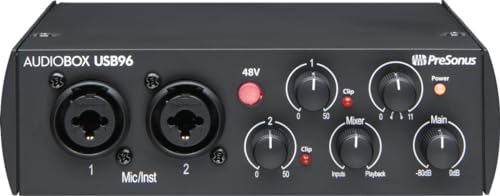
- Two Class-A mic preamps in a bus-powered box
- Up to 24-bit/96 kHz recording with MIDI I/O
- Includes Studio One Artist and other software
Best For: Beginners needing a simple portable 2-channel interface
ADAT Expansion Preamplifier

- Eight-channel mic preamp stage with Midas preamps
- ADAT optical out for expanding a compatible interface
- 24-bit conversion at 44.1/48 kHz
Best For: Adding eight extra mic inputs to an existing rig
High-Headroom Recording Interface

- Eight MAX-HD mic preamps with up to +75 dB gain
- 32-bit / 192 kHz operation with 124 dB dynamic range
- Auto Gain and re-amp outputs improve workflow
Best For: Engineers and producers wanting fast, transparent multichannel recording
Budget 8-Preamp USB Interface
Behringer UMC1820 Audiophile 18x20 USB Audio/MIDI Interface

- 8 MIDAS mic preamps with phantom power
- 18-in/20-out USB 2.0 with ADAT I/O
- 24-bit/96 kHz recording and MIDI support
Best For: Bands and home studios needing eight mic inputs with expansion
Hybrid Studio Pick
Fender Quantum LT 16 USB-C Audio Interface

- Eight MAX-HD mic preamps with up to +75 dB gain
- 16-in/8-out USB-C design with 14 line inputs
- Loopback, MIDI I/O, and standalone modes
Best For: Hybrid studios and multi-instrument setups needing eight preamps
Mobile Creator Choice
MAONO P2 Hybrid USB Audio Interface

- Dual XLR inputs with 56 dB gain
- Works with phones, tablets, Mac, and PC
- Loopback, mute controls, and direct monitoring
Best For: Podcasters and mobile creators needing flexible dual-input recording
Producer’s 18-Channel Hub
Focusrite Scarlett 18i16 4th Gen

- 18-in/16-out interface with 4 mic preamps
- Includes ADAT, S/PDIF, MIDI, Auto Gain, and Clip Safe
- 24-bit/192kHz converters with 122dB dynamic range
Best For: Home studios needing lots of I/O and expansion
Compact Starter Interface
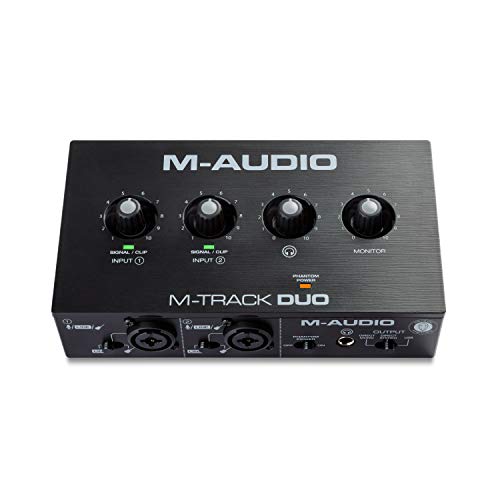
- Two combo XLR/line/instrument inputs
- Transparent Crystal Preamps and direct monitoring
- 48kHz recording with included MPC Beats software
Best For: Beginners and podcasters needing a basic 2-channel interface
Eight-Preamp Studio Rack
Focusrite Scarlett 18i20 4th Gen

- Eight mic preamps for larger recording setups
- 18-in/20-out design with dual ADAT and Word Clock
- Auto Gain, Clip Safe, and 24-bit/192kHz conversion
Best For: Engineers and studios needing eight preamps and full routing
Studio-Grade 8-Preamp Workhorse – Focusrite Clarett+ 8Pre
If you need an audio interface with eight preamps for multitrack sessions, the Focusrite Clarett+ 8Pre is built for high-end recording with plenty of headroom and very low noise. Its eight Clarett+ mic preamps, improved converters, and ADAT expansion make it a practical choice for producers who want clean capture and room to grow.
Best For: Established producers, project studios, and anyone building a serious multi-mic recording setup.
Pros:
- Eight low-noise, low-distortion Clarett+ mic preamps with strong headroom
- All-analogue Air mode on every preamp adds a useful high-frequency lift
- Improved A-D and D-A converters support high-dynamic-range recording and mixing
- ADAT optical input adds eight channels of digital expansion
Cons:
- Requires more setup than a simple 2-channel interface
- Best suited to users who will actually use multiple inputs and expansion
The Clarett+ 8Pre is a strong fit when you want a serious audio interface with eight preamps and studio-focused monitoring and conversion quality. It is especially appealing if you record full bands, layered sources, or plan to expand through ADAT.
Portable Budget Starter – PreSonus AudioBox 96
The PreSonus AudioBox 96 is a compact audio interface for simple recording setups, but it does not match the eight-preamps target in this roundup. It is still useful to consider if you want an affordable, bus-powered 2-channel interface with two Class-A mic preamps, MIDI I/O, and included software for getting started quickly.
Best For: Beginners, portable setups, and small home-recording rigs that only need two inputs.
Pros:
- Two Class-A mic preamps in a portable, bus-powered design
- Includes MIDI I/O for connecting external gear
- Up to 24-bit/96 kHz recording and playback
- Includes Studio One Artist, Ableton Live Lite, and Studio Magic Plug-In Suite
Cons:
- Only a 2-channel interface, so it is not an eight-preamp solution
- Global phantom power may be less flexible than per-channel control
This is a straightforward entry-level interface, but buyers specifically searching for an audio interface with eight preamps will need to look elsewhere. It makes sense mainly as a portable, low-cost option for smaller recording tasks.
ADAT Expansion Preamplifier – Behringer ADA8200
Behringer ADA8200 Audiophile 8 In/8 Out ADAT Audio Interface with Midas Mic Preamplifiers
Check Price On AmazonThe Behringer ADA8200 is a practical way to add eight microphone preamps to a compatible setup through ADAT optical out. If you already have an interface with digital expansion, this unit gives you 8 channels of mic preamplification and 24-bit conversion at 44.1/48 kHz.
Best For: Expanding an existing interface with eight extra mic inputs.
Pros:
- Eight-channel microphone preamplifier in an ADAT-equipped box
- Midas mic preamps provide the front end for added inputs
- 24-bit AD/DA conversion with ADAT optical out
- Simple solution for increasing input count without replacing your main interface
Cons:
- Not a standalone full-featured interface for most workflows
- Maximum sample rate is limited to 48 kHz
For users who need an audio interface with eight preamps in the broader sense of input expansion, the ADA8200 is the most focused add-on here. It is best treated as a preamp expansion unit rather than a primary recording interface.
High-Headroom Recording Interface – PreSonus Quantum HD 8
The PreSonus Quantum HD 8 is a modern audio interface with eight preamps designed for low-latency recording and production. With MAX-HD mic preamps, 32-bit / 192 kHz operation, and a 124 dB dynamic range, it is aimed at users who want a clean front end for tracking, re-amping, and serious studio work.
Best For: Recording engineers, guitarists, and producers who want fast, transparent eight-preamp input capture.
Pros:
- Eight newly designed MAX-HD mic preamps with up to +75 dB of gain
- Low-latency driver and high-performance converters support responsive tracking
- 32-bit / 192 kHz operation with 124 dB dynamic range
- Auto Gain, re-amp outputs, and front-panel/app control add workflow flexibility
Cons:
- Built around Studio One integration, which may matter depending on your workflow
- More advanced feature set may be more than a basic home setup needs
If you want an audio interface with eight preamps and a modern production feature set, the Quantum HD 8 stands out for its speed and transparency. It is a strong pick for users who want to track multiple sources while keeping latency and conversion quality in focus.
Budget 8-Preamp USB Interface – Behringer UMC1820 Audiophile 18×20 USB Audio/MIDI Interface
If you need an audio interface with eight preamps for a multi-mic recording setup, the Behringer UMC1820 gives you a straightforward 18-in/20-out USB path with 8 MIDAS-designed mic preamps and ADAT I/O. It is built for home studios that want plenty of input count, MIDI connectivity, and 24-bit/96 kHz recording without moving into a much higher price tier.
Best For: Bands, podcasters, and home studios needing eight mic inputs plus ADAT expansion.
Pros:
- 8 MIDAS-designed mic preamps with +48V phantom power
- 18 inputs and 20 outputs over USB 2.0
- 24-bit/96 kHz resolution for recording microphones and instruments
- Includes ADAT I/O and MIDI support for flexible setups
Cons:
- Maximum sample rate is 96 kHz, not higher
- Large rack-style footprint compared with compact interfaces
- Uses USB 2.0 rather than newer USB-C connectivity
The UMC1820 stands out for straightforward multi-channel recording, especially if you want eight built-in mic preamps and room to expand later. It is a practical choice when input count matters more than premium extras.
Hybrid Studio Pick – Fender Quantum LT 16 USB-C Audio Interface
For buyers looking for an audio interface with eight preamps and lots of routing flexibility, the Fender Quantum LT 16 is aimed at hybrid studios that use outboard gear, synths, and multi-mic sessions. Its eight MAX-HD mic preamps, 14 line inputs, USB-C connection, and low-latency drivers make it a strong fit when you need a large I/O front end for production work.
Best For: Hybrid studios, multi-instrument setups, and creators who want eight clean preamps plus extensive line inputs.
Pros:
- Eight MAX-HD mic preamps with up to +75 dB of gain
- 16-in/8-out USB-C interface with 14 total line inputs
- Low-latency drivers and pristine converters for monitoring
- Loopback, MIDI I/O, and standalone mixer/preamp modes
Cons:
- More interface than a simple solo or podcast rig needs
- Requires a larger desktop or rack-friendly setup
- Best value depends on using its expanded I/O and routing features
This model is a good fit if you need an audio interface with eight preamps and enough connectivity to handle a busy studio. Its extra line inputs and standalone options make it especially useful for music production workflows that go beyond basic recording.
Mobile Creator Choice – MAONO P2 Hybrid USB Audio Interface
The MAONO P2 is not an audio interface with eight preamps, but it is a practical dual-XLR option for creators who want compact recording, loopback, and phone or tablet compatibility. If your buying decision is driven more by mobile workflow, direct monitoring, and routing features than by a large mic-pre count, this model is worth a look.
Best For: Podcasters, streamers, and mobile creators who need flexible dual-input recording.
Pros:
- Dual XLR inputs with 56 dB gain for condenser and dynamic mics
- Works with Mac, PC, iPhone, Android, and tablets
- Loopback, mute controls, and direct monitoring for streaming
- 24-bit/192 kHz recording with ASIO support
Cons:
- Only two XLR inputs, not eight preamps
- Not suited to multi-mic band recording
- Best for compact creator setups rather than expanded studio rigs
As a creator-focused interface, the P2 is strong on portability and routing, but it does not match the input count of an eight-preamp interface. It makes more sense when you value flexible device compatibility and content-creation features over larger studio expansion.
Producer’s 18-Channel Hub – Focusrite Scarlett 18i16 4th Gen
If you want an audio interface with eight preamps-level routing flexibility without stepping up to a full rack unit, the Scarlett 18i16 is built for multitrack recording, songwriting, and podcasting workflows. It offers 18 inputs and 16 outputs, plus 4th Gen preamps, ADAT, S/PDIF, MIDI, Auto Gain, and Clip Safe for a fast, controlled session.
Best For: Home studios that need lots of I/O, modern recording tools, and expansion options for larger sessions.
Pros:
- 18-in/16-out layout with four mic preamps, two Hi-Z inputs, eight line inputs, ADAT, S/PDIF, and MIDI
- 4th Gen preamps deliver up to 69dB of gain for flexible mic recording
- 24-bit/192kHz converters and 122dB dynamic range for detailed capture
- Auto Gain and Clip Safe help set levels quickly and avoid clipping
Cons:
- It has four mic preamps, so it does not meet the eight-preamp requirement on its own
- More interface than a simple two-channel setup if you only need basic recording
This is a strong choice if you want a capable desktop interface with pro-style features and room to grow. The included software bundle also adds value for users starting or expanding a studio.
Compact Starter Interface – M-AUDIO M-Track Duo
The M-Track Duo is a simple USB audio interface for recording, streaming, and podcasting when you want an easy setup more than an audio interface with eight preamps. It gives you two combo XLR/line/instrument inputs, transparent Crystal Preamps, 48kHz audio, and direct monitoring for fuss-free tracking.
Best For: Beginners who want a lightweight two-channel interface for vocals, guitar, and streaming.
Pros:
- Two combo XLR/line/instrument inputs with phantom power
- Transparent Crystal Preamps for microphone recording
- USB/direct monitoring switch helps reduce latency
- Includes MPC Beats software to get started
Cons:
- Only two channels, so it is far from an eight-preamp interface
- 48kHz max sample rate is modest compared with higher-end units
This is a practical budget pick for basic recording tasks, but it is not designed for larger multi-mic sessions. Choose it if simplicity and portability matter more than expandability.
Eight-Preamp Studio Rack – Focusrite Scarlett 18i20 4th Gen
If you are shopping for an audio interface with eight preamps, the Scarlett 18i20 is the clear fit in this group. It packs eight mic preamps, 18 inputs, 20 outputs, dual ADAT, S/PDIF, MIDI, Word Clock, and a talkback mic, making it well suited to larger recording setups and multitrack sessions.
Best For: Engineers and serious home studios that need eight mic preamps and extensive connectivity.
Pros:
- Eight mic preamps for multi-mic recording
- 18 inputs and 20 outputs with dual ADAT, S/PDIF, MIDI, and Word Clock
- 4th Gen preamps offer up to 69dB of gain
- Auto Gain and Clip Safe support faster, safer level setting
Cons:
- Bulkier than compact desktop interfaces at 17.37 inches deep and 8 pounds
- May be more interface than needed for simple solo recording
This model is the most direct match for buyers seeking an audio interface with eight preamps. Its feature set is aimed at larger sessions, with enough I/O and workflow tools to handle expanding studio needs.
How We Picked the Best Audio Interface with Eight Preamps
We prioritized models that give you eight mic preamps or an eight-channel recording path with practical studio value, not just big channel counts on paper. We also looked at preamp noise performance, converter quality, USB-C or USB stability, ADAT expandability, software support, and how well each unit fits common recording workflows.
Quick Comparison: What Matters Most
Some buyers need the simplest path to eight microphones in one room. Others need more line inputs, ADAT expansion, MIDI, or a low-latency interface for heavier DAW sessions. In practice, the best choice often comes down to whether you want a straightforward Audio Interface with Eight Preamps for tracking drums and bands, or a more expandable interface that can grow with your studio.
Key Buying Factors for an Audio Interface with Eight Preamps
Preamp Quality and Gain
Look for enough clean gain for dynamic microphones and quiet sources. A strong eight-preamp interface should stay usable without adding noticeable hiss when levels are pushed.
Input Type Mix
Not every eight-preamp unit is built the same. Some prioritize eight mic inputs, while others combine mic, line, and instrument connectivity. Choose based on whether you record vocals, live bands, hardware synths, or a mix of all three.
Expandability
If your setup may grow, ADAT input and output support can be a major advantage. It lets you add more channels later without replacing your main interface.
Latency and Driver Reliability
For tracking through software, low-latency performance matters as much as raw specs. Reliable drivers and solid monitoring tools are especially important for singers, podcasters, and musicians recording in real time.
Software and Workflow
Loopback, routing software, bundled DAWs, and mixer control apps can save time if you stream, podcast, or manage complex monitor mixes.
Who Should Buy Which Audio Interface with Eight Preamps?
If you record full bands, drum kits, or multi-mic sessions, choose a true Audio Interface with Eight Preamps and strong expansion options. If you mainly record one or two sources but want room to grow, a smaller interface with ADAT expandability may be the smarter value. Podcasters and streamers should prioritize easy monitoring, loopback, and dependable USB performance, while producers should focus on conversion quality, routing flexibility, and software control.
For most buyers, the best eight-preamp interface is the one that matches your current channel needs while leaving enough headroom for future sessions. That balance is what keeps a studio setup useful long after the first upgrade.