Choosing the right interface can make a bigger difference than almost any other part of a home studio. A good high resolution USB audio interface gives you cleaner recordings, better monitoring, and a smoother workflow.
Below, we’ve rounded up 10 options for musicians, podcasters, streamers, and creators who want reliable audio quality without overbuying features they won’t use.
Best 10 High Resolution USB Audio Interface Picks for 2026
Solo Studio Starter
Focusrite Scarlett Solo 3rd Gen

- 24-bit/192kHz recording and playback
- Air mode adds extra clarity
- 1 XLR preamp and 1 Hi-Z input
Best For: Solo musicians and podcasters needing a compact, high-quality interface
Portable Value Rack
PreSonus AudioBox 96 25th Anniversary
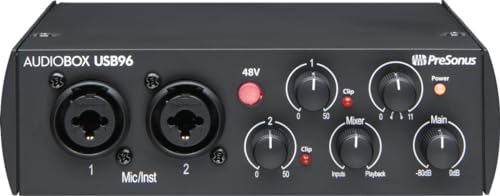
- 24-bit/96kHz recording and playback
- Two Class-A preamps with MIDI I/O
- Bus-powered and software-rich bundle
Best For: Portable home recordists who want good value and bundled software
Colorful Creator Pick

- 24-bit/192kHz high-fidelity converters
- USB-C bus power with no drivers required
- Two combo inputs plus direct monitoring
Best For: Creators who want a simple, portable plug-and-play interface
Multi-Input Workhorse
Behringer UMC404HD 4x4 Interface

- 4x4 I/O with MIDI for flexible routing
- 24-bit/192kHz audiophile resolution
- Four MIDAS mic preamps with phantom power
Best For: Bands and producers needing more inputs, outputs, and MIDI
Portable Starter Interface
M-AUDIO M-Track Solo USB Audio Interface

- 48kHz USB recording for Mac or PC
- Combo XLR/line input plus instrument input
- Direct monitoring and MPC Beats included
Best For: Beginners recording vocals, guitar, podcasting, or streaming
High-Detail Studio Pick
Behringer UMC202HD 24-Bit/192 kHz USB Interface

- 24-bit/192 kHz high-resolution converters
- Two combo XLR/TRS inputs with phantom power
- Midas-designed preamps and direct monitoring
Best For: Higher-resolution home recording with microphones and instruments
Compact 96kHz Creator Pick
Artesia A22xt High-Resolution USB Interface

- 24-bit/96kHz recording for clear capture
- XLR and 1/4-inch TRS input support
- 48V phantom power with ultra-low latency monitoring
Best For: Solo recording, streaming, and podcasting on a compact setup
Studio Multichannel Pick
Behringer UMC1820 18x20 USB Interface

- 18x20 USB 2.0 I/O for multi-source recording
- 24-bit/96kHz resolution with ADAT expansion
- 8 MIDAS-designed mic preamps with phantom power
Best For: larger home studios needing many inputs and MIDI
Creator-Friendly Compact Pick
MAONO PS22 Lite USB Audio Interface

- 24-bit/192kHz recording with 106dB dynamic range
- Loopback, ASIO support, and routing software
- Compact plug-and-play design with direct monitoring
Best For: streamers and beginners recording vocals or guitar
Desktop Mixing Pick
Creative Live! Audio A3 USB Interface

- 24-bit/96kHz playback and recording support
- Zero-latency direct monitoring
- Balanced stereo outputs with level control
Best For: small studios and streamers needing simple real-time monitoring
Solo Studio Starter – Focusrite Scarlett Solo 3rd Gen
If you want a high resolution USB audio interface for vocals, guitar, and podcasting, the Scarlett Solo 3rd Gen keeps things simple while still delivering studio-quality capture. Its 24-bit/192kHz converters, low-noise outputs, and Air mode make it a practical choice for solo creators who want clean recordings without a complicated setup.
Best For: Solo musicians, vocalists, and podcasters who want a compact interface with strong conversion quality.
Pros:
- 24-bit/192kHz recording and playback for detailed, studio-grade sound
- Air mode adds extra clarity to acoustic instruments and vocals
- 1 XLR mic preamp plus 1 Hi-Z instrument input for direct recording
- Low-noise balanced outputs and headphone monitoring for clean playback
Cons:
- Only one mic preamp, so it is not built for multi-mic recording
- Fewer input options than larger 2-channel or 4-channel interfaces
This is a strong fit if your priority is simple operation and high-quality results in a compact footprint. It is especially appealing for creators who need polished sound for one voice or one instrument at a time.
Portable Value Rack – PreSonus AudioBox 96 25th Anniversary
The PreSonus AudioBox 96 is a practical high resolution USB audio interface for users who want portability, software value, and straightforward 2-channel recording. With 24-bit/96kHz converters, dual Class-A mic preamps, MIDI I/O, and bus power, it is well suited to compact home setups and mobile sessions.
Best For: Beginners and portable recordists who want a budget-friendly interface with included software and MIDI support.
Pros:
- 2 Class-A mic preamps for easy stereo or dual-source recording
- 24-bit/96kHz converters for solid studio-grade capture and playback
- Includes Studio One Artist, Ableton Live Lite, and Studio Magic Plug-In Suite
- USB bus power makes it easy to use on the go
Cons:
- Top sample rate is 96kHz, lower than 192kHz competitors
- Only a 1-year manufacturer warranty
This interface stands out when you want a lot of features for the money, especially bundled software and MIDI I/O. It is a sensible pick for recording at home or carrying in a backpack to sessions.
Colorful Creator Pick – Alloy Red 2×2 USB-C Interface
This high resolution USB audio interface is aimed at creators who want simple USB-C connectivity, 24-bit/192kHz capture, and a compact one-cable setup. The class-compliant design, zero-latency monitoring, and combo inputs make it a convenient choice for PC, Mac, and iOS-style mobile workflows.
Best For: Mobile and desktop creators who want a plug-and-play 2-channel interface with modern USB-C convenience.
Pros:
- 24-bit/192kHz converters for high-fidelity recording
- USB-C bus power and plug-and-play operation with no drivers required
- Two combo jacks support vocals, instruments, and Hi-Z guitar recording
- Direct monitor plus 3.5mm headphone jack for zero-latency tracking
Cons:
- Details only list Windows compatibility, so platform support appears more limited than some rivals
- Fewer channels than larger interfaces for bigger setups
Its appeal is simplicity: one cable, high-resolution audio, and a flexible front end for common recording tasks. That makes it a strong fit for streamlined home studios and portable setups.
Multi-Input Workhorse – Behringer UMC404HD 4×4 Interface
If you need a high resolution USB audio interface with more routing flexibility, the Behringer UMC404HD offers 4×4 audio/MIDI connectivity and 24-bit/192kHz conversion. Its four MIDAS-designed mic preamps, MIDI I/O, and impact-resistant metal chassis make it a solid option for more involved recording sessions.
Best For: Small bands, multi-source recording, and users who want extra inputs and outputs.
Pros:
- 4 inputs and 4 outputs with MIDI I/O for expanded connectivity
- 24-bit/192kHz resolution for professional audio quality
- Four MIDAS-designed mic preamps with +48V phantom power
- Metal chassis adds durability for studio or mobile use
Cons:
- Larger and heavier than compact 2-channel interfaces
- Listed OS support is older in the supplied details
This model is a better match when simple solo tracking is not enough and you need more I/O headroom. It leans toward function and durability, making it a practical tool for more demanding setups.
Portable Starter Interface – M-AUDIO M-Track Solo USB Audio Interface
If you want a high resolution USB audio interface for basic recording, podcasting, or streaming, the M-AUDIO M-Track Solo keeps things simple while covering the essentials. It offers 48kHz audio resolution, a combo XLR/line input with phantom power, a separate line/instrument input, and direct monitoring for low-latency sessions.
Best For: Beginners and creators who need a compact USB interface for vocals, guitar, streaming, or podcasting.
Pros:
- 48kHz resolution for clean, practical recording on Mac or PC
- Combo XLR/line input plus separate line/instrument input for flexible source capture
- Zero-latency monitoring with USB/Direct switch
- Includes MPC Beats software to get started quickly
Cons:
- Max sample rate is 48kHz, so it is not the highest-resolution option here
- Only 2 channels, which limits larger recording setups
- Best suited to simple home recording rather than multi-input production
This is a practical entry-level interface if your priority is ease of use and a straightforward signal path. It gives you the tools to record microphones and instruments without adding complexity, but buyers wanting more detailed conversion should look at the higher-sample-rate models in this roundup.
High-Detail Studio Pick – Behringer UMC202HD 24-Bit/192 kHz USB Interface
The Behringer UMC202HD is a strong high resolution USB audio interface choice if you want 24-bit/192 kHz recording with two combo inputs and solid monitoring tools. Its Midas-designed mic preamps, direct monitoring, and phantom power make it well suited to recording microphones, instruments, and line-level sources on a Mac or Windows computer.
Best For: Musicians and home studio users who want higher-resolution conversion and two-input flexibility.
Pros:
- 24-bit/192 kHz converters for high-resolution recording
- Two combo XLR/TRS inputs for mics, instruments, or line sources
- Midas-designed mic preamps for quality audio reproduction
- Direct monitoring with dedicated phones output level control
Cons:
- Listed compatibility details focus on Windows in the supplied specs
- Only 2 inputs and 2 outputs, so it is not built for larger sessions
- More feature-rich than a starter interface, which may be more than some casual users need
If your buying priority is resolution and clean input handling, this model stands out. The 192 kHz spec and Midas preamps give it a more studio-oriented profile than basic 48 kHz interfaces, while still keeping the workflow simple.
Compact 96kHz Creator Pick – Artesia A22xt High-Resolution USB Interface
The Artesia A22xt is a high resolution USB audio interface built for straightforward music production, streaming, and podcasting with 24-bit/96kHz recording. It pairs XLR and 1/4-inch TRS input support with 48V phantom power and real-time monitoring, making it a practical option for small recording setups.
Best For: Solo creators who want a compact 96kHz interface for vocals, instruments, or streaming.
Pros:
- 24-bit/96kHz recording for detailed, high-resolution capture
- XLR and 1/4-inch TRS inputs with 48V phantom power
- Ultra-low latency monitoring for real-time playback while recording
- USB plug-and-play setup for PC or Mac
Cons:
- Only 2 channels, so it is not ideal for bigger multi-input projects
- Supplied compatibility details are centered on personal computer use
- Includes Bitwig 8 Track Artist software rather than a broader bundle
This interface lands between a starter unit and a more studio-focused model, with a strong emphasis on clean 96kHz recording. It is a sensible pick if you want higher-detail audio without paying for extra complexity you may not use.
Studio Multichannel Pick – Behringer UMC1820 18×20 USB Interface
If you need a high resolution USB audio interface for a more demanding recording setup, the Behringer UMC1820 is built around 18×20 USB 2.0 I/O, 24-bit/96kHz resolution, and ADAT expansion. It’s a practical fit for tracking multiple microphones and instruments at once while keeping latency low.
Best For: Home studios and project rooms that need many inputs, MIDI support, and expanded mic recording.
Pros:
- 18 inputs and 20 outputs for larger recording sessions
- 24-bit/96kHz audio quality for detailed capture
- 8 MIDAS-designed mic preamps with +48V phantom power
- ADAT I/O and MIDI support add flexibility
Cons:
- May be more interface than small solo setups need
- Larger desktop footprint than compact 2-channel models
The UMC1820 stands out when channel count matters more than portability. If your priority is recording several sources cleanly and expanding later, it offers a strong balance of resolution, routing options, and mic input capacity.
Creator-Friendly Compact Pick – MAONO PS22 Lite USB Audio Interface
The MAONO PS22 Lite is a high resolution USB audio interface designed for creators who want an easy path into recording, streaming, and guitar/vocal work. It records at 24-bit/192kHz, includes loopback and ASIO support, and adds routing software for more control over your setup.
Best For: Streamers, beginners, and home creators who want compact, flexible recording for vocals and guitar.
Pros:
- 24-bit/192kHz recording with 106dB dynamic range
- Low-noise preamp with up to 56dB gain and 48V phantom power
- Loopback, ASIO driver support, and ProStudio routing software
- Compact, plug-and-play design with direct monitoring
Cons:
- Compact layout may feel limiting for more complex studio builds
- Better suited to focused creator setups than large recording rigs
This interface is a strong choice if you want high-resolution recording without a complicated learning curve. Its mix of portable hardware and creator-focused features makes it especially useful for content production, streaming, and simple music recording.
Desktop Mixing Pick – Creative Live! Audio A3 USB Interface
The Creative Live! Audio A3 is a high resolution USB audio interface aimed at users who want clean recording plus straightforward monitoring and mixing. It supports up to 24-bit/96kHz, adds zero-latency direct monitoring, and includes a dedicated mobile device channel for flexible routing.
Best For: Creators who want a simple desktop interface with balanced outputs and real-time monitoring.
Pros:
- 24-bit/96kHz playback and recording support
- Zero-latency direct monitoring for live use
- 4-channel mixer with a dedicated mobile device input
- Balanced stereo outputs with level control
Cons:
- 4-channel design is more limited than larger studio interfaces
- Maximum sample rate tops out at 96kHz
For small studios and streaming setups, the Audio A3 offers a sensible mix of resolution and control. It’s most appealing if you value easy source balancing and real-time monitoring over more advanced multichannel expansion.
How We Picked the Best High Resolution USB Audio Interface
We focused on core buyer priorities: audio resolution, preamp quality, input and output flexibility, monitoring features, driver support, and overall value. For a High Resolution USB Audio Interface, the best choice is not always the one with the highest channel count; it’s the one that matches your recording needs and computer setup.
Quick Comparison
In this group, compact 1×2 and 2×2 interfaces are best for solo recording, streaming, and podcasting, while 4×4 and 18×20 models suit bands, multi-mic sessions, and more advanced studios. Several options also add loopback, MIDI, or ADAT expansion, which can be important if you plan to grow your system.
Key Buying Factors for a High Resolution USB Audio Interface
Resolution and Sample Rate
Look for at least 24-bit/96kHz support, with 24-bit/192kHz common on many current models. Higher specs can help capture detail, but real-world quality also depends on the analog design and drivers.
Inputs, Outputs, and Monitoring
Match the interface to your sources. XLR inputs are essential for microphones, combo inputs help with instruments and line-level gear, and direct monitoring reduces delay when tracking vocals or guitar.
Preamp Quality and Noise Performance
Cleaner gain is crucial if you use dynamic microphones or record quiet sources. If you want a High Resolution USB Audio Interface that stays usable in real sessions, low-noise preamps matter as much as the headline resolution.
Connectivity and Software Support
Check for USB compatibility with your computer or mobile device, plus driver stability on Windows and macOS. Features like loopback, MIDI I/O, phantom power, and routing software can be major advantages for streamers and hybrid creators.
Who Should Buy Which High Resolution USB Audio Interface?
Solo vocalists, guitarists, and podcasters usually do best with compact 1×2 interfaces. If you want a more flexible home studio setup, a 2×2 model is often the sweet spot. Creators who need multiple mics, external gear, or future expandability should consider 4×4 or larger units, especially if they plan to record drums, ensembles, or complex streaming setups.
If your priority is simple, dependable recording, choose the smallest interface that covers your inputs and monitoring needs. If you expect your setup to grow, it often pays to step up once rather than replace the interface later.