Finding the right cabinet for upright bass is about more than wattage. You need clear low-end support, enough headroom for realistic stage volume, and a sound that stays musical instead of muddy.
This roundup highlights 10 strong options across compact, vertical, and larger cabinet formats so you can match tone, portability, and projection to your playing situation.
Best 10 Bass Speaker Cabinet for Upright Bass Picks for 2026
Compact High-Power Pick

- 500W cabinet with 12-inch woofer
- Tweeter has on/off and two level settings
- Link jack supports a second cabinet
Best For: Players wanting compact, articulate bass support with easy expansion
Portable 2x10 Option

- Lightweight ported plywood enclosure
- Tweeter has three-position control
- 700W program rating with Speakon and 1/4" inputs
Best For: Gigging players who want a light, defined 2x10 cabinet
Large-Format Projection

- 4x10 cabinet with aluminum-cone drivers
- 400W RMS and 8-ohm rating
- Dual-ported plywood build
Best For: Players who want strong projection and a big 4x10 footprint
High-Output 4x10
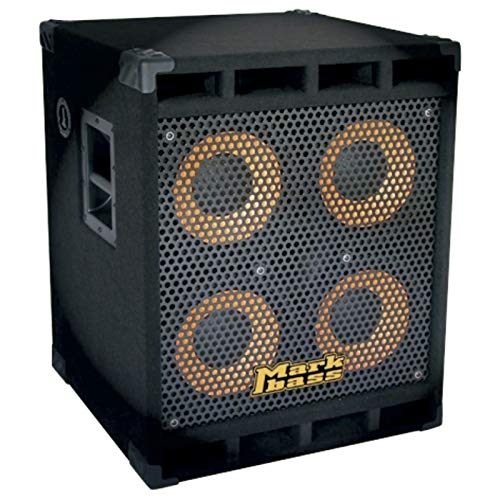
- 800W 4x10 cabinet with 8-ohm load
- Front-ported design with neodymium speakers
- Built for live performance and pro audio
Best For: Professionals who want maximum headroom from a 4x10 cabinet
Club-Ready 2x10 Power
Fender Rumble 2x10 Bass Cabinet

- 700W program / 350W continuous rating
- Two 10-inch Eminence speakers in a ported plywood cab
- Horn with attenuator switch for extra control
Best For: Players who want a lightweight 2x10 cabinet with stage-ready output
Compact Vertical Performer
TC Electronic BC208 2x8 Cabinet

- 200W cabinet with two 8-inch custom drivers
- Compact, lightweight, and easy to carry
- Vertical stackable design with 1/4-inch link connections
Best For: Upright bass players or bassists who want a compact, lightweight cabinet for stage and studio use
Budget 2x10 Workhorse
Seismic Audio SA-210 Bass Cabinet

- 400W peak / 200W RMS power handling
- Two 10-inch woofers with 8-ohm wiring
- Daisy-chain support and dual 1/4-inch inputs
Best For: Players who want a budget-friendly 2x10 cabinet with simple wired connectivity and solid power handling
Fender Precision Pick
Rumble 115 1x15 300W Bass Cabinet
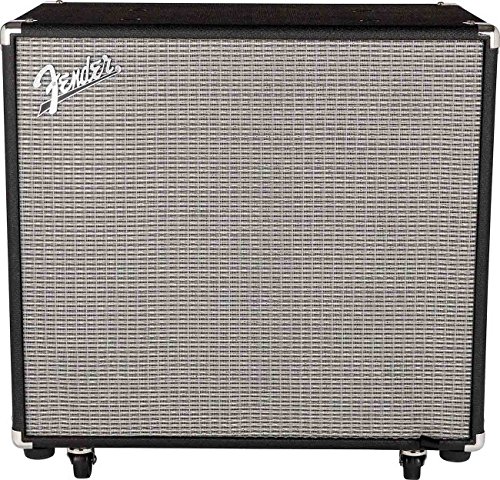
- Revoiced for detail and low-frequency translation
- Eminence driver with HF compression tweeter
- Magnetic head-attachment system adds convenience
Best For: Players wanting a clean, detailed 1x15 cabinet with Fender styling
Seismic Power Choice

- Dual 15-inch woofers for big low-end output
- 4-ohm mono, 600W RMS / 1200W peak handling
- 99 dB sensitivity and rugged plywood build
Best For: Players needing a loud, high-output 2x15 cabinet
Seismic Punch Option
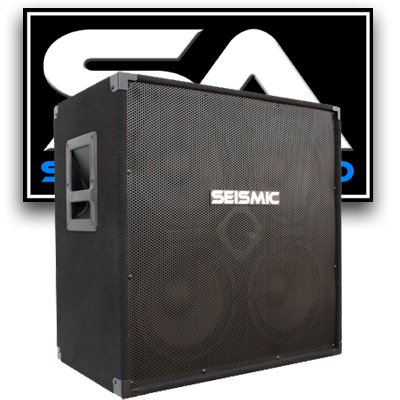
- Four 10-inch woofers for punch and response
- Built-in horn for added top-end presence
- 400W RMS and rugged recessed-handle cabinet
Best For: Bassists wanting a punchy 4x10 with extra clarity
Compact High-Power Pick – BOSS Katana Cabinet 112 Bass
If you need a bass speaker cabinet for upright bass that stays compact but still delivers serious output, the BOSS Katana Cabinet 112 Bass is built for full, articulate low-end support. Its 12-inch Eminence Neodymium woofer, tweeter with switchable levels, and 500-watt capacity make it a practical match for players who want clarity and control from a small cabinet.
Best For: Upright bass players and bassists who want a compact, high-output cabinet with flexible top-end control.
Pros:
- 500-watt power handling for professional bass applications
- 12-inch Eminence Neodymium Series woofer for punchy, articulate sound
- High-frequency tweeter with on/off switch and two preset level settings
- Speaker input and link jack for adding a second cabinet
Cons:
- Designed primarily for bass amplification, not a dedicated upright-bass-only cabinet
- Single 12-inch design may not deliver the same spread as larger multi-driver cabs
This is a strong choice if you want a small footprint without giving up power or flexibility. The tweeter controls help you tailor brightness to the room, while the link jack makes expansion easy when you need more volume or coverage.
Portable 2×10 Option – Fender Rumble 210 CABINET V3
The Fender Rumble 210 CABINET V3 is a practical bass speaker cabinet for upright bass if you want a lightweight 2×10 format with clear high-end definition. Its plywood ported enclosure, high-frequency compression tweeter, and 700-watt program rating make it a useful option for players who want portability without giving up headroom.
Best For: Upright bass players and gigging bassists who want a portable 2×10 cabinet with clear top-end control.
Pros:
- Featherweight, portable plywood ported enclosure
- High-frequency compression tweeter with three-position switch
- Rated at 700 watts program / 350 watts continuous
- Speakon jack plus standard 1/4″ input for flexible connections
Cons:
- 2×10 format may be less spacious than larger cabinets
- Best paired with Fender Rumble heads or combo for matched appearance
This cabinet is aimed at players who prioritize easy transport and a clean, defined response. If you need a straightforward cab that can handle rehearsal and stage use while staying manageable, it fits that role well.
Large-Format Projection – Hartke 410XL V2 Bass Cabinet
For a bass speaker cabinet for upright bass with a more traditional 4×10 feel, the Hartke 410XL V2 offers strong output and a wide frequency range. Its 400W RMS rating, dual-ported cabinet, and proprietary aluminum 10-inch cones are geared toward tight low end and clear projection.
Best For: Upright bass players and bassists who want a large-format cabinet with focused low-end response.
Pros:
- 400W RMS power handling at 8 ohms
- Four proprietary 10-inch aluminum-cone drivers
- Frequency response listed at 30 Hz to 5 kHz
- Dual-chamber, dual-ported 3/4″ plywood construction
Cons:
- Heavy at 90.4 pounds
- No tweeter is listed in the supplied notes
This cabinet makes sense when you want bigger projection and a more substantial stage presence. The aluminum cones and ported design suggest a responsive, punchy voice that can suit live playing and rehearsal use.
High-Output 4×10 – Markbass Standard 104HF
If you’re shopping for a bass speaker cabinet for upright bass and want maximum headroom, the Markbass Standard 104HF brings an 800-watt 4×10 format with front-ported design and neodymium speakers. It is built for live performance and professional audio use, making it a serious option when you need scale and output.
Best For: Upright bass players and professionals who need a high-power 4×10 cabinet for live performance.
Pros:
- 800-watt output with 8-ohm impedance
- Four 10-inch front-ported Markbass neodymium speakers
- Built for live performance and professional audio use
- Compact enough for a 4×10 at 23.35″ D x 19.02″ W x 23.54″ H
Cons:
- No tweeter is mentioned in the supplied notes
- Heavier and larger than smaller 1×12 or 2×10 cabinets
This is the most power-forward option in the group, so it suits players who want a bigger rig and plenty of output on stage. The front-ported design and neodymium speakers help keep the cabinet focused while delivering strong wattage.
Club-Ready 2×10 Power – Fender Rumble 2×10 Bass Cabinet
If you need a bass speaker cabinet for upright bass that can handle louder gigs and still stay relatively easy to move, the Fender Rumble 2×10 is worth a look. Its two 10-inch Eminence speakers, ported plywood enclosure, and compression driver horn are aimed at delivering full bass response with extra clarity up top.
Best For: Players who want a lightweight 2×10 cabinet with stage-ready output and a horn for added definition.
Pros:
- 700W program / 350W continuous rating for solid output headroom
- Two 10-inch Eminence speakers in a lightweight ported plywood cabinet
- Compression driver horn with attenuator switch for tone shaping
- Removable grille and magnetic amp-head attachment system add convenience
Cons:
- Designed around bass guitar use, so upright players may need to fine-tune EQ
- At 30 pounds, it is portable but still a substantial cabinet
This is the most versatile high-output option in the group, especially if you want a compact 2×10 format with more top-end control than a basic cab. It should suit players who value projection and flexibility over ultra-minimal size.
Compact Vertical Performer – TC Electronic BC208 2×8 Cabinet
TC Electronic BC208 Vertical 200 Watt 2 x 8" Portable Bass Cabinet with Superior Tone
Check Price On AmazonIf you want a bass speaker cabinet for upright bass that stays compact without giving up usable stage volume, the TC Electronic BC208 is built around portability. Its vertical 2×8 layout, custom drivers, and stackable design make it a practical choice for smaller rigs and quick setups.
Best For: Upright bass players or bassists who want a compact, lightweight cabinet for stage and studio use.
Pros:
- Compact and lightweight at 26.4 pounds
- Two 8-inch custom drivers for deep fundamental bass tone
- Vertical cabinet design can be stacked with other cabinets
- Dual speaker link connections on premium 1/4-inch connectors
Cons:
- 200-watt output is lower than the larger cabinets in this roundup
- 2×8 format may not move as much air as a 2×10 setup
This cabinet makes sense if portability is a priority and you want a smaller footprint for rehearsals, recording, or modest live gigs. It is especially appealing when you value easy transport and a tidy vertical layout.
Budget 2×10 Workhorse – Seismic Audio SA-210 Bass Cabinet
Seismic Audio - 210 Bass Guitar Speaker Cabinet PA DJ 400 Watts 2x10 PRO AUDIO
Check Price On AmazonFor a no-nonsense bass speaker cabinet for upright bass rigs on a budget, the Seismic Audio SA-210 offers a straightforward 2×10 design with plenty of basic utility. It uses dual 10-inch woofers, rear dual ports, and a rugged cabinet build aimed at music performance and recording.
Best For: Players who want a budget-friendly 2×10 cabinet with simple wired connectivity and solid power handling.
Pros:
- 400W peak / 200W RMS power handling for practical gig use
- Two 10-inch woofers with 8-ohm wiring and 97 dB sensitivity
- Dual 1/4-inch jack inputs and daisy-chain capability
- Metal grill, recessed handles, and plywood front panel for ruggedness
Cons:
- Heavier than the other options at 49 pounds
- More basic feature set than the Fender or TC Electronic cabinets
This is a practical choice if you want straightforward performance and value rather than premium extras. Its weight and simple layout make it best for players who prioritize function and affordability over portability.
Fender Precision Pick – Rumble 115 1×15 300W Bass Cabinet
If you want a bass speaker cabinet for upright bass that leans into clarity, low-end translation, and classic Fender feel, the Rumble 115 is a straightforward option. Its revoiced design, Eminence driver, and premium HF compression tweeter are aimed at giving you a detailed, punchy sound in a familiar 1×15 format.
Best For: Players who want a 1×15 cabinet with Fender styling and a clean, detailed low-end response.
Pros:
- Revoiced cabinet focuses on sonic detail and low-frequency translation.
- Includes Eminence drivers and a premium HF compression tweeter.
- Patented Magnetic Rumble Head-Attachment System adds convenience.
- Classic Fender styling with a 15-inch speaker format.
Cons:
- Only one 15-inch speaker, so it may not move as much air as larger multi-driver cabs.
- Listed power output details in the supplied specs are inconsistent, so check compatibility carefully.
For an upright bass setup that needs a compact cabinet with articulate low end and a refined top end, this Fender is built around practical performance. It is best suited to players who value clarity and brand-backed construction over maximum brute-force output.
Seismic Power Choice – SA-215 2×15 Bass Cabinet
For a bass speaker cabinet for upright bass that prioritizes volume and deep projection, the Seismic Audio SA-215 is built like a rugged workhorse. With dual 15-inch woofers, a 4-ohm mono load, and high sensitivity, it is aimed at bigger rooms, louder stages, and setups that need a lot of air moved fast.
Best For: Players who want a loud 2×15 cabinet with strong low-end output and simple wired connectivity.
Pros:
- Dual 15-inch woofers for substantial bass output.
- 4-ohm mono wiring and 600 watts RMS / 1200 watts peak handling.
- High 99 dB sensitivity supports efficient volume delivery.
- Recessed handles, metal grill, and plywood front panel add durability.
Cons:
- Large and heavy at 60 pounds, so portability is limited.
- Basic feature set with no horn or advanced voicing controls listed.
This cabinet is best when you need size, punch, and straightforward stage utility rather than a compact footprint. Its dual-15 design and rugged build make it a strong match for players who need powerful low-end reinforcement.
Seismic Punch Option – SA-410H 4×10 Bass Cabinet
Seismic Audio - 410 Bass Guitar Speaker Cabinet with Horn PA DJ 400 Watts 4x10 4 10
Check Price On AmazonIf your bass speaker cabinet for upright bass needs a tighter, more responsive 4×10 format, the Seismic Audio SA-410H brings a classic setup with a built-in horn. Its four 10-inch woofers, 8-ohm wiring, and 400-watt RMS rating make it a practical choice for players who want definition as well as punch.
Best For: Bassists who want a 4×10 cabinet with a horn and a balanced mix of punch and clarity.
Pros:
- Four 10-inch woofers offer a familiar punchy 4×10 response.
- Built-in horn adds extra upper-frequency presence.
- 400 watts RMS / 800 watts peak provides solid power handling.
- Full metal grill, recessed handles, and plywood front panel support durability.
Cons:
- Bulkier than a single-15 cabinet and may be less convenient to transport.
- Horn-equipped voicing may be more aggressive than some upright bass players prefer.
For players who want a cabinet that can stay articulate while still delivering plenty of punch, this Seismic Audio model is an easy fit. The 4×10 layout and horn make it well suited to louder playing situations where definition matters.
How We Picked the Best Bass Speaker Cabinet for Upright Bass
We focused on cabinet designs that can work well as a Bass Speaker Cabinet for Upright Bass, prioritizing clean low-frequency response, practical power handling, sensitivity to fingerstyle dynamics, and real-world portability. We also considered enclosure size, driver configuration, and whether the cabinet is likely to provide enough definition for acoustic or amplified upright bass.
Quick Comparison
In general, smaller 2×8 and 2×10 cabinets are better when you want easier transport and tighter, more controlled response. 4×10 and 2×15 options usually deliver more volume and low-end authority, which can help on louder stages but may be heavier and less convenient. A 1×15 cabinet can be a good middle ground if you want fuller low end without jumping to the largest formats.
Key Buying Factors for a Bass Speaker Cabinet for Upright Bass
Tone and Clarity
Upright bass often benefits from cabinets that keep the fundamental notes clear without overemphasizing boom. Look for balanced mids and controlled lows, especially if you use a pickup and want the acoustic character to come through.
Cabinet Size and Driver Layout
Smaller drivers like 8-inch or 10-inch speakers can offer faster response and better note definition. Larger configurations can produce more air movement and depth, but they may need careful EQ to avoid low-end buildup.
Power Handling and Headroom
Choose a cabinet with enough wattage capacity to handle your amp comfortably, but remember that wattage alone does not guarantee loudness or tone. Headroom matters if you play with drums or electric instruments and need the cabinet to stay clean at volume.
Portability
If you travel often, weight, footprint, and carry convenience can matter as much as sound. Compact vertical cabinets are often easier to move, while larger multi-driver models are better suited to fixed rehearsal spaces or stage setups.
Who Should Buy Which Bass Speaker Cabinet for Upright Bass?
Players needing a compact, easy-to-carry setup should lean toward 2×8 or 2×10 cabinets. Bassists playing jazz, acoustic ensembles, or moderate-volume gigs may prefer these for their definition and manageable size. If you need more projection for louder bands or larger rooms, a 4×10 or 2×15 cabinet is usually the stronger choice. For those wanting a fuller, rounder low end with a simpler footprint, a 1×15 cabinet can be a practical middle option.
For the best results, match the cabinet to your amp power, typical venue size, and the amount of natural upright bass character you want preserved.