Compact DI boxes are a simple way to send instruments and line sources to a mixer or interface with less noise and better balance. They help preserve tone, reduce hum, and make setup easier on stage or in the studio.
In this roundup, we focus on practical, compact DI boxes that offer dependable performance, useful controls, and the right features for common live and recording needs.
Best 10 Compact Di Boxes Picks for 2026
Passive Studio Workhorse
Radial Pro DI Passive Direct Box

- Passive mono DI with custom transformer
- Rugged stainless steel I-beam build
- Balanced XLR output for instruments and consoles
Best For: Simple passive live or studio DI use
Two-in-One Workflow Pick
JOYO JDI-48 Reamping & Active DI Box

- Combines active DI and reamping in one unit
- 48V phantom-powered active DI section
- Includes pad, phase, ground lift, and low-cut
Best For: Players and engineers who want DI plus reamping
Phantom-Powered Compact Choice
Radial Pro48 Active 48-Volt Compact Direct Box
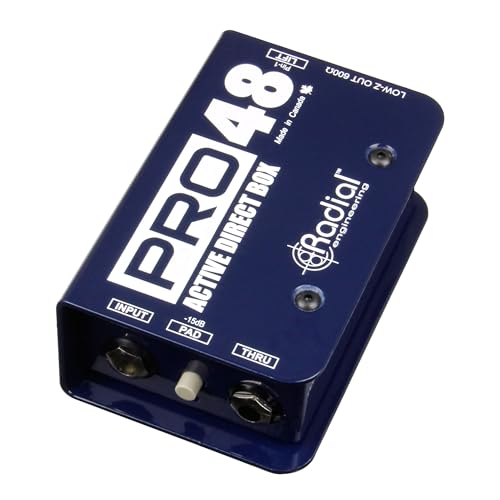
- Active DI with balanced mono output
- -15dB pad for passive guitars and basses
- Compact steel enclosure with low-noise circuit
Best For: Phantom-powered DI use for guitars and basses
Stereo Signal Splitter
Bolanle DB2 Passive 2-Channel DI Box

- Dual-channel passive DI for two sources
- Ground lift switch for hum reduction
- Three attenuation settings for signal control
Best For: Dual-source and stereo-style DI setups
Dual-Channel Active DI
ART DualXDirect Dual Professional Active Direct Box

- Dual-channel active design
- Phantom power or 9V battery
- Attenuation, low-pass, and phase invert controls
Best For: Users needing a dual-channel active DI with flexible control
Rugged Passive DI
Monoprice Sound Block Passive Direct Box

- Passive single-channel DI
- 14-gauge steel construction
- Ground lift and attenuator included
Best For: Rugged, no-power DI use with basic stage controls
Active Speaker-Ready DI
Behringer Ultra-DI DI100 1-Channel Active Microphone/Instrument Direct Box

- Active single-channel DI
- Ground lift and switchable attenuation
- Supports amp speaker output per supplied notes
Best For: Guitar and stage setups needing active DI flexibility
Budget Hum-Canceling Passive DI Box

- Passive DI with hum and buzz cancellation
- Supports guitars, bass, keyboards, and processors
- All-steel chassis for durability
Best For: Simple stage or studio direct-box use
Compact Performance DI Box
Donner Special-I Passive DI Box

- Transformer isolation for cleaner signal handling
- Ground Lift helps reduce ground-loop noise
- Compact size for stage and studio use
Best For: Players wanting a small passive DI with clean output
Dual-Channel Passive DI Box
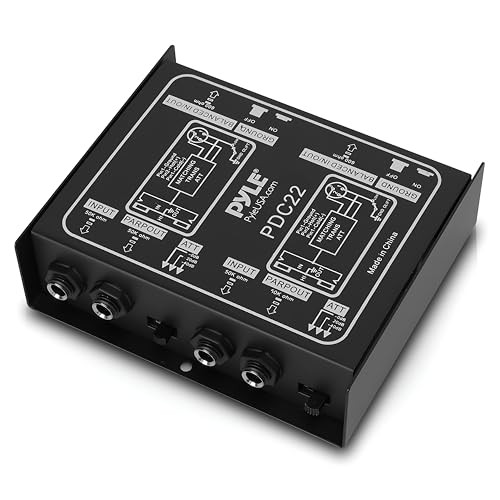
- Two-channel layout for more flexible routing
- Passive design with hum cancellation
- Steel chassis for durability
Best For: Keyboard rigs and multi-source setups
Passive Studio Workhorse – Radial Pro DI Passive Direct Box
If you want compact di boxes that can handle everyday stage and studio duties, the Radial Pro DI Passive Direct Box is built around a rugged passive design with transformer isolation. It is a straightforward choice for turning instrument signals into balanced XLR output for acoustic guitars, bass, keyboards, drum machines, and snake systems.
Best For: Players and engineers who want a simple passive direct box for live or studio use.
Pros:
- Passive mono direct box with a custom transformer for signal conversion
- Rugged I-beam construction and stainless steel enclosure
- Made for acoustic guitars, bass, keyboards, drum machines, and console feeds
- Balanced XLR connectivity for standard pro-audio routing
Cons:
- Mono design only
- No active or phantom-powered features
- Not built for wireless use
This is a dependable no-frills option if your priority is durable passive conversion in a compact format. It fits well when you need a basic DI that is ready for routine gigging and recording.
Two-in-One Workflow Pick – JOYO JDI-48 Reamping & Active DI Box
For buyers comparing compact di boxes that do more than basic signal conversion, the JOYO JDI-48 combines active DI and reamping in one compact unit. It is designed for guitar, bass, and keyboard setups where you want clean balanced output, reamp routing, and practical onboard controls in a pedalboard-friendly size.
Best For: Home, studio, and gigging users who want both DI and reamping in one box.
Pros:
- 2-in-1 active DI and reamping functions
- Runs on 48V phantom power, so no batteries are needed for the active DI section
- Includes 80Hz low-cut, -15dB pad, polarity reverse, and ground lift
- Compact, all-metal chassis with clearly labeled controls
Cons:
- More complex than a basic DI-only box
- Active section depends on phantom power
- Weight and dimensions may be larger than ultra-minimal DI units
This is a practical choice if you need more routing flexibility than a standard direct box offers. Its feature set is especially useful when recording and reamping are part of the same workflow.
Phantom-Powered Compact Choice – Radial Pro48 Active 48-Volt Compact Direct Box
If your compact di boxes shortlist needs a small active model for guitars and basses, the Radial Pro48 is built for phantom-powered operation and balanced mono output. It uses a proprietary low-noise circuit and adds a -15dB pad for handling passive instruments cleanly.
Best For: Guitar and bass players who want an active DI with phantom power.
Pros:
- Phantom-powered active direct box with balanced mono output
- -15dB pad helps with passive guitars and basses
- Proprietary low-noise op-amp circuit
- Compact steel enclosure in a simple gig-ready format
Cons:
- Designed for mono use only
- Requires power to operate as an active DI
- Fewer routing features than multi-function boxes
This is a focused active DI for users who want a clean, professional signal path without extra complexity. It is a sensible fit when phantom power is available and reliability matters more than added functions.
Stereo Signal Splitter – Bolanle DB2 Passive 2-Channel DI Box
Among compact di boxes, the Bolanle DB2 stands out for users who need two channels instead of one. This passive stereo-style DI box is aimed at electric guitars, basses, synthesizers, and other sources that benefit from balanced XLR output, ground-lift noise control, and selectable attenuation.
Best For: Stereo or dual-source setups that need a passive two-channel DI and hum reduction.
Pros:
- Dual-channel passive DI box for multiple sources
- Ground lift switch helps reduce hum and interference
- Three attenuation settings: -0dB, -20dB, and -40dB
- Balanced XLR output for studio or live use
Cons:
- Larger than a single-channel DI box
- Passive design means no active phantom-powered operation
- Not as specialized as dedicated reamping or active DI units
This is a practical option if you need more routing flexibility than a standard mono direct box provides. Its dual-channel layout makes it a useful pick for compact rigs that still need clean, balanced signal transfer.
Dual-Channel Active DI – ART DualXDirect Dual Professional Active Direct Box
The ART DualXDirect is a strong fit for compact di boxes shoppers who want two channels in one rugged unit. Its fully active design runs on phantom power or a 9V battery, and the switchable attenuation, low-pass filter, and phase invert controls make it practical for clean stage and recording routing.
Best For: Players and engineers who need a dual-channel active direct box with extra control options.
Pros:
- Dual-channel design in a compact 1 lb enclosure
- Fully active with phantom power or 9V battery operation
- Switchable 0, -20, and -40 dB attenuation for flexible input handling
- Includes low-pass filter and phase invert switches
Cons:
- Requires power, so it is not a purely passive setup
- More controls than a basic DI may be more than some users need
Overall, this is a practical choice if you want a compact DI box that can handle two sources and give you more shaping tools on the way to the mixer. The neutral sound profile and balanced 600 ohm outputs make it easy to integrate into straightforward live or studio workflows.
Rugged Passive DI – Monoprice Sound Block Passive Direct Box
Monoprice Sound Block Passive Direct Box - With Ground Lift and Attenuator - Stage Right Series
Check Price On AmazonThe Monoprice Sound Block is a straightforward pick for compact di boxes when you want passive operation and basic stage utility. Its heavy-duty 14-gauge steel build and bidirectional impedance matching make it a practical option for microphones, mixers, and audio interfaces.
Best For: Users who want a rugged passive direct box with ground lift and attenuator controls.
Pros:
- Passive design with no power requirement
- Heavy-duty 14-gauge steel construction
- Ground lift and attenuator for basic signal management
- Bidirectional impedance matching
Cons:
- Single-channel design only
- Less feature-rich than active direct boxes
For simple routing jobs, this box keeps the setup uncomplicated and durable. It is a solid value-oriented option if you need a passive DI with the core controls most stage users expect.
Active Speaker-Ready DI – Behringer Ultra-DI DI100 1-Channel Active Microphone/Instrument Direct Box
The Behringer Ultra-DI DI100 is a compact DI box option for users who need an active direct box with practical protection and routing features. It offers switchable input attenuation, ground lift, and a buffering amplifier that is designed to keep the signal balanced and noise-free over long cable runs.
Best For: Guitarists and engineers who need an active single-channel DI with speaker-level handling.
Pros:
- Active design powered by a 9V battery
- Switchable input attenuation and ground lift
- Buffering amplifier for long cable runs
- Can handle amplifier speaker output up to 3,000 watts per supplied notes
Cons:
- Single-channel layout only
- Battery-powered operation means ongoing battery management
This is a useful pick if you want an active DI with a little more flexibility than the simplest models. It stands out most for stage users who need a noise-resistant signal path and the ability to work with amplifier speaker output.
Budget Hum-Canceling Passive DI Box – Pyle PDC21 Passive DI Box
If you want one of the more compact DI boxes for simple stage or studio use, the Pyle PDC21 focuses on the basics: clean signal conversion, hum rejection, and easy connection for guitars, bass, keyboards, and outboard processors. Its passive design and steel chassis make it a practical pick when you need a straightforward direct box without extra complexity.
Best For: Players and engineers who need a simple passive DI for guitars, bass, keyboards, or unbalanced line sources.
Pros:
- Passive direct box with buzz and hum cancellation
- Works with guitars, bass, keyboards, and outboard signal processors
- All-steel chassis for durable everyday use
- Can also handle line output from consumer stereo sources
Cons:
- Single-unit design, so it is less flexible than dual-channel options
- Basic feature set compared with more advanced DI boxes
The PDC21 is a solid no-frills choice if your priority is clean balanced output and hum reduction in a compact format. It suits users who want an easy direct box for practical recording or live sound tasks.
Compact Performance DI Box – Donner Special-I Passive DI Box
The Donner Special-I fits well into a compact DI boxes roundup because it keeps the footprint small while covering the essentials for stage and studio work. It is a passive direct injection box with transformer isolation, ground-lift noise control, and signal matching for instruments feeding mixers or amplifiers.
Best For: Guitar, bass, and keyboard players who want a small passive DI with clean output and ground-loop control.
Pros:
- Passive DI box with transformer isolation
- Ground Lift switch helps reduce typical ground-loop problems
- Supports instrument and line-level unbalanced sources
- Compact instrument size for easier placement
Cons:
- Plastic body materials may feel less rugged than metal-bodied units
- Single-channel design limits multi-source setups
For users who want a straightforward, compact direct box, the Donner keeps the feature set focused on clean conversion and noise reduction. It is a sensible option when you need reliable XLR balancing without extra bulk.
Dual-Channel Passive DI Box – Pyle PDC22 Dual DI Box
When you need compact DI boxes with a little more flexibility, the Pyle PDC22 stands out by adding two channels while still keeping the direct-box workflow simple. It is built to connect guitars, bass, keyboards, and other unbalanced sources to balanced XLR inputs, with hum cancellation and input attenuation for practical live or recording use.
Best For: Users who want a dual-channel passive DI for keyboards, stereo sources, or multiple instruments.
Pros:
- Two-channel design adds more routing flexibility
- Passive DI with buzz and hum cancellation
- Supports guitars, keyboards, and outboard processors
- Steel chassis built for long-term use
Cons:
- Bulkier than single-channel compact DI options
- Basic feature set outside of dual-channel capability
The PDC22 is a useful pick if you want one DI box to handle more than one source without moving to a larger setup. Its dual-channel layout makes it especially practical for keyboard rigs and other multi-output situations.
How We Picked the Best Compact Di Boxes
We prioritized models that are truly practical to carry and easy to integrate into real-world rigs. That means solid signal handling, sensible input and output options, and controls that actually help solve common problems such as ground noise, level mismatch, and overloading.
We also looked for Compact Di Boxes that suit different use cases, including passive and active designs, single- and dual-channel formats, and units with reamp or attenuator features where they add value.
Quick Comparison
If you need the simplest setup, a passive DI is often the easiest choice. If your source is weak, needs more headroom, or benefits from active circuitry, an active DI may be the better fit. Dual-channel units are useful for stereo keyboards, acoustic rigs, and sources that need two channels in one box.
Key Buying Factors for Compact Di Boxes
Passive Vs. Active
Passive DI boxes are typically better for loud, high-output sources and for users who want a low-maintenance tool that does not need power. Active DI boxes can offer stronger performance with quieter sources, longer cable runs, and instruments that benefit from a buffered input.
Inputs, Pad, and Ground Lift
Look for an input pad if you plan to connect hot signals from keyboards, modelers, or powered instruments. A ground lift switch is essential for cutting hum caused by ground loops, especially in live sound environments.
Channel Count and Format
Most Compact Di Boxes are single-channel, but dual-channel models can save space for stereo sources or two-mic instrument setups. Choose the smallest format that still matches your routing needs so your pedalboard, rack, or gig bag stays manageable.
Build Quality and Connectivity
Metal housings, sturdy switches, and reliable XLR and 1/4-inch connectors matter more than flashy extras. A compact DI box should withstand frequent packing, floor traffic, and quick setup changes without adding failure points.
Who Should Buy Which Compact Di Boxes?
Guitarists and bass players who want a straightforward direct connection can usually start with a passive model. Keyboard players, acoustic performers, and anyone feeding longer cable runs may prefer an active unit. If you need stereo support, reamping, or a second channel for flexibility, look at dual-channel Compact Di Boxes instead.
For most buyers, the best choice is the one that solves your specific noise, routing, and portability needs without adding unnecessary complexity.