Choosing the right compressor can make a church mix sound more polished, intelligible, and consistent from service to service.
Below, we’ve narrowed the field to the best options for practical worship use, from vocal control to full-system dynamic management.
Best 10 Audio Compressors for Church Sound Systems Picks for 2026
Rack-Side Dynamics Control
Behringer Composer Pro-XL MDX2600

- 2-channel compressor/limiter/gate
- Includes de-esser support
- Compact corded rack unit
Best For: Churches needing an affordable dual-channel compressor with gate and de-esser support
Remote-Controlled Mixer Dynamics
Soundcraft Ui12 12-Input Digital Mixer

- Built-in compression, de-esser, and gate
- Remote control from multiple platforms
- 31-band EQ plus output compressor
Best For: Churches that want a compact digital mixer with built-in compression and remote control
Dual/Stereo Processing Unit
ART SCL2 Dual/Stereo Compressor
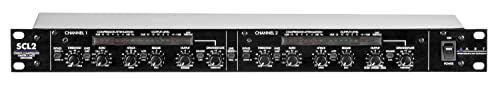
- Dual channel or linked stereo operation
- Balanced TRS and XLR inputs
- Auto/manual attack and release
Best For: Churches that want a dedicated dual-channel or stereo compressor with clear front-panel control
Vintage-Style Leveling
Behringer 2A Classic Optical Compressor

- 2A-style optical leveling amplifier
- Single-channel design
- Stereo link support
Best For: Churches needing a single-channel optical compressor for gentle level control
Dual-Channel Rackmount Compressor
Professional Dual-Channel Black Dynamic Processor

- Dual-channel design for two sources or stereo processing
- Overeasy compression with auto attack/release
- XLR/TRS I/O plus noise gate and LED metering
Best For: Churches needing flexible dynamics control for vocals and live instruments
Stereo Bus Compressor
Successor Stereo Bus Compressor

- Stereo bus design for main mix processing
- Carnhill transformer-balanced I/O
- Stepped controls and diode-bridge compression
Best For: Churches wanting classic bus compression on the main mix
Dual-Channel Vocal Compressor/Limiter
Professional Dual-Channel Rackmount Vocal Compressor/Limiter

- Dual-channel compressor/limiter for live sources
- XLR/TRS connectivity with noise gate and metering
- Sidechain insert and adjustable attack/release
Best For: Churches needing vocal-focused compression with flexible live sound control
Transparent Bass Control

- CHT Constant Headroom Technology for clear performance
- Ten gain-reduction LEDs for easy level monitoring
- True bypass keeps the signal path simple
Best For: Bass players and church teams needing transparent compression.
Classic Rack-Style Punch

- Fully discrete signal path for classic compression
- Custom CineMag USA transformers included
- Supports the ‘all buttons in’ ratio setting
Best For: Church audio teams wanting a classic rack compressor.
Compact Studio-Style Control

- Phase 90-sized pedal saves board space
- Ten gain-reduction LEDs show compression clearly
- CHT Constant Headroom Technology keeps audio clean
Best For: Church musicians needing compact, transparent pedal compression.
Rack-Side Dynamics Control – Behringer Composer Pro-XL MDX2600
For audio compressors for church sound systems, the Behringer Composer Pro-XL MDX2600 is a practical 2-channel dynamics unit for tightening vocals, controlling peaks, and adding gate/de-ess processing in one rackspace-friendly box. Its compressor/limiter/gate layout makes it useful when you want simple control over live inputs without adding extra gear.
Best For: Churches needing an affordable dual-channel compressor with gate and de-esser functions for live sound control.
Pros:
- 2-channel compressor/limiter/gate design covers multiple live inputs.
- Includes de-esser support for helping tame harsh vocal sibilance.
- Compact, portable form factor for rack-based church audio setups.
- Corded electric power and a 2-year warranty add straightforward ownership.
Cons:
- Basic analog-style dynamics control may be more manual than digital options.
- Best value depends on needing a dedicated outboard compressor rather than mixer built-ins.
The MDX2600 is a sensible choice if you want dedicated compression and gating in a church system without a lot of setup complexity. It is most compelling when you need to process a few critical channels consistently from week to week.
Remote-Controlled Mixer Dynamics – Soundcraft Ui12 12-Input Digital Mixer
If you are comparing audio compressors for church sound systems, the Soundcraft Ui12 stands out because it combines mixer control with built-in processing. It offers remote-controlled mic gain and phantom power, plus compression, de-esser, and noise gate on input channels, so you can manage several live sources from a tablet, laptop, or computer.
Best For: Churches that want a compact digital mixer with built-in compression and remote control for front-of-house or streaming use.
Pros:
- Built-in compressor, de-esser, and noise gate on input channels.
- Remote control via iOS, Android, Windows, Mac OS, and Linux devices.
- Also includes 31-band graphic EQ and compressor on all outputs.
- Wi-Fi and Ethernet control options add flexibility for live operation.
Cons:
- It is a mixer first, so it may be more than you need if you only want a standalone compressor.
- Users looking for a simple analog rack processor may find the digital workflow less direct.
For churches that want to streamline the rack and centralize control, the Ui12 offers a lot of processing in one unit. Its built-in dynamics tools make it especially useful when your team needs quick adjustments from different devices.
Dual/Stereo Processing Unit – ART SCL2 Dual/Stereo Compressor
The ART SCL2 is a straightforward option for audio compressors for church sound systems when you need flexible dual-channel or linked stereo processing. With balanced TRS and XLR inputs, stereo mode balance control, and selectable auto/manual attack and release, it is built for hands-on dynamics shaping in live setups.
Best For: Churches that want a dedicated dual-channel or stereo compressor with clear front-panel control.
Pros:
- Dual channel or linked stereo operation supports different church audio needs.
- Balanced 1/4-inch TRS and XLR inputs offer installation flexibility.
- Selectable auto/manual attack and release help tailor response.
- Precise LED level meters make gain reduction easier to monitor.
Cons:
- It is a corded analog processor, so it lacks remote control and digital recall.
- Users wanting built-in mixer features will need separate equipment.
For operators who prefer a dedicated outboard dynamics unit, the SCL2 gives you the essential controls in a rack-friendly format. It is a solid fit when you want stereo-linked processing without unnecessary extras.
Vintage-Style Leveling – Behringer 2A Classic Optical Compressor
Among audio compressors for church sound systems, the Behringer 2A Classic Optical Compressor is aimed at simple leveling duties with a 2A-style optical design and stereo link support. As a 1-channel unit, it is a focused choice for smoothing one key source where musical, gradual compression is preferred.
Best For: Churches needing a single-channel optical compressor for gentle level control on an important source.
Pros:
- 2A-style leveling amplifier design suits smooth compression tasks.
- Stereo link support adds flexibility for compatible setups.
- Single-channel format keeps the unit focused and simple.
- Includes a 2-year warranty.
Cons:
- Only one channel, so it is less versatile than dual-channel compressors.
- No extra processing features are listed beyond the leveling amplifier function.
This is a good fit when you need one dependable compressor rather than a multi-function dynamics box. It makes the most sense for church applications where a single source needs smooth, controlled gain handling.
Dual-Channel Rackmount Compressor – Professional Dual-Channel Black Dynamic Processor
If you’re comparing audio compressors for church sound systems, this dual-channel rackmount unit is built for practical control over vocals, instruments, and other live sources. The Overeasy compression, auto attack/release, and classic VCA circuit aim for smooth level management while keeping voices clear and natural in a church mix.
Best For: Churches that want a flexible dual-channel compressor for vocals, instruments, and general live sound control.
Pros:
- Dual-channel design handles two sources or stereo-style processing.
- Overeasy compression and auto attack/release support smooth, natural dynamics.
- XLR and 1/4-inch TRS I/O make it easy to fit into pro audio chains.
- Built-in noise gate and LED indicators help with cleaner setup and monitoring.
Cons:
- Sidechain insert and gate features may be more than a simple basic setup needs.
- Rackmount format requires available 1U space.
Overall, this is a solid option if your church needs hands-on dynamics control with flexible connectivity and visual feedback. The feature set is geared toward live use, making it a sensible choice for managing vocals and other dynamic sources at the board.
Stereo Bus Compressor – Successor Stereo Bus Compressor
For church sound systems that need gentle glue on the main mix, this stereo bus compressor focuses on classic analog compression with stepped controls and transformer-balanced I/O. Its diode-bridge design makes it a strong fit when you want to shape overall program dynamics rather than manage individual channels.
Best For: Churches looking for a stereo bus compressor to smooth and unify the main mix.
Pros:
- Stereo bus format is suited to main mix or mix-bus processing.
- Carnhill transformer-balanced I/O supports professional signal routing.
- Stepped controls can make settings easier to recall and repeat.
- Diode-bridge compression offers a classic bus-compression approach.
Cons:
- Not a dual-channel utility compressor for separate source control.
- Limited feature list compared with units that include gate or sidechain tools.
This model makes the most sense when your goal is polished overall mix control instead of detailed channel-by-channel treatment. For churches that want a straightforward stereo bus compressor with classic analog character, it is the most focused option in this group.
Dual-Channel Vocal Compressor/Limiter – Professional Dual-Channel Rackmount Vocal Compressor/Limiter
Among audio compressors for church sound systems, this dual-channel rackmount compressor/limiter is aimed at keeping vocals and other live sources controlled and consistent. It combines Overeasy-style compression, a noise gate, LED metering, and sidechain insert support, so it can handle both routine vocal leveling and more targeted low-end shaping.
Best For: Churches that need a rackmount compressor/limiter with vocal-focused control and live sound flexibility.
Pros:
- Dual-channel layout works well for multiple live sources.
- XLR and TRS inputs/outputs fit mixers, PA systems, and other pro gear.
- Noise gate and LED gain reduction indicators aid cleaner setup and monitoring.
- Sidechain insert and adjustable attack/release add more control for live use.
Cons:
- Rackmount design needs compatible rack space.
- Feature set may be more advanced than a basic church install requires.
This is a practical pick if your church wants a modern, configurable dynamics processor for vocals and other stage sources. It offers a good balance of connectivity, visual feedback, and control features for live mixing workflows.
Transparent Bass Control – MXR Bass Compressor
If you need one of the more practical audio compressors for church sound systems, the MXR Bass Compressor is built for clean, transparent control on bass. Its CHT Constant Headroom Technology is designed to keep the sound clear while the signal stays in its full dynamic range, and the ten gain-reduction LEDs make it easier to see when compression is actually happening.
Best For: Bass players and church teams that want transparent compression with visible gain reduction feedback.
Pros:
- CHT Constant Headroom Technology supports clear, clean performance.
- True bypass helps keep the signal path simple when the pedal is off.
- Ten gain-reduction status LEDs provide clear compression monitoring.
- Transparent design keeps the full dynamic range intact until compression kicks in.
Cons:
- It is a bass-focused compressor rather than a general-purpose rack unit.
- Requires 9V corded power, so it is not battery-operated.
For church bass duties where clarity matters, this pedal is a straightforward way to add controlled compression without coloring the tone more than necessary. The visual metering is especially useful when setting levels quickly during rehearsals or services.
Classic Rack-Style Punch – Warm Audio WA76 Compressor
Among audio compressors for church sound systems, the Warm Audio WA76 is the most traditional high-end option here. It uses a fully discrete signal path and custom CineMag USA transformers, and it is designed to be true to the classic ’76 compressor in both design and performance. That makes it a strong fit when you want familiar studio-style compression behavior in a professional audio setup.
Best For: Engineers and church audio teams looking for a classic discrete compressor with transformer character.
Pros:
- Fully discrete signal path for classic compressor architecture.
- Custom CineMag USA transformers are built into the design.
- Supports the famous “all buttons in” ratio setting.
- Single-channel format keeps it focused for one source at a time.
Cons:
- Heavier and larger than a pedal-style compressor.
- Requires DC power supply and is aimed at professional applications.
If your church setup needs a compressor with a more classic, rack-style approach, the WA76 brings that familiar workflow. It is the kind of unit that makes sense when consistency, build style, and known compression behavior matter more than portability.
Compact Studio-Style Control – MXR Studio Compressor
The MXR Studio Compressor is a compact option in audio compressors for church sound systems when you want pedalboard-friendly control. It uses CHT Constant Headroom Technology for clear, clean performance, and its ten gain-reduction LEDs make it easy to see how much compression is being applied. The phase 90-sized enclosure also keeps it small enough to fit into tighter setups.
Best For: Church musicians who want a compact compressor with clear visual feedback and a studio-style feel.
Pros:
- Phase 90-sized pedal design saves space on a board.
- CHT Constant Headroom Technology supports clean performance.
- Ten gain-reduction LEDs help with quick setting checks.
- True bypass is included for simple signal handling when disengaged.
Cons:
- Pedal format is less suited to rack-based church installs.
- Listed as a compressor pedal, so it is more specialized than a multi-channel unit.
For worship rigs that need dependable compression without taking up much room, this model offers a practical balance of size and control. It is especially appealing if you value a clear visual indication of how the compressor is working during live use.
How We Picked the Best Audio Compressors for Church Sound Systems
For Audio Compressors for Church Sound Systems, we focused on models that balance transparency, ease of setup, and reliable control over peaks. We also prioritized features that matter in live worship environments, such as stereo linking, sidechain inserts, gating, de-essing, and straightforward front-panel operation.
Because church systems often run volunteers and rotate operators, we favored compressors that are flexible without being overly complicated. Rackmount compatibility, durability, and good value were also key factors.
Quick Comparison
In simple terms, some compressors are best for lead vocals, others for drum overheads, bass, or stereo bus control, and a few are more general-purpose dynamics tools. Optical designs tend to feel smoother, VCA-style compressors often give tighter control, and channel-strip or digital mixer options can be the easiest route if you want compression built into a larger workflow.
Key Buying Factors for Audio Compressors for Church Sound Systems
Channel Count and Routing
Decide whether you need a single-channel unit for a lead vocal or bass, a dual-channel unit for stereo sources, or a stereo-linked compressor for the mix bus. If your church regularly runs stereo keys, playback, or live streaming feeds, flexible routing matters.
Transparency Vs. Character
If the goal is smooth speech and vocal leveling, choose a compressor that avoids obvious pumping. If you want more presence or punch for music instruments, a more characterful design may fit better.
Control Features
Threshold, ratio, attack, release, and makeup gain are the essentials, but sidechain filters, de-essers, and gates can be very useful for reducing harshness, taming sibilance, and keeping open mics cleaner in reverberant sanctuaries.
Ease of Use
For volunteer teams, simpler layouts and clearly labeled controls reduce setup errors. Digital and remote-controlled options can be attractive if your church needs recallable settings or centralized control.
Who Should Buy Which Audio Compressors for Church Sound Systems?
If you need a simple all-purpose solution for vocals and general dynamics, a dual-channel rack compressor is often the most practical choice. If your priority is smooth, musical compression on a featured vocal or bass, an optical or classic discrete unit may be the better fit. If you’re building a broadcast, streaming, or multi-zone church workflow, consider a compressor that integrates easily with a digital mixer or supports more advanced routing.
For most churches, the best choice is the model that matches your most common use case, not the one with the most features. Start with the sources that cause the biggest mix problems, then choose a compressor that gives you enough control without slowing down Sunday setup.