Choosing the right recorder can make the difference between a usable song idea and a muddy reference track. For musicians, the best options balance sound quality, portability, battery life, and simple controls.
This roundup highlights 10 voice recorders for musicians across budget-friendly, field-ready, and pro-grade models, so you can find the right fit for rehearsals, demos, lessons, and live capture.
Best 10 Voice Recorders for Musicians Picks for 2026
Most Versatile Multitrack Pick
6-Track 32-Bit Float Recorder for Musicians

- 6-track 32-bit float recording
- 4 XLR/TRS inputs plus X/Y mics
- USB audio interface for multiple devices
Best For: musicians who need a flexible recorder for live sessions and multi-input capture
Best Budget-Friendly Simple Recorder
Simple USB Voice Recorder for Practice Notes

- Built-in USB for easy file transfer
- Up to 55 hours of battery life
- microSD expansion with auto voice recording
Best For: musicians who need a simple, long-lasting recorder for notes and rehearsals
Best Modular Midrange Choice
Interchangeable Capsule Recorder for Musicians
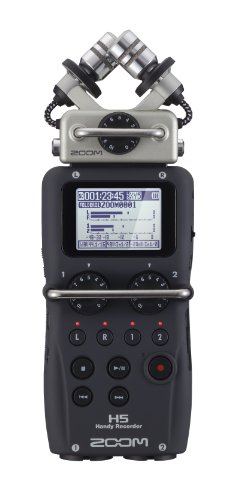
- Swappable input capsules for different setups
- Two XLR/TRS combo inputs with phantom power
- Four-track recording plus USB interface mode
Best For: musicians who want a flexible handheld recorder for demos and small sessions
Best Compact 32-Bit Float Pick
Portable 32-Bit Float Recorder for Musicians

- 32-bit float recording with no gain adjustment needed
- X/Y mics rated up to 130 dB SPL
- USB-C mic mode plus auto-record features
Best For: musicians who want a compact recorder for loud sources and quick capture
Flagship handheld recorder

- Large 19.4mm X/Y mics
- 32-bit float recording
- Up to 4 tracks at 192kHz WAV
Best For: musicians who want a portable recorder with pro-style control
Compact everyday recorder
Zoom H1 Essential for musicians

- Clear stereo capture for music and voice
- Very lightweight at 92 g
- USB-C mic mode for streaming and calls
Best For: musicians and creators who want an easy, portable recorder
Pro field recorder

- 32-bit float recording
- Dual locking XLR inputs
- Ultra-low-noise preamps
Best For: musicians and recordists who need a compact professional recorder with secure XLR connectivity
Portable 4-Track Capture
Zoom H4 Essential Handheld Recorder

- 32-bit float helps protect loud takes from clipping.
- Built-in stereo mics and two XLR/TRS inputs add flexibility.
- Records to USB devices and SD card for backup-friendly sessions.
Best For: Musicians who want a compact recorder for rehearsals and live capture
Multi-Input Pro Recorder
Zoom F6 Professional Field Recorder

- Six XLR inputs support multi-mic recording sessions.
- Up to 14 tracks gives you more production flexibility.
- 32-bit float and dual AD converters help prevent clipping.
Best For: Musicians and producers recording complex multi-track projects
Compact Accessibility Pick
Zoom H2 Essential Handheld Recorder

- Three built-in mics with nine selectable recording patterns.
- 32-bit float recording removes the need to set gain.
- USB mic mode and SD backup support flexible workflows.
Best For: Musicians who want a lightweight, easy-to-use recorder with flexible pickup patterns
Most Versatile Multitrack Pick – 6-Track 32-Bit Float Recorder for Musicians
If you want one of the most flexible voice recorders for musicians, the Zoom H6 Essential stands out for its 6-track 32-bit float recording and four XLR/TRS combo inputs. It is built to handle bands, interviews, and live events without clip-induced surprises, while the built-in X/Y mics add another easy way to capture stereo sound on the spot.
Best For: Musicians who need a rugged all-in-one recorder for multi-source sessions, live takes, and backup recording.
Pros:
- 6-track 32-bit float recording helps prevent clipping and distortion.
- Four XLR/TRS combo inputs support vocals, instruments, and other sources.
- Built-in X/Y mics capture up to 135 dB SPL for loud environments.
- Works as a USB audio interface for PC, Mac, iOS, and Android.
Cons:
- Runs on 4 AAA batteries, so you’ll need spares for long sessions.
- It may be more recorder than you need for simple voice memos.
The H6 Essential is a strong pick when recording needs go beyond basic voice capture and into serious music production territory. Its flexible inputs, interface mode, and spoken menu guidance make it especially useful if you want one recorder to cover many jobs.
Best Budget-Friendly Simple Recorder – Simple USB Voice Recorder for Practice Notes
Sony ICD-PX470 Stereo Digital Voice Recorder with Built-in USB Voice Recorder, Black
Check Price On AmazonThe Sony ICD-PX470 is a straightforward option among voice recorders for musicians who mainly need quick, reliable capture for rehearsals, lesson notes, and ideas. Its built-in USB connection makes file transfer easy, while the adjustable microphone range and auto voice recording help keep spoken content clearer and reduce background noise.
Best For: Musicians who want an easy-to-use recorder for practice notes, lessons, and simple voice capture.
Pros:
- Built-in USB connection makes transfers quick and simple.
- Auto voice recording reduces background noise.
- Up to 55 hours of battery life supports extended sessions.
- microSD card slot lets you expand memory beyond the built-in 4 GB.
Cons:
- Built-in mics and basic feature set are less suited to complex music recording.
- Not designed with XLR inputs or interface-style workflows.
This is a practical grab-and-go recorder if your priority is convenience rather than studio flexibility. For musicians who mainly need spoken notes or rehearsal references, it covers the basics well without adding complexity.
Best Modular Midrange Choice – Interchangeable Capsule Recorder for Musicians
The Zoom H5 is a practical middle-ground choice in voice recorders for musicians, especially if you need more input flexibility than a basic handheld model. With interchangeable input capsules, four-track simultaneous recording, and two XLR/TRS combo inputs with phantom power support, it is built for recording instruments, voices, and field audio with more control.
Best For: Musicians and creators who want a flexible recorder for small sessions, demos, and video audio.
Pros:
- Interchangeable capsules adapt the recorder to different recording scenarios.
- Two XLR/TRS combo inputs support phantom power and a -20 dB pad.
- Four-track simultaneous recording adds workflow flexibility.
- Can work as a USB audio interface for PC, Mac, and iPad.
Cons:
- Records directly to SD/SDHC cards up to 32 GB, which is more limited than some newer models.
- Battery life and digital recording time are more modest than long-runtime recorders.
The H5 remains a useful option if you want XLR inputs and modular mic options in a compact body. It is especially appealing when you need a recorder that can move between rehearsal capture, demo work, and video-production audio.
Best Compact 32-Bit Float Pick – Portable 32-Bit Float Recorder for Musicians
The Xvive XV1-R is aimed at musicians who want modern 32-bit float recording in a compact portable body. Its X/Y microphones can handle loud sources up to 130 dB SPL, and the recorder supports WAV and AAC formats, auto record, pre-record, and USB microphone use over USB-C for flexible everyday recording.
Best For: Musicians and content creators who want a compact recorder for high-volume performances and quick USB use.
Pros:
- 32-bit float recording helps avoid gain-setting mistakes and distortion.
- X/Y microphones capture clean sound up to 130 dB SPL.
- USB-C mic mode works with PC, Mac, iOS, and Android.
- Auto-record and pre-record add convenience for live situations.
Cons:
- No headphone jack is included for direct monitoring.
- Maximum recording time is listed at up to 12 hours in AAC mode.
This model makes sense if you value portability and modern recording safeguards more than a full input array. For loud rehearsals, live rooms, and fast capture workflows, it offers a very practical feature set.
Flagship handheld recorder – Zoom H5 Studio for musicians
If you want one of the most capable voice recorders for musicians, the Zoom H5 Studio leans into higher-end capture with large built-in X/Y mics, 32-bit float recording, and hands-on gain control. It is built for sketching songs, live rehearsal capture, location recording, and multitrack work when you need strong audio without babysitting levels.
Best For: Musicians and creators who want a portable recorder with pro-style control and clip-free recording.
Pros:
- Large 19.4mm X/Y microphones for rich, detailed stereo capture
- 32-bit float recording helps prevent clipped takes
- Dedicated gain knobs make level adjustments fast and intuitive
- Records up to 4 tracks at up to 192kHz WAV
Cons:
- Requires 4 AA batteries for portable use
- More recorder than casual users may need
Overall, this is the strongest all-around option here if your priority is dependable, high-resolution audio for musical work. The mix of large mics, clip-free recording, and multitrack flexibility makes it especially appealing for serious sessions on the go.
Compact everyday recorder – Zoom H1 Essential for musicians
The Zoom H1 Essential is a compact pick among voice recorders for musicians when you want quick stereo capture without much setup. It is suited to songwriting sessions, rehearsals, acoustic performances, lessons, jam sessions, and even podcast or voiceover use, with USB-C support for streaming and calls.
Best For: Musicians and creators who want an easy, portable recorder for everyday capture.
Pros:
- Clear stereo recording for music, voice, and ambient sound
- Very lightweight and easy to carry at 92 g
- USB-C can be used as a microphone for streaming and calls
- 32-bit float recording helps keep takes usable in unpredictable situations
Cons:
- Battery life is limited to about 10 hours
- Fewer hands-on controls than larger recorders
This is the practical choice if you want a simple recorder that travels well and captures better sound than a phone or camera. It is especially appealing for musicians who need something ready when inspiration hits.
Pro field recorder – Zoom F3 for musicians
The Zoom F3 is aimed at demanding recording jobs, making it a strong option in voice recorders for musicians who need dependable capture in unpredictable environments. Its 32-bit float recording, dual locking XLR inputs, and ultra-low-noise preamps are designed for situations where levels can jump and there is no second chance.
Best For: Musicians and recordists who need a compact professional recorder with secure XLR connectivity.
Pros:
- 32-bit float recording handles sudden peaks without level riding
- Dual locking XLR inputs stay secure in larger rigs
- Ultra-low-noise preamps support cleaner recordings
- Flexible power and USB workflows suit long sessions
Cons:
- Built around external inputs rather than onboard stereo mics
- Mono/stereo mode may be less straightforward than simpler handheld units
For musicians using external microphones or more complex recording setups, the F3 is the most specialized tool in this group. It trades convenience for robust connectivity and dependable performance in tough recording conditions.
Portable 4-Track Capture – Zoom H4 Essential Handheld Recorder
If you’re comparing voice recorders for musicians, the Zoom H4 Essential is a practical pick for tracking rehearsals, live sets, and ideas without worrying about distorted takes. Its built-in stereo mics, two XLR/TRS inputs, and 32-bit float recording make it flexible enough for simple stereo capture or a more connected setup with external mics and gear.
Best For: Musicians who want a handheld recorder that can handle rehearsals, performances, and simple multitrack sessions.
Pros:
- 32-bit float recording helps reduce the risk of clipping on louder performances.
- Built-in stereo microphones plus two XLR/TRS inputs support a range of recording setups.
- Records to both USB-connected devices and SD card for backup-friendly workflows.
- Spoken menu guidance can make the recorder easier to navigate and use.
Cons:
- Runs on 2 AA batteries, so battery management is part of the workflow.
- More of a portable capture tool than a full studio interface replacement.
This is a strong all-around option if you want a compact recorder that stays useful as your recording needs grow. It balances simplicity and flexibility well for musicians who need dependable on-the-go audio capture.
Multi-Input Pro Recorder – Zoom F6 Professional Field Recorder
For musicians who need more channels and more control, the Zoom F6 is a serious choice in voice recorders for musicians. It uses 32-bit float recording with dual AD converters, offers six XLR inputs, and can capture up to 14 tracks, making it better suited to multi-mic sessions, complex location recording, and workflows where sync matters.
Best For: Musicians and producers who need a rugged multi-input recorder for demanding multi-track sessions.
Pros:
- Six XLR inputs let you record multiple microphones at once.
- Up to 14 tracks provides room for more complex recording setups.
- 32-bit float recording with dual AD converters helps avoid clipping.
- Timecode I/O supports accurate sync for video-linked projects.
Cons:
- More advanced than a basic handheld recorder, so it’s less casual to use.
- Weighs 2.4 pounds, which is less pocket-friendly than smaller models.
The F6 stands out when your recording needs go beyond quick demos and simple stereo capture. It’s built for heavier production work, especially when multiple sources and reliable sync are priorities.
Compact Accessibility Pick – Zoom H2 Essential Handheld Recorder
If you want voice recorders for musicians that are easy to travel with and simple to operate, the Zoom H2 Essential is a smart compact option. It features three built-in microphones, nine selectable recording patterns, and 32-bit float/96kHz capture, so it can handle everything from intimate rehearsals to wider stereo or surround-style recordings.
Best For: Musicians who want a lightweight recorder with flexible mic patterns and simple clip-free capture.
Pros:
- Three built-in mics and nine recording patterns give you plenty of capture options.
- 32-bit float recording lets you record at any volume level without adjusting gain.
- USB mic mode plus SD recording supports live use and automatic backup.
- Audible menu navigation and Bluetooth syncing add convenience and accessibility.
Cons:
- Uses 2 AA batteries, so you’ll still need spare power for long sessions.
- Built-in mics are the focus, so it’s less expandable than XLR-based recorders.
This model is a good fit if you want something lightweight, flexible, and straightforward for capturing music on the move. It’s especially appealing for users who value accessibility features and low-fuss operation.
How We Picked the Best Voice Recorders for Musicians
We focused on recording quality, microphone performance, portability, input flexibility, file-format support, and ease of use. For Voice Recorders for Musicians, the most important question is not just whether a recorder sounds good, but whether it works quickly in real sessions without slowing down the creative process.
We also considered features musicians actually use: stereo capture, X/Y mics, low-noise preamps, 32-bit float on select models, USB connectivity, and battery options that suit long rehearsals or field sessions.
Quick Comparison
Use this shortlist to narrow your choice by workflow. Handheld recorders are great for sketches, rehearsals, and casual live capture. Field recorders are better when you need cleaner inputs, more control, and higher headroom. Compact stereo recorders are often the easiest grab-and-go option for capturing ideas fast.
Key Buying Factors for Voice Recorders for Musicians
Audio Quality and Mic Design
Look for low self-noise, strong stereo imaging, and microphones that can handle loud sources without distorting. X/Y patterns are a solid default for instruments, practice rooms, and ensemble capture.
Input Flexibility
If you plan to record vocals, line sources, or multiple instruments, choose a model with external mic inputs, combo jacks, or support for higher-end field workflows. Basic portable units are fine for memo-style capture, but they can be limiting for serious music use.
Dynamic Range and 32-Bit Float
For unpredictable playing levels, 32-bit float recorders can reduce the risk of clipping. That matters when you are recording rehearsals, drums, or live performances where gain changes are hard to manage on the fly.
Portability and Workflow
A recorder only helps if you can use it instantly. Consider size, button layout, battery life, storage type, and whether the device doubles as a USB microphone or interface.
Who Should Buy Which Voice Recorders for Musicians?
If you want a simple, affordable way to capture lyrics, melodies, and practice ideas, a compact handheld recorder is usually the best starting point. If you need better fidelity for band rehearsals or location recording, step up to a model with stronger stereo mics and more inputs.
Producers, live recordists, and musicians who work with louder sources should look at field recorders, especially if 32-bit float and multiple inputs are priorities. The best choice depends on how often you record, how loud your sources are, and whether you need fast note-taking or more advanced production flexibility.