The best drum machines for techno combine punchy kick drums, flexible sequencing, hands-on controls, and reliable performance features. The right choice depends on whether you prioritize analog character, sample-based flexibility, portability, or deep pattern programming.
We compared 10 standout machines across those categories, including compact grooveboxes, classic analog designs, hybrid instruments, and performance-focused samplers.
Best 10 Drum Machines for Techno Picks for 2026
Powerhouse Pick

- 12 tracks with analog and digital sound engines
- 35 machines for drums and melodic parts
- Overbridge, MIDI, and DIN Sync connectivity
Best For: Advanced techno production and live performance
Portable Sampler Pick

- Standalone, battery-powered sampling workflow
- 16 pads with chopping and resampling tools
- Built-in effects, speaker, microphone, and USB-C
Best For: Portable, sample-driven techno production
Analog Impact Pick

- Separate accent control for every drum
- Song mode chains patterns for performance
- Color shaping adds variation to most instruments
Best For: Hands-on analog techno rhythm programming
Ultra-Portable Pick

- TR-808, TR-909, and TR-606 drum sounds
- TB-303 bass with a 16-step sequencer
- Portable design with effects and USB-C connectivity
Best For: Mobile techno jams and acid-inspired grooves
Best Analog Classic

- Warm analog engine with 16 drum sounds
- 64-step sequencer supports advanced performance modes
- 11 independent analog outputs for external processing
Best For: Classic, hands-on techno drum programming
Best Hybrid Workflow

- Analog, digital, and multi-engine sound generation
- 11 parts with a 64-step sequencer
- Per-part effects and broad connectivity
Best For: Flexible studio and live techno setups
Most Feature-Rich

- 808/909 analog engine plus ACB, FM, VA, and PCM sounds
- Advanced sampler with over 2,000 sounds and 46 GB memory
- Deep sequencing, effects, I/O, and hardware integration
Best For: Professional techno production and performance
Portable Sampling Powerhouse
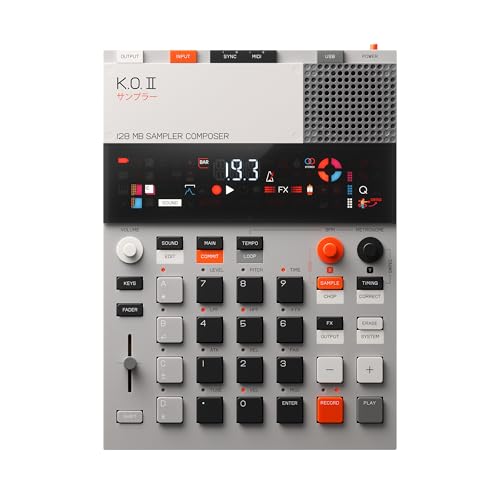
- 128 MB memory and 999 sample slots
- Built-in mic, resampling, and performance effects
- Battery-powered with MIDI and sync connectivity
Best For: Portable beatmaking, sampling, and live techno performance
Classic Analog Grooves

- 15 classic analog drum sounds
- 34 rhythm presets for quick starting points
- Simple 16-step sequencing in a compact body
Best For: Accessible analog rhythm programming and live use
Acid-Ready Analog Punch

- True analog circuitry and classic clap sound
- 64-step sequencing with accent and distortion
- Seven independent analog outputs
Best For: Punchy techno rhythms, external processing, and multitrack recording
Powerhouse Pick – Elektron Syntakt
The Elektron Syntakt is a flexible choice for drum machines for techno, combining analog and digital sound engines with deep sequencing and sound-shaping controls. Its 12-track design suits producers who want one compact instrument for both studio production and live performance.
Best For: Techno producers who want extensive synthesis, sequencing, and DAW integration in one performance-focused unit.
Pros:
- Combines four analog and eight digital tracks
- Offers 35 sound-generating machines for drum and melodic sounds
- Includes multimode filters, assignable LFOs, and Overbridge support
- Provides MIDI In/Out/Thru plus DIN Sync connectivity
Cons:
- Its broad feature set may take time to learn
- At 2.17 kg, it is less ultra-portable than smaller grooveboxes
The Syntakt stands out when you want a serious techno workstation rather than a basic rhythm box. High-resolution encoders, backlit buttons, and a clear OLED display support hands-on programming, while the converters and connectivity make it suitable for a complete production setup.
Portable Sampler Pick – Akai MPC Sample
The Akai MPC Sample brings sampling, sequencing, effects, and portability to the search for drum machines for techno. With battery power, a built-in speaker, microphone, and standalone operation, it is designed for creating grooves away from a computer.
Best For: Beginners, sample-based producers, and DAWless creators who want a portable way to build and manipulate techno rhythms.
Pros:
- Runs standalone with a rechargeable battery, speaker, and microphone
- Includes 16 MPC pads and a 2.4-inch full-color display
- Provides sample chopping, timestretching, repitching, and internal resampling
- Offers four FX processors with 60 effect types
Cons:
- MIDI DIN connection requires an adapter, which is not included
- Its sampling-centered workflow may be less direct than a dedicated analog drum machine
The MPC Sample is a practical option if your techno workflow relies on found sounds, chopped loops, and hands-on performance. Its compact format and broad connectivity also make it useful as a sketchpad, portable sampler, or addition to a larger setup.
Analog Impact Pick – Arturia DrumBrute Impact
The Arturia DrumBrute Impact is a focused analog drum machine for techno producers who prefer dedicated controls and immediate pattern work. Its separate drum accents, Song mode, and optional Color sound shaping support punchy, performance-oriented programming.
Best For: Hands-on techno performers who want an analog-focused drum machine with pattern chaining and per-drum dynamics.
Pros:
- Provides a separate accent for each drum
- Includes Song mode for chaining patterns
- Offers optional Color sound shaping across the instruments, except Cowbell
- Uses a metal alloy-steel body for a durable hardware feel
Cons:
- Color sound shaping does not apply to the Cowbell
- The supplied notes describe fewer connectivity details than some competing units
The DrumBrute Impact is a good fit when immediacy matters more than an expansive multi-purpose feature set. Its accent controls and Color options give techno grooves useful movement, while Song mode helps turn individual patterns into a performance sequence.
Ultra-Portable Pick – Roland AIRA Compact T-8
The Roland AIRA Compact T-8 is an accessible option among drum machines for techno, pairing TR-808, TR-909, and TR-606-style drums with TB-303 bass sounds. Its compact body, 16-step sequencer, and battery-friendly portable design make it well suited to quick jams and mobile idea building.
Best For: Beginners and mobile producers who want classic Roland rhythm and acid-bass sounds in a compact unit.
Pros:
- Combines TR drum sounds with TB-303 bass synthesis
- Supports up to 32 steps across 64 user patterns
- Includes probability, sub step, last step, and velocity controls
- Provides delay, reverb, overdrive, and sidechain compression
Cons:
- Its compact controls may feel limited for more complex arrangements
- It is focused on Roland-inspired drum and bass sounds rather than broad synthesis
The T-8 is particularly appealing for acid techno sketches, live pattern manipulation, and portable practice. ACB technology supplies its characteristic Roland-style sound, while USB-C audio and MIDI plus audio, MIDI, and sync I/O help it connect to a wider setup.
Best Analog Classic – Behringer RD-8
The Behringer RD-8 is a strong choice among drum machines for techno if you want warm, vintage analog character and a hands-on 64-step workflow. Its 16 drum sounds, global accent, Wave Designer, and dual-mode filter provide useful tools for building punchy, classic-style rhythms.
Best For: Techno producers seeking an affordable, vintage-voiced analog drum machine with extensive sequencing and multi-output routing.
Pros:
- 16 analog drum sounds with tuning and additional parameters
- Powerful 64-step sequencer with poly-meter, repeats, real-time triggering, mutes, and solos
- 11 independent analog outputs for multitrack recording or external processing
- Wave Designer and dual-mode filter add sound-shaping flexibility
Cons:
- At 3.98 kg, it is less portable than smaller drum machines
- Its sound palette centers on classic analog drum-machine tones rather than broad sample-based variety
The RD-8 is especially compelling when authentic analog punch, tactile sequencing, and separate outputs matter more than a large onboard sound library or compact size.
Best Hybrid Workflow – KORG drumlogue
The KORG drumlogue combines analog, digital, and multi-engine synthesis in a compact format, making it one of the more flexible drum machines for techno. Dedicated part controls, 64-step sequencing, per-part effects, and extensive connectivity support both studio production and live performance.
Best For: Producers who want a versatile hybrid drum machine with hands-on mixing, onboard effects, and room for custom sounds.
Pros:
- Combines analog, digital, noise, VPM, and open-source user oscillator engines
- 11 parts and a 64-step sequencer with Loop and Chain functions
- Per-part reverb and delay plus master effects can be used simultaneously
- Offers assignable outputs, USB-C, MIDI, audio input, and audio sync
Cons:
- Its hybrid architecture may require more sound-design exploration than a dedicated analog unit
- The supplied notes do not specify onboard memory capacity for user samples
The drumlogue suits techno setups that need varied synthesis options and flexible routing without giving up direct front-panel control over individual parts.
Most Feature-Rich – Roland TR-1000
The Roland TR-1000 is designed for producers who want an expansive centerpiece for techno production. It combines analog 808 and 909 sounds, ACB modeling, FM, VA, PCM, sampling, advanced TR-REC sequencing, extensive effects, and comprehensive audio and control connectivity.
Best For: Advanced producers who need deep sound design, sampling, performance sequencing, and extensive integration with external hardware.
Pros:
- Analog engine delivers 808 and 909 sounds with expanded parameters
- Includes ACB models, FM, VA, PCM engines, and over 2,000 onboard sounds
- Advanced sampler provides stereo sampling, resampling, time-stretching, slicing, and 46 GB of memory
- Extensive TR-REC sequencing, effects, outputs, MIDI, trigger, DIN sync, CV, and USB-C connectivity
Cons:
- Its 19.1-pound weight and large footprint make it less portable
- The breadth of features may be more than needed for straightforward drum programming
- Manufacturer warranty details require checking Roland’s website
The TR-1000 is the most comprehensive option here, particularly if your definition of drum machines for techno includes sampling, melodic parts, detailed probability-based sequencing, and hardware integration.
Portable Sampling Powerhouse – EP-133 K.O. II
If you want drum machines for techno that can also capture, reshape, and arrange your own sounds, the teenage engineering EP-133 K.O. II is a highly portable option. It combines sampling, beat sequencing, effects, and live performance controls in a compact battery-powered unit.
Best For: Producers who want portable sampling, fast pattern building, and hands-on live effects.
Pros:
- 128 MB of memory with 999 sample slots and built-in microphone sampling.
- Four groups with 99 patterns each, plus a four-track sequencer.
- Includes six master effects and 12 punch-in effects controlled by a multifunctional fader.
- Portable design with built-in speaker, USB-C power, MIDI, and sync connections.
Cons:
- Plastic construction may not feel as rugged as metal-bodied alternatives.
- Its broad sampling and performance feature set may take time to master.
The EP-133 K.O. II is a flexible choice when techno production needs to move beyond preset drum sounds. Its resampling, song mode, sidechain, and live-oriented controls make it especially useful for sketching and performing ideas away from a computer.
Classic Analog Grooves – Behringer RD-78
The Behringer RD-78 is a straightforward pick for drum machines for techno when you want classic analog drum character and an uncomplicated workflow. Its 15 sounds, preset rhythms, and 16-step sequencer make it suitable for quickly building foundational patterns.
Best For: Beginners and performers seeking classic analog sounds with simple hands-on sequencing.
Pros:
- Offers 15 analog drum sounds for varied rhythm programming.
- Includes 34 rhythm presets to start ideas quickly.
- Its 16-step sequencer supports straightforward pattern creation.
- Compact alloy-steel construction is suited to studio or live use.
Cons:
- The 16-step sequencer is less expansive than longer pattern systems.
- The supplied notes do not specify individual output options or advanced connectivity.
The RD-78 focuses on immediacy rather than an extensive feature list. It is a practical choice for producers who want classic analog drum sounds and preset-assisted rhythm creation without a complicated interface.
Acid-Ready Analog Punch – Behringer RD-6-BK
For producers comparing drum machines for techno, the Behringer RD-6-BK emphasizes true analog circuitry, accent control, distortion, and hands-on rhythm programming. Its dedicated outputs also make it useful when routing individual sounds through external processors or a mixer.
Best For: Techno and electronic producers who want analog punch, distortion, and multitrack output flexibility.
Pros:
- Uses true analog circuitry with an authentic reproduction of the original design.
- Provides nine drum sounds with mix parameters and global accent control.
- Includes distortion effects for adding drive to programmed rhythms.
- Seven independent analog outputs support external processing or multitrack recording.
Cons:
- Its sound set is more focused than that of a sampler-based drum machine.
- The supplied notes describe a 64-step sequencer, while the product title mentions eight drum sounds, so specifications should be checked carefully.
The RD-6-BK is built around focused analog rhythm performance rather than broad sampling. Its accent capability, distortion, and independent outputs give techno producers useful tools for shaping and processing punchy drum parts.
How We Picked the Best Drum Machines for Techno
We evaluated each model for the features that matter most in techno production and performance: kick and percussion character, sequencing depth, pattern workflow, sound-shaping controls, synchronization options, portability, and value. We also considered whether a machine is best suited to studio programming, live improvisation, or both.
Because techno setups vary widely, this list includes more than one type of instrument. Analog drum machines offer immediate sound and tactile control, while samplers and hybrid grooveboxes provide broader palettes and more extensive arrangement options.
Quick Comparison
| Best For | Recommended Type | Main Strength |
|---|---|---|
| Deep sequencing and sound design | Elektron Syntakt | Hybrid synthesis and advanced pattern control |
| Sample-based production | Akai MPC | Sampling, arranging, and beat creation |
| Analog punch on a budget | Arturia DrumBrute Impact or Behringer RD-8 | Hands-on drum shaping and strong low end |
| Portable jamming | Roland AIRA Compact T-8 | Compact format with classic-style sounds |
| Hybrid drum synthesis | Korg drumlogue | Analog and digital sound engines |
| Performance sampling | teenage engineering EP–133 K.O. II | Fast sample manipulation and effects |
Key Buying Factors for Drum Machines for Techno
Sound Engine
Choose analog circuitry for direct, forceful kicks, snares, and hats with familiar hardware character. Digital modeling can provide classic drum-machine tones with more compact designs, while hybrid machines combine analog foundations with digital voices and additional synthesis options.
Sequencer and Pattern Workflow
Look for parameter locks, step probability, microtiming, rolls, variations, and song-mode features if you build evolving arrangements. A simpler 16-step sequencer may be preferable for fast live programming and repetitive, hypnotic grooves.
Connectivity and Synchronization
Check for MIDI, USB, trigger outputs, audio inputs, and clock compatibility with your setup. MIDI and USB are useful for DAW integration; individual outputs can make mixing hardware drums easier; and reliable sync matters when combining several machines.
Performance Controls
Large pads, mute and solo functions, real-time effects, and accessible knobs help when improvising. If you perform live, consider power requirements, screen visibility, build quality, and whether pattern changes can happen without interrupting playback.
Sampling and Expansion
Sample-based models are useful when you want field recordings, vocal hits, processed loops, or custom kick drums. Confirm memory, storage, sample transfer, microphone capability, and editing tools before buying.
Who Should Buy Which Drum Machines for Techno?
Choose the Elektron Syntakt if you want one sophisticated centerpiece for sequencing, synthesis, and evolving techno patterns. The Akai MPC or EP–133 K.O. II is better for producers who build around samples and want broader sound sources.
For immediate analog-style performance, consider the DrumBrute Impact, RD-8, RD-78, or RD-6. The DrumBrute Impact emphasizes hands-on shaping, while the Behringer models focus on recognizable classic-style voices at accessible prices. The Roland T-8 suits compact mobile setups, and the Korg drumlogue is a strong middle ground for producers who want analog drums with digital flexibility.
Finally, choose the Roland TR-1000 if you want a more advanced Roland-centered instrument with modern sequencing and classic-inspired drum sounds. Before purchasing, match the machine’s workflow to how you actually create: quick pattern jamming, detailed studio arrangement, sample manipulation, or live performance.