Choosing the right DJ controller can make learning faster, mixing smoother, and practice sessions more rewarding. The best model for you depends on your skill level, software preference, and the style of DJing you want to do.
In this roundup, we focused on versatile dj controllers that balance performance features, ease of use, and value for beginners through advanced users.
Best 10 Dj Controllers Picks for 2026
Starter-Friendly All-Rounder
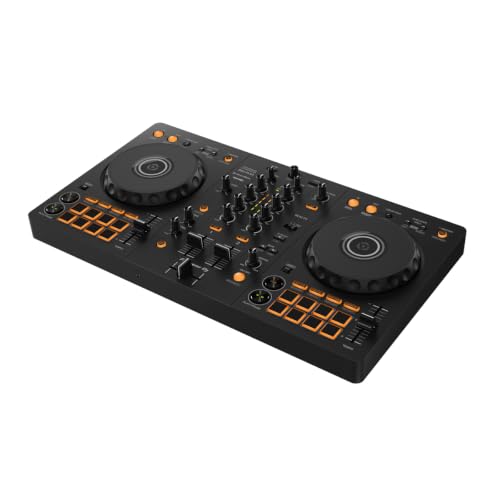
- Smart Fader helps blend tracks without manual beatmatching.
- 16 pads add Hot Cues, Pad FX, Beat Jump, and Sampler control.
- USB or Bluetooth support works with phones, tablets, and computers.
Best For: Beginners who want an easy, flexible first controller
Club-Style Practice Pick
Hercules DJControl Inpulse 500

- Beatmatch Guide supports practice with transitions and timing.
- Large touch-detection jog wheels are built for scratching.
- Fold-out feet and built-in audio interface add practical value.
Best For: Practice-focused DJs who want tactile controls and learning aids
Clean White Upgrade

- Same beginner-friendly FLX4 layout with Smart Fader support.
- 16 pads and 2-channel control keep mixing simple.
- USB or Bluetooth compatibility covers phones, tablets, and computers.
Best For: Beginners who prefer the FLX4 in a white finish
Performance-Heavy Serato Choice

- 4-deck control adds flexibility for bigger mixes.
- Color-display jog wheels show BPM, platter position, and pitch info.
- Serato DJ Lite, FX paddles, and loop controls support performance mixing.
Best For: Serato DJs who want visual feedback and more deck control
Battle-Style Starter
Pioneer DJ DDJ-REV1 2-deck Serato DJ Controller

- Battle-style layout for scratching practice
- Serato DJ Lite unlock for quick setup
- Compact and affordable beginner choice
Best For: Hip-hop and scratch beginners
Travel-Ready Portable
Numark MixTrack Go Compact Bluetooth DJ Controller

- Backpack-friendly 2-deck portable design
- Bluetooth MIDI with djay mobile support
- USB-C power and built-in audio interface
Best For: Mobile DJs and on-the-go practice
Standalone All-in-One
Denon DJ SC LIVE 4 Standalone DJ Controller
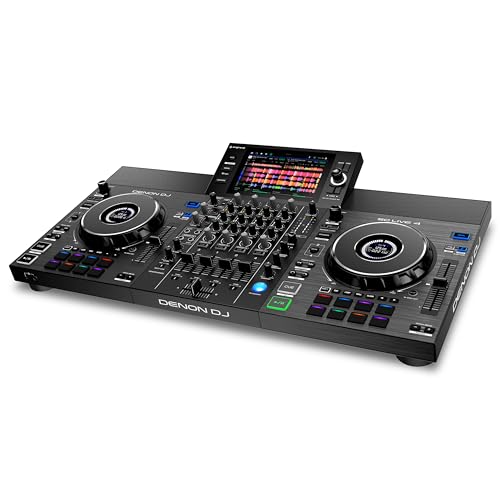
- Standalone Engine DJ OS with no laptop needed
- 7-inch touchscreen and 4-deck control
- Built-in speakers plus streaming and Bluetooth
Best For: Mobile and club DJs wanting an all-in-one setup
Beginner-Friendly Starter Pick
AlphaTheta Pioneer DJ DDJ-FLX2

- Smart Fader helps auto-match volume, BPM, and bass.
- USB-C bus power and 2.7 lb weight make it easy to carry.
- Works with rekordbox, djay, and Serato DJ Lite.
Best For: First-time DJs who want a portable, low-friction setup.
Club-Style Performance Pick

- Club-inspired layout is built to transfer to booth workflows.
- Groove Circuit enables live drum-loop swapping and remixing.
- Compatible with rekordbox and Serato DJ Pro out of the box.
Best For: Performance-focused DJs who want club-style controls and remix tools.
Battle-Ready Scratch Pick

- Battle-style layout is aimed at scratch and open-format play.
- On-jog displays show playback position for easier tracking.
- Ships with rekordbox and Serato DJ Pro included.
Best For: Scratch DJs who want a battle layout and pro software support.
Starter-Friendly All-Rounder – Pioneer DJ DDJ-FLX4 Graphite
If you’re comparing dj controllers for an easy first setup, the Pioneer DJ DDJ-FLX4 is built to help beginners start mixing without a steep learning curve. Its simple Pioneer-style layout, Smart Fader, and 2-channel design make it practical for learning, while the built-in sound card and multi-device support keep it flexible as your setup grows.
Best For: New DJs who want a beginner-friendly controller that can also grow with them.
Pros:
- Smart Fader can auto-adjust volume, bass, and BPM for smoother blends.
- 16 performance pads cover Hot Cues, Pad FX, Beat Jump, and Sampler duties.
- Works with PC, Mac, iPhone, iPad, and Android via USB or Bluetooth.
- Supports streaming and live-streaming from a single device.
Cons:
- It is a 2-channel controller, so it stays focused on the basics.
- Included components are limited to a user manual in the supplied notes.
Overall, the DDJ-FLX4 is a sensible pick if you want one of the most approachable dj controllers for learning fundamentals and making simple, reliable mixes. It balances beginner features with enough room to expand into more capable mixing habits.
Club-Style Practice Pick – Hercules DJControl Inpulse 500
Among dj controllers in this price and feature range, the Hercules DJControl Inpulse 500 stands out for practice-focused features like Beatmatch Guide, large touch-sensitive jog wheels, and a built-in audio interface. It is designed for Serato and DJUCED users who want hands-on control, smoother transitions, and a controller that feels ready for regular bedroom or practice-room use.
Best For: DJs who want tactile practice features and a more hands-on learning experience.
Pros:
- Beatmatch Guide helps with track matching and transition practice.
- Large jog wheels include touch detection for scratching.
- Built-in audio interface and hardware input mixer add flexibility.
- Retractable/extendable feet help lift the controller and protect it from spills.
Cons:
- Heavier than some portable alternatives at 11.6 pounds.
- Only 2 decks of control, so it stays focused on the essentials.
If you want dj controllers that emphasize learning the feel of mixing, this one is a strong practical choice. Its layout and extras make it better suited to hands-on practice than ultra-portable travel setups.
Clean White Upgrade – Pioneer DJ DDJ-FLX4 White
The white Pioneer DJ DDJ-FLX4 offers the same easygoing approach that makes the FLX4 line appealing in dj controllers, but in a cleaner colorway. It keeps the 2-channel layout, Smart Fader, 16 performance pads, and streaming-friendly design, so it suits learners who want a simple controller with broad device support and a lighter visual style.
Best For: Beginners and improvers who want the FLX4 formula in white.
Pros:
- Smart Fader simplifies blending by adjusting volume, bass, and BPM.
- 16 performance pads support Hot Cues, Pad FX, Beat Jump, and Sampler use.
- Works with PC, Mac, iPhone, iPad, and Android via USB or Bluetooth.
- Built-in sound card supports speaker connection and livestream use.
Cons:
- It remains a 2-channel controller rather than a more advanced setup.
- Its main advantage over the graphite version is color, not extra features.
For buyers who want a straightforward learning controller with a more distinctive look, this is an easy recommendation. It delivers the same beginner-friendly feature set while keeping the setup compact and approachable.
Performance-Heavy Serato Choice – Numark Mixtrack Platinum FX
If you’re shopping dj controllers for Serato-based mixing, the Numark Mixtrack Platinum FX offers a feature-rich setup with 4 decks of control, color display jog wheels, and a built-in 24-bit audio interface. It is aimed at DJs who want more visual feedback and quick-access performance tools without giving up plug-and-play USB convenience.
Best For: Serato users who want extra deck control and visual feedback.
Pros:
- 4 decks of control expand mixing options beyond basic 2-deck layouts.
- 6-inch jog wheels include high-resolution color displays with BPM and platter info.
- Dual paddle FX, instant loop controls, and 8 performance pads per deck add flexibility.
- Includes microphone input, headphone output, RCA output, and a built-in 24-bit audio interface.
Cons:
- It is more feature-dense than a beginner-simple controller.
- At 5.29 pounds, it is less compact than the lightest travel-friendly options.
As a Serato-ready controller, the Mixtrack Platinum FX is best for users who want more than the basics and value information-rich jog wheels. It feels geared toward performance-first mixing rather than absolute entry-level simplicity.
Battle-Style Starter – Pioneer DJ DDJ-REV1 2-deck Serato DJ Controller
If you’re shopping for dj controllers and want a beginner-friendly layout geared toward scratching, the Pioneer DJ DDJ-REV1 is built around an open battle-style design that mirrors a turntable and mixer setup. It is compact, affordable, and designed to help new DJs get comfortable with scratch techniques quickly.
Best For: Hip-hop, scratch, and open-format beginners who want a battle-style controller.
Pros:
- Open battle-style layout makes it easier to learn turntablist techniques.
- Unlocks Serato DJ Lite so you can start performing right away.
- Tall pitch faders and quick effect controls are within easy reach.
- Tracking Scratch mode helps build confidence with a single-motion scratch routine.
Cons:
- It is a compact 2-deck controller, so it is focused on the basics.
- Best suited to beginners rather than users needing a larger feature set.
The DDJ-REV1 keeps the learning curve approachable without losing the battle-style feel many scratch DJs want. If your priority is an affordable first controller for hands-on practice, this one is well aligned with that goal.
Travel-Ready Portable – Numark MixTrack Go Compact Bluetooth DJ Controller
For dj controllers that prioritize portability, the Numark MixTrack Go is a compact 2-deck option that fits easily into a backpack and is built for moving between locations. It adds Bluetooth MIDI connectivity for cable-free use with the djay app on compatible iOS and Android devices, while still supporting laptop-based setups.
Best For: Mobile DJs who want a lightweight controller for casual sets and practice on the go.
Pros:
- Very lightweight and compact, making it easy to travel with.
- Bluetooth MIDI supports cable-free DJing with compatible mobile devices.
- USB-C power can come from a laptop or power bank for flexibility.
- Includes Stems control, performance pads, and built-in audio interface basics.
Cons:
- Compact layout limits it to a simpler 2-deck workflow.
- Designed around portability, not a full-size pro setup.
The MixTrack Go is a practical pick when convenience matters more than size or advanced controls. If you want a controller that can move with you and still cover the essentials, it delivers a lot in a small package.
Standalone All-in-One – Denon DJ SC LIVE 4 Standalone DJ Controller
If you want dj controllers that can work without a laptop, the Denon DJ SC LIVE 4 is built around Engine DJ OS for standalone performance. It brings in streaming, onboard speakers, a touchscreen, and 4-deck control, making it a strong all-in-one choice for mobile, streaming, and club-style use.
Best For: DJs who want a laptop-free, feature-rich all-in-one controller for performance and streaming.
Pros:
- Standalone operation with Engine DJ OS means no computer is required.
- 7-inch touchscreen and 4-deck layout support flexible performance control.
- Built-in speakers make it easier to practice or play anywhere.
- Streaming, Bluetooth audio in, and broad connectivity expand its use cases.
Cons:
- It is larger and heavier than compact beginner controllers.
- Many advanced features may be more than casual users need.
The SC LIVE 4 stands out when you want serious capability in a self-contained format. For DJs who value standalone playback, streaming access, and a full performance workflow, it offers a lot in one unit.
Beginner-Friendly Starter Pick – AlphaTheta Pioneer DJ DDJ-FLX2
If you’re comparing dj controllers for your first setup, the DDJ-FLX2 is built to make the learning curve feel much smaller. It supports streaming through compatible apps, runs on USB-C bus power, and includes beginner-friendly mixing features like Smart Fader to help you get comfortable quickly.
Best For: New DJs who want a compact, easy-to-use controller for learning, practice, and casual mixing.
Pros:
- Smart Fader automatically matches volume, BPM, and bass while you move the crossfader.
- Works with rekordbox, djay, and Serato DJ Lite, with streaming support through compatible apps.
- Very portable at 2.7 pounds and powered by USB-C from a phone, tablet, or PC/Mac.
- Multiple listening options: phone/laptop speaker, 3.5 mm output, or headphones.
Cons:
- Only a 2-channel layout, so it is less expansive than larger club-style controllers.
- Best suited to entry-level use rather than advanced performance features.
For a first controller, the DDJ-FLX2 focuses on simplicity and convenience without feeling stripped down. It is a practical choice if you want to start mixing fast and carry your setup anywhere.
Club-Style Performance Pick – AlphaTheta DDJ-GRV6
Among dj controllers aimed at performance, the DDJ-GRV6 stands out for its club-inspired layout and live remix tools. It is designed to build muscle memory that transfers to the booth, while Groove Circuit and Serato Stems FX give you flexible ways to reshape tracks on the fly.
Best For: DJs who want a club-standard feel, hands-on remixing, and support for both rekordbox and Serato DJ Pro.
Pros:
- CDJ-3000 and DJM-A9 inspired layout helps build transferable club workflow.
- Groove Circuit lets you swap drum parts for loops from other genres live.
- Works out of the box with rekordbox and Serato DJ Pro.
- Full-size jog wheels and 8 pads provide expressive control.
Cons:
- At 4.6 kg and a large footprint, it is less travel-friendly than compact controllers.
- Its feature set is geared more toward performance than simple beginner use.
The DDJ-GRV6 is a strong pick if you want a more professional-feeling controller without jumping straight to separate club gear. Its layout and performance tools make it especially appealing for DJs focused on live mixing and prep for booth play.
Battle-Ready Scratch Pick – Pioneer DJ DDJ-REV5
If your priority is scratching and open-format play, the DDJ-REV5 is one of the more targeted dj controllers in this lineup. Its battle-style 2-channel layout, full-size jog wheels, and on-jog displays are all aimed at helping you stay locked in while performing.
Best For: Scratch DJs and open-format performers who want a battle-style controller with full-size jogs and software flexibility.
Pros:
- Battle-style 2-channel layout is built for scratch-focused performance.
- On-jog displays show playback position so you can track the mix visually.
- Includes both rekordbox and Serato DJ Pro with no license required.
- Supports streaming services, samples, Hot Cues, and DJM-style effects.
Cons:
- At 14 pounds, it is heavier than compact controllers.
- Two-channel design may be limiting if you want a broader multideck workflow.
The DDJ-REV5 is built for DJs who want hands-on control and a more specialized scratch-oriented feel. It is a smart buy if your style leans toward battle mixing, open-format sets, and software choice flexibility.
How We Picked These Dj Controllers
We prioritized controllers that offer a strong mix of usability, feature set, and long-term value. That includes models with solid build quality, reliable software compatibility, responsive jog wheels and performance pads, and layouts that help new DJs learn without outgrowing the device too quickly.
We also looked at how well each controller fits common use cases, from bedroom practice and mobile setups to scratching, standalone use, and more advanced performance workflows.
Quick Comparison
If you want the simplest path into mixing, a compact 2-channel controller is usually the easiest place to start. If you want more creative control, look for features like dedicated effects, stem control, larger jogs, or a 4-channel layout. Standalone units suit DJs who want less dependence on a laptop, while scratch-focused models are better for turntablists and performance DJs.
Key Buying Factors for Dj Controllers
Channels and Layout
Most beginners do well with 2-channel Dj Controllers because they are easier to learn and more affordable. A 4-channel controller makes sense if you plan to layer tracks, run more complex mixes, or expand your performance style.
Software Compatibility
Make sure the controller works with the platform you want to use, such as Serato, rekordbox, or the included software bundle. Compatibility can determine how easy setup feels and which features you can access right away.
Performance Features
Look for useful extras like performance pads, pad modes, stem separation, smart effects, loop controls, and on-jog displays. These features matter most if you want to move beyond basic beatmatching and start performing more creatively.
Portability and Connectivity
If you need to travel or set up in tight spaces, size and power options matter. USB-C, Bluetooth, standalone playback, and lightweight construction can be valuable for mobile use, home practice, or quick event setups.
Build Quality and Feel
The best controllers should feel stable, responsive, and comfortable under your hands. Smooth jog wheels, well-spaced buttons, and durable faders make a noticeable difference during longer sessions.
Who Should Buy Which Dj Controllers?
Beginners should usually choose a simple 2-channel controller with clear controls and strong software support. Intermediate DJs may prefer a model with more pads, better effects, or added creative tools like stems control. Advanced users and performers should focus on workflow, scratch features, and whether they need standalone operation or a 4-channel layout.
In short, the best choice is the controller that matches your current skill level while leaving room to grow. For most buyers, that means balancing ease of use today with enough features to support where you want your DJing to go next.