A network audio player with balanced outputs can bring streaming convenience and cleaner signal routing to a serious hi-fi system. The right model depends on whether you prioritize network services, digital conversion, headphone power, storage, or broad system compatibility.
We compared 10 selected players across connectivity, supported formats, output options, streaming features, and overall practicality so you can choose the best fit for your listening setup.
Best 10 Network Audio Player with Balanced Outputs Picks for 2026
Flexible All-in-One
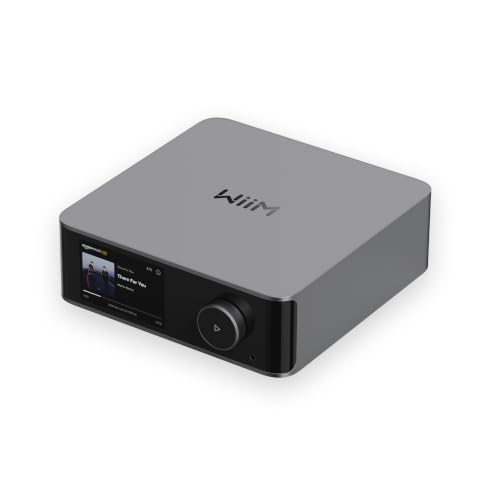
- ESS DAC, touchscreen, and Wi-Fi 6
- HDMI ARC, phono, digital, and subwoofer connections
- Supports major streaming platforms and room correction
Best For: Versatile stereo or 2.1 systems using RCA or digital connections
Balanced Connectivity Pick

- Balanced XLR output
- ESS Sabre ES9028Q2M DAC
- HDMI eARC plus USB, optical, coaxial, and Ethernet
Best For: Stereo systems requiring balanced XLR output
High-End Digital Transport

- OCXO clock and external master-clock inputs
- Wi-Fi 6, Ethernet, and optional SFP fiber
- Advanced DSP and extensive streaming support
Best For: Advanced systems using a separate DAC or external clock
Feature-Rich Streaming Preamp

- Streamer, DAC, preamp, and digital library player
- 4X ESS DACs with DSD512 and 768kHz/32-bit support
- NAS, USB, CD-drive, and internal-storage support
Best For: Large local libraries and all-in-one digital systems
Flexible Digital Hub
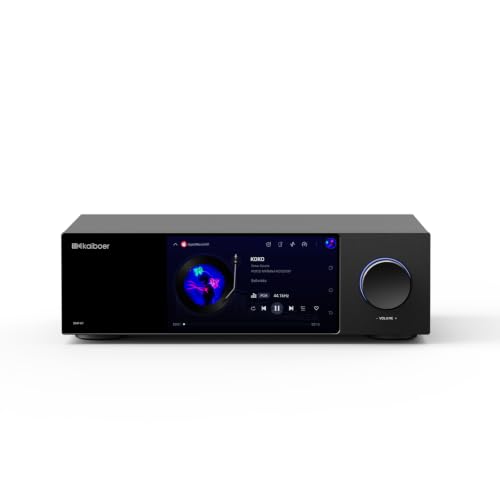
- Direct digital PCM and DSD transport output
- Wi-Fi 6, Ethernet, NAS, and SSD support
- CD ripping with broad digital connectivity
Best For: External-DAC-based Hi-Fi systems
Disc-and-Stream Center

- Integrated CD playback and network streaming
- Supports AirPlay, DLNA, and major music services
- Expandable storage up to 8TB
Best For: CD-and-streaming home Hi-Fi systems
Portable Balanced Power
Surfans F20 Pro HiFi Music Player

- 4.4mm balanced headphone output up to 500mW
- Dual ESS DACs with DSD512 support
- Wi-Fi, LDAC, and up to 1TB storage
Best For: Portable balanced-headphone listening
All-in-One Network Hub

- Combines streaming, DAC, preamp, and CD functions
- Supports Wi-Fi 6, AirPlay, DLNA, and up to 8TB storage
- RCA connectivity is listed; verify balanced-output requirements
Best For: A feature-rich stationary digital-audio centerpiece
High-Power R2R Portable

- Up to 1100mW + 1100mW balanced headphone output
- True R2R DAC with flat and warm sound profiles
- 128GB storage, Wi-Fi, Bluetooth, USB audio, and AUTO EQ
Best For: Powerful portable listening with demanding headphones
Flexible All-in-One – WiiM Ultra
The WiiM Ultra is a practical network audio player with balanced outputs alternative for systems that primarily use RCA, digital, headphone, or subwoofer connections. It combines a touchscreen, ESS DAC, Wi-Fi 6, broad streaming support, and room-correction tools in one compact component.
Best For: Listeners building a versatile stereo or 2.1 system around RCA, HDMI ARC, or digital connections.
Pros:
- ESS ES9038 Q2M DAC with support up to 24-bit/192 kHz
- Wide connectivity, including HDMI ARC, phono, USB, optical, coaxial, RCA, and subwoofer out
- Touchscreen, app, remote, and voice control with multiroom support
- Room correction and independent EQ settings
Cons:
- It does not support AirPlay or operate as an AirPlay receiver
- No balanced XLR output is listed in the supplied specifications
The WiiM Ultra stands out for flexibility and ease of integration rather than balanced connectivity. Its extensive inputs, HDMI ARC, and subwoofer support make it especially useful when one streamer needs to handle both music and television audio.
Balanced Connectivity Pick – Cambridge Audio EXN100
The Cambridge Audio EXN100 is the clearest match here for shoppers seeking a network audio player with balanced outputs. Its listed balanced XLR output, ESS Sabre DAC, wired network connection, and HDMI eARC make it a strong fit for a higher-end stereo system or home-cinema setup.
Best For: Users who specifically need balanced XLR connectivity alongside digital inputs and HDMI eARC.
Pros:
- Balanced XLR output for compatible audio equipment
- ESS Sabre ES9028Q2M DAC chip
- HDMI eARC input for home-cinema integration
- USB, Toslink, SPDIF, Ethernet, and Bluetooth connectivity
Cons:
- The supplied notes do not specify maximum supported resolution or streaming-service compatibility
- Only Bluetooth 5 with aptX HD is identified for wireless playback
If balanced analog output is the priority, the EXN100 is the most direct choice among these products. Its connectivity is broad without being overly complicated, and HDMI eARC adds useful flexibility for systems that also handle television sound.
High-End Digital Transport – Eversolo T10
The Eversolo T10 is a substantial digital streamer transport aimed at listeners who want advanced clocking, network isolation, and extensive library support. It can suit a network audio player with balanced outputs system when paired with a separate DAC or converter, but the supplied notes do not list an analog balanced output.
Best For: Advanced digital-audio systems using a separate DAC, external clock, or extensive local and streaming libraries.
Pros:
- OCXO clock with support for external 10 MHz and 25 MHz master clocks
- Wi-Fi 6, RJ45 Ethernet, and SFP fiber connectivity
- 8GB DDR5 memory and 64GB eMMC storage
- 40-band DSP, FIR filter import, and room-correction PEQ support
Cons:
- SFP module must be purchased separately
- The supplied notes do not list balanced XLR or other analog outputs
- Its large chassis may require more rack or shelf space
The T10 is best understood as a configurable digital front end rather than a straightforward balanced-output streamer. Its clocking options, fiber input, DSP tools, and broad service support appeal to enthusiasts assembling a more specialized system.
Feature-Rich Streaming Preamp – Kaiboer DMP-K7 Plus
The Kaiboer DMP-K7 Plus combines a streamer, DAC, preamp, and digital library player in one aluminum chassis. It is worth considering for a network audio player with balanced outputs setup only after confirming the exact output configuration, since the supplied details mention a coaxial interface but do not specify balanced analog outputs.
Best For: Users wanting an all-in-one streamer, DAC, preamp, NAS player, and optional CD-ripping hub.
Pros:
- 4X ESS9039Q2M DAC design with support up to 768kHz/32-bit and DSD512
- Built-in storage plus support for M.2 NVMe and external USB storage up to 16TB
- Supports NAS, cloud, WebDAV, and numerous high-resolution formats
- Can connect to an external CD drive for playback and lossless ripping
Cons:
- Does not support Bluetooth
- Balanced output connectivity is not specified in the supplied notes
- Its extensive features may be more than a simple streaming system requires
The DMP-K7 Plus is aimed at listeners who want a central digital hub rather than a basic network player. Its storage expansion, NAS access, high-resolution decoding, and integrated preamp functions make it particularly compelling for large local music collections.
Flexible Digital Hub – DMP-K7 HiFi Music Transport
The Kaiboer DMP-K7 is a practical choice when you want a network audio player with balanced outputs in a modular Hi-Fi system. It focuses on digital transport duties, sending source-rate audio to an external DAC through USB, coaxial, optical, or HDMI connections rather than providing built-in analog balanced outputs.
Best For: Listeners building a flexible system around an external DAC, amplifier, and speakers.
Pros:
- Supports high-resolution PCM and DSD playback with direct digital output.
- Works with Wi-Fi 6, Gigabit Ethernet, NAS, USB storage, and compatible NVMe SSD storage.
- Offers app control plus TIDAL, Spotify, AirPlay, and DLNA support.
- Supports CD ripping and includes USB, coaxial, optical, and HDMI connectivity.
Cons:
- Requires a compatible external DAC for analog output.
- Balanced analog outputs are not listed among the supplied connections.
The DMP-K7 makes the most sense for a system where digital flexibility and library management matter more than an all-in-one analog stage. Verify your DAC’s input compatibility before buying.
Disc-and-Stream Center – DMP-K8 Hi-Fi Streamer
The Kaiboer DMP-K8 combines CD playback with network streaming for shoppers seeking a network audio player with balanced outputs in a larger Hi-Fi setup. Its supplied connectivity is digital—USB, HDMI, and optical—so it is intended to feed a compatible DAC, amplifier, or other downstream equipment rather than serve as a balanced analog source.
Best For: Audiophiles who want CD playback, streaming, and local storage in one component.
Pros:
- Combines a CD player with high-resolution digital streaming.
- Supports AirPlay, DLNA, Spotify Connect Lossless, TIDAL Connect, and multiple music services.
- Dual drive bays support 2.5-inch SATA and M.2 storage, with capacity up to 8TB.
- Includes app control and a 7.8-inch front display for playback information.
Cons:
- No balanced analog outputs are identified in the supplied specifications.
- Requires compatible downstream equipment for analog or balanced-system integration.
Choose the DMP-K8 if physical CDs and digital libraries are equally important. Its feature set is broad, but buyers specifically needing balanced analog outputs should confirm the connection panel before purchase.
Portable Balanced Power – Surfans F20 Pro HiFi Music Player
The Surfans F20 Pro is the closest match here for shoppers searching for a network audio player with balanced outputs, though it is a portable digital audio player rather than a conventional home network streamer. Its 4.4mm balanced headphone output delivers up to 500mW at 32 ohms, while dual-band Wi-Fi supports streaming and downloads.
Best For: Portable listeners who want balanced headphone power, Wi-Fi streaming, and expandable storage.
Pros:
- Provides a 4.4mm balanced output rated up to 500mW at 32 ohms.
- Uses dual ESS9018K2M DACs and supports DSD512 playback.
- Offers dual-band Wi-Fi, Bluetooth LDAC, Spotify, and Tidal streaming.
- Includes 32GB storage with microSD expansion up to 1TB.
Cons:
- The balanced connection is a headphone output, not a pair of balanced line outputs.
- Its 2.7-inch screen and portable design may be less suitable for rack-based systems.
The F20 Pro is a strong fit when “balanced outputs” means a high-power balanced headphone connection. For a home stereo with balanced interconnects, confirm that its portable headphone-oriented output meets your system’s needs.
All-in-One Network Hub – DMP-K8 Plus Streamer
The DMP-K8 Plus is a substantial home-audio option for shoppers seeking a network audio player with balanced outputs in a broader system. It combines streaming, DAC, preamp, CD playback, app control, and high-resolution support, though the supplied specifications list RCA connectivity rather than a dedicated balanced output.
Best For: Centralizing streaming, CD playback, local storage, and digital library management in a home Hi-Fi system.
Pros:
- Combines streamer, DAC, preamp, CD player, and music-player functions.
- Supports up to 768kHz/32-bit PCM and DSD512 with four ESS9039PRQ2M DAC chips.
- Offers Wi-Fi 6, AirPlay, DLNA, app control, and dual internal-drive support up to 8TB.
- Large 7.8-inch touchscreen displays album art, lyrics, spectrum analysis, and VU meters.
Cons:
- Supplied details identify RCA as the connector type, not balanced outputs.
- It is a larger component at 8.7 by 3.1 by 11 inches.
- The notes state that the app connects over Wi-Fi and that Bluetooth is unavailable.
This is the most comprehensive choice of the three for a stationary setup. If balanced connectivity is essential, verify the output configuration before buying; otherwise, its storage, CD, and network features make it a versatile system centerpiece.
Portable Balanced Value – Surfans F20 Pro Music Player
The Surfans F20 Pro is a practical portable alternative for anyone searching for a network audio player with balanced outputs. Its 4.4mm balanced connection is clearly specified, while dual-band Wi-Fi, Bluetooth LDAC, and installable streaming apps support listening at home or on the move.
Best For: Portable headphone listening with balanced power, streaming-app access, and expandable music storage.
Pros:
- Provides a specified 4.4mm balanced output rated at 500mW/32Ω.
- Supports Spotify, Apple Music, Tidal, and YouTube through Android app installation.
- Dual ESS9018 DACs, DSD512 support, and 192kHz/24-bit playback target high-resolution listening.
- Expandable storage supports libraries up to 1TB via microSD.
Cons:
- The 2.7-inch touchscreen is relatively small for browsing and control.
- Internal storage is 32GB, with expansion relying on a microSD card.
- Its balanced output is intended for headphones, not a listed home-audio line-level connection.
The F20 Pro is the clearest match here for balanced headphone output in a compact device. Choose it when portability and headphone power matter more than full-size home-system connectivity or a large display.
High-Power R2R Portable – FiiO M33 R2R Music Player
The FiiO M33 R2R suits listeners who want a powerful network-capable portable player with balanced output. Its fully differential analog circuit is rated up to 1100mW + 1100mW balanced, and Wi-Fi, Bluetooth, USB audio, and streaming-oriented hardware give it flexibility beyond a basic local-file player.
Best For: Driving demanding headphones from a portable R2R player with substantial storage and customizable sound.
Pros:
- Offers up to 1100mW + 1100mW balanced output through a fully differential analog circuit.
- Uses a self-developed True R2R resistor-ladder DAC with flat and warm sound profiles.
- Snapdragon 680, 8GB RAM, and 128GB storage support smooth multitasking and large libraries.
- Includes Wi-Fi, Bluetooth, USB audio via XMOS XU316, and AUTO EQ functionality.
Cons:
- The supplied notes do not specify the balanced connector type.
- At 258g, it is portable but heavier than a small basic music player.
- Its listed compatible device is headphones, so home line-level integration should be confirmed.
The M33 R2R is the strongest performance-focused option when balanced headphone drive is the priority. Its R2R architecture, high output, storage, and AUTO EQ add flexibility, but confirm connector details and system compatibility before purchase.
How We Picked the Best Network Audio Player with Balanced Outputs
We focused on models that combine network playback with balanced connectivity or balanced headphone output, then compared the features that matter in daily use. Key considerations included wired and wireless networking, streaming-service support, DAC specifications, high-resolution format compatibility, app or display usability, digital and analog outputs, storage options, and system flexibility.
Because these products span compact streamers, portable players, digital transports, and more complete source components, we also considered how each one fits into a real listening chain. A player designed for a balanced headphone rig has different strengths from a network source intended for a preamp or integrated amplifier.
Quick Comparison
| Priority | Look For | Best Fit |
|---|---|---|
| Balanced headphone listening | 4.4mm output, strong amplification, low-noise design | Portable hi-fi players such as the Surfans F20 Pro or FiiO M33 |
| Traditional hi-fi integration | Balanced line-level outputs, digital inputs or outputs, stable network support | Dedicated network audio players such as the Cambridge Audio EXN100 |
| Local music libraries | NAS, USB, internal storage, SSD support, broad file compatibility | Storage-focused DMP-K7 and DMP-K8 models |
| Easy everyday streaming | Responsive interface, app support, AirPlay, Bluetooth, and major services | Accessible all-in-one streamers such as the WiiM Ultra |
Key Buying Factors for a Network Audio Player with Balanced Outputs
Output Type and System Compatibility
Confirm whether “balanced” means a 4.4mm or 4-pin XLR headphone connection, balanced analog line outputs, or both. A balanced headphone output does not automatically make a player suitable as a balanced source for a stereo amplifier. Check connector types, output levels, and whether volume is fixed, variable, or switchable.
Streaming and Network Support
Look for the services you actually use, such as Spotify, Tidal, Qobuz, internet radio, or AirPlay. Ethernet is generally preferable for a fixed system, while dual-band Wi-Fi offers easier placement. NAS, DLNA, USB, and Bluetooth support can make a major difference if your library comes from multiple sources.
DAC, Formats, and Amplification
Higher DSD and PCM figures can be useful, but they are not the sole measure of sound quality. Pay attention to implementation, analog-stage design, output power, and volume control. Portable models should also be judged by battery life, thermal behavior, and headphone-driving capability.
Usability and Expansion
A touchscreen, remote, reliable control app, searchable library, and clear metadata can matter more than headline specifications. If you expect your library to grow, consider USB storage, internal memory, SSD bays, or dependable NAS browsing.
Who Should Buy Which Network Audio Player with Balanced Outputs?
Choose the WiiM Ultra if straightforward streaming, a modern interface, and broad connectivity are more important than maximum storage. The Cambridge Audio EXN100 is the more natural choice for a conventional separates system centered on a dedicated network source.
Consider the Eversolo and DMP-K models if you want a more feature-rich digital hub with local-library support, extensive format handling, or integrated storage options. The Surfans F20 Pro and FiiO M33 make more sense for listeners who need portable playback and a powerful balanced headphone output.
Before buying, verify the exact output arrangement and included accessories for your system. The best Network Audio Player with Balanced Outputs is the one whose connectors, control method, streaming platforms, and power capabilities match the rest of your setup.