Choosing the right power amplifier can make a meaningful difference in system control, speaker compatibility, and listening flexibility. This roundup compares 10 options spanning compact desktop amps, Bluetooth-integrated models, tube designs, and high-output mono amplifiers.
Whether you are upgrading a bookshelf-speaker system or building a serious two-channel setup, focus on the amplifier’s power delivery, inputs, impedance support, and role within your existing audio chain.
Best 10 Power Amplifier for Audiophiles Picks for 2026
Flexible Power Choice

- Stereo or mono operation with up to 235W output
- Balanced XLR/TRS input and 12V trigger-in
- Swappable op-amps and improved cooling
Best For: Audiophiles building an adaptable compact system
All-in-One Digital Hub
AIYIMA A80 Bluetooth DAC Amplifier

- Integrated ESS9038Q2M DAC and TPA3255 amplifier
- Bluetooth, USB, optical, coaxial, and balanced inputs
- Subwoofer pre-out, remote, trigger, and VU display
Best For: Digital-focused music and home audio systems
Precision Mono Expansion

- GaN power transistor for high-frequency switching
- PGA2311 chip provides precise volume control
- Stereo direct and XLR mono modes
Best For: Balanced separates systems with future mono expansion
Traditional Stereo Versatility
Denon PMA-600NE Integrated Amplifier
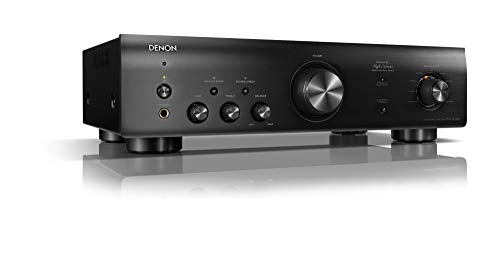
- 70W output with Advanced High Current circuitry
- Built-in DAC, Bluetooth, phono, optical, and coaxial inputs
- Analog mode disengages digital circuits and Bluetooth
Best For: Mixed analog, digital, and Bluetooth home systems
High-Output GaN Specialist
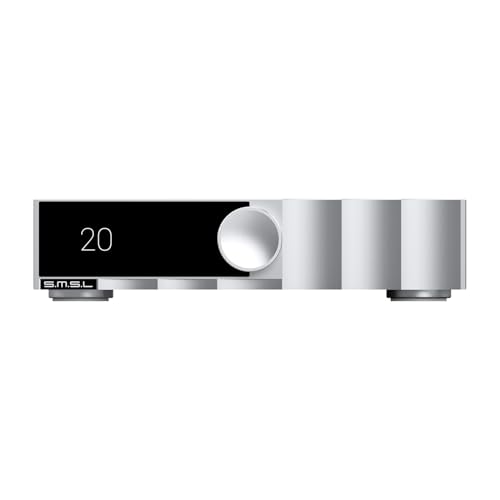
- GaN power technology with PGA2311 control
- Stereo pass-through and XLR mono modes
- Overheat and overcurrent protection
Best For: Flexible, high-power XLR-based home audio systems
Customizable Wireless Value
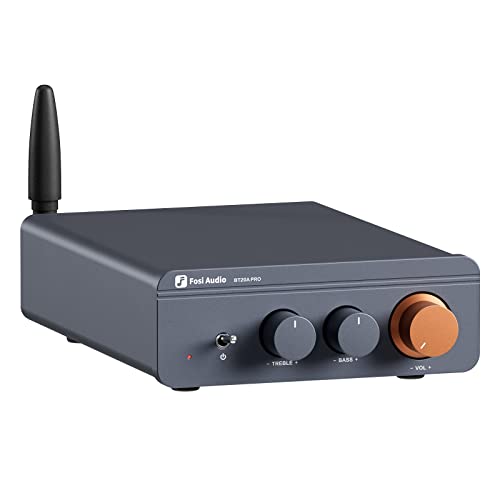
- 300 watts x2 with TPA3255 amplification
- Bluetooth 5.0 and tone controls
- Replaceable op-amps for sound customization
Best For: Compact Bluetooth systems and hands-on audio tuning
Hybrid Class A/AB Powerhouse

- Class A at low levels, Class AB for dynamic peaks
- 200 watts x2 at 8 ohms and supports loads down to 2 ohms
- Dual XLR, four RCA inputs, and bi-wiring support
Best For: Large US-market HiFi systems with demanding passive speakers
Monoblock Powerhouse

- 240W at 4 ohms per amplifier
- XLR/TRS balanced and RCA inputs
- Op-amp swapping and PFFB design
Best For: Modular stereo and home-theater systems
Tube-Style All-in-One
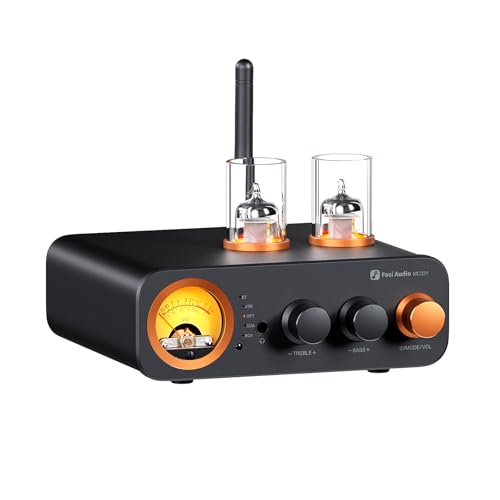
- Integrated DAC, preamp, amp, and headphone output
- Bluetooth, USB, optical, coaxial, and RCA inputs
- 105W x2 at 4 ohms
Best For: Compact desktop and bookshelf-speaker systems
Compact Stereo Power

- Up to 300W x2 for 2-8 ohm speakers
- TPA3255 Class D amplification
- Swappable op-amps and volume-controlled pre-out
Best For: Compact high-output stereo systems
Flexible Power Choice – Fosi Audio ZA3
The Fosi Audio ZA3 is a versatile power amplifier for audiophiles who want compact stereo performance with the option to build a more powerful mono system. Its TPA3255 design, balanced input, and swappable op-amps make it especially adaptable for desktop, bookshelf, or home-theater setups.
Best For: Listeners who want stereo flexibility, balanced connectivity, and an upgrade-friendly mini amplifier.
Pros:
- Switches between stereo output up to 180W and mono output up to 235W.
- Balanced XLR/TRS input and 12V trigger-in help reduce noise and simplify system control.
- Includes premium capacitors, a TPA3255 chip, improved cooling, and swappable op-amps.
Cons:
- Op-amp rolling requires compatible components and additional experimentation.
- Its compact form may be less suitable for buyers seeking a traditional full-size amplifier.
The ZA3 stands out when system flexibility matters as much as output. It is a strong fit for enthusiasts who may start with stereo and later add a second unit for a mono configuration.
All-in-One Digital Hub – AIYIMA A80 Bluetooth DAC Amplifier
The AIYIMA A80 combines a DAC, Bluetooth, digital inputs, tone control, and a high-power Class D amplifier in one unit. For anyone comparing a power amplifier for audiophiles, its broad connectivity and ESS9038Q2M decoding make it a practical centerpiece for both music and home audio systems.
Best For: Users who want a feature-rich amplifier for digital sources, Bluetooth listening, and flexible 2.0 or 2.1 setups.
Pros:
- Combines an ESS9038Q2M DAC with a TPA3255 amplifier and supports DSD256 and high-resolution PCM.
- Offers Bluetooth, USB, optical, coaxial, and TRS balanced inputs.
- Includes subwoofer pre-out, 12V trigger support, tone control, remote control, and a digital VU display.
Cons:
- The many features may be unnecessary for listeners seeking a simple analog power stage.
- Its maximum output specification and system performance depend on the connected speakers and power setup.
The A80 is a compelling choice for convenience-focused listeners. Rather than requiring separate source, DAC, and amplifier components, it provides a broad collection of functions in a compact stereo unit.
Precision Mono Expansion – SMSL PA200 Power Amplifier
The SMSL PA200 is designed for listeners who want a focused power-stage component with precise control and a path to higher output. Its GaN power transistor, PGA2311 volume chip, and XLR mono-mode support make it an interesting power amplifier for audiophiles assembling a separates-based system.
Best For: Enthusiasts using balanced sources who may pair two amplifiers for a higher-power mono configuration.
Pros:
- Infineon GaN power technology supports switching frequencies up to 1MHz.
- PGA2311 volume control is designed for accurate adjustment and low distortion.
- Supports stereo direct mode and XLR mono operation, with protection against overheating and overcurrent.
Cons:
- The supplied output specification is 35W, so speaker matching is important.
- Using mono mode for increased power requires two units.
- Its separates-oriented design may be less convenient than an integrated amplifier.
The PA200 makes the most sense in a carefully planned system rather than as a general-purpose receiver replacement. Its balanced mono capability gives experienced users a clear upgrade path when one amplifier is not enough.
Traditional Stereo Versatility – Denon PMA-600NE Integrated Amplifier
The Denon PMA-600NE is a conventional integrated stereo amplifier for buyers who want dependable speaker power alongside digital and analog source support. With Bluetooth, a built-in DAC, phono input, and 70W output, it offers a straightforward entry point into a power amplifier for audiophiles and home listening system.
Best For: Home listeners seeking a familiar full-size integrated amplifier for speakers, turntables, optical sources, and Bluetooth devices.
Pros:
- Delivers 70W at 4 ohms through Denon’s Advanced High Current push-pull amplifier design.
- Includes two optical inputs, coaxial input, phono input, Bluetooth, and a built-in DAC.
- Analog mode can disengage digital circuits and Bluetooth for an undivided analog experience.
Cons:
- It is larger and heavier than the compact mini amplifiers in this group.
- Its feature set is centered on stereo listening rather than mono expansion or op-amp customization.
The PMA-600NE is a sensible choice for buyers who value broad source compatibility and a traditional component design. It is particularly convenient for systems that combine a turntable with digital and wireless playback.
High-Output GaN Specialist – SMSL VMV PA200
For audiophiles seeking a power amplifier with flexible system-matching options, the SMSL VMV PA200 combines XLR connectivity, Infineon GaN technology, and stereo or mono operation. Its dedicated power supply and protection circuits make it suited to demanding home audio setups.
Best For: Audiophiles who need flexible stereo operation or higher-power mono configurations with XLR connectivity.
Pros:
- XLR input mono mode allows two units to form a higher-power stereo system.
- Infineon GaN power technology and TI PGA2311 volume control support precise operation.
- Includes overheat and overcurrent protection for safer use.
- Dedicated high-power switching supply supports performance under demanding conditions.
Cons:
- The mono configuration requires two amplifiers.
- Its advanced connectivity may be more than a simple RCA-based system needs.
The PA200 is a strong choice when expandability and power flexibility matter more than minimal configuration. Its pass-through stereo mode also makes it practical for systems that prioritize a direct signal path.
Customizable Wireless Value – Fosi Audio BT20A Pro
The Fosi Audio BT20A Pro is a compact power amplifier for audiophiles who want strong output, Bluetooth convenience, and the option to tune the preamp stage. Its TPA3255 design delivers up to 300 watts per channel, while bass and treble controls simplify everyday adjustment.
Best For: Listeners who want a small Bluetooth amplifier with high output and replaceable op-amps for experimentation.
Pros:
- Rated for 300 watts x2 using the TI TPA3255 amplifier chip.
- Replaceable NE5532 op-amps support different sound-tuning approaches.
- Bluetooth 5.0 includes memory pairing and a removable pairing alert tone.
- Provides bass and treble controls, with stated SNR of at least 108 dB and THD of 0.005% or less.
Cons:
- It uses a compact external 32V/5A power adapter rather than an integrated supply.
- Op-amp rolling requires separately sourced compatible replacements.
Choose the BT20A Pro if convenient wireless playback and customization are central to your system. It offers a practical balance of compact size, substantial rated output, and hands-on sound adjustment.
Hybrid Class A/AB Powerhouse – FLYINSKY 200W x2 Stereo Amp
For audiophiles wanting a substantial power amplifier with a more traditional high-end presentation, this FLYINSKY hybrid design combines 30 watts of Class A operation with automatic Class AB output for demanding peaks. Its dual balanced XLR and RCA inputs, large chassis, and US-specific 110V–120V power supply suit dedicated home HiFi systems.
Best For: Owners of demanding passive speakers who want high output, balanced connectivity, and Class A/AB operation.
Pros:
- Operates in Class A at lower volumes and switches to Class AB for up to 200 watts x2 at 8 ohms.
- Supports demanding loads down to 2 ohms, with a stated 380 watts at 4 ohms.
- Offers two XLR balanced inputs, four RCA inputs, and bi-wiring support.
- Large 21 kg chassis, 125 dB SNR in Direct Mode, and protection against short circuit and DC offset.
Cons:
- Its 21 kg chassis requires substantial space and careful placement.
- The power supply is customized for US 110V–120V, limiting suitability in other regions.
- Its hybrid architecture and extensive connectivity may be excessive for modest speaker systems.
This amplifier is aimed at listeners building a serious, full-size stereo system rather than a compact desktop setup. The high output, low-impedance support, and balanced inputs make it especially compelling for power-hungry speakers.
Monoblock Powerhouse – V3 Mono
For audiophiles seeking a power amplifier for audiophiles that can scale with a serious home system, the Fosi Audio V3 Mono is a flexible Class D monoblock. Each amplifier drives one passive speaker, while balanced and single-ended inputs support stereo, multi-channel, or home-theater configurations.
Best For: Audiophiles building modular stereo or multi-channel systems around demanding passive speakers.
Pros:
- Up to 240W at 4 ohms per monoblock.
- Balanced XLR/TRS and RCA input options.
- PFFB technology, premium capacitors, and a claimed 0.006% THD.
- Op-amp swapping and signal-sensing power mode add customization and convenience.
Cons:
- As a monoblock, a stereo setup requires two units.
- Its advanced configuration may be more than casual listeners need.
The V3 Mono is the strongest fit here for listeners who prioritize clean power, system-building flexibility, and upgrade potential. Its two-amplifier format is less convenient than an integrated design, but it offers a more expandable foundation.
Tube-Style All-in-One – MC331
The Fosi Audio MC331 is a practical choice if your idea of a power amplifier for audiophiles includes source switching, a DAC, and headphone support in one compact chassis. Its tube-and-VU-meter presentation adds vintage character while Bluetooth, USB, optical, coaxial, and RCA inputs simplify system setup.
Best For: Desktop listeners and small-room systems wanting tube styling, digital connectivity, and integrated controls.
Pros:
- Combines DAC, preamplifier, speaker amplifier, and headphone amplifier.
- Supports Bluetooth, USB, optical, coaxial, and RCA sources.
- Rated up to 105W x2 at 4 ohms for bookshelf speakers.
- Includes a remote, tone controls, pre-out, and replaceable tubes.
Cons:
- It is designed around bookshelf-speaker use rather than a modular high-power setup.
- Its tube-oriented presentation and styling may not suit every system.
The MC331 favors convenience and character over separates-style expansion. Choose it when you want a compact, easy-to-control system with broad source compatibility and a headphone output.
Compact Stereo Power – V3 Stereo
For buyers who want a straightforward power amplifier for audiophiles without a full-size receiver, the Fosi Audio V3 Stereo pairs a compact enclosure with up to 300W per channel. It is built for passive speakers in desktop, bookshelf, tower, and home-theater applications, with a volume-controlled pre-out for added flexibility.
Best For: Listeners needing high-output stereo amplification in a compact, customizable chassis.
Pros:
- Up to 300W x2 with support for 2-8 ohm speakers.
- TPA3255 Class D design with premium capacitors and inductors.
- Top-and-bottom ventilation and whole-body heat dissipation.
- Swappable op-amps and an adjustable pre-out support system experimentation.
Cons:
- The compact amplifier requires separate source and preamp equipment.
- Its high power may be unnecessary for modest desktop speakers.
The V3 Stereo is a strong middle ground: more powerful and expandable than a basic desktop amp, but simpler than a multi-component stack. It suits audiophiles who already have a source and want efficient stereo power in a small footprint.
How We Picked the Best Power Amplifier for Audiophiles
We selected models across several use cases rather than treating maximum wattage as the only measure of quality. The lineup includes stereo and mono amplifiers, Class D, Class A/AB, and tube-hybrid designs, plus options with Bluetooth, DACs, balanced inputs, headphone outputs, and pass-through functionality.
Our comparison emphasizes practical system matching: claimed output power, connection options, speaker compatibility, form factor, controls, and whether each amplifier works best as an integrated unit or as a dedicated power stage. Because specifications can vary by impedance and power supply, treat published wattage as a reference and verify the manufacturer’s current figures before buying.
Quick Comparison
- Best for compact systems: Mini Class D amplifiers such as the Fosi Audio V3 and ZA3 save space while offering substantial output.
- Best for wireless listening: Bluetooth-equipped models from Fosi Audio, AIYIMA, and Denon simplify phone and tablet playback.
- Best for separates: The SMSL and Fosi Audio mono power amplifiers suit systems using a separate preamplifier or DAC.
- Best for tone-focused listening: Tube-hybrid and Class A/AB designs may appeal to listeners who prefer a different presentation and traditional hardware styling.
Key Buying Factors for a Power Amplifier for Audiophiles
Power and Speaker Matching
Look beyond the largest wattage number. Check output at your speakers’ nominal impedance, sensitivity, and typical listening distance. Speakers with low sensitivity or large rooms generally benefit from more clean headroom, while efficient bookshelf speakers may need far less power.
Inputs and System Role
Decide whether you need an integrated amplifier with volume control and source features or a power amplifier designed to follow a preamp. RCA is common, while XLR can be useful for balanced sources and longer cable runs. A pass-through or mono mode can also support future system expansion.
Features, Size, and Heat
Bluetooth and built-in DACs reduce component count, but dedicated separates may offer more upgrade flexibility. Class D models are typically compact and efficient; Class A/AB and tube designs can run warmer and require more ventilation. Confirm that the amplifier fits your rack or desktop and has adequate airflow.
Controls and Everyday Usability
Consider input selection, gain or volume adjustment, remote control, display visibility, and headphone support. A technically capable amplifier is less useful if its controls do not suit your listening habits.
Who Should Buy Which Power Amplifier for Audiophiles?
Choose a compact Class D model if you want high output in a desktop, bedroom, or small home-theater system. Choose a Bluetooth integrated amplifier for simple streaming with passive speakers and minimal equipment. Choose a mono pair if you want separate left and right channels, greater upgrade flexibility, or a dedicated system built around a preamp. Choose a tube-hybrid or Class A/AB amplifier if design, analog character, and a more traditional listening experience matter as much as efficiency.
Before ordering, confirm speaker impedance, connector compatibility, included power supply, and return coverage. The best Power Amplifier for Audiophiles is the one that delivers suitable clean power while fitting naturally into the rest of your system.