Choosing the right amplifier for bi-amping can improve system flexibility, channel control, and speaker performance—but only when the amplifier’s power, impedance, and connectivity match your setup.
We’ve selected 10 power amplifiers for bi-amping, including compact desktop models, Bluetooth-equipped stereo amps, amplifier boards, and higher-output rack units. Use the guide below to narrow the list by room size, speaker requirements, and installation style.
Best 10 Power Amplifiers for Bi Amping Picks for 2026
Flexible Desktop Power

- 300W per channel with TPA3255
- RCA input and passive speaker output
- Bass and treble controls
Best For: Compact home audio and bookshelf speaker systems
Balanced High-Power Choice

- 200W amplifier output
- High- and low-gain settings
- XLR and 12V trigger connectivity
Best For: Balanced high-power stereo systems
DIY Wireless Power

- 220W per channel
- Bluetooth 5.2 and multiple inputs
- 12–36V DC DIY design
Best For: Custom wireless speaker and amplifier projects
Rack-Mount System Power

- 1,000W per channel in stereo
- Bridgeable to 2,000W
- XLR, TRS, and Speakon connections
Best For: Rack-based and PA-style audio systems
Compact Stereo Pick
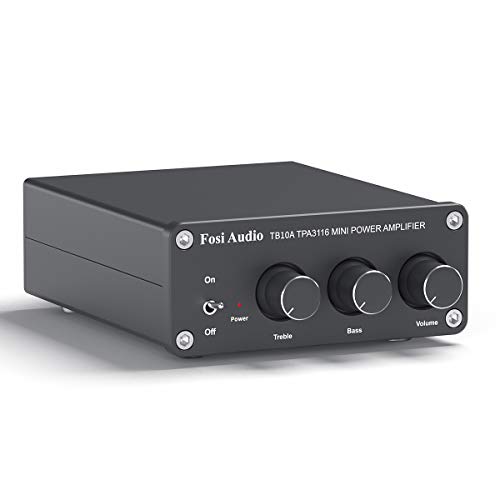
- Two-channel Class D design
- Up to 100W x 2 maximum output
- Compact aluminum enclosure
Best For: Small passive-speaker systems and space-conscious setups
Flexible PA Option

- 500W peak output at 4 ohms
- 70V/100V and digital inputs
- Bluetooth and rack-mount design
Best For: Karaoke, PA, and feature-rich rack systems
Bridgeable Rack Amp

- 100W x 2 RMS stereo output
- Stereo, parallel, and bridge modes
- Bluetooth 5.3 and XLR input
Best For: Flexible home, DJ, garage, and small live-sound setups
DIY Integration Pick
DROK PAM8620 15W×2 Amplifier Board

- 8–26V DC operating range
- Over 90% claimed Class D efficiency
- Multiple built-in protection features
Best For: Custom audio builds and embedded installations
Flexible Desktop Power – Fosi Audio TB10D
If you need power amplifiers for bi amping in a compact home-audio setup, the Fosi Audio TB10D offers two channels and up to 300 watts per channel. Its passive-speaker output, RCA input, and adjustable bass and treble make it a practical option where simple system integration matters.
Best For: Desktop audio, bookshelf speakers, gaming setups, and bass-shaker applications.
Pros:
- Up to 300 watts per channel from the TPA3255 chip.
- Supports 2–8 ohm bookshelf speakers.
- Includes RCA input, bass and treble controls, and protection circuits.
Cons:
- Only two channels are specified, so a second amplifier may be needed for a complete bi-amping arrangement.
- Power adapter specifications are not provided in the supplied details.
The TB10D is best viewed as a flexible two-channel building block rather than a dedicated multi-channel bi-amping system. Its small size and straightforward controls make it easy to add to an existing setup.
Balanced High-Power Choice – LEAUDIO TOPPING B200
The LEAUDIO TOPPING B200 is a high-output option for power amplifiers for bi amping, delivering 200 watts and offering high- and low-gain settings. Its XLR connectivity and 12V trigger are useful when building a coordinated system with compatible preamplifiers or a second amplifier.
Best For: High-power stereo systems using balanced connections and compatible control equipment.
Pros:
- 200-watt output suits a broad range of speakers.
- High- and low-gain options provide setup flexibility.
- XLR connectivity and 12V trigger support system integration.
Cons:
- A preamplifier or DAC is needed to complete the broader system described.
- The supplied details do not specify speaker impedance or input options beyond XLR.
For a bi-amping plan based on matched, balanced components, the B200 is especially appealing because two units can be paired with a Pre90. Confirm connection and speaker requirements before buying.
DIY Wireless Power – DAMGOO 440W Amplifier Board
For builders creating custom power amplifiers for bi amping, this DAMGOO board provides two channels rated at 220 watts each. Bluetooth 5.2, AUX, USB audio, and USB flash-drive support add source flexibility, while the board’s adjustable tone controls and protection features suit DIY speaker projects.
Best For: DIY wireless speakers and custom two-channel amplifier builds.
Pros:
- 220 watts per channel with dual TPA3251 chips.
- Bluetooth 5.2, AUX, USB sound card, and USB flash-drive inputs.
- Protection against short circuits, voltage problems, overheating, and clipping.
Cons:
- Power adapter is not included.
- Requires DIY installation and an appropriate 12–36V DC supply.
- Only two channels are provided.
This board can serve as one channel pair in a custom bi-amping project, but it is not a ready-to-use enclosure. Plan for power-supply selection, mounting, wiring, and a second amplifier if your design needs more channels.
Rack-Mount System Power – Pyle PTA1000BT
The Pyle PTA1000BT is a rack-mountable two-channel amplifier for larger installations and power amplifiers for bi amping. It offers 1,000 watts per channel in stereo or 2,000 watts in bridged mode, along with XLR and TRS inputs, Speakon outputs, Bluetooth, and front-panel monitoring.
Best For: Rack-based audio systems, PA-style setups, and installations using 4–8 ohm speakers.
Pros:
- Up to 1,000 watts per channel in stereo operation.
- Bridge mode, XLR/TRS inputs, and Speakon outputs provide connection flexibility.
- Cooling fan, LED level indicators, and rack-mountable construction support installation use.
Cons:
- Only two channels are specified for a bi-amping configuration.
- The supplied details list a 120–220V supply range, so power compatibility should be verified.
- Its rack-mount format is less suited to compact desktop systems.
The PTA1000BT makes sense when you need substantial output and professional-style connections. For bi-amping, check the speaker impedance, crossover arrangement, and available preamp outputs before relying on it as part of a larger system.
Compact Stereo Pick – Fosi Audio TB10A
The Fosi Audio TB10A is a compact two-channel Class D amplifier for straightforward home speaker setups. For power amplifiers for bi amping, its two stereo channels and 100W-per-channel maximum output can suit a simple, space-conscious configuration, although it does not provide separate high- and low-frequency crossover controls.
Best For: Small home audio systems using passive 4- or 8-ohm speakers and an external source.
Pros:
- Two channels with up to 100W x 2 maximum output.
- Compact aluminum enclosure measuring about 5.2 x 3.54 x 1.42 inches.
- Includes bass and treble controls plus built-in overload, short-circuit, thermal, and DC protection.
- Supports a 12–24V supply range and includes a power adapter.
Cons:
- Only two channels, so a second amplifier may be needed for a true bi-amped system.
- No stated active crossover or dedicated bi-amping controls.
The TB10A is best viewed as an affordable, compact stereo amplifier that can serve one section of a larger system or a basic two-channel setup. Confirm speaker impedance, crossover requirements, and source connectivity before using it for bi amping.
Flexible PA Option – Pyle PMX3500PH
The Pyle PMX3500PH is a feature-heavy two-channel mixing amplifier aimed at home entertainment and PA use. Among power amplifiers for bi amping, its 70V/100V outputs and multiple inputs may help in varied installations, but the supplied specifications do not identify dedicated bi-amping or crossover functions.
Best For: Home karaoke, rack-mounted entertainment systems, and installations needing microphones, digital inputs, Bluetooth, or 70V/100V output.
Pros:
- 500W peak power rating for 4-ohm speakers.
- Offers USB, AUX, microphone, optical, coaxial, AC-3, line-out, and 70V/100V connections.
- Includes Bluetooth, FM radio, MP3 playback, front-panel controls, and a remote.
- Universal rack-mount design suits equipment cabinets.
Cons:
- Two-channel configuration may require additional amplification for separate bi-amped speaker sections.
- Designed as a mixing amplifier, so it may be more equipment than a basic stereo system needs.
- No dedicated active crossover or explicit bi-amping mode is listed.
The PMX3500PH makes the most sense when connectivity and PA-style features matter as much as amplification. Its output options are versatile, but verify compatibility with your speakers and crossover arrangement before choosing it for a bi-amping project.
Bridgeable Rack Amp – Donner MAMP7
The Donner MAMP7 combines two-channel amplification with Bluetooth 5.3, XLR connectivity, and selectable stereo, parallel, or bridge modes. For power amplifiers for bi amping, the independent channels are useful as a starting point, while the listed controls and modes make it adaptable to home, garage, DJ, and small live-sound applications.
Best For: Users who want a versatile two-channel amplifier with balanced XLR input, wireless playback, and bridge capability.
Pros:
- Delivers 100W x 2 RMS or 225W x 1 in bridge mode at 4 ohms.
- Supports Bluetooth 5.3, USB, RCA, AUX, and XLR inputs.
- Offers stereo, parallel, and bridge input modes.
- Includes treble, midrange, and bass controls with cooling vents and a quiet fan.
Cons:
- No dedicated crossover or high-/low-frequency output sections are listed.
- Bridge mode uses the amplifier as one channel, reducing its usefulness for two-way bi amping.
- The 2U design may be less convenient for compact desktop systems.
The MAMP7 is the most adaptable option here for users who value input variety and operating modes. For bi amping, keep it in stereo mode and pair it with an appropriate external crossover, while checking speaker impedance and power requirements.
Compact High-Output Pick – Facmogu F900S 50W×2 Bluetooth Amplifier
For shoppers comparing power amplifiers for bi amping, the Facmogu F900S is a compact two-channel option for passive-speaker setups. It delivers claimed 50W-per-channel output and accepts Bluetooth, USB, and 3.5mm AUX sources, making it practical for desktop and space-limited systems.
Best For: Desktop audio, bookshelf speakers, RVs, workshops, and other compact stereo installations.
Pros:
- 50W×2 stereo output from an upgraded TPA3116 chip
- Bluetooth 5.0, USB, and 3.5mm AUX inputs
- Compact design with included 12V power adapter and cables
Cons:
- It is a two-channel amplifier rather than a dedicated multi-channel bi-amping solution
- Not compatible with Amazon Echo or Alexa
- USB/Bluetooth mode includes a voice announcement at switching
The F900S makes the most sense when small size, wireless convenience, and straightforward two-channel amplification matter more than specialized bi-amp controls.
DIY Integration Pick – DROK PAM8620 15W×2 Amplifier Board
For custom projects involving power amplifiers for bi amping, the DROK PAM8620 board offers a bare two-channel Class D platform rather than a finished enclosure. Its wide 8–26V DC input range, protection features, and external mute and shutdown connections make it suited to hands-on speaker and sound-system builds.
Best For: DIY audio projects, embedded installations, and builders who need a configurable amplifier module.
Pros:
- Accepts DC 8–26V power, including common 12V and 24V supplies
- Class D efficiency is rated above 90%
- Includes reverse-polarity, short-circuit, thermal, overcurrent, and voltage protection
Cons:
- Outputs up to 15W per channel at 24V and 8 ohms, less than the other listed amps
- Board format requires a separate power supply and installation
- It provides two channels, not a complete dedicated bi-amping system
The DROK is the most flexible choice for technically minded users, but its unfinished board format means it requires more planning and wiring than a ready-to-use amplifier.
Ready-to-Use Desktop Pick – Nobsound Mini 50W×2 Bluetooth Amp
Those seeking power amplifiers for bi amping in a simple desktop or home setup may appreciate the Nobsound Mini. It provides claimed 50W×2 output in a small aluminum enclosure, with Bluetooth 5.0, USB, AUX, and RCA connectivity plus a power supply and cables in the box.
Best For: Plug-and-play desktop, office, and compact home stereo systems using passive speakers.
Pros:
- Claimed 100W total output from a compact two-channel design
- Bluetooth 5.0, USB, AUX, and RCA input options
- Includes 19V power supply, cables, manual, and an 18-month limited warranty
Cons:
- Two-channel design is not a dedicated multi-channel bi-amping amplifier
- Requires passive speakers and an external speaker connection setup
- Supplied notes do not identify an adjustable crossover or bi-amp-specific controls
The Nobsound is a convenient, ready-to-use option when connectivity and included accessories are priorities, though users planning true bi-amping should verify that their system has the necessary crossover and channel arrangement.
How We Picked the Best Power Amplifiers for Bi Amping
We compared these amplifiers by looking at channel count, rated output, impedance compatibility, connection options, controls, form factor, and intended use. Because bi-amping can involve separate amplification for a speaker’s high- and low-frequency sections, we prioritized models that provide two usable channels or practical bridging flexibility.
Specifications vary significantly between manufacturers, and advertised peak or bridged wattage may not equal continuous stereo output. Treat power ratings as a starting point, then confirm the manual’s specifications before connecting your speakers.
Quick Comparison
| Type | Best suited for | What to prioritize |
|---|---|---|
| Mini Class D stereo amp | Desktop systems and efficient speakers | Clean power, cooling, and input selection |
| Bluetooth home amplifier | Casual listening and compact rooms | Reliable wireless connection and speaker impedance |
| Amplifier board | DIY projects and custom enclosures | Power supply, heat management, and wiring |
| Rack-mount or PA amplifier | Large rooms and demanding speakers | Continuous output, balanced inputs, and ventilation |
Key Buying Factors for Power Amplifiers for Bi-Amping
Power and Impedance
Match the amplifier to the speaker’s nominal and minimum impedance. An amp that is stable at the required load is more important than a large headline wattage. Leave reasonable headroom, but avoid pairing a high-powered amplifier with speakers that cannot handle its output.
Two-Channel Operation
A two-channel amplifier is often the simplest choice for bi-amping one stereo pair, with one channel assigned to each frequency section per speaker only when the system design and crossover arrangement support it. Verify whether your preamp, active crossover, or speaker terminals are configured for the intended method.
Inputs and Controls
Bluetooth, USB, AUX, optical, RCA, TRS, and XLR inputs serve different installations. Choose digital or wireless inputs for convenience, while balanced XLR or TRS connections are preferable for longer cable runs and pro-audio systems. Bass, treble, and EQ controls are useful, but they should not replace proper crossover setup.
Cooling and Installation
Compact Class D amplifiers suit desks and small cabinets, while rack amplifiers need ventilation and may produce more fan or operational noise. Amplifier boards require a suitable DC power supply, secure wiring, and an enclosure that protects both the electronics and listener.
Who Should Buy Which Power Amplifiers for Bi Amping?
Choose a compact Class D amplifier for desktop listening, small rooms, efficient passive speakers, or a discreet secondary system. Models from Fosi Audio, Facmogu, and Nobsound fit this use case.
Choose a board-style amplifier if you are building a custom speaker, bass-shaker system, or electronics project and are comfortable selecting the power supply and managing heat.
Choose a Bluetooth home or PA amplifier when you want convenient streaming, microphone support, USB playback, or more flexible inputs. These are practical for multipurpose rooms and entertainment systems.
Choose a rack-mount or bridgeable model for larger rooms, higher output demands, or installations that benefit from balanced connectivity and robust controls. Before buying, confirm continuous output, bridge-mode requirements, cooling clearance, and whether an external crossover is needed for your bi-amping plan.