A dependable in-ear monitoring system can help performers hear a consistent mix without relying on loud stage monitors. UHF models remain popular for their practical range, dedicated wireless links, and flexible channel options.
We’ve selected 10 UHF wireless in-ear monitor systems spanning compact solo setups, stereo systems, multi-channel configurations, and portable rechargeable designs. Use the guide below to narrow the options by coverage, connectivity, monitoring style, and intended use.
Best 10 Uhf Wireless in Ear Monitor Systems Picks for 2026
Reliable Mono Monitoring
Phenyx Pro PTM-11 UHF IEM System

- Mono audio helps avoid phase issues
- 50 selectable frequencies
- Separate inputs and pass-through outputs
Best For: Solo performers, presenters, churches, and studios
Extended-Range Touring Pick
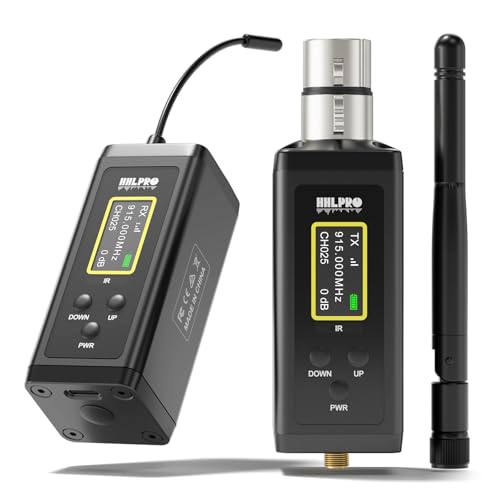
- Advertised 300-foot range
- 50 channels with auto-scan and one-touch sync
- Metal build with rechargeable battery
Best For: Touring bands, venues, worship teams, and rehearsals
Expandable Studio Value
I5 Professional UHF Wireless IEM
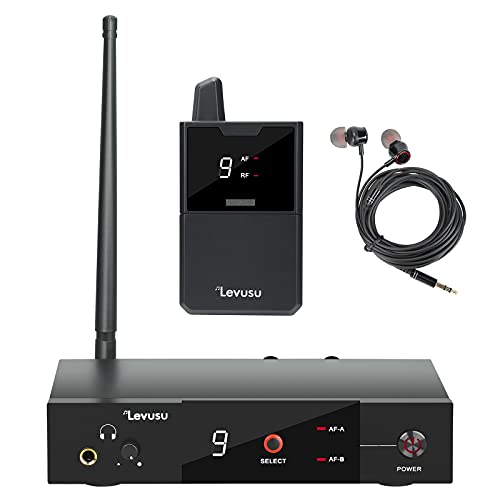
- 16 channels with under 4.5ms stated delay
- Supports additional matching bodypacks
- Includes rack-mount ears and accessories
Best For: Studios, bands, rehearsals, and expandable monitor setups
Four-Performer Solution

- Four channels for standalone monitor mixes
- Includes four bodypacks and earphones
- IR sync and rackmount-ready design
Best For: Four-member bands, worship teams, and stage productions
Easy-Pairing Pick

- Automatic pairing for simpler setup
- 20 adjustable channels for interference management
- One transmitter supports up to 10 receivers
Best For: Bands and performers needing easy, multi-receiver monitoring
Professional Stereo Pick

- Selectable stereo or mono monitoring
- 89 frequencies for multi-system operation
- Rack-mountable design with audio controls
Best For: Stage, studio, speech, and multi-system applications
Low-Latency Value Pick

- Stated 1ms transmission latency
- Balanced XLR and AUX/LINE input options
- USB-C rechargeable transmitter and receiver
Best For: Live performers prioritizing responsive monitoring and portability
Portable Metal Performer

- 16 adjustable UHF channels
- Six earbud sets with passive isolation
- Up to five hours of rechargeable use
Best For: Bands, DJs, studios, and live performers
Flexible Team Monitoring

- 500MHz frequency-hopping UHF connection
- Supports multiple receivers up to 130 feet
- Mono/stereo switching and broad adapter kit
Best For: Small bands, rehearsals, and coordinated monitoring
High-Fidelity Stage Monitoring

- Under-5ms latency for real-time monitoring
- 24-bit/96kHz audio with wide response
- Metal casing and XLR/TS input support
Best For: Stage performers, singers, bands, and studios
Reliable Mono Monitoring – Phenyx Pro PTM-11 UHF IEM System
The Phenyx Pro PTM-11 is a practical choice for shoppers comparing uhf wireless in ear monitor systems for clear, focused personal monitoring. Its mono design helps avoid stereo phase issues, while 50 selectable UHF frequencies and separate outputs support flexible setups for performers, presenters, and studios.
Best For: Solo performers, church pastors, conference hosts, broadcasters, and small stage or studio setups.
Pros:
- Mono monitoring helps reduce phase-related blurring and distortion.
- Offers 50 selectable frequencies and supports up to five systems together.
- Separate left/right inputs and pass-through outputs allow flexible signal routing.
- Includes a metal transmitter, bodypack, earphone, rackmount kit, batteries, and carrying case.
Cons:
- Its stated operating range is 164 feet, which may be limiting for very large venues.
- Mono monitoring may not suit listeners who specifically need stereo mixes.
With a straightforward feature set and useful signal-routing options, the PTM-11 is a solid single-performer monitor system when dependable mono audio matters more than stereo imaging.
Extended-Range Touring Pick – HHLPRO F10P UHF IEM System
The HHLPRO F10P stands out among uhf wireless in ear monitor systems for its advertised 300-foot range, 902–927MHz operating band, and quick setup features. Auto-scan and one-touch sync are useful when moving between venues, while its metal construction and included case suit regular gigging.
Best For: Touring bands, live venues, church worship, rehearsals, lectures, and performers who need extended mobility.
Pros:
- Advertises a 300-foot operating range and 50 channels.
- Auto-scan and one-touch sync can simplify frequency setup.
- Under-5ms latency is designed to keep monitoring responsive.
- Includes independent transmitter and receiver volume controls, a case, and a 1200mAh battery.
Cons:
- The mono design does not provide stereo monitoring.
- Battery life is listed at approximately 5–8 hours, so extended events may require charging.
- Performance can still depend on venue interference and local RF conditions.
The F10P is a compelling option for mobile performers who prioritize range, fast frequency coordination, and rugged portability in a mono wireless monitoring system.
Expandable Studio Value – I5 Professional UHF Wireless IEM
The I5 is a useful contender among uhf wireless in ear monitor systems for buyers seeking uncompressed transmission, broad audio response, and an expandable receiver setup. Its 16 channels, rack-mount ears, and stated 150–180-foot outdoor range make it suitable for rehearsal rooms, studios, and smaller live productions.
Best For: Bands, studios, guitarists, educators, speakers, and teams that may add multiple bodypack receivers.
Pros:
- Provides 16 channels with less than 4.5ms stated delay.
- Supports additional bodypacks when they share the transmitter’s frequency.
- Offers a 20Hz–20kHz frequency response and up to 107dB signal-to-noise ratio.
- Includes rack-mount ears, earphones, cables, batteries, and a carrying setup.
Cons:
- The stated 150–180-foot range is shorter than some extended-range alternatives.
- Only one bodypack receiver is included in this package.
- The 16-channel selection is less extensive than systems offering 50 channels.
Choose the I5 when expandable monitoring and conventional rack integration are more important than maximum range or a large frequency bank.
Four-Performer Solution – Phenyx Pro PTM-33-4B UHF IEM
The Phenyx Pro PTM-33-4B is built for groups comparing uhf wireless in ear monitor systems with multiple independent mixes. Its integrated four-channel transmitter provides four left/right input and loop-output groups, while four included bodypacks let a band or worship team begin with individual monitoring from one rack-friendly unit.
Best For: Four-member bands, worship teams, stage productions, sound engineers, and multi-performer monitoring.
Pros:
- Provides four channels for up to four standalone monitor mixes.
- Includes four bodypack receivers and four in-ear earphones.
- Offers 4×25 UHF frequencies and IR sync for quick receiver linking.
- Integrated loop outputs, rackmount hardware, and a compact 42cm design support organized installations.
Cons:
- Mono monitoring only, so it is not intended for stereo personal mixes.
- Its stated interference-free range is approximately 140–164 feet line of sight.
- The multi-channel design requires four auxiliary mixer outputs for the intended four-member setup.
For teams that need separate mixes without purchasing four independent transmitters, the PTM-33-4B offers a purpose-built and space-conscious monitoring hub.
Easy-Pairing Pick – EBJ SQ-01 UHF Wireless IEM
The EBJ SQ-01 is a straightforward option for shoppers comparing uhf wireless in ear monitor systems for rehearsals and smaller performances. Automatic pairing, 20 adjustable channels, and support for multiple receivers simplify setup while helping manage interference.
Best For: Bands and performers who want easy setup, extended battery life, and one-transmitter-to-many monitoring.
Pros:
- Automatic pairing avoids manual channel selection during initial setup.
- Offers 20 adjustable channels to help reduce interference.
- Supports up to 10 receiver sets with one transmitter.
- Provides up to 8 hours of use and a stated 164-foot open-area range.
Cons:
- The 8-hour battery rating may require recharging for longer event days.
- Its 164-foot range is specified for open areas, so real-world coverage may vary.
With low-latency UHF transmission, a 24-bit/48kHz specification, and simple push-button operation, the SQ-01 is a practical fit for small and medium setups that prioritize convenience.
Professional Stereo Pick – Phenyx Pro PTM-10 UHF IEM
The Phenyx Pro PTM-10 stands out among uhf wireless in ear monitor systems for users who want stereo monitoring and more detailed control. Its selectable 900MHz frequencies, rack-mountable transmitter, and built-in EQ, balance, limiter, and lock functions suit stage and studio work.
Best For: Performers, speakers, worship teams, and small production setups needing stereo flexibility and professional installation features.
Pros:
- Switches between stereo and mono monitoring for different applications.
- Provides 89 selectable frequencies and supports up to five systems simultaneously.
- Includes EQ, balance, limiter, PAD, and lock functions for setup control.
- Comes with XLR and 6.3mm inputs, rack hardware, earbuds, batteries, and a carrying case.
Cons:
- Its 160-foot operating range is slightly shorter than some listed alternatives.
- The system uses two AA batteries in the bodypack rather than a built-in rechargeable battery.
The PTM-10 is a well-equipped choice when stereo imaging, frequency coordination, and rack-ready hardware matter more than the simplest possible setup.
Low-Latency Value Pick – POGOLAB 7-Channel UHF IEM
The POGOLAB MWB-1 is a compact choice among uhf wireless in ear monitor systems, emphasizing 1ms latency, rechargeable operation, and flexible audio inputs. Its seven selectable channels, balanced XLR support, and 164-foot stated range make it suited to live performance and band use.
Best For: Singers and musicians who need very low latency, USB-C charging, and compatibility with mixer or line-level sources.
Pros:
- Delivers stated 1ms transmission latency with 48kHz/24-bit audio.
- Supports balanced XLR input plus an AUX/LINE switch for different sources.
- Uses rechargeable USB-C batteries in both transmitter and receiver.
- Includes a belt clip, 10-step volume adjustment, and a stated 164-foot line-of-sight range.
Cons:
- Its listed battery life is up to 5 hours, shorter than some competing systems.
- Seven selectable channels provide fewer tuning options than higher-channel alternatives.
- The notes specify no noise-control feature.
For performers who value immediate response and convenient rechargeable hardware, the MWB-1 offers a focused feature set in a portable package, though its shorter battery rating is worth considering for long events.
Portable Metal Performer – Be-10 UHF IEM System
This Be-10 is a practical choice for shoppers comparing uhf wireless in ear monitor systems for studio work, bands, DJs, and live performances. Its UHF connection, 16 adjustable channels, and included carrying bag support flexible setup and easier interference management.
Best For: Singers, bands, DJs, studios, and performers who want a rechargeable system with included earphones and accessories.
Pros:
- UHF circuitry and 16 adjustable channels help reduce interference.
- Includes six earbud sets in S/M/L sizes with up to 33 dB passive noise cancellation.
- Built-in 1,000mAh battery charges in about two hours and provides up to five hours of use.
- Metal construction, automatic pairing, and a carrying bag make it convenient for mobile use.
Cons:
- Battery life is limited to about five hours per charge.
- Passive noise cancellation may provide less isolation than active noise cancellation.
- The package includes one transmitter and one bodypack receiver.
The Be-10 emphasizes portability and straightforward operation. It is a well-rounded option when adjustable channels, included fit options, and a compact rechargeable design matter more than extended battery runtime.
Flexible Team Monitoring – MELONARE PM-1 UHF IEM
The MELONARE PM-1 stands out among uhf wireless in ear monitor systems for its 500MHz frequency-hopping connection, quick automatic pairing, and support for multiple receivers. It also offers mono/stereo switching and a useful collection of connection and charging accessories.
Best For: Small bands, rehearsals, live performances, and teams that need one transmitter to support multiple receivers.
Pros:
- 500MHz UHF frequency hopping is designed for stable, interference-resistant operation.
- Automatic pairing and one-click mono/stereo switching simplify setup.
- Supports multiple receivers across 10 selectable frequencies, with a stated range of up to 130 feet.
- Offers less than 6ms latency, 24-bit/48kHz sampling, and up to five hours of battery life.
Cons:
- The included transmitter and receiver each use a compact 400mAh rechargeable battery.
- Its plastic enclosure may be less rugged than a metal-bodied alternative.
- Multi-receiver use requires additional compatible receivers.
With its team-oriented connectivity and broad adapter bundle, the PM-1 is a strong fit for performers who value flexible routing. The compact design and battery indicator also make it convenient for rehearsals and smaller shows.
High-Fidelity Stage Monitoring – A9 Mono UHF IEM
The A9 is aimed at buyers seeking uhf wireless in ear monitor systems with low latency and detailed audio for stage use. Its metal casing, balanced XLR and unbalanced TS input support, built-in limiter, and professional audio specifications make it suited to demanding monitoring setups.
Best For: Singers, bands, studios, and live performers who prioritize low-latency mono monitoring and durable hardware.
Pros:
- Under-5ms latency is designed for real-time monitoring.
- 24-bit/96kHz audio, 20Hz–20kHz frequency response, and at least 94dB SNR support detailed sound.
- Accepts mono balanced XLR and unbalanced TS input connections.
- Metal casing, built-in limiter, and stated five-to-seven-hour battery life suit stage use.
Cons:
- This is a mono IEM system rather than a stereo monitoring solution.
- The listed package includes ear-rest headphones, but no carrying bag is specified.
- A full charge takes about three hours.
The A9 is the most performance-focused option in this group, combining low latency with high-resolution audio and rugged construction. Choose it when reliable stage monitoring and input flexibility are more important than stereo operation.
How We Picked the Best Uhf Wireless in Ear Monitor Systems
We focused on the features that matter most in real performance and rehearsal environments: wireless band and channel flexibility, stated operating range, mono or stereo transmission, transmitter inputs, receiver design, latency, power options, and included accessories. We also considered whether each system suits a solo performer, a small production, or several performers sharing one transmitter.
Specifications can vary by venue, interference, antenna placement, and local frequency rules, so treat published range figures as best-case guidance rather than a guarantee.
Quick Comparison
- Best for simple solo monitoring: Choose a mono system with a straightforward transmitter and beltpack receiver.
- Best for stereo mixes: Look for stereo transmission, left/right inputs, and a receiver that supports a balanced stereo feed.
- Best for multiple performers: Multi-channel systems can support several receivers, but confirm how many bodypacks are included and whether each needs a compatible frequency.
- Best for portability: Rechargeable transmitters or receivers, compact hardware, and a carrying case make mobile setups easier.
- Best for permanent installations: Rack-mountable transmitters and robust metal housings are useful for studios, venues, and touring racks.
Key Buying Factors for UHF Wireless In-Ear Monitor Systems
Frequency and Channel Selection
More adjustable channels make it easier to avoid interference and coordinate several wireless devices. Check the system’s operating band against local regulations and the other microphones or wireless equipment in your setup.
Mono Versus Stereo
Mono is often sufficient for vocals, announcements, worship, and basic stage cues. Stereo is preferable when the mix depends on panning, separate instrument placement, or a more natural listening experience.
Range, Antennas, and Latency
Compare the claimed range with the size of your stage or venue, then leave margin for walls and crowded RF environments. Low latency helps the performer stay synchronized with the live sound, but antenna positioning and clear line of sight can be equally important.
Inputs, Outputs, and Power
Confirm whether the transmitter accepts XLR, 1/4-inch, AUX, or line-level connections required by your mixer. For frequent travel, consider rechargeable power and included accessories; for fixed installations, prioritize dependable cabling, rack mounting, and easy access to controls.
Who Should Buy Which Uhf Wireless in Ear Monitor Systems?
Solo singers and presenters should prioritize an easy-to-configure mono system with a comfortable beltpack and adequate range. Bands and worship teams may benefit from stereo audio, selectable channels, and the ability to pair multiple receivers. Studios and venues should look for rack-mountable transmitters, flexible inputs, and durable metal construction. Touring or mobile performers will generally appreciate compact hardware, rechargeable operation, carrying protection, and quick frequency changes.
Before buying, verify the included earphones, receiver count, connector types, frequency range, and power accessories. Those details often determine whether a system works immediately with your mixer or requires additional cables and adapters.