The best multi-effects looper pedals combine essential effects, amp modeling, rhythm patterns, and looping in a single guitar-friendly unit. They can simplify a live rig, expand practice options, or provide a compact way to experiment with tones and arrangements.
This roundup compares 10 options ranging from dedicated loop stations and delay pedals to full-featured processors with expression pedals, impulse-response support, USB audio, and extensive preset libraries.
Best 10 Multi Effects Looper Pedals Picks for 2026
Flexible Modeling Hub

- 200 presets and 170 effects
- Four footswitches plus expression pedal
- 80-second stereo looper and USB-C OTG recording
Best For: Players seeking extensive modeling and live control
Simple Looping Standard

- 12 minutes of stereo recording
- Clear 24-segment loop indicator
- Stereo I/O and battery included
Best For: Musicians wanting an uncomplicated dedicated looper
Portable Tone Workshop
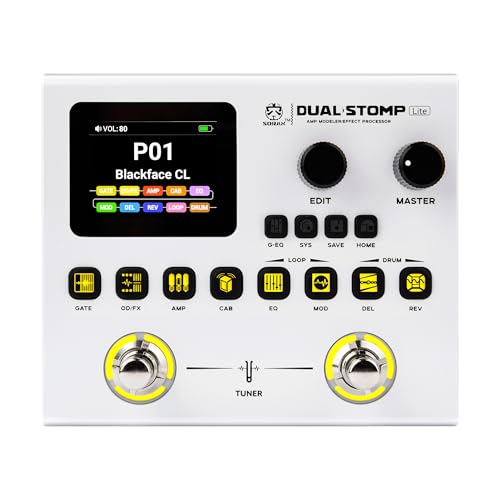
- 125 effects and 99 presets
- 20 IR/NAM slots with USB audio
- Six-hour battery and 40-second looper
Best For: Portable practice, recording, and broad tone experimentation
Practice-Friendly Expression Pedal

- 71 effects and 13 amp models
- 30-second looper with 68 rhythms
- Integrated expression pedal and headphone practice
Best For: Practice, songwriting, and accessible tone exploration
Most Versatile

- 125 effects with amp, cab, NAM, and IR support
- 40-second looper plus 100 drum rhythms
- Rechargeable, portable, and USB recording ready
Best For: Players wanting a portable practice, recording, and live rig
Best Learning Features
MOOER GE100 Multi-Effects Pedal

- 66 effects with 80 preset and 80 user patches
- 180-second looper and built-in drum machine
- Assignable expression pedal and scale/chord lessons
Best For: Practice-focused players wanting longer loops and learning tools
Best Delay Looper
JOYO Aquarius R-07 Delay Looper

- Eight delay modes from Digital to Galaxy and Reverse
- Five-minute looper works simultaneously with delay
- Unlimited overdubs, undo/redo, and tap tempo
Best For: Players creating ambient, layered, delay-driven performances
Best Smart Modeling Option

- 130+ effects with nine simultaneous modules
- NAM and cabinet IR support
- Looper, USB audio, and rechargeable battery
Best For: Players wanting deep tone customization and flexible connectivity
Best for Creative Practice

- 240 effects and expandable amp tones
- 80-second stereo looper with drum rhythms
- 3.5-inch display and AI tone assistant
Best For: Players combining looping, practice, and detailed tone editing
Best Portable Amp Combo

- 10-watt amp with 14 amp models
- 30-second looper and 36 drum patterns
- Bluetooth, OTG recording, and battery power
Best For: Portable practice and all-in-one guitar setups
Flexible Modeling Hub – MOOER GE150 Pro
The MOOER GE150 Pro is a strong choice for players who want multi effects looper pedals with extensive amp modeling, patch control, and recording features. It combines 200 presets, 170 effects, four multipurpose footswitches, an expression pedal, and an 80-second stereo looper in a compact floor unit.
Best For: Guitarists who need broad tone-shaping options, hands-on live control, and USB or OTG recording.
Pros:
- Includes 200 factory presets, 55 amp models, 26 cabinet simulations, and 20 AMP and CAB sample slots.
- Four footswitches and an expression pedal provide flexible patch and parameter control.
- Features an 80-second stereo looper, 40 drum rhythms, tuner, AUX input, headphone output, and USB-C OTG recording.
Cons:
- The extensive modeling and routing options may take time to learn.
- The standard version is corded rather than battery powered.
Choose the GE150 Pro when versatility matters more than a minimal interface. Its deep preset and modeling library makes it suitable for practice, performance, and quick mobile recording.
Simple Looping Standard – BOSS RC-1 Loop Station
The BOSS RC-1 is a straightforward option for musicians who want multi effects looper pedals mainly for creating and layering phrases. It focuses on reliable record, overdub, playback, undo, and redo controls rather than amp modeling or a large effects library.
Best For: Guitar, bass, and keyboard players who want an easy-to-use dedicated looper.
Pros:
- Offers 12 minutes of stereo recording time with phrase memory retention after power-off.
- A 24-segment loop indicator clearly shows recording, overdub, and playback status.
- Stereo inputs and outputs support guitar, bass, keyboards, and other compatible setups.
- Includes a 9-volt battery and carries BOSS’s five-year warranty.
Cons:
- It is a dedicated looper, so it does not provide amp modeling or multiple built-in effects.
- The AC adaptor is optional and sold separately.
The RC-1 is best when uncomplicated looping is the priority. Its clear visual indicator and familiar stompbox layout make it an accessible starting point for building layered performances.
Portable Tone Workshop – SORAN JME-02 Dual Stomp Lite
The SORAN JME-02 Dual Stomp Lite packs multi effects looper pedal functionality into a compact, rechargeable unit. Its 125 effects, 99 presets, 10 independent modules, 40-second looper, drum rhythms, IR/NAM slots, and USB audio interface give it a broad range for practice, recording, and live use.
Best For: Guitarists and bassists who want a portable all-in-one pedal with rechargeable power and recording connectivity.
Pros:
- Provides 125 effects, 99 presets, 10 simultaneous modules, and compatibility with guitar and bass.
- Includes 20 customizable IR/NAM slots for expanding the tone library.
- Combines a 40-second looper, 100 drum rhythms, tuner, Auto Rec Mode, and 48kHz/24-bit USB audio.
- The rechargeable 2000mAh battery offers up to six hours of operation.
Cons:
- The 40-second looper is shorter than the recording time offered by some dedicated loopers.
- Its many modules and tone-import features may be more than beginners need.
For players who value portability and modern connectivity, the Dual Stomp Lite is a feature-dense option. The rechargeable battery and mobile-friendly inputs make it especially practical away from a full pedalboard or studio.
Practice-Friendly Expression Pedal – Zoom G1X FOUR
The Zoom G1X FOUR is a practical entry point for multi effects looper pedals, pairing 71 effects and 13 amp models with an integrated expression pedal. Its 30-second looper, 68 rhythm patterns, tuner, AUX connection, and headphone monitoring support focused practice and basic live experimentation.
Best For: Guitarists who want affordable-style practice features, rhythm accompaniment, and expression control in one unit.
Pros:
- Offers 71 effects and 13 amp models for exploring clean, driven, and high-gain sounds.
- The 30-second looper and 68 rhythm patterns support songwriting and timed practice.
- Built-in expression pedal adds hands-on control over compatible parameters.
- AUX input, headphone monitoring, and Guitar Lab software support quiet practice and patch editing.
Cons:
- The looper recording time is shorter than that of the BOSS RC-1.
- Its effect and amp-model count is more limited than the MOOER and SORAN options.
The G1X FOUR makes sense for players who want a compact practice companion rather than a deeply configurable professional floor processor. Its rhythm library and expression pedal add useful flexibility without requiring separate devices.
Most Versatile – LEKATO ME Multi-Effects Pedal
For players seeking multi effects looper pedals with extensive sound-shaping options, the LEKATO ME combines 125 effects, amp and cab modeling, a 40-second looper, drum rhythms, and NAM/IR support in a compact rechargeable unit. Its USB audio and OTG recording features also make it useful beyond a traditional pedalboard.
Best For: Guitarists and bassists who want a portable practice, recording, and live-performance rig with deep editing options.
Pros:
- Offers 125 effects, 30 amp models, 30 cab simulations, and up to 10 simultaneous effect blocks.
- Includes a 40-second looper, 100 drum rhythms, tuner, Bluetooth, and app-based editing.
- Rechargeable 1500mAh battery provides up to four hours of play, and the 250g body is easy to carry.
- USB audio interface supports ASIO recording on PC/Mac and OTG recording on mobile devices.
Cons:
- The built-in looper is shorter than the looping time offered by some dedicated loopers.
- Its broad feature set and app-based editing may require more setup than a simple stompbox.
- The compact controls and 2-inch screen may be less immediate for extensive stage editing.
The LEKATO is the strongest all-in-one choice here for players who value modeling, connectivity, portability, and creative tools. Choose it when a multi effects looper pedal needs to double as a compact recording setup.
Best Learning Features – MOOER GE100 Multi-Effects Pedal
The MOOER GE100 is a practical option among multi effects looper pedals, pairing 66 effect types with presets, a long looper, drum patterns, and an assignable expression pedal. Its scale and chord learning functions also make it especially approachable for developing players.
Best For: Guitarists who want a straightforward multi-effects unit with extended looping, hands-free expression control, and built-in learning tools.
Pros:
- Provides 80 preset patches, 80 user patches, and 66 effect types across eight modules.
- Its 180-second looper and drum machine support computer-free practice and songwriting.
- Includes an assignable expression pedal with six parameters for volume, wah, and tone control.
- Offers adjustable line-out mode, headphone output, tuner, tap tempo, and scale/chord lessons.
Cons:
- It is substantially larger and heavier than the LEKATO, weighing 730g.
- It requires a 9V adapter or four AA batteries rather than a built-in rechargeable battery.
- Its 66 effects provide fewer options than the LEKATO’s 125-effect library.
The GE100 makes a sensible pick when looping time and hands-free control matter more than maximum modeling depth. Its built-in lessons and accessible controls add value for practice-focused players.
Best Delay Looper – JOYO Aquarius R-07 Delay Looper
The JOYO Aquarius R-07 takes a more focused approach than typical multi effects looper pedals, combining eight delay voices with a five-minute looper. It is designed for players who want ambient textures, tap tempo, and simultaneous looping and delay rather than a broad multi-effects library.
Best For: Guitarists building atmospheric layers, shoegaze textures, and delay-driven performances with a dedicated looper.
Pros:
- Includes eight delay modes, including Tape, Reverse, Low Bit, Galaxy, and Mod.
- The five-minute looper can run simultaneously with delay and supports unlimited overdubs with undo/redo.
- Tap tempo and four straightforward controls make core delay adjustments easy to access.
- Rugged aluminum housing and a compact 248g design suit regular gigging.
Cons:
- It offers delay and looper functions rather than a broad range of modulation, distortion, amp, or cab effects.
- The 9V DC adapter is required and is not included.
- Its ambient LED settings and secondary controls may take some time to learn.
The Aquarius is the specialist choice in this group. It makes the most sense when long looping, layered delay, and distinctive ambient sounds are more important than an all-in-one effects library.
Best Smart Modeling Option – SONICAKE QME-20
The SONICAKE QME-20 is a flexible choice for players comparing multi effects looper pedals with deep modeling, recording, and connectivity features. It combines more than 130 effects, nine simultaneous modules, third-party NAM and cabinet IR support, and a 20-second looper in a compact floor unit.
Best For: Guitarists, bassists, and acoustic players who want extensive tone shaping, USB recording, and wireless-friendly stage control.
Pros:
- Offers more than 130 effects with 100 preset slots and nine simultaneous modules.
- Supports third-party NAM and cabinet IR files for expanded amp and cabinet tones.
- Includes a looper, tuner, metronome, drum rhythms, USB audio, loopback, and re-amping.
- Provides stereo outputs, USB-C, Bluetooth MIDI, and a rechargeable battery.
Cons:
- The rechargeable battery is rated for up to 3.5 hours of wireless operation.
- A 9V DC adapter or USB cable is not included.
- The supplied notes advise avoiding firmware updates on Windows 11 for now.
The QME-20 stands out when sound expansion and computer-based editing matter as much as looping. Its broad feature set is particularly appealing for players willing to use the Sonicake software ecosystem and manage a more advanced setup.
Best for Creative Practice – MOOER GE100 Pro
The MOOER GE100 Pro is a strong pick among multi effects looper pedals for players who want visual control and a long stereo looping time. Its 3.5-inch color display, AI tone assistant, 240 effects, amp modeling, and editing apps make it suited to both sound design and practice.
Best For: Guitarists building tones, rehearsing with backing material, and recording or editing through mobile and desktop tools.
Pros:
- Includes 240 effects, realistic amp modeling, and support for MNRS, NAM A2, and third-party IR files.
- Provides an 80-second stereo looper, 40 drum rhythms, and 10 metronome patterns.
- Features a 3.5-inch color display, RGB lighting, Bluetooth audio, and USB-C.
- Supports MOOER Cloud, desktop editing, tone sharing, and tone-file downloads.
Cons:
- The standard GE100 Pro uses an AC adapter; battery operation is offered by a separate Li version.
- Its extensive app, AI, and editing features may be more than basic players need.
Choose the GE100 Pro if a clear interface and creative practice tools are priorities. The long stereo looper and drum section offer more room for layered ideas than a basic practice pedal, while the supported tone-file formats leave plenty of space for expansion.
Best Portable Amp Combo – JOYO JAM Buddy II
The JOYO JAM Buddy II takes a different approach to multi effects looper pedals by combining the effects section with a 10-watt portable guitar amplifier. It supplies 14 amp models, nine effects, a 30-second looper, drum patterns, Bluetooth playback, and OTG recording in a compact battery-powered unit.
Best For: Beginners, home players, and mobile musicians who want an all-in-one practice amp with looping and recording features.
Pros:
- Combines dual speakers, 14 amp models, nine effects, three channels, and a three-band EQ.
- Includes a 30-second looper, 36 drum patterns, tuner, and memory for channel settings.
- Supports Bluetooth playback, USB-C OTG recording, headphone practice, and balanced output.
- Battery operation provides up to five hours of playtime after a full charge.
Cons:
- Its 30-second looper is shorter than the looping time offered by the other listed options.
- The effects selection is limited to nine built-in effects.
- It is an amplifier combo rather than a standalone pedal for an existing amp rig.
The JAM Buddy II is most practical when portability and immediate practice are more important than a large effect library. Built-in speakers, phone mounting, Bluetooth, and OTG recording make it a convenient self-contained setup for learning, writing, and casual performance.
How We Picked the Best Multi Effects Looper Pedals
We focused on the features that most affect everyday guitar use: effect variety, amp and cabinet modeling, looper length, rhythm accompaniment, preset capacity, controls, connectivity, and portability. The selection includes both comprehensive modeling processors and simpler pedals for players who want looping without learning a complex menu system.
We also considered practical differences between products. A unit with hundreds of effects may suit experimentation, while a dedicated looper or compact delay pedal can be faster to operate onstage. USB recording, expression control, cabinet simulation, and support for NAM or IR files were treated as useful advantages rather than requirements for every player.
Quick Comparison
| Best For | Look For |
|---|---|
| Maximum tonal variety | Large effect libraries, amp models, presets, and editing tools |
| Simple live looping | Dedicated loop controls, clear footswitch operation, and reliable bypass |
| Practice and songwriting | Drum rhythms, phrase loops, headphones, and easy preset access |
| Recording and direct rigs | USB audio, cabinet simulation, IR support, or NAM compatibility |
| Portable setups | Compact housing, low weight, battery or USB power, and built-in amplification |
Key Buying Factors for Multi-Effects Looper Pedals
Looper Controls and Capacity
Check the maximum loop time and whether recording, overdubbing, undo, redo, and stopping have dedicated controls. Longer loop times are useful for complete arrangements, while immediate footswitch access matters more for live performance.
Effects, Modeling, and Presets
Count the effect types, but also examine how quickly you can select and edit them. Amp models and cabinet simulations are especially valuable for direct connection to headphones, an audio interface, a mixer, or a full-range speaker. Preset slots help when you need separate sounds for songs or sections.
Rhythm and Practice Features
Built-in drum patterns can turn a pedal into a compact practice station. Look for tempo control, tap tempo, rhythm volume, and the ability to run drums alongside a loop. Headphone output and auxiliary or Bluetooth connectivity can make home practice more convenient.
Connectivity and Expandability
USB audio is useful for recording and editing, while IR or NAM support can broaden your direct tones. An expression pedal or expression input adds control over wah, volume, pitch, and effect parameters. Confirm the input and output configuration matches your amplifier or recording setup.
Usability and Footprint
More features often mean deeper menus. Consider screen size, switch layout, preset navigation, and whether the pedal can be operated while standing. A smaller unit may be the better choice if your board has limited space or you primarily need a few dependable sounds.
Who Should Buy Which Multi Effects Looper Pedals?
Choose a full multi-effects processor if you want one device to cover practice, direct recording, amp modeling, and multiple song-ready presets. Models with expression control are particularly useful for players who perform with wah, volume swells, or parameter changes.
Choose a dedicated loop station if looping is the main goal and you already have the effects or amplifier you like. A delay-and-looper pedal is a practical middle ground for ambient textures, rhythmic repeats, and shorter performance loops.
Beginners and home players should prioritize straightforward controls, built-in rhythms, headphone-friendly operation, and a manageable preset system. Gigging guitarists should give extra weight to footswitch layout, dependable bypass, fast preset access, and the outputs needed for their amplifier, PA, or direct rig.