The best polyphonic synthesizers make it easier to build chords, pads, basses, leads, and evolving textures without giving up hands-on control. This lineup spans compact keyboards, analog instruments, digital modeling synths, and flexible hybrid designs.
Whether you need a portable performance synth, a studio centerpiece, or an affordable way to explore subtractive synthesis, these 10 options cover different budgets, workflows, and levels of programming depth.
Best 10 Polyphonic Synthesizers Picks for 2026
Most Expressive

- Four stacked oscillators for multidimensional tones
- KAOSS Pad and Motion Sequencing 2.0
- Deep modulation with dual filters and multiple processors
Best For: Experimental sound design and interactive performance
Best Portable Polyphonic

- 8-voice digital wave-morphing synthesis
- Polyphonic aftertouch and MPE compatibility
- Compact 37-key design with microtuning
Best For: Expressive mobile setups and intermediate players
Best All-Rounder
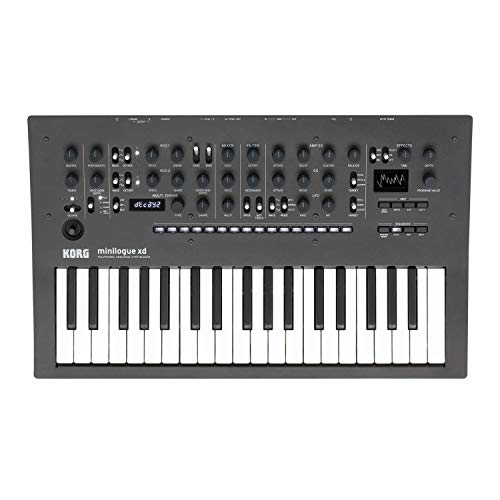
- Four-voice polyphony with dual oscillators
- Digital multi-engine and built-in effects
- 16-step polyphonic sequencer and OLED oscilloscope
Best For: Composing, sequencing, and versatile hands-on synthesis
Best for Vocal Effects

- Up to 18 voices with five effects per voice
- Built-in vocoder, VocalTune, and microphone
- 256 presets, Animate buttons, and arpeggiator
Best For: Vocal performers and accessible live sound shaping
Best Hybrid Pick

- Six-voice polyphony
- Hybrid digital-and-analog sound profile
- Portable 37-key USB design
Best For: Beginners and producers exploring flexible hybrid synthesis
Best Portable Performer

- Eight-note polyphony plus mono mode
- Built-in speakers and battery power
- Phrase looper with 37-key mini keyboard
Best For: Mobile players and songwriters capturing ideas anywhere
Best Analog Sequencer

- Four-voice true analog polyphony
- 16-step polyphonic motion sequencer
- 200 presets with delay and sound-shaping controls
Best For: Analog-focused players who want sequencing for studio or live use
Compact Analog Choice

- 37-key polyphonic analog design
- Polyphonic aftertouch and modulation matrix
- Sequencer and arpeggiator included
Best For: Players wanting expressive analog performance in a compact keyboard format
Classic Eight-Voice Value

- Eight-voice polyphonic analog design
- Two VCOs per voice
- 400 program memories with sequencer and arpeggiator
Best For: Studio users prioritizing voice count, analog tone, and preset storage
Performance-Focused Analog Pick

- Four VCOs and four-voice polyphonic design
- 37 full-size velocity-sensitive keys
- Sequencer, arpeggiator, chorus, and distortion
Best For: Players seeking thick analog tones and hands-on keyboard performance
Most Expressive – Korg MULTIPOLY
Korg multipoly Analog Modeling Synthesizer w/Four Oscillators, 60 Voices and built-in KAOSS Pad
Check Price On AmazonThe Korg MULTIPOLY is a strong choice for players seeking polyphonic synthesizers with an experimental, performance-focused workflow. Its four stacked oscillators, flexible routing, and built-in KAOSS Pad support rich tones and hands-on sound manipulation.
Best For: Sound designers and performers who want evolving textures, deep modulation, and expressive control in a compact setup.
Pros:
- Four oscillators create rich, multidimensional sounds.
- Includes x-mod, sync routing, dual filters, four envelopes, five LFOs, and six mod processors.
- KAOSS Pad features, Layer Rotate, and Motion Sequencing 2.0 support interactive performance.
Cons:
- Its extensive modulation and routing options may take time to master.
- The plastic-bodied design may feel less substantial than some metal instruments.
Choose the MULTIPOLY if evolving modulation and tactile performance features matter more than a minimal, straightforward interface.
Best Portable Polyphonic – ASM Hydrasynth Explorer
The ASM Hydrasynth Explorer is a portable option among polyphonic synthesizers, combining an 8-voice digital wave-morphing engine with a 37-key keyboard. Polyphonic aftertouch, MPE compatibility, and microtuning make it especially flexible for expressive playing and modern sound design.
Best For: Intermediate players who need a compact synthesizer with expressive keyboard control and advanced digital synthesis.
Pros:
- Eight-voice polyphony with three oscillators per voice and four mutators.
- 37 mid-sized keys support polyphonic aftertouch and note velocity.
- MPE compatibility, microtuning, and a compact 4.8 kg design expand performance options.
Cons:
- Its intermediate-oriented feature set may be more than beginners need.
- The 37-key format provides less playing range than larger keyboards.
The Hydrasynth Explorer stands out when portability and expressive control are priorities, particularly for musicians who use MPE or polyphonic aftertouch.
Best All-Rounder – Korg minilogue xd
The Korg minilogue xd offers an approachable blend of analog-style synthesis and digital flexibility for musicians comparing polyphonic synthesizers. Its four-voice architecture, built-in sequencer, effects, and OLED oscilloscope make it useful for both composing and hands-on sound shaping.
Best For: Players who want a compact four-voice instrument with sequencing, presets, digital oscillators, and versatile effects.
Pros:
- Dual oscillators pair with a digital multi-engine supporting noise, VPM, and user slots.
- Four voice modes include Poly, Unison, Chord, and Arp/Latch.
- Built-in 16-step polyphonic sequencer, OLED oscilloscope, and multiple effects add practical versatility.
Cons:
- Four-voice polyphony may limit larger or densely layered arrangements.
- The 16-step sequencer is less extensive than a full song-oriented sequencing system.
The minilogue xd is a balanced pick for musicians who want analog-style character, digital expansion, and a focused workflow without a large instrument footprint.
Best for Vocal Effects – Novation MiniNova
The Novation MiniNova is a practical choice among polyphonic synthesizers for players who want broad preset access, performance controls, and built-in vocal processing. It offers up to 18 voices, a vocoder, VocalTune, Animate buttons, and a supplied gooseneck microphone.
Best For: Vocalists, performers, and producers who want synth sounds combined with accessible vocal effects and real-time performance tools.
Pros:
- Up to 18-voice polyphony supports basses, leads, pads, and layered sounds.
- Built-in vocoder and VocalTune work with the included microphone.
- Offers 256 sounds, space for 128 user sounds, eight Animate buttons, and an arpeggiator mode.
Cons:
- The 37 mini-key layout may not suit players who prefer full-size keys.
- Its plastic body is less substantial than a metal-bodied instrument.
The MiniNova makes the most sense for performers who value immediate access to sounds and vocal effects, rather than a deeply modular synthesis workflow.
Best Hybrid Pick – Arturia MiniFreak
Arturia MiniFreak 37 Key Polyphonic 6-Voice Hybrid Synthesizer Keyboard (Standard, 37 Key)
Check Price On AmazonThe Arturia MiniFreak is one of the more flexible polyphonic synthesizers for players who want to explore hybrid digital-and-analog sounds. Its 37-key format, six-voice polyphony, USB connectivity, and included VST counterpart make it suitable for both hands-on playing and computer-based production.
Best For: Beginners and producers seeking a portable hybrid synthesizer with broad sound-design potential.
Pros:
- Six-voice polyphony supports chords and layered parts.
- Hybrid sound profile combines digital and analog character.
- Portable 37-key design with USB connectivity.
- Includes a MiniFreak VST counterpart.
Cons:
- USB is the listed connector type, which may require additional equipment for other setups.
- Its extensive sonic range may take time for new users to explore.
The MiniFreak stands out when versatility and portability matter more than a strictly analog signal path. It is a strong option for experimenting with varied sounds while keeping a compact keyboard format.
Best Portable Performer – Yamaha REFACE CS
The Yamaha REFACE CS is a portable choice among polyphonic synthesizers, pairing analog physical modeling with an eight-note polyphonic mode. Its 37-key mini keyboard, built-in speakers, battery power, and phrase looper make it practical for mobile playing and quick idea capture.
Best For: Players who want a self-contained synthesizer for practice, travel, jamming, and songwriting.
Pros:
- Eight-note polyphony handles chords and pads.
- Can switch to mono mode for bass and lead sounds.
- Built-in speakers and battery power support play-anywhere use.
- Phrase looper captures ideas and jams.
Cons:
- The mini keyboard may not suit players who prefer full-size keys.
- Its listed 3.5mm headphone jack may require an adapter for different headphone connectors.
The REFACE CS is especially appealing when portability and immediate playability are priorities. It offers useful polyphonic and mono modes without requiring a separate speaker system for casual sessions.
Best Analog Sequencer – Korg Minilogue
The Korg Minilogue is a focused option for musicians who want warm, punchy analog sound in a compact 37-key instrument. Its four-voice polyphony, 200 preset sounds, and built-in 16-step polyphonic motion sequencer give these polyphonic synthesizers a strong balance of hands-on sound design and sequencing features.
Best For: Beginners and experienced musicians who want analog tones with built-in sequencing for studio work or live performance.
Pros:
- True analog synthesis produces warm, punchy tones.
- Four-voice polyphony supports chords and layered arrangements.
- Built-in polyphonic step and motion sequencer records and recalls sequences.
- Includes 200 presets, filters, modulation options, and a tape-style delay.
Cons:
- Four-voice polyphony is less than some competing polyphonic synthesizers.
- The compact slim keys may not feel like full-size keys.
- The supplied notes list an audio jack connector but do not specify USB connectivity.
The Minilogue is a compelling pick for buyers who prioritize genuine analog character and sequencing over maximum polyphony. Its visual oscilloscope and accessible controls also support learning and hands-on sound shaping.
Compact Analog Choice – Sequential Fourm
The Sequential Fourm is a practical option for shoppers comparing polyphonic synthesizers with hands-on analog architecture. Its 37-key design combines two VCOs with polyphonic aftertouch, sequencing, arpeggiation, and a modulation matrix.
Best For: Players seeking a compact 37-key analog synthesizer with expressive aftertouch and built-in sequencing tools.
Pros:
- 37-key polyphonic analog design
- Polyphonic aftertouch adds expressive control
- Includes a sequencer and arpeggiator
- Two VCOs, two ADSR envelopes, and a modulation matrix
Cons:
- Its 28-inch width may still require dedicated desk or stand space
- The supplied specifications list an HDMI connector, which may not suit every studio setup
With its combination of analog voices, expressive key control, and modulation features, the Fourm is a well-rounded choice for musicians who want a focused polyphonic instrument without giving up performance controls.
Classic Eight-Voice Value – Behringer PRO-800
The Behringer PRO-800 is built for shoppers seeking polyphonic synthesizers with classic analog voice architecture. It offers eight voices, two VCOs per voice, a pure analog signal path, an arpeggiator, a sequencer, and 400 program memories in a Eurorack-format design.
Best For: Producers who want an eight-voice analog synthesizer with substantial preset storage and classic oscillator controls.
Pros:
- Eight-voice polyphonic architecture
- Two VCOs per voice for fat and detuned sounds
- Pure analog signal path with VCO, VCF, and VCA designs
- Includes 400 program memories, an arpeggiator, and a sequencer
Cons:
- Eurorack format may require a compatible setup or separate integration planning
- The supplied details identify USB Type-B connectivity but do not specify a keyboard
The PRO-800 stands out when voice count and analog signal flow matter most. Its oscillator flexibility, unison mode, and extensive program memory make it a strong fit for studio-focused sound design and sequencing.
Performance-Focused Analog Pick – Behringer POLY D
The Behringer POLY D is a performance-oriented option among polyphonic synthesizers, pairing four-voice polyphonic or paraphonic operation with 37 full-size semi-weighted keys. Its four VCOs, ladder filter, stereo chorus, distortion, sequencer, and arpeggiator support thick, hands-on sounds.
Best For: Keyboard players who want full-size keys, fat analog tones, and flexible mono, unison, paraphonic, and polyphonic modes.
Pros:
- Four-voice polyphonic/paraphonic design with mono and unison modes
- Four VCOs support thick, bass-heavy analog sounds
- 37 velocity-sensitive, semi-weighted full-size keys
- Built-in ladder filter, stereo chorus, distortion, sequencer, and arpeggiator
Cons:
- At 26.1 pounds, it is less portable than a smaller keyboard synthesizer
- Four-voice polyphony is more limited than an eight-voice design
The POLY D is a compelling choice for players who value tactile keyboard performance and rich analog character. Its voice modes and onboard effects broaden its use from bass and lead duties to chords and sequenced parts.
How We Picked These Polyphonic Synthesizers
We focused on instruments that offer genuine polyphonic operation or practical multi-voice performance, while comparing their sound engines, keybeds, controls, sequencing features, connectivity, portability, and value. The selection includes analog, analog-modeling, digital, and hybrid designs so shoppers can match the instrument to their preferred workflow rather than choosing by voice count alone.
We also considered how well each synthesizer serves common use cases: chord-based composition, live performance, sound design, electronic production, learning, and integration with a computer or larger hardware setup.
Quick Comparison
- For deep digital sound design: ASM Hydrasynth Explorer offers extensive modulation and expressive control in a compact format.
- For versatile hybrid synthesis: Arturia MiniFreak combines digital sound generation with hands-on performance controls.
- For classic analog workflow: Korg minilogue, minilogue xd, Sequential Fourm, and Behringer PRO-800 emphasize immediate knob-per-function programming.
- For maximum hands-on voice flexibility: Korg multipoly provides four oscillators, 60 voices, and integrated performance-focused features.
- For portability: Yamaha REFACE CS and Novation MiniNova are convenient choices for mobile setups and compact studios.
Key Buying Factors for Polyphonic Synthesizers
Voice Count and Architecture
Voice count determines how many notes can sound simultaneously, but the practical result also depends on oscillator design, envelopes, effects, and how voices are allocated. Four voices can work well for basses, leads, and simple chords; eight or more voices provide more room for sustained pads, layered parts, and long releases.
Analog, Digital, or Hybrid Sound
Analog synths are appealing for their direct signal paths and familiar subtractive character. Digital modeling instruments often provide more voices, presets, and complex modulation at a lower size or cost. Hybrid designs can bridge both approaches, giving you broad sound variety with tactile controls.
Keys, Controls, and Expression
Check the keyboard size, key action, velocity sensitivity, aftertouch, and available pitch or modulation controls. A compact keybed may be ideal for travel, while full-size keys and deeper expression options are better for performance. Knob layout matters just as much: dedicated controls speed up sound shaping and reduce menu diving.
Sequencing, Effects, and Connectivity
An onboard sequencer or arpeggiator can turn a synthesizer into a self-contained writing tool. Built-in effects add value for live use, while MIDI, USB, audio outputs, and pedal connections determine how easily the instrument fits into a studio or stage rig. Confirm the specific connections you need before buying.
Who Should Buy Which Polyphonic Synthesizers?
Beginners and budget-conscious players should consider the Korg minilogue, Behringer PRO-800, or Yamaha REFACE CS for approachable controls and strong foundational sounds. Producers who want broad programming options may prefer the Hydrasynth Explorer or MiniFreak. Performers should prioritize the Korg multipoly, MiniFreak, or a model with expressive controls, useful effects, and dependable sequencing.
Traditional analog enthusiasts will likely favor the Korg minilogue xd, Sequential Fourm, PRO-800, or POLY D. Choose based on desired voice count, keyboard format, modulation depth, and whether you want modern conveniences such as presets, digital effects, or extensive sequencing. The best polyphonic synthesizer is ultimately the one whose controls, sound architecture, and physical format fit the way you actually create music.